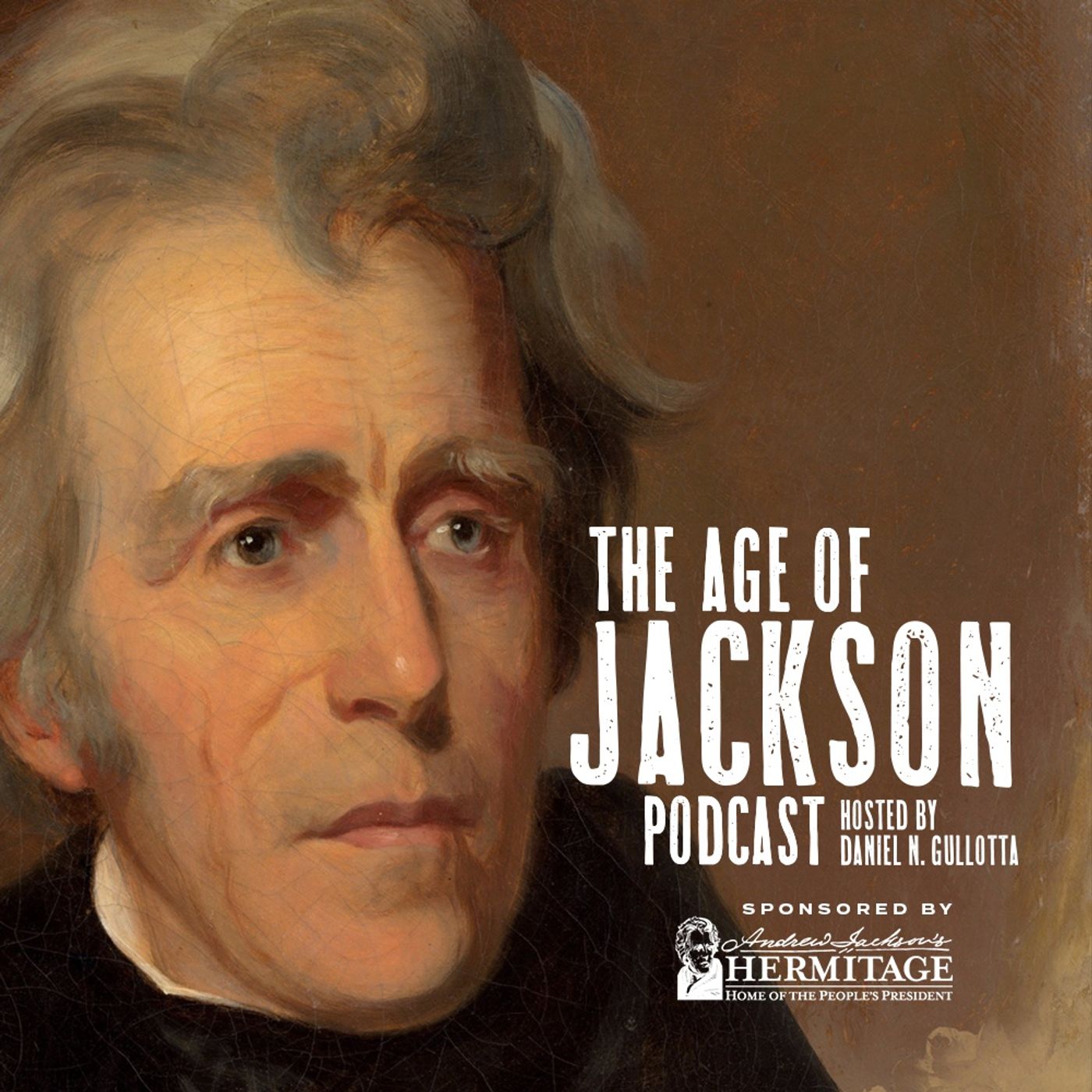
Andrew Jackson’s rise to power was driven by his national military fame, the rapid expansion of voting rights to non-property-owning white men, and strategic party building following the disputed election of 1824. By mobilizing populist anti-establishment sentiment, Jackson established a new political coalition that captured the presidency in 1828 and reshaped American democracy.
Early Life and the Shaping of "Old Hickory"
Andrew Jackson’s political trajectory was rooted in the harsh realities of the late eighteenth-century American frontier. Born on March 15, 1767, in the Waxhaw settlement—a remote region along the border of North and South Carolina—Jackson was the son of Scots-Irish immigrants. His early life was marked by extreme hardship and violence. During the American Revolutionary War, Jackson served as a courier at age thirteen. He was captured by British forces, contracted smallpox, and suffered a famous physical blow when a British officer slashed him with a sword for refusing to clean the officer's boots. By the end of the war, his mother and two brothers had died, leaving him an orphan at age fourteen.
These early experiences instilled in Jackson an enduring distrust of British power, a fierce personal pride, and a lifetime anti-establishment posture. Lacking formal wealth or aristocratic connections, he pursued legal studies in Salisbury, North Carolina, and was admitted to the bar in 1787. Seeking opportunity further west, Jackson moved across the Appalachian Mountains to Nashville, in the Western District of North Carolina (which later became the state of Tennessee).
- Frontier Legal & Merchant Career
- Tennessee Statehood & Politics (1796–1798)
- War of 1812 & Military Victories (1814–1815)
- Contested Election of 1824 & "Corrupt Bargain"
- Creation of Democratic Coalition (1825–1828)
- Landslide Presidential Victory in 1828
In Tennessee, Jackson quickly built a prosperous career as a public prosecutor, land speculator, merchant, and slaveholding planter at his estate, the Hermitage. His legal practice involved settling land disputes and debt collections, which elevated his standing among the region's elite settlers. When Tennessee achieved statehood in 1796, Jackson helped draft its first state constitution. He was subsequently elected as Tennessee’s inaugural representative in the U.S. House of Representatives and briefly served in the U.S. Senate. Finding national legislative politics unappealing at the time, he resigned from the Senate in 1798 to accept an appointment as a judge on the Tennessee Supreme Court, a position he held until 1804.
Military Career: The Catalyst for National Fame
While Jackson held various political posts in early Tennessee, his national political rise was propelled by his military command. In 1802, he was elected major general of the Tennessee Militia, a role that placed him at the center of regional defense and military campaigns over the next two decades.
The Creek War (1813–1814)
During the War of 1812, domestic conflict escalated on the southern frontier between the U.S. military and the Red Sticks, a faction of the Creek Nation opposed to American expansion. Jackson organized and led a force of Tennessee militia, federal troops, and Native American allies into the Creek territory.
The campaign culminated in the Battle of Horseshoe Bend on March 27, 1814, where Jackson’s forces broke the Red Sticks' defenses. The resulting Treaty of Fort Jackson forced the Creek Nation to cede over 23 million acres of land across present-day Alabama and Georgia to the United States government. This victory established Jackson as the premier military commander in the American Southwest and earned him a commission as a major general in the regular U.S. Army.
The Battle of New Orleans (1815)
Jackson’s military reputation reached national proportions at the end of the War of 1812. Tasked with defending the Strategic Gulf Coast, Jackson assembled a diverse force comprising regular infantry, state militias, free men of color, Choctaw fighters, and Jean Lafitte's privateers to defend New Orleans against an advancing army of veteran British soldiers led by Major General Sir Edward Pakenham.
On January 8, 1815, Jackson’s fortified line along the Rodriguez Canal repulsed a frontal attack by the British army. The battle resulted in over 2,000 British casualties compared to fewer than 100 American casualties. Although the Treaty of Ghent ending the war had been signed weeks earlier in Europe, news traveled slowly, and the battle was celebrated across the United States as a decisive triumph. The victory transformed Jackson into an iconic national figure, proving to the American public that a frontier citizen-soldier could defeat a European military superpower.
The First Seminole War and Florida (1817–1818)
In late 1817, President James Monroe ordered Jackson to command operations along the Georgia-Florida border to prevent raids by Seminole forces and escaped slaves seeking refuge in Spanish Florida. Jackson interpreted his orders broadly, crossing the international border into Spanish territory, capturing Spanish forts at St. Marks and Pensacola, and executing two British subjects—Alexander Arbuthnot and Robert Ambrister—for alleged inciting of Native hostilities.
Jackson's unilateral actions sparked intense debate in Washington, where Speaker of the House Henry Clay and others criticized his defiance of diplomatic protocol. However, Secretary of State John Quincy Adams defended Jackson’s actions, using the military occupation to pressure Spain into transferring the territory. The negotiations concluded with the signing of the Adams-Onís Treaty, through which Spain formally ceded Florida to the United States. Jackson was subsequently appointed Florida’s first territorial governor in 1821, further solidifying his image as a bold, decisive leader.
The Election of 1824 and the "Corrupt Bargain"
By the early 1820s, the ruling Democratic-Republican Party had become the sole major political party in the nation, marking the so-called "Era of Good Feelings." However, beneath this single-party unity lay intense regional divisions. As the 1824 presidential election approached, the traditional method of nominating candidates via a Congressional nominating caucus ("King Caucus") collapsed. Regional factions nominated their own native sons, leading to a four-way presidential contest:
- Andrew Jackson: Nominated by the Tennessee legislature, drawing support from the West, South, and working-class urban areas.
- John Quincy Adams: Secretary of State, representing New England commercial and manufacturing interests.
- William H. Crawford: Secretary of the Treasury, backed by the traditional Virginia-led Congressional caucus.
- Henry Clay: Speaker of the House, championing the "American System" of internal improvements and protective tariffs from his western base in Kentucky.
1824 Popular Vote Results
| Candidate | Percentage |
|---|---|
| Jackson | 41.4% |
| J.Q. Adams | 30.9% |
| Clay | 13.0% |
| Crawford | 11.2% |
1824 Electoral Vote Results (261 Total / 131 Needed)
| Candidate | Electoral Votes |
|---|---|
| Jackson | 99 votes |
| J.Q. Adams | 84 votes |
| Crawford | 41 votes |
| Clay | 37 votes |
When the votes were counted, Jackson led both the popular vote (receiving roughly 41%) and the Electoral College, where he secured 99 electoral votes. Adams finished second with 84, Crawford third with 41, and Clay fourth with 37. Because no candidate attained the required 131 electoral votes for an absolute majority, the election was deferred to the U.S. House of Representatives under the terms of the Twelfth Amendment.
Under the Twelfth Amendment, the House was restricted to choosing among the top three electoral vote recipients, which eliminated Henry Clay. However, as Speaker of the House, Clay held influence over the delegation voting process. Clay viewed Jackson as a dangerous populist unqualified for executive office and aligned more closely with Adams’ political platform.
When the House voted on February 9, 1825, Adams secured the presidency on the first ballot after Clay threw his support behind him. Days later, President-elect Adams named Clay as his Secretary of State—a position historically viewed as the stepping stone to the presidency. Jackson and his supporters decried the agreement as a "Corrupt Bargain." They asserted that the political elite had circumvented the will of the voters to keep a representative of the common public out of executive office.
Building the First Modern Political Coalition (1824–1828)
The controversy surrounding the 1824 election catalyzed the formation of a organized political opposition. Jackson resigned his seat in the U.S. Senate—to which he had been re-elected in 1823—and began a four-year campaign to secure the presidency in 1828.
The Role of Martin Van Buren
The primary architect of this political transformation was Senator Martin Van Buren of New York. Van Buren recognized that the old personal factionalism of the post-War of 1812 period was unstable. He sought to construct a broad-based national political party that united Northern urban laborers and small farmers with Southern agricultural interests.
Van Buren aligned his political machine (the Albany Regency) with Jackson’s popularity in the South and West. This coalition laid the foundation for the modern Democratic Party. Details on Jackson's official correspondence and legislative service during this pivotal transition are maintained within the Library of Congress Andrew Jackson Papers.
The Jacksonian Coalition
- Southern Planters (State Rights & Anti-Tariff)
- Western Farmers (Land Expansion & Anti-Monopoly)
- Northern Workingmen (Opposition to Elite Banking Systems)
Democratization of the Franchise
Jackson’s political ascent coincided with a widespread democratic restructuring of state legal codes across the United States. During the 1810s and 1820s, many states revised their constitutions to eliminate property and taxpaying qualifications for voting.
By 1828, almost all adult white male citizens were legally entitled to vote, and most states had shifted the selection of presidential electors from state legislatures to a direct popular vote. This surge in eligible voters dramatically altered the political landscape, shifting electoral power away from property-owning elites toward a broader electorate.
Popular Campaigning and Mass Mobilization
The Jackson campaign of 1828 introduced modern political marketing techniques designed to engage mass electorates:
- Local Organizations: "Hickory Clubs" were established across towns and cities to coordinate local outreach and register new voters.
- Partisan Press: A nationwide network of newspapers, spearheaded by editors like Amos Kendall and Francis Preston Blair, published daily commentary promoting Jackson and attacking Adams.
- Public Events: The campaign arranged political rallies, barbecues, parades, and liberty-pole raisings that turned voting into a community event.
- Populist Rhetoric: Jackson was presented as a plain-spoken outsider, patriot, and defender of popular sovereignty fighting against entrenched federal elites.
Electoral Comparison: 1824 vs. 1828
The institutional and structural changes between the 1824 and 1828 elections are reflected in the shifting electoral and popular metrics of the period:
| Campaign Metric | The 1824 Presidential Election | The 1828 Presidential Election |
|---|---|---|
| Primary Candidates | Andrew Jackson, John Quincy Adams, William H. Crawford, Henry Clay | Andrew Jackson (Democratic), John Quincy Adams (National Republican) |
| Selection of Electors | 18 of 24 states used direct popular vote; 6 used state legislatures | 22 of 24 states used direct popular vote; only 2 used state legislatures |
| Total Popular Votes Cast | ~350,000 votes | ~1,110,000 votes (more than triple 1824 turnout) |
| Voter Turnout Rate | ~27% of eligible adult white male population | ~57% of eligible adult white male population |
| Winning Electoral Votes | Decided by House of Representatives (Adams won 13 state delegations) | Andrew Jackson won 178 to 83 |
| Popular Vote Winner | Andrew Jackson (41.4% plurality, lost election) | Andrew Jackson (56.0% decisive majority) |
| Dominant Political Theme | Personalities, regional patronage, collapse of caucus system | Populism, "Corrupt Bargain," expanded franchise mobilization |
The Election of 1828 and the Realignment of Power
The 1828 presidential campaign between incumbent John Quincy Adams (running as a National Republican) and Andrew Jackson (running as a Democrat) was notably partisan and personal. Adams’ supporters accused Jackson of execution-style military tyranny, duel-related violence, and questioned the legality of his marriage to his wife, Rachel Donelson Jackson. Jackson’s supporters attacked Adams as an out-of-touch aristocrat who had used federal funds for personal luxuries and had subverted democracy through political bargaining.
1828 Electoral Map Results
| Candidate | Electoral Votes |
|---|---|
| Jackson | 178 votes |
| J.Q. Adams | 83 votes |
Jackson achieved a decisive victory in 1828, winning 178 electoral votes to Adams’ 83. He swept the South and the West, while also capturing key Middle Atlantic states, including Pennsylvania and New York. Historical summaries of Jackson's presidential terms and executive actions are cataloged by the White House Historical Association.
Jackson's inauguration in March 1829 symbolized the shift in political authority. Tens of thousands of citizens traveled to Washington, D.C., to witness the swearing-in ceremony at the U.S. Capitol. The public reception at the White House became so crowded that Jackson was forced to escape through a side exit as the crowd surged inside, an event recorded by contemporaries as evidence of the arrival of popular democratic rule.
- 1828 Election Victory
- March 1829 Public Inauguration
- Institutional Executive Changes
- Rotation in Office ("Spoils System")
- Veto Usage Expansion (Executive Supremacy)
- Destruction of Second Bank of the U.S.
Structural Institutional Changes Under Jackson
Upon entering office, Jackson implemented systemic modifications to federal executive operations:
- Rotation in Office ("Spoils System"): Jackson replaced approximately 10% of federal civil servants with political supporters. He argued that public offices should rotate regularly to prevent the growth of a permanent bureaucratic elite.
- Expansion of Executive Veto Power: Prior presidents used the veto almost exclusively on constitutional grounds. Jackson used it based on policy disagreement, issuing 12 vetoes during his presidency—more than all six previous presidents combined.
- Dismantling of the Second Bank of the United States: Viewing the federally chartered central bank as an unconstitutional monopoly that benefited wealthy financial elites over working citizens, Jackson vetoed its recharter in 1832 and removed federal deposits.
- Enforcement of Federal Primacy and Indian Removal: Jackson enforced federal authority during the South Carolina Nullification Crisis while simultaneously signing the Indian Removal Act of 1830, which led to the forced relocation of Southeastern Native American nations along the Trail of Tears.
Frequently Asked Questions
How did the War of 1812 launch Andrew Jackson into national politics?
Jackson's leadership during the War of 1812—specifically his victory over the Red Sticks at the Battle of Horseshoe Bend and his defeat of the British at the Battle of New Orleans in 1815—transformed him into a national military hero. This widespread public fame, combined with his image as a self-made frontier soldier, gave him the broad name recognition necessary to challenge established political dynasties in Washington.
What was the "Corrupt Bargain" of 1824, and how did it affect Jackson's rise?
The "Corrupt Bargain" refers to the resolution of the 1824 presidential election in the House of Representatives. After Jackson won a plurality of the popular and electoral vote without achieving an absolute majority, Speaker of the House Henry Clay supported John Quincy Adams, securing Adams the presidency. When Adams subsequently appointed Clay as Secretary of State, Jackson and his allies alleged a corrupt deal had taken place. This claim became the central campaign message for Jackson's victorious 1828 campaign.
What role did Martin Van Buren play in Andrew Jackson’s election?
Martin Van Buren was the primary organizational architect of Jackson’s 1828 victory. He united Southern planters with Northern urban laborers and small farmers, establishing local political clubs, partisan newspaper networks, and state committee structures. This framework laid the foundation for the modern Democratic Party and established party discipline as a primary tool in national American elections.
How did voting rights change during Andrew Jackson's rise to power?
During the 1810s and 1820s, state after state revised its constitution to remove land-owning and taxpaying qualifications for voting. By 1828, universal white male suffrage was largely established nationwide, and almost all states selected their presidential electors via direct popular vote. This expanded electorate favored Jackson's populist platform over traditional aristocratic candidates.
How did the campaign of 1828 differ from earlier presidential elections?
The 1828 election was the first American campaign focused on mass popular mobilization. Rather than relying solely on private political bargaining among elites, both campaigns used public rallies, parades, campaign merchandise, partisan newspapers, and targeted mudslinging. This operational model resulted in voter turnout more than tripling compared to the 1824 election.
Next Steps for Historical Research
To further examine primary source materials and institutional records related to Andrew Jackson's political rise, consider the following research steps:
- Examine Primary Correspondence: Review the digital archives of the Library of Congress Andrew Jackson Papers to examine Jackson's personal letters, military orders, and administrative documents between 1812 and 1828.
- Analyze Congressional Election Records: Consult the official history collections of the U.S. House of Representatives to review state-by-state vote tallies for the 1824 House election under the 12th Amendment.
- Review State Constitutional Records: Track the structural expansion of suffrage by comparing state constitutional conventions between 1810 and 1830, specifically analyzing how property qualifications were systematically eliminated in states like New York, Virginia, and Massachusetts.
- Evaluate Period Newspapers: Search digital historical collections (such as Chronicling America) for partisan publications from 1824 to 1828 to see how campaign messaging was framed for voters in different regions.