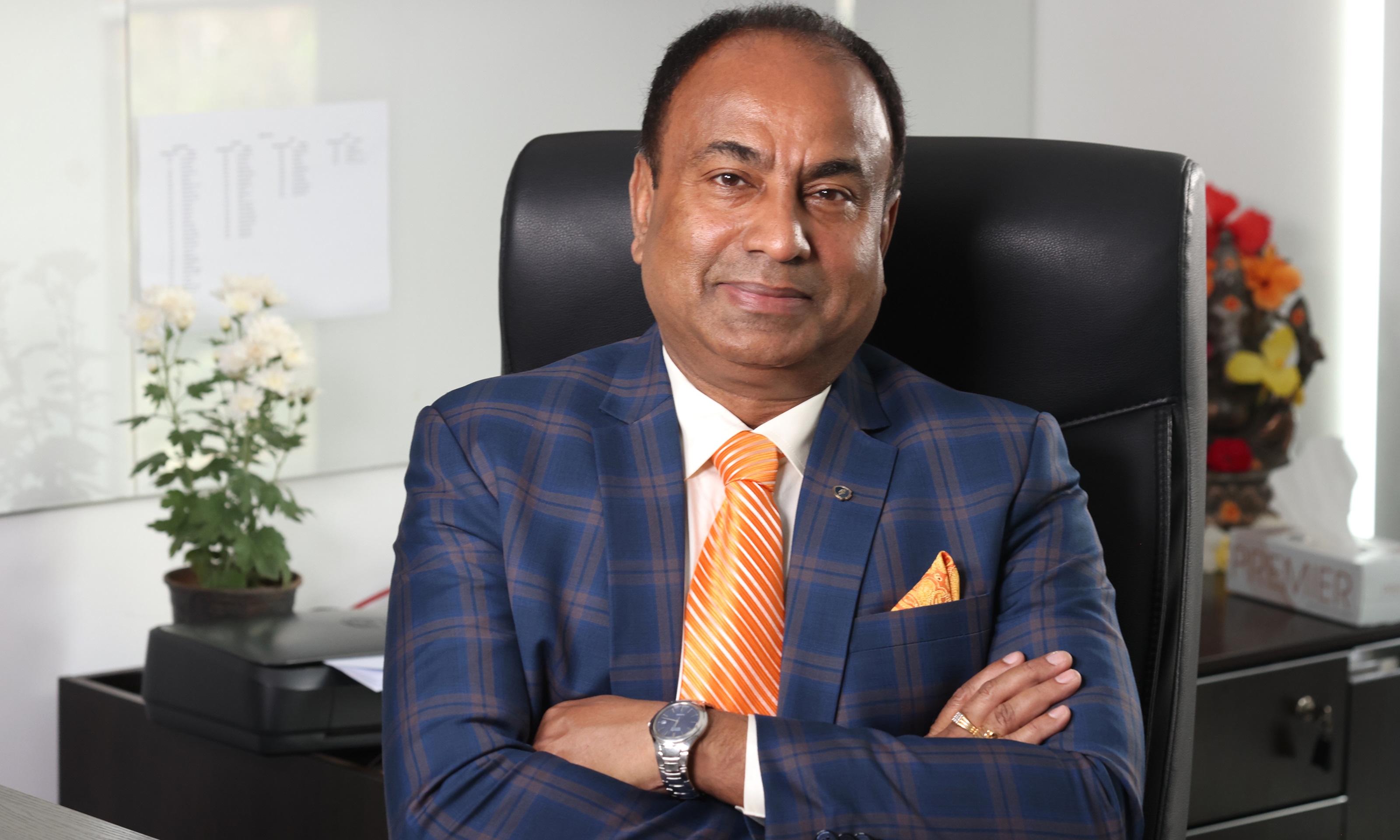
As of 2026, Anand Kumar Ashiya's estimated net worth is approximately ₹180 Crore to ₹230 Crore ($22–$28 million). This valuation is primarily derived from his substantial public equity portfolio in the Indian stock market and his professional capacity as the CEO of Fitnesys, complemented by private business interests and diversified asset holdings.
The landscape of Indian "superstar investors"—individuals whose portfolio moves are tracked with hawk-like precision by retail participants—has evolved significantly by 2026. Anand Kumar Ashiya remains a prominent figure in this circle. Unlike high-profile billionaires, Ashiya’s wealth is characterized by strategic, value-oriented bets in the small-cap and micro-cap segments. His ability to identify undervalued gems before they hit the mainstream radar has made him a subject of intense interest for those looking to replicate his success in the Indian equities market.
The Foundations of Anand Kumar Ashiya’s Wealth
To understand the net worth of Anand Kumar Ashiya, one must look beyond a single number. His wealth is a product of disciplined capital allocation and a deep understanding of corporate fundamentals. Ashiya’s financial journey is built on two primary pillars: his leadership in the technology and fitness sectors and his prowess as a value investor.
Leadership at Fitnesys
As the CEO of Fitnesys, Ashiya has been at the helm of a company that bridges the gap between technology and wellness. By 2026, the fitness-tech industry has matured, and companies providing scalable software-as-a-service (SaaS) solutions for gym management, health tracking, and wellness analytics have seen steady growth. His role at Fitnesys provides not only a consistent income stream through compensation and bonuses but also significant equity value in a private enterprise that operates in a high-growth niche.
The Investor Identity
In the public eye, Ashiya is best known as an HNI (High Net Worth Individual) investor. In India, the Securities and Exchange Board of India (SEBI) requires individuals holding more than 1% of a listed company’s equity to be named in the quarterly shareholding patterns. It is through these regulatory filings that much of Ashiya’s wealth is visible. His strategy typically involves "skin in the game"—taking significant stakes in companies where he believes the market has overlooked the intrinsic value or the growth potential of the underlying business.
Detailed Analysis of the Public Equity Portfolio
The core of Anand Kumar Ashiya’s net worth resides in his public stock holdings. By 2026, his portfolio has shown resilience, benefiting from the broader "Make in India" tailwinds and the recovery of the small-cap index.
Key Holdings and Sector Preferences
Historically, Ashiya has shown a preference for the Specialty Chemicals, Textiles, and Manufacturing sectors. These industries often house small-cap companies with robust balance sheets but limited institutional coverage.
- Indo Borax & Chemicals Ltd: This has been a cornerstone of his portfolio for several years. Boric acid and its derivatives are essential in various industrial applications, from glass to agriculture. Ashiya’s long-term conviction in this stock reflects his preference for companies with low debt-to-equity ratios and consistent dividend-paying track records.
- Shiva Texyarn Ltd: His investment in the textile sector, specifically in technical textiles, highlights a bet on specialized manufacturing. As of 2026, the technical textile segment in India has expanded due to government incentives (PLI schemes), which has likely bolstered the valuation of his holdings in this space.
- Emerging Small-Caps: By 2026, Ashiya has rotated parts of his capital into green energy components and specialized engineering firms. These tactical shifts allow his portfolio to stay ahead of market cycles.
Portfolio Valuation Metrics (Estimated 2026)
| Company Name | Sector | Estimated Holding Value (₹ Cr) | Investment Theme |
|---|---|---|---|
| Indo Borax & Chemicals | Chemicals | 45 – 55 | Value/Dividend Yield |
| Shiva Texyarn | Textiles | 20 – 25 | Technical Manufacturing |
| Unnamed Small-Cap A | Engineering | 30 – 35 | Infrastructure Growth |
| Unnamed Micro-Cap B | Tech/SaaS | 15 – 20 | Digital Transformation |
| Cash & Liquid Assets | Debt/Cash | 70 – 95 | Liquidity & Safety |
Note: Estimates are based on public shareholding data and historical growth rates of mid-tier Indian indices. Private holdings and real estate are extrapolated based on standard HNI wealth distribution models.
Investment Philosophy: The "Ashiya" Method
Wealth at this level is rarely the result of luck; it is the result of a repeatable process. Anand Kumar Ashiya’s investment philosophy can be broken down into three actionable principles that have contributed to his 2026 net worth.
Focus on Micro-Caps and Small-Caps
Most institutional investors (Mutual Funds and FIIs) cannot invest in micro-cap companies because the low liquidity makes it difficult for them to enter or exit without moving the price. Ashiya operates in this "blind spot." By investing in companies with market caps below ₹1,000 crore, he positions himself to benefit from the "re-rating" process that occurs when these companies grow and finally attract institutional attention.
High Conviction and Concentration
Unlike many retail investors who over-diversify their portfolios (holding 50+ stocks), Ashiya tends to maintain a concentrated portfolio. He focuses on a few high-conviction ideas where he understands the management's integrity and the company's competitive moat. This concentration allows for exponential wealth creation when a single pick becomes a "multibagger."
Patience and Low Turnover
Data from 2021 through 2026 shows that Ashiya does not frequently "churn" his portfolio. He often holds positions for several years, allowing the power of compounding to work. This approach also minimizes the impact of short-term capital gains taxes and brokerage costs, which can significantly erode the net worth of more active traders.
Factors Influencing Net Worth in 2026
Several external factors dictate the fluctuations in Ashiya’s net worth. In 2026, the Indian economic environment presents both opportunities and risks.
- Interest Rate Cycles: As an investor heavily weighted in small-caps, Ashiya’s portfolio value is sensitive to interest rate changes by the RBI. Lower rates generally lead to a re-rating of small-cap multiples, increasing his net worth.
- Regulatory Changes: SEBI’s evolving norms on HNI disclosures and "fit and proper" criteria for major shareholders impact how Ashiya structures his holdings.
- The Fitnesys Trajectory: If Fitnesys undergoes an IPO or a significant private equity funding round in 2026, Ashiya’s net worth could see a substantial upward revision due to the liquidity event and the high valuation multiples typically afforded to tech companies.
Challenges and Risk Management
Maintaining a net worth in the hundreds of crores requires sophisticated risk management. For an investor like Ashiya, the primary risks include:
- Liquidity Risk: Since his wealth is tied up in small-cap stocks, selling a large stake quickly during a market downturn could lead to significant "slippage," where the actual realized price is much lower than the screen price.
- Sectoral Concentration: Being heavily invested in chemicals or textiles means that a global commodity price shock or a change in export duties could impact a large percentage of his portfolio simultaneously.
- Market Volatility: By 2026, global geopolitical tensions often spill over into the Indian markets. Ashiya likely mitigates this by maintaining a significant portion of his wealth in liquid debt instruments or gold, providing a "margin of safety."
Common Questions Regarding Anand Kumar Ashiya
How did Anand Kumar Ashiya start his investment journey? Ashiya began by focusing on fundamentals-based investing in the Indian equity markets while simultaneously building a career in business management. His early successes in identifying undervalued manufacturing companies provided the seed capital for his larger bets seen in the 2020s.
Is Anand Kumar Ashiya related to the "Super 30" Anand Kumar? No. There is frequently confusion between the two due to the similar name. Anand Kumar of Super 30 is a world-renowned mathematician and educator from Bihar. Anand Kumar Ashiya is a businessman, CEO of Fitnesys, and a high-net-worth investor primarily based in South India (with significant activity in Mumbai and Bangalore financial circles).
What is the "Fitnesys" impact on his wealth? Fitnesys serves as Ashiya’s primary operational venture. While his public stocks provide capital appreciation, Fitnesys represents his entrepreneurial wealth. In 2026, the valuation of such health-tech firms remains high due to the integration of AI in personalized wellness, significantly contributing to his overall financial standing.
Can retail investors copy his portfolio? While retail investors can see his holdings via BSE and NSE filings, "cloning" his portfolio is risky. By the time a retail investor sees his name in a shareholding pattern, the stock price has often already jumped. Furthermore, Ashiya has the risk appetite to withstand 30-40% drawdowns, which many retail investors may not.
What is his most successful investment to date? While portfolio performance varies, his long-term position in Indo Borax & Chemicals is often cited by market analysts as a classic example of his "value discovery" style, yielding multi-fold returns over the last decade leading into 2026.
Practical Recommendations for Following HNI Wealth
If you are tracking the net worth of individuals like Anand Kumar Ashiya to improve your own financial literacy or investment strategy, consider the following actions:
- Analyze the "Why," not just the "What": Instead of blindly buying the stocks Ashiya buys, analyze the financial ratios of those companies. Look for low P/E ratios, high Return on Equity (ROE), and low debt.
- Monitor Bulk and Block Deals: Use financial news portals to track "Bulk Deals" in real-time. This can give you an earlier indication of HNI movement than quarterly shareholding patterns.
- Diversify Your Own Portfolio: While Ashiya can afford concentration, retail investors should maintain a broader diversification to protect their capital from the volatility inherent in micro-cap investing.
- Verify via Official Sources: Always cross-reference net worth claims with official regulatory filings from SEBI or the Ministry of Corporate Affairs (MCA) in India to ensure you are acting on factual data rather than market rumors.
Anand Kumar Ashiya’s financial profile in 2026 serves as a testament to the potential of the Indian "hidden" mid-market. His journey from a professional executive to a cornerstone investor highlights the synergy between business leadership and astute capital allocation.