Choosing an analytics online course requires balancing your existing technical proficiency with your long-term career goals. Whether you are transitioning into a data-driven role, looking to master specific statistical modeling tools, or aiming to lead business intelligence teams, the effectiveness of your education depends on the curriculum’s alignment with industry-standard software and real-world application scenarios.
Defining Your Objectives in Data Analytics
Before selecting a course, it is essential to distinguish between the various subfields of analytics. The landscape is broad, and an "analytics online course" can refer to anything from foundational data literacy to advanced predictive modeling. Identifying your primary goal is the first step toward effective learning.
Most professional learners fall into one of three categories:
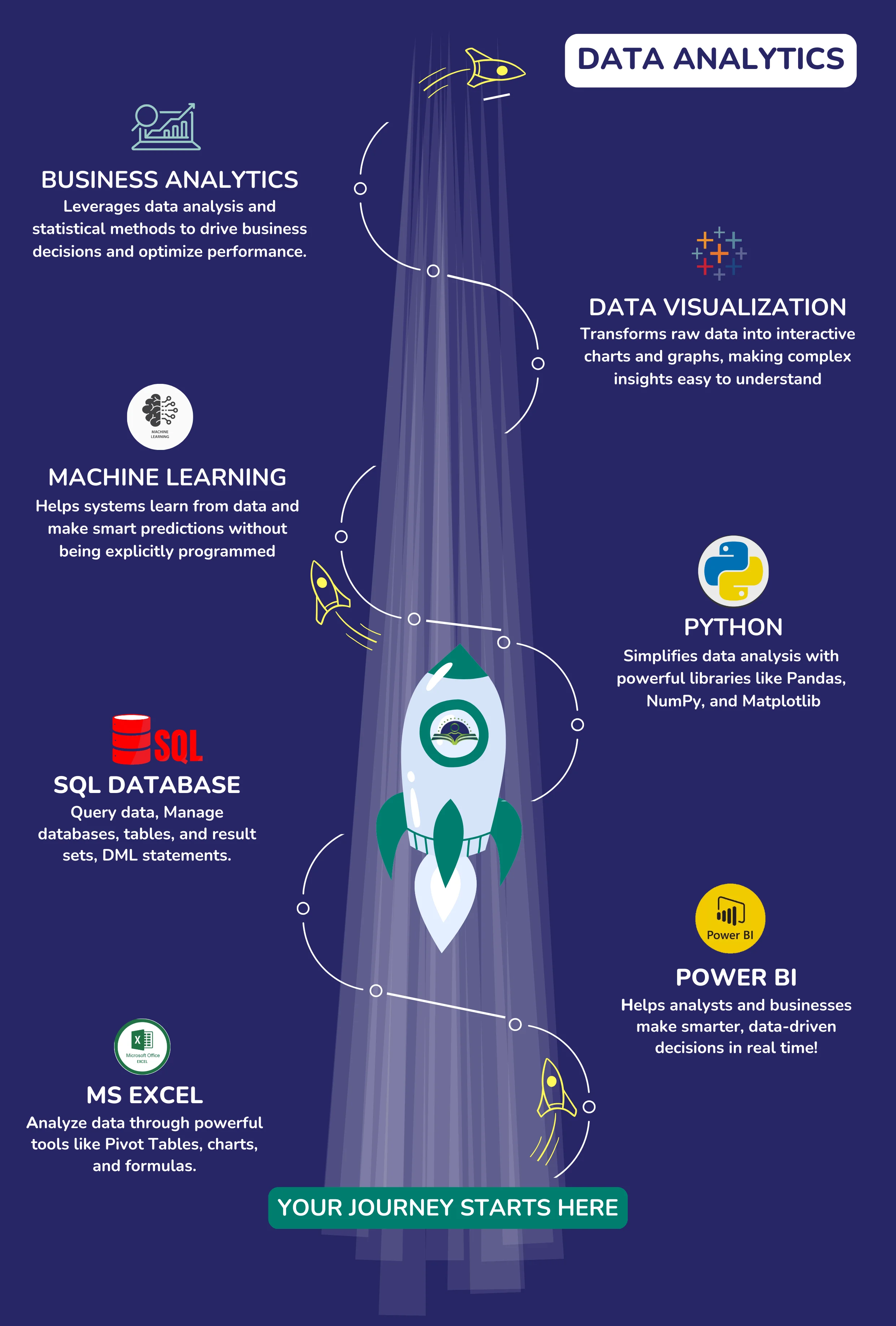
- Business Analytics: Focused on interpreting data to drive operational decisions, financial planning, and organizational strategy.
- Data Science and Machine Learning: Focused on writing algorithms, statistical modeling, and developing predictive software.
- Data Visualization and Reporting: Focused on communicating insights through tools like Tableau, Power BI, or Looker.
If your objective is to move into management, a course focusing on data-driven decision-making will be more valuable than an intensive coding bootcamp. Conversely, if you intend to become a data engineer or scientist, you must prioritize courses that emphasize programming languages like Python or R, alongside database management systems like SQL.
Prerequisites and Technical Requirements
Analytics education is rarely one-size-fits-all. Many reputable platforms offer "Professional Certificates" that require no prior experience, while others—particularly those associated with graduate-level university programs—require a working knowledge of linear algebra, calculus, or basic programming.
Core Mathematical Concepts
Even in software-centric courses, you will likely encounter concepts such as:
- Descriptive Statistics: Understanding mean, median, mode, variance, and standard deviation.
- Probability Theory: Essential for predictive analytics and risk assessment.
- Hypothesis Testing: The backbone of A/B testing and inferential statistics in business.
Software and Tooling
Modern analytics courses typically revolve around a specific "stack." Before enrolling, verify that the course syllabus covers tools currently used in your target industry. For instance, if you are looking at retail or marketing analytics, proficiency in Google Analytics 4 (GA4) or specialized CRM data tools is often more relevant than a theoretical focus on complex neural networks.
Comparing Learning Environments and Certification
When reviewing course providers, evaluate the format of instruction. As of 2026, the market is divided between self-paced massive open online courses (MOOCs) and cohort-based programs that simulate a traditional classroom environment.
| Feature | Self-Paced Courses | Cohort-Based Bootcamps |
|---|---|---|
| Schedule | Highly flexible, on-demand | Fixed, weekly deadlines |
| Interaction | Mostly forums or AI support | Peer groups and live mentoring |
| Duration | Short (weeks to months) | Intensive (3–9 months) |
| Cost | Low to moderate | High |
| Credential | Certificate of Completion | Portfolio/Career Placement |
Self-Paced Learning
Self-paced courses are ideal for professionals who need to balance learning with full-time employment. The primary challenge here is consistency. Because these courses rarely mandate a timeline, dropout rates are higher. Successful students in this category often set artificial milestones to ensure they finish the curriculum.
Cohort-Based Programs
Cohort-based models offer accountability. By progressing alongside a group of peers, you gain the benefit of networking, group projects, and direct feedback from instructors. These programs often include career coaching, which can be a significant factor if your primary intent for taking the course is a career pivot.
Evaluating Course Quality and Credibility
Not all certificates are created equal. When researching potential providers, look for transparency regarding their syllabus and the nature of the final project.
The Importance of the Capstone Project
An analytics course is only as good as the portfolio pieces it helps you build. Avoid courses that rely solely on multiple-choice quizzes. Instead, look for programs that require a "Capstone Project." This should be a comprehensive task where you are given a messy, real-world dataset, required to clean it, perform an analysis, and present a conclusion. Being able to demonstrate this workflow to a prospective employer is often more valuable than the certificate itself.
Instructor Credentials
Verify the background of the instructors. Are they industry practitioners with experience at reputable firms, or are they purely academic? While academic instructors provide excellent theoretical grounding, industry practitioners are more likely to teach you about the "real-world" constraints of data, such as data quality issues, missing values, and the limitations of software in a high-pressure business environment.
Common Pitfalls and How to Avoid Them
The most frequent mistake learners make is "tutorial hell"—the state of passively watching instructional videos without actively applying the concepts to new, unseen data. To maximize the return on your investment, consider these strategies:
- Work with Your Own Data: Whenever possible, take the concepts taught in the course and apply them to a dataset related to your current job or a personal interest.
- Understand the "Why," Not Just the "How": It is easy to memorize how to run a function in Python, but understanding the statistical assumption behind that function is what separates an analyst from a data clerk.
- Don't Ignore Data Cleaning: Most introductory courses use "clean" datasets. In professional practice, 80% of an analyst's time is spent cleaning and preparing data. Ensure your chosen course covers data wrangling techniques.
- Avoid Over-Certification: Do not collect certificates for the sake of credentials. Focus on deep-diving into one major ecosystem (e.g., the Microsoft Azure stack or the AWS cloud environment) rather than gaining surface-level knowledge of five different platforms.
Troubleshooting Your Learning Path
If you find yourself stuck, assess whether the issue is technical or conceptual. Technical issues—such as software installation errors or coding syntax problems—are usually solved by leveraging community resources like Stack Overflow or official product documentation.
Conceptual issues—such as failing to grasp why a specific statistical model is inappropriate for a given dataset—are better addressed by returning to the core foundational materials or seeking help in course-specific Slack or Discord channels. Never push forward if the foundational logic of a module remains unclear, as analytics builds cumulatively.
Frequently Asked Questions
Is an analytics certificate enough to get a job?
Generally, a certificate acts as a signal of intent and foundational knowledge. However, employers primarily look for a portfolio of work and the ability to explain complex findings in simple terms. Use your course projects to build a GitHub repository or a professional portfolio website to showcase your skills.
How much should I expect to pay for a high-quality course?
Costs vary wildly. You can find high-quality foundational knowledge for under $100 on major MOOC platforms. Comprehensive career-switch bootcamps can cost between $5,000 and $15,000. Price is not always a proxy for quality; look for student reviews and verify if the course has been updated in the last 18–24 months.
Can I learn data analytics without advanced mathematics?
You can start with basic statistics and arithmetic, but as you advance, you will encounter more complex concepts. Most analytics roles focus more on the application of statistics within software than on solving complex mathematical proofs by hand. Focus on understanding the logic behind models.
How long does it take to become proficient in analytics?
For a professional pivot, expect a commitment of at least 6 to 12 months of consistent study and practice. Analytics is a skill that deepens over years of experience. Aim for "job-ready" status within a year, but treat the subsequent years as a period of continuous refinement.
Do I need to be a programmer to work in analytics?
Not necessarily, but you will be severely limited without at least one scripting language (Python or R) and a query language (SQL). These are the standard tools of the trade. If a course promises to make you an analyst without teaching any coding, it is likely teaching a very narrow niche of business intelligence tools.
Next Steps for Your Analytics Journey
To begin your journey, start by assessing your current skill set. If you are a complete beginner, enroll in a reputable foundational course that introduces you to Excel, SQL, and a visualization tool like Tableau. If you already have some experience, identify the specific gap in your resume—such as a lack of experience with cloud-based data warehouses or predictive modeling—and select a targeted, advanced-level course that addresses that specific deficiency. Commit to one project-heavy program rather than multiple introductory ones, and focus on producing a portfolio that you can present to hiring managers.