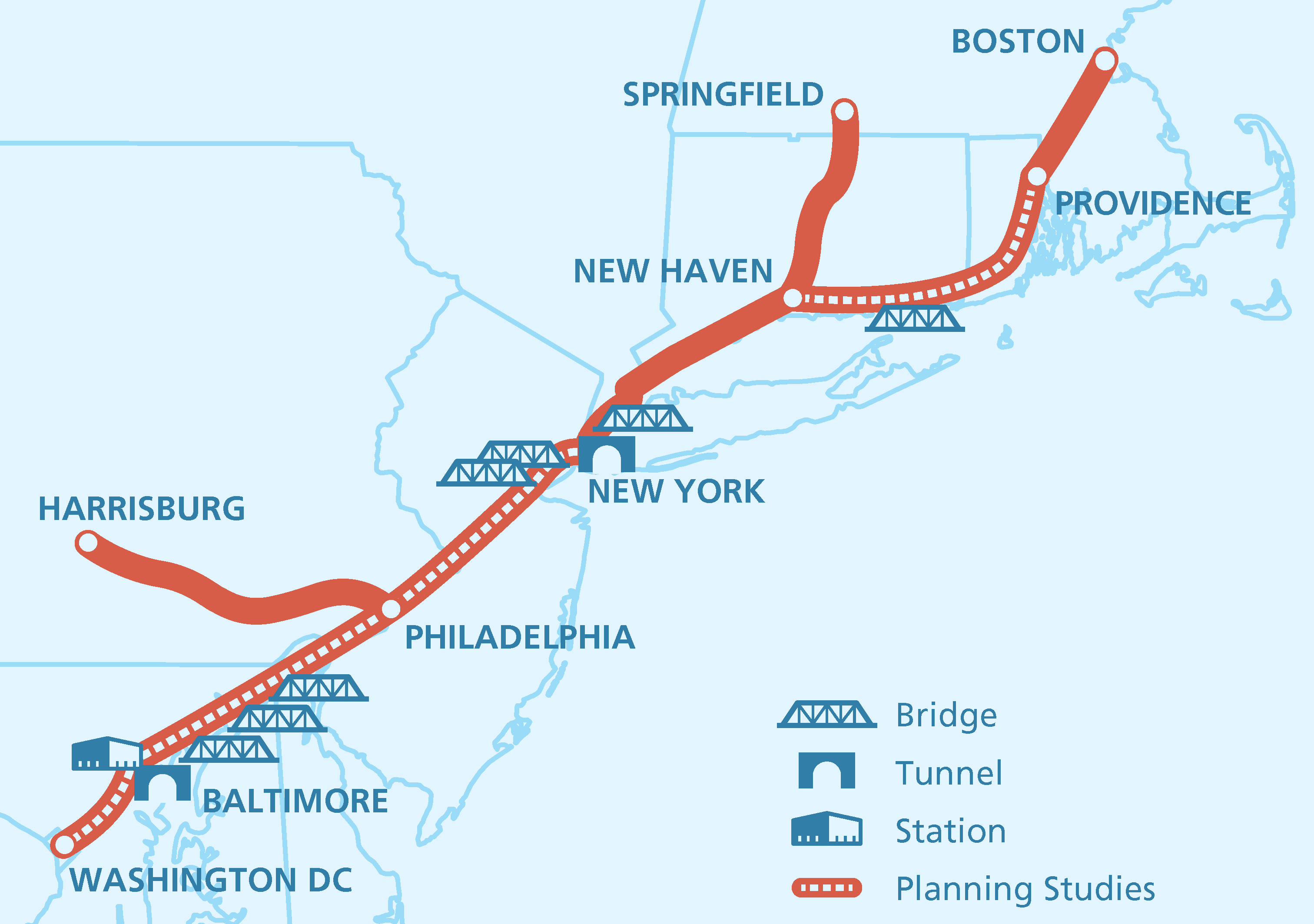
The Amtrak Northeast Corridor (NEC) features over 50 stops connecting Boston, Massachusetts, to Washington, D.C. Major hubs include Boston South Station, Providence, New Haven Union Station, New York Penn Station, Newark Penn Station, Philadelphia 30th Street Station, Baltimore Penn Station, and Washington Union Station. While the high-speed Acela services only serve primary metropolitan centers, the Northeast Regional stops at dozens of smaller intermediate communities.
The Northeast Corridor is the crown jewel of American passenger rail, serving as the busiest rail line in the United States. Spanning 457 miles, it traverses the densely populated "Megalopolis" of the Northeast, moving millions of passengers annually. In 2026, the corridor remains the primary alternative to the I-95 corridor and regional air travel, offering a mix of high-speed luxury and essential commuter connectivity. Understanding the specific stops, the differences between service levels, and the logistical layout of major stations is critical for any traveler navigating this complex transit artery.
Understanding the Northeast Corridor (NEC) Network
The NEC is more than just a single track; it is a multi-state infrastructure network owned primarily by Amtrak, with segments owned by the Massachusetts Bay Transportation Authority (MBTA) and the Connecticut Department of Transportation. Because it serves both intercity passengers and local commuters via agencies like NJ Transit, SEPTA, and MARC, the stopping patterns are designed to balance speed with regional access.
In 2026, the NEC represents the most advanced rail environment in North America. Following significant federal investment over the past several years, the corridor has seen the full deployment of the new Acela trainsets (Avelia Liberty), which offer increased capacity and improved tilt technology for higher speeds on curved sections of the track. This technological leap has further differentiated the stopping patterns between "Express" and "Local" intercity services.
Service Types and Stopping Philosophies
Before identifying specific stops, it is essential to distinguish between the two primary service types operating on the NEC:
- Acela: This is Amtrak’s flagship high-speed service. In 2026, it utilizes modern trainsets capable of reaching 160 mph on certain segments. The Acela is designed for business travelers and those seeking speed, stopping only at the most significant urban centers and transportation hubs.
- Northeast Regional: This is the workhorse of the corridor. It stops at significantly more stations than the Acela, providing vital links to smaller cities and suburban centers. While it takes longer to travel from end-to-end, it offers more frequent departures and lower price points.
Comprehensive List of Amtrak Northeast Corridor Stops by State
The corridor travels through eight states and the District of Columbia. Each station serves a specific demographic, from university students to federal employees and international tourists.
Massachusetts
The northern terminus of the NEC begins in the heart of Boston.
- Boston South Station (BOS): The northern anchor. It is a major multimodal hub connecting to the MBTA Red and Silver lines, as well as regional buses.
- Boston Back Bay (BBY): Located in the Copley Square area, this stop is often preferred by those staying in downtown hotels or visiting the Prudential Center.
- Route 128 / Westwood (RTE): A suburban station designed for "park and ride" commuters. It is located at the intersection of I-95 and I-93, making it the most accessible stop for travelers living in the Boston suburbs.
Rhode Island
- Providence (PVD): A major stop for both Acela and Regional trains. It serves the state capital and Brown University.
- Kingston (KIN): Primarily a Regional stop, serving the University of Rhode Island and the beach communities of South County.
- Westerly (WLY): The final stop in Rhode Island, catering to the southwestern portion of the state.
Connecticut
The Connecticut segment is known for its scenic views of the Long Island Sound but also for its "Shore Line East" local connections.
- Mystic (MYS): A seasonal favorite for tourists visiting the Seaport and Aquarium.
- New London (NWR): A critical ferry connection point for travelers heading to Long Island or Block Island.
- Old Saybrook (OSB): Serves the shoreline communities of Middlesex County.
- New Haven Union Station (NHV): A massive transfer point where the NEC meets the Hartford Line and Metro-North’s New Haven Line.
- Bridgeport (BRP): Provides access to the ferry to Port Jefferson, NY, and is a major commercial hub.
- Stamford (STM): A primary stop for Acela and Regional trains, serving the massive corporate presence in Fairfield County.
New York
- New Rochelle (NRO): A key stop in Westchester County that allows passengers to bypass the congestion of Manhattan.
- New York Penn Station / Moynihan Train Hall (NYP): The busiest stop in the entire Amtrak system. In 2026, Moynihan Train Hall serves as the primary boarding point for Amtrak passengers, offering a world-class terminal experience with high-end dining and lounge facilities.
New Jersey
New Jersey features the most frequent station density on the corridor due to its role as a suburban feeder for New York and Philadelphia.
- Newark Penn Station (NWK): A major transit hub providing connections to the PATH train and NJ Transit.
- Newark Liberty International Airport (EWR): A specialized station connected to the airport via the AirTrain monorail. Not all trains stop here; travelers must verify their specific schedule.
- Metropark (MET): Located in Iselin, this is one of the busiest suburban stops on the NEC, serving a massive commuter parking demographic.
- New Brunswick (NBK): Primarily serves Rutgers University and the surrounding corporate healthcare sector.
- Princeton Junction (PJC): Connects to the "Dinky" train, a short shuttle that runs directly to the Princeton University campus.
- Trenton (TRE): The state capital and a major transfer point between Amtrak, NJ Transit, and SEPTA’s Trenton Line.
Pennsylvania
- Cornwells Heights (CWH): A specialized stop with a massive park-and-ride lot.
- North Philadelphia (PHN): A limited-stop station serving the northern neighborhoods of the city.
- Philadelphia 30th Street Station (PHL): One of the most architecturally significant stations in the US. It is a major hub for Acela and Regional trains, connecting to SEPTA and NJ Transit’s Atlantic City Line.
Delaware
- Wilmington (WIL): Named the Joseph R. Biden, Jr. Railroad Station, this is a major stop for corporate and legal travelers.
- Newark (NRK): Serves the University of Delaware and the surrounding tech corridor.
Maryland
- Aberdeen (ABE): Primarily serves the Aberdeen Proving Ground military installation.
- Baltimore Penn Station (BAL): The central hub for Maryland. As of 2026, the station has undergone significant renovations to modernize its concourse and integrate it with the surrounding neighborhood.
- BWI Thurgood Marshall Airport (BWI): Provides a direct rail link to the airport via a dedicated shuttle bus.
- New Carrollton (NCR): A major transfer point for the Washington Metro Orange Line and the Purple Line (which, in 2026, has significantly improved cross-county transit).
District of Columbia
- Washington Union Station (WAS): The southern terminus of the NEC. It is a massive facility providing connections to the DC Metro, MARC, VRE, and interstate bus lines.
Comparing Stop Characteristics: Acela vs. Northeast Regional
The choice of which stop to use often depends on which service you are booking. While the Northeast Regional hits every stop listed above (and several others depending on the specific train number), the Acela is highly selective.
| Station | Acela Service | Regional Service | Connection Hub |
|---|---|---|---|
| Boston South Station | Yes | Yes | MBTA, Bus |
| Route 128 | Yes | Yes | Commuter Parking |
| Providence | Yes | Yes | MBTA, RIPTA |
| New Haven Union | Yes | Yes | Metro-North, CTRail |
| Stamford | Yes | Yes | Metro-North |
| New York Moynihan | Yes | Yes | LIRR, NJT, Subway |
| Newark Penn | Yes | Yes | PATH, NJT |
| Metropark | Yes | Yes | NJT |
| Trenton | No (Limited) | Yes | SEPTA, NJT |
| Philadelphia 30th St | Yes | Yes | SEPTA, NJT |
| Wilmington | Yes | Yes | SEPTA, DART |
| Baltimore Penn | Yes | Yes | MARC, MTA |
| BWI Airport | No (Limited) | Yes | Airport Shuttle |
| Washington Union | Yes | Yes | DC Metro, MARC, VRE |
Infrastructure Projects Impacting Stops in 2026
By 2026, several multi-year infrastructure projects have moved into critical phases, impacting how passengers interact with NEC stops.
The Gateway Program
The Gateway Program is a massive effort to modernize the rail link between New Jersey and New York. While construction on the new Hudson River Tunnel continues, the Portal North Bridge project is nearing completion. For passengers, this means fewer delays when traveling through Newark and Secaucus. The "stops" themselves haven't changed, but the reliability of arriving at Newark Penn or New York Penn on time has significantly improved.
The Frederick Douglass Tunnel
In Baltimore, the replacement of the ancient B&P Tunnel with the new Frederick Douglass Tunnel is a major milestone. This project helps eliminate a significant bottleneck just south of Baltimore Penn Station. While the construction is ongoing in 2026, the long-term goal is to allow trains to maintain higher speeds between Baltimore and Washington, potentially shaving minutes off the travel time for all trains stopping at BAL.
Station Revitalizations
Philadelphia 30th Street Station and Baltimore Penn Station have both seen extensive interior renovations. These projects focused on expanding retail options, improving passenger lounges, and upgrading digital signage. When you stop at these stations in 2026, expect a more "airport-like" experience with clear real-time tracking of train positions.
Travel Tips for Selecting Your Stop
Navigating the NEC requires more than just knowing where the train stops; it requires knowing which stop is most efficient for your final destination.
Choosing Between Newark Penn and Newark Airport
A common mistake for travelers is assuming that Newark Penn Station is the airport stop. It is not. Newark Penn (NWK) is located in the heart of downtown Newark and is the best stop for Prudential Center events or PATH connections to Jersey City. Newark Liberty International Airport (EWR) is a separate stop located south of the city, requiring an AirTrain transfer to reach the terminals.
The Benefit of Route 128 over South Station
If you are traveling by car to catch a train to New York from the Boston area, avoid South Station. The traffic in downtown Boston is notoriously difficult. Route 128 (Westwood) offers ample parking and is located right on the highway, making it the superior "stop" for those driving from the North Shore, South Shore, or Metrowest regions.
New York Moynihan vs. Penn Station
While they are technically the same "stop" geographically, the boarding experience is vastly different. Always aim to enter through the Moynihan Train Hall on 8th Avenue. It is cleaner, brighter, and specifically designed for Amtrak passengers. The old Penn Station concourses (under Madison Square Garden) are now primarily used by NJ Transit and Long Island Rail Road commuters.
Frequently Asked Questions
Which Amtrak stops have the most parking?
Suburban stations like Route 128, Metropark, and New Carrollton are designed specifically for drivers, offering the largest dedicated parking structures on the corridor. In contrast, urban hubs like New York Penn and Washington Union Station have very limited and expensive parking, as they are designed for pedestrian and transit access.
Does the Acela stop at BWI Airport?
Most Acela trains do not stop at BWI Airport to maintain their "express" status. If you are flying into BWI and need to reach Philadelphia or New York, you will likely need to book the Northeast Regional. A small number of Acela trains may have limited stops at BWI during peak commuting hours, but this is the exception rather than the rule.
Can I transfer to local subways at these stops?
Yes, most major NEC stops are integrated with local transit. In Boston, you have the "T"; in New York, the MTA Subway; in Philadelphia, SEPTA; and in Washington D.C., the WMATA Metro. Smaller stops like Kingston or Westerly generally rely on local bus services or rideshare options.
Are all Amtrak Northeast Corridor stops accessible?
Amtrak has made significant strides in ADA compliance. As of 2026, all major hubs and the vast majority of intermediate stops on the NEC offer level boarding or wheelchair lift assistance. However, some historical stations in smaller towns may have specific platform limitations. It is always recommended to check the station details on the Amtrak app or website 24 hours before departure.
How early should I arrive at my stop?
For major hubs like New York, Philadelphia, or DC, you should arrive at least 30 to 45 minutes before departure, especially if you need to navigate the larger station footprints or use a lounge. For smaller intermediate stops like Metropark or Providence, 15 to 20 minutes is usually sufficient as the platforms are easier to access.
Next Steps for Your Journey
Before your next trip, download the Amtrak mobile app to receive real-time updates on platform assignments, which can change frequently at busy hubs like New York or Philadelphia. If you are traveling between major cities, compare the Acela and Northeast Regional schedules; often, a Regional train departing slightly earlier will arrive at your destination at the same time as a later Acela for a significantly lower price.