Amazon strictly prohibits the listing, sale, or display of products featuring a noose, as it is classified as a symbol of hate, violence, and racial intolerance. This policy applies globally across all Amazon marketplaces and extends to its physical workplaces, where a zero-tolerance stance is maintained regarding symbols of harassment or intimidation. Sellers found violating this policy face immediate listing removal and potential account suspension, while employees or contractors involved in such displays face termination.
The "Amazon noose policy" is not a single standalone document but rather a critical enforcement component of two broader frameworks: the Offensive Products Policy for third-party sellers and the Global Code of Business Conduct and Ethics for employees and contractors. As of 2026, Amazon has significantly bolstered its automated detection systems to ensure these symbols do not appear on the platform, following high-profile incidents in previous years that necessitated more rigorous oversight.
Understanding the Offensive Products Policy for Sellers
Amazon’s marketplace thrives on diversity, but it maintains strict "guardrails" to ensure the platform remains safe and respectful for all customers. The prohibition of nooses falls under the "Offensive Products" category. According to Amazon’s Seller Central guidelines, products that promote, incite, or glorify hatred, violence, racial, sexual, or religious intolerance are strictly forbidden.
Why the Noose is Specifically Categorized
In the context of American history and global human rights, the noose is widely recognized as a symbol of extrajudicial execution and racial terror, specifically associated with lynching. Amazon’s compliance teams categorize the noose alongside other hate symbols, such as swastikas or Confederate imagery, which are restricted because they contribute to a hostile environment.
For a seller, this means that any item—whether it is a t-shirt, a decal, a piece of jewelry, or a "novelty" item—that prominently features a noose will be flagged. Amazon does not distinguish between "historical" or "humorous" intent when it comes to these symbols; the mere presence of the symbol is usually sufficient for a policy violation.
Prohibited Content Categories
To understand the scope, sellers should look at how Amazon groups these violations:
- Violence and Intolerance: Products that depict or encourage violence against specific groups.
- Hate Speech Symbols: Symbols associated with hate groups or historical atrocities.
- Tragedy-Related Items: Products that capitalize on human suffering or sensitive historical events.
Sellers must perform due diligence before sourcing inventory. A common mistake is assuming that because a product is available on other "open" marketplaces, it is permissible on Amazon. Amazon maintains a more restrictive standard than many of its competitors to protect its brand reputation and customer trust.
The Workplace Noose Policy: Safety and Harassment
Beyond the digital storefront, the term "Amazon noose policy" often refers to the company's internal protocols regarding workplace harassment. This became a matter of intense public and legal scrutiny following incidents at Amazon construction sites, notably in Windsor, Connecticut, in 2021, where multiple nooses were discovered.
Zero-Tolerance in Operations and Construction
Amazon’s internal policy for its fulfillment centers (FCs), corporate offices, and construction sites is built on the principle of a "Safe and Inclusive Workplace." As of 2026, Amazon mandates that any discovery of a hate symbol on its property triggers an immediate escalation to both corporate security and local law enforcement.
The policy includes:
- Immediate Suspension of Site Operations: When a hate symbol like a noose is discovered, work often halts to allow for a comprehensive sweep of the premises.
- Mandatory Sensitivity Training: All staff and contractors at the affected site must undergo refreshed training on racial bias and harassment.
- Financial Incentives for Information: Amazon has historically offered substantial rewards (sometimes upwards of $100,000) for information leading to the identification of individuals responsible for placing such symbols.
Contractor Accountability
One complexity of the workplace policy is that many incidents occur at sites managed by third-party contractors. Amazon’s 2026 vendor agreements include specific clauses that allow Amazon to terminate entire contracts if a contractor fails to maintain a site free of harassment symbols. This "flow-down" requirement ensures that the no-tolerance policy is enforced even by sub-contractors who are not direct Amazon employees.
Technical Implementation: How Amazon Detects Violations
In 2026, Amazon relies heavily on advanced Computer Vision (CV) and Natural Language Processing (NLP) to enforce its offensive products policy. The sheer volume of new listings uploaded daily makes manual review impossible at scale.
Image Recognition and "Contextual Filtering"
Amazon’s AI models are trained to recognize the specific geometry of a noose. However, this presents a technical challenge: distinguishing a "noose" (as a hate symbol) from a "slipknot" or "lasso" used in legitimate contexts like sailing, camping, or ranching equipment.
- Positive Identification: If an image contains a rope tied in a traditional 13-loop hangman's noose, the system triggers an automatic block.
- Contextual Analysis: The NLP engine scans the product title, description, and keywords. If keywords like "historical," "western," or "nautical" are present, the item might be sent for manual human review rather than an immediate ban. Conversely, if the metadata includes inflammatory language, the listing is purged instantly.
Keyword Blacklisting
Amazon maintains a dynamic "Blacklist" of terms associated with hate speech. While "noose" is not blacklisted in a vacuum (as it may appear in a historical book or a crime novel), it is heavily "weighted" in the risk-scoring algorithm. When "noose" is combined with other high-risk terms, the listing’s probability of being flagged reaches near 100%.
Consequences for Sellers: Enforcement and Appeals
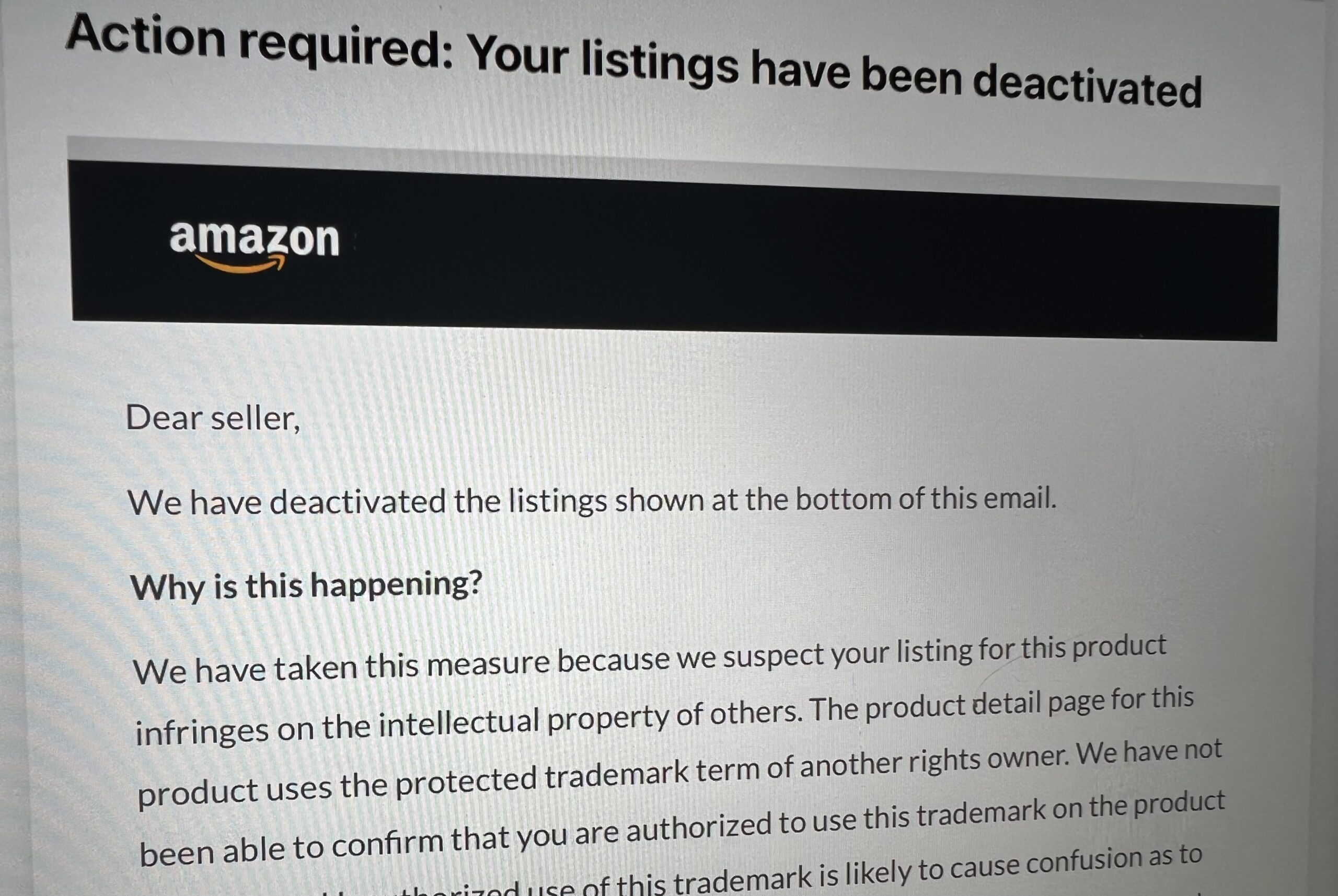
If a seller's product is flagged under the noose policy, the consequences are swift. Amazon operates on a "guilty until proven innocent" basis for offensive products to minimize public exposure to the items.
The Notification Process
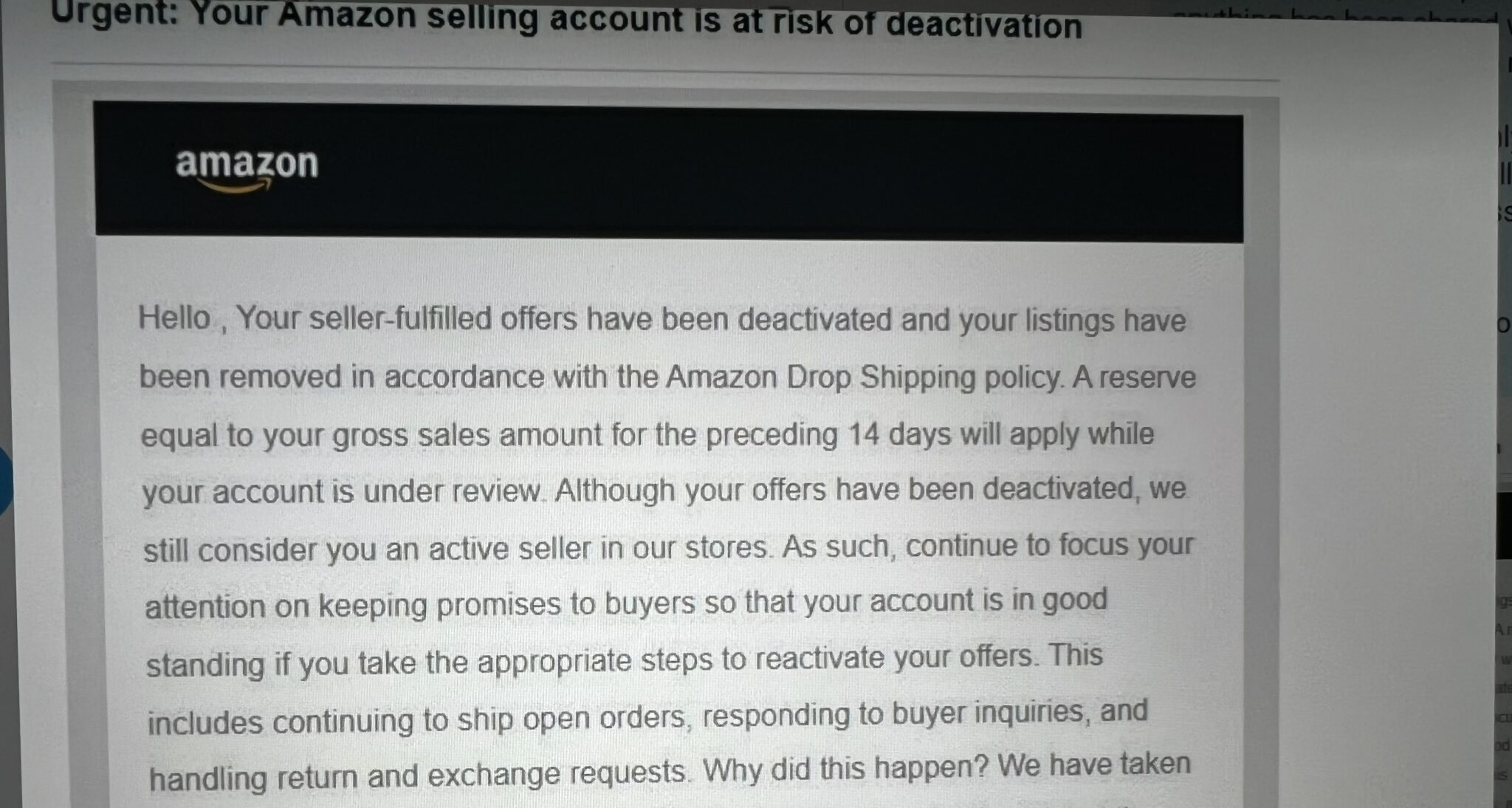
Sellers receive a "Performance Notification" via Seller Central. The message typically states that the listing has been removed because it violates the "Offensive Products" policy. Unlike a standard "Product Detail Page" error, an offensive product violation is considered a "High Severity" infraction.
The Appeals Process
If a seller believes their product was flagged in error (for example, a piece of nautical equipment misidentified by AI), they must submit a Plan of Action (POA).
- Root Cause: Explain why the AI might have flagged the item.
- Immediate Actions: Confirm that the listing has been deleted or modified.
- Preventative Steps: Describe how the seller will vet future inventory to ensure compliance with the Offensive Products guidelines.
| Violation Severity | Action Taken by Amazon | Recovery Possibility |
|---|---|---|
| First Offense (Minor) | Listing removed; warning issued. | High (via Appeal) |
| Repeat Offenses | All listings suppressed; funds frozen. | Medium |
| Intentional Hate Speech | Permanent account termination. | Low to None |
| Workplace Violation | Termination of employment/contract. | None |
Legal and Ethical Implications of the Policy
Amazon’s stance is shaped by both ethical considerations and legal pressures. In many jurisdictions, allowing the sale of hate symbols can lead to investigations by civil rights regulators. Furthermore, as a global brand, Amazon’s "Brand Equity" is its most valuable asset. The PR damage from being associated with hate imagery far outweighs the commission earned from such sales.
The Role of Section 230
In the United States, while Section 230 of the Communications Decency Act generally protects platforms from liability for user-generated content, Amazon has moved toward a "curated" model. By actively setting a "noose policy," Amazon takes ownership of the customer experience, moving beyond the role of a passive host to that of an active moderator.
Social Responsibility
As of 2026, Amazon’s "ESG" (Environmental, Social, and Governance) reporting includes metrics on workplace safety and platform health. Consistently enforcing the noose policy is a key performance indicator for their "Social" goals, demonstrating to investors that the company is managing the risks associated with a massive, decentralized marketplace.
Common Mistakes and Misconceptions
Many sellers and observers misunderstand how the policy is applied. Here are the most frequent points of confusion:
- "It’s just a movie prop": Amazon generally does not make exceptions for movie props or "novelty" items if they feature prohibited symbols. The standard is whether the item could be used to harass or intimidate.
- "Other sellers have it": This is a classic "survivorship bias" error. Just because one listing hasn't been caught yet doesn't mean it is allowed. Amazon's sweeps are periodic and often retroactive.
- "It’s a historical replica": While Amazon allows historical books and documentaries, physical replicas of symbols associated with racial terror are almost always prohibited.
Summary of Best Practices for Sellers
To avoid falling afoul of the Amazon noose policy in 2026, sellers should adopt a conservative approach to inventory:
- Visual Audit: Use third-party AI vision tools to scan your product images before uploading to Amazon.
- Metadata Scrubbing: Ensure that descriptions are purely functional and do not use language that could be interpreted as promoting intolerance.
- Monitor Policy Updates: Amazon updates its "Restricted Products" and "Offensive Products" pages frequently. Subscribe to Seller Central newsletters to stay informed of changes in categorization.
FAQ
Does Amazon allow nooses in historical books or educational materials?
Yes, generally. Amazon distinguishes between a "product" (like a t-shirt or a toy) and "media" (like a history book, documentary, or educational film). Books discussing the history of the Jim Crow era or the legal history of the death penalty are permitted, provided they do not promote or glorify the violence. The focus is on the intent and the nature of the product.
What should an employee do if they see a noose at an Amazon facility?
Employees are instructed to report the incident immediately through the "A to Z" app, the "Ethics Line" (which can be anonymous), or by speaking directly to site leadership or HR. Amazon’s policy guarantees protection from retaliation for any employee who reports a hate symbol or an act of harassment.
Can a seller be sued by Amazon for listing a noose?
While Amazon typically limits its enforcement to account suspension and withholding of funds, the "Participation Agreement" signed by all sellers does allow Amazon to seek legal remedies if a seller’s actions cause material harm to the company. In extreme cases involving illegal hate speech or threats, Amazon may cooperate with law enforcement.
Is the policy different for Amazon "Handmade" or "Custom" items?
No. All items, regardless of the program (FBA, FBM, Handmade, or Merch on Demand), are subject to the same Offensive Products Policy. Custom-printed items are actually under higher scrutiny because Amazon’s printing facilities use real-time image scanning to block prohibited designs before they are even manufactured.
How does Amazon handle "false positives" in 2026?
False positives are handled through the "Account Health" dashboard. Sellers can submit photos of the actual product from multiple angles to prove it is a legitimate tool (e.g., a safety rope or specialized knot) rather than a noose. In 2026, these appeals are often reviewed by human compliance specialists within 24–48 hours.
Final Recommendation
For sellers, the most practical approach to the Amazon noose policy is strict avoidance. Given the high severity of "Offensive Product" violations, the risk to your entire account—and your ability to sell on Amazon ever again—is too great to justify listing any item that could even remotely be interpreted as a symbol of hate. For employees and contractors, understanding that a noose is viewed as a "threat of violence" rather than a "prank" is essential for maintaining employment. Amazon’s 2026 enforcement landscape is highly automated and unforgiving; compliance must be proactive rather than reactive.