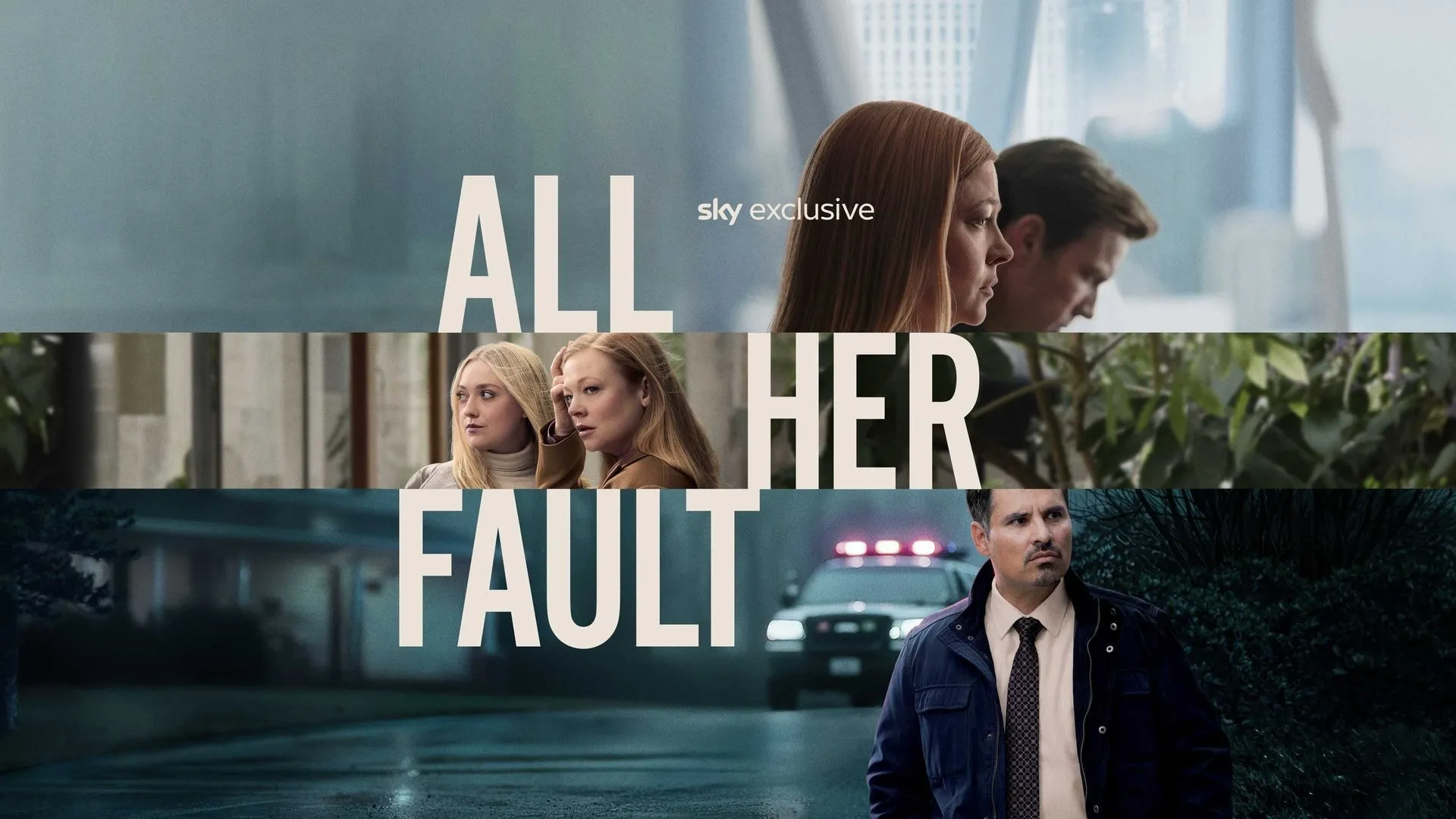
All Her Fault is a high-stakes psychological thriller limited series on Peacock starring Sarah Snook. The story follows Marissa Irvine’s frantic search for her young son, Milo, after she arrives at a supposed playdate only to find an unfamiliar woman at the door and her child missing.
The series, which arrived as one of the most anticipated streaming events of the mid-2020s, represents a significant milestone in the "suburban noir" genre. Based on the bestselling novel by Andrea Mara, the show blends the gut-wrenching anxiety of parental loss with a complex web of neighborhood secrets. As we look at the series from the perspective of 2026, it stands as a masterclass in tension, anchored by an award-winning lead performance and a narrative that challenges the idealized image of modern community living.
The Core Premise: A Parent’s Worst Nightmare
The narrative engine of All Her Fault is fueled by a single, terrifying moment of realization. Marissa Irvine, played by Sarah Snook, arrives at 14 Cotter’s Grove to collect her son, Milo, from his first playdate with a boy from his new school. However, when the door opens, the woman standing there is not the mother Marissa spoke to on the phone, nor does she have any knowledge of Milo.
This "wrong house" trope is handled with clinical precision, immediately plunging the viewer into Marissa’s disorientation. The series moves beyond a simple kidnapping plot, evolving into a forensic examination of a community’s underbelly. Every neighbor becomes a suspect, and every past interaction is re-examined through the lens of suspicion. The title itself, All Her Fault, serves as a haunting refrain for Marissa’s internal monologue, as she grapples with the crushing guilt of having entrusted her child to a stranger.
The pacing of the limited series is designed to mimic the escalating panic of a missing persons investigation. Unlike traditional procedurals that focus heavily on the police perspective, All Her Fault stays close to Marissa’s subjective experience. This creative choice ensures that the audience feels the same claustrophobia and desperation as the protagonist, making the eventual revelations all the more impactful.
Adaptation from Page to Screen: Andrea Mara’s Bestseller
When Peacock announced the adaptation of Andrea Mara’s novel, fans of the book were curious about how the Dublin-set story would translate to a global streaming audience. The series retains the DNA of Mara’s writing—specifically her ability to weave multiple perspectives into a cohesive mystery—while expanding the scope of the supporting characters.
In the transition to the screen, creator and writer Megan Gallagher (known for Wolf and Suspicion) emphasized the psychological toll over mere plot twists. While the novel relied on sharp, punchy chapters to maintain momentum, the series uses visual storytelling to heighten the sense of suburban isolation. The adaptation successfully navigates the "unreliable narrator" elements of the book, presenting a version of Marissa that is both deeply sympathetic and, at times, dangerously impulsive in her grief.
One of the most significant aspects of the adaptation is the focus on the "Playdate Culture." In the 2020s, the reliance on WhatsApp groups, school gate acquaintances, and digital scheduling has transformed how parents interact. All Her Fault exploits the vulnerabilities of this digital-first parenting style, showing how a simple lapse in verification can lead to a catastrophic outcome.
The Stellar Cast and Character Dynamics
The success of All Her Fault rests heavily on its ensemble cast, which features a mix of established dramatic heavyweights and rising stars.
Sarah Snook as Marissa Irvine
Following her monumental success in Succession, Sarah Snook’s portrayal of Marissa Irvine was one of the most discussed performances of the season. Snook brings a raw, kinetic energy to the role. Unlike the calculated Siobhan Roy, Marissa is a character driven by pure, unadulterated instinct. Snook captures the physical manifestations of grief—the shaking hands, the hollowed eyes, and the sudden bursts of adrenaline—with remarkable nuance.
Dakota Fanning as Jenny
Dakota Fanning provides a chilling and enigmatic counterpoint to Snook’s Marissa. As a key figure in the mystery surrounding Milo’s disappearance, Fanning’s character, Jenny, embodies the "perfect" suburbanite with a hidden depth of complexity. Her performance is a study in restraint, leaving the audience constantly questioning her motives and her role in the central conspiracy.
The Supporting Ensemble
The series is rounded out by a strong supporting cast, including:
- Jake Lacy: Known for playing "nice guys with an edge," Lacy portrays a character whose proximity to the Irvine family adds layers of domestic tension.
- Abby Elliott: Brings a sense of grounded, albeit stressed, reality to the neighborhood social circle.
- Sophie Lillis: Plays a pivotal role that connects the younger generation of the community to the unfolding adult drama.
The chemistry between these actors creates a palpable sense of history. You believe these people have lived next to each other for years, sharing coffee and secrets, which makes the eventual betrayals feel earned rather than manufactured for the sake of the plot.
Production Insights and Visual Style
Filmed primarily in Melbourne, Australia—standing in for a high-end suburban locale—the production design of All Her Fault uses architecture to tell a story. The homes are beautiful but sterile, featuring large glass windows that suggest transparency while actually hiding the rot within.
Directorial Vision
Minkie Spiro, who directed several episodes and served as an executive producer, brought her experience from high-stakes dramas like Better Call Saul and 3 Body Problem to the project. Her direction emphasizes the "unseen observer." There are frequent shots from a distance, or through doorways and windows, suggesting that someone is always watching. This voyeuristic lens heightens the paranoia that defines the series.
Cinematography and Sound
The color palette of the series shifts as the investigation deepens. The early scenes are bright and saturated, reflecting the "perfect" life Marissa believes she has. As Milo remains missing, the lighting becomes harsher and more desaturated, mirroring her emotional exhaustion. The score, often minimalist and pulsing, acts as a countdown clock, keeping the tension at a simmer even during quieter, dialogue-heavy scenes.
Key Facts and Series Specifications
The following table summarizes the essential details of the All Her Fault limited series for viewers and researchers.
| Feature | Details |
|---|---|
| Streaming Platform | Peacock (NBCUniversal) |
| Original Format | Limited Series (6 Episodes) |
| Lead Actress | Sarah Snook |
| Primary Genre | Psychological Thriller / Domestic Noir |
| Source Material | All Her Fault by Andrea Mara (Novel) |
| Creator / Writer | Megan Gallagher |
| Director | Minkie Spiro |
| Primary Filming Location | Melbourne, Victoria, Australia |
| Key Themes | Parental Guilt, Suburban Secrets, Deception |
| Production Companies | Carnival Films, Universal International Studios |
Genre Analysis: The Rise of Suburban Noir in 2026
By 2026, the "Suburban Noir" genre has become a staple of prestige television. All Her Fault sits alongside titles like Big Little Lies and The Undoing, but it distinguishes itself by its focus on the specific anxieties of the mid-2020s.
The genre works because it subverts the concept of the "safe space." The home and the neighborhood are meant to be sanctuaries. When a series like All Her Fault shatters that illusion, it taps into a primal fear. The show doesn't just ask "Who took Milo?" It asks "How well do you actually know the people you trust with your life?"
Furthermore, the series explores the impact of the "Court of Public Opinion." As news of Milo’s disappearance spreads, the neighborhood doesn't just offer support; it offers judgment. The title All Her Fault refers not just to Marissa's own guilt, but to the way the community and the media tend to blame mothers for any misfortune that befalls their children. This social commentary adds a layer of depth that elevates the show above a standard kidnapping thriller.
Critical Reception and Audience Impact
Critics have largely praised the series for its refusal to rely on cheap jump scares, opting instead for a slow-burn dread. The performance of Sarah Snook was universally lauded, with many noting her ability to carry the emotional weight of the entire production.
Audiences were particularly drawn to the "whodunnit" aspect of the show. During its initial rollout, social media was flooded with theories, as the series meticulously placed red herrings in every episode. This "event television" feel helped Peacock solidify its place as a home for high-quality, adult-oriented thrillers.
The show's ending—a subject of much debate—stays true to the dark tone of the source material. It avoids the "happily ever after" tropes of traditional television, acknowledging that even when a mystery is solved, the trauma remains. This honesty resonated with viewers who have grown weary of sanitized resolutions in the thriller genre.
Comparing All Her Fault to Similar Thrillers
To understand where All Her Fault fits in the current landscape, it is helpful to compare it to other landmark limited series.
- Vs. The Undoing: While both involve a high-society mystery, The Undoing focuses on the legal and marital fallout of a crime. All Her Fault is more visceral and grounded in the immediate terror of a missing child.
- Vs. Sharp Objects: Both series deal with deep-seated trauma and the dark history of a specific town. However, All Her Fault is more contemporary in its setting and themes, focusing on the modern era of parenting rather than Southern Gothic atmosphere.
- Vs. Gone Girl: While Gone Girl is a cynical look at marriage and media, All Her Fault is a more earnest (though still dark) look at motherhood and the lengths a parent will go to for their child.
Frequently Asked Questions
Is All Her Fault based on a true story?
No, the series is not based on a true story. It is an adaptation of the fictional novel All Her Fault by Andrea Mara, published in 2021. While the events are fictional, the author has noted that the story was inspired by the universal parental fear of losing sight of a child in a crowded place or a misunderstanding during a hand-off.
Where was the series filmed?
Despite the story potentially being set in various suburban locations depending on the adaptation's focus, the production took place in Melbourne, Australia. The city’s diverse architecture and suburban layouts provided the perfect backdrop for the affluent, somewhat eerie neighborhood depicted in the show.
How many episodes are in the limited series?
The series consists of six episodes. As a limited series, it was designed to tell a complete, self-contained story with a definitive conclusion, rather than setting up for multiple seasons.
Does Sarah Snook use her Australian accent in the show?
While Sarah Snook is Australian, her character Marissa Irvine's accent depends on the specific creative direction of the production's setting. In many of her international roles, Snook has demonstrated a flawless American or British accent, though the Melbourne filming location led to much speculation about the final characterization during production.
Is the book different from the TV show?
As with most adaptations, there are structural changes. The TV series spends more time developing the internal lives of the neighbors to create a broader ensemble feel. However, the core mystery and the major plot points regarding Milo’s disappearance remain faithful to Andrea Mara’s original vision.
Practical Recommendation for Viewers
For those looking to dive into All Her Fault, it is best experienced as a "binge-watch" over a weekend to maintain the intensity of the suspense. Because the plot is dense with clues and subtle character interactions, paying close attention to the background details in the first two episodes will provide a much more rewarding experience when the final revelations occur.
If you are a fan of domestic thrillers that prioritize character development over action set-pieces, this series is a mandatory addition to your watchlist. It serves as a stark reminder of the complexities of trust and the devastating power of a single mistake.