Veterans and surviving spouses seeking Aid and Attendance (A&A) benefits must satisfy specific financial thresholds known as net worth limitations. As of 2026, the Department of Veterans Affairs (VA) calculates eligibility based on a combination of a claimant's net worth and annual income, applying a specific limit—indexed for inflation—to ensure benefits reach those with the greatest financial need.
Understanding the Financial Framework of Aid and Attendance
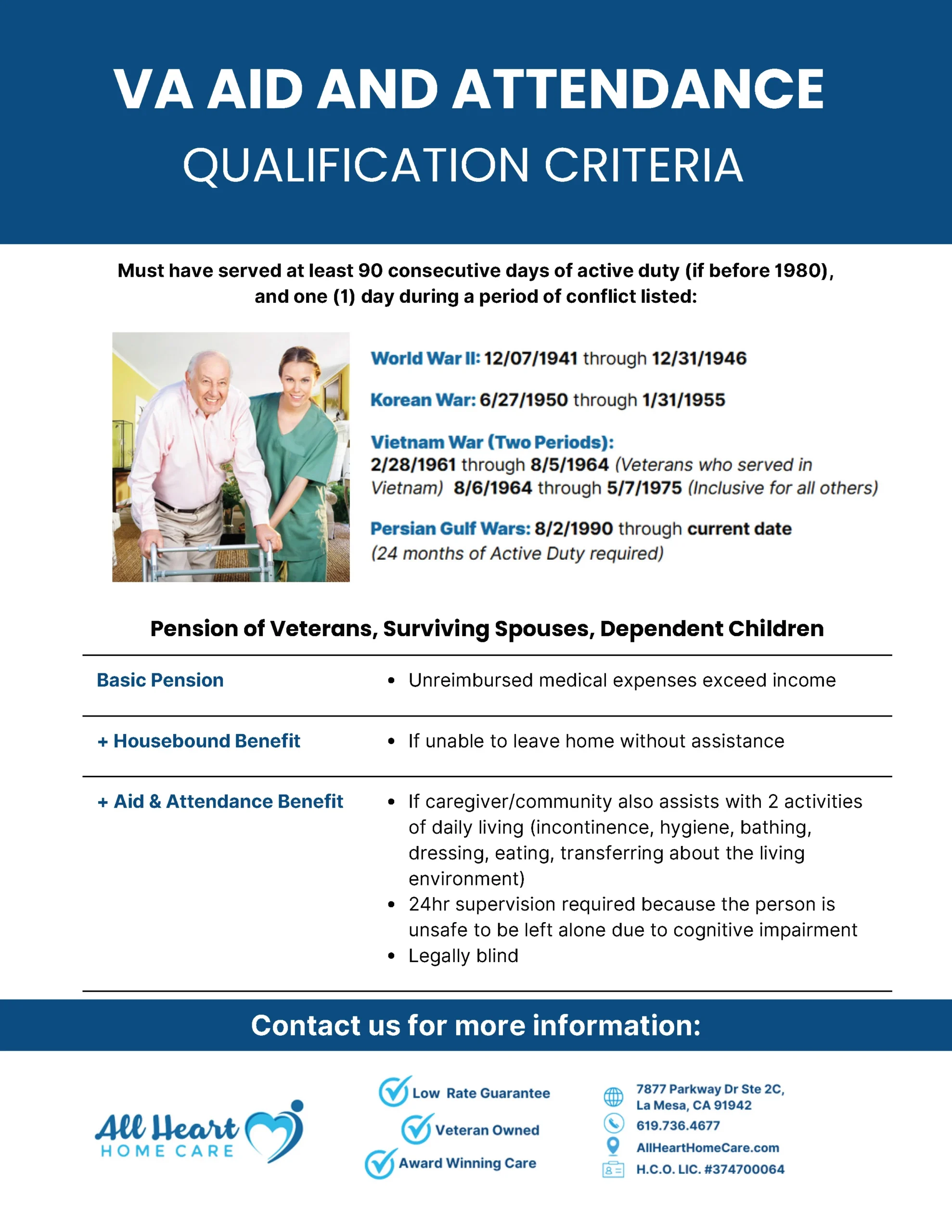
The Aid and Attendance benefit is an augmented pension program for wartime veterans or their surviving spouses who require the regular assistance of another person to perform activities of daily living. Because this is a needs-based program, the VA does not offer it as an automatic entitlement based solely on military service. Instead, it requires a rigorous assessment of the applicant's financial position, primarily focused on "net worth."
In the context of VA pension benefits, net worth is defined as the sum of a claimant's annual income and the value of their assets. The VA uses this combined figure to determine if an applicant possesses enough wealth to sustain themselves without additional government assistance. It is essential to recognize that this calculation is distinct from standard tax reporting; the VA’s interpretation of assets and income includes specific inclusions and exclusions that applicants must navigate carefully to avoid disqualification.
The 2026 Net Worth Limit
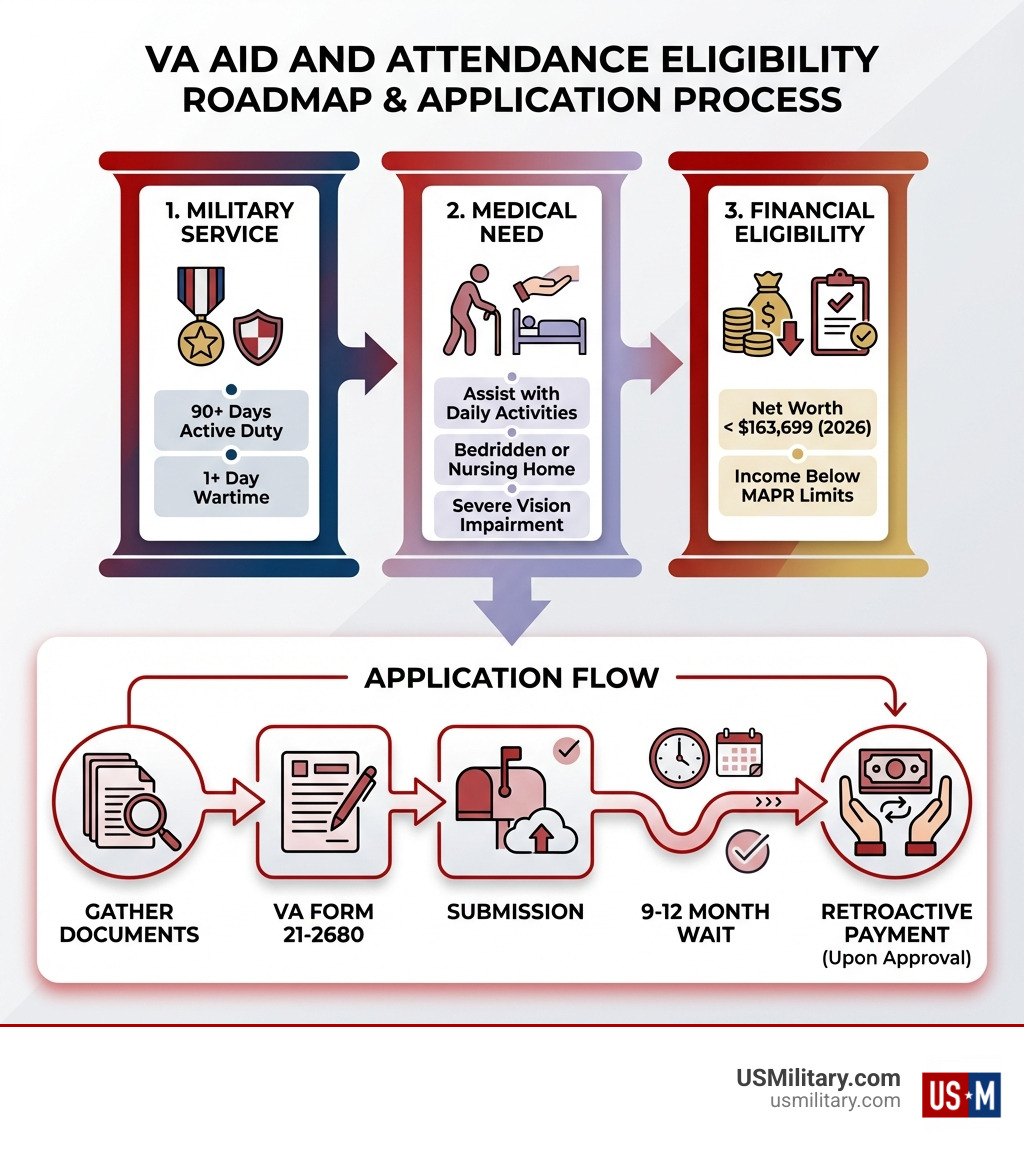
The VA adjusts its net worth limit annually to keep pace with the maximum annual pension rate (MAPR). For 2026, the net worth limit is $168,767. This figure represents the maximum amount of total assets and annual income combined that a claimant is permitted to hold while remaining eligible for the pension.
If an applicant's net worth exceeds this limit, they are generally disqualified from receiving the benefit. However, the limit acts as a ceiling, not a target. The VA periodically re-evaluates these figures, and applicants must ensure they are using the most current data provided by the VA Office of the Pension Management Center.
What Constitutes Assets for VA Calculation
When calculating net worth, the VA considers the applicant's total assets. For many veterans, this is the most complex portion of the eligibility equation. Assets are generally defined as the market value of all real and personal property, excluding the claimant's primary residence and a reasonable lot area.
Included Assets:
- Cash and Bank Accounts: Checking, savings, money market accounts, and certificates of deposit (CDs).
- Investments: Stocks, bonds, mutual funds, and annuities that are not specifically designated as retirement accounts that have already begun periodic payments.
- Real Estate: Any real property that is not the applicant's primary home. This includes vacation homes, rental properties, and undeveloped land.
- Business Equity: The fair market value of business interests held by the applicant.
Excluded Assets:
- Primary Residence: The VA does not count the home in which the veteran or surviving spouse lives.
- Personal Property: Items such as household goods, clothing, and an automobile used for personal transportation are typically excluded.
The Impact of the Three-Year Look-Back Period
To prevent the rapid transfer of assets for the sole purpose of qualifying for A&A, the VA enforces a three-year "look-back" period. If an applicant transfers assets for less than fair market value—such as gifting money to family members or transferring title to a home—the VA may impose a penalty period during which the applicant is ineligible for benefits.
This rule is designed to ensure that the pension program is not treated as a wealth-preservation vehicle. If you transfer assets during the three-year window preceding your application, you must disclose these transfers to the VA. The penalty period is calculated by dividing the value of the transferred assets by the maximum annual pension rate. Being aware of this look-back period is critical; unauthorized asset moves can lead to a significant delay in receiving necessary care funding.
Comparing Net Worth Components
The following table summarizes the primary elements that constitute the VA’s financial eligibility assessment for 2026.
| Category | Status in Net Worth Calculation | Note |
|---|---|---|
| Primary Residence | Excluded | Must be the current, permanent dwelling. |
| Personal Vehicle | Excluded | Limited to personal use vehicles. |
| Checking/Savings | Included | Total balance at time of application. |
| Rental Property | Included | Fair market value minus any encumbrances. |
| Annual Income | Included | Includes Social Security, interest, and retirement. |
| IRAs/401ks | Variable | Included if available for withdrawal. |
Deductible Medical Expenses
One of the most effective ways to manage the "income" portion of the net worth calculation is through the deduction of unreimbursed medical expenses (UMEs). Because the VA views the A&A benefit as a way to offset the cost of long-term care, they allow applicants to subtract these recurring medical costs from their gross annual income.
If a veteran or spouse is paying for home health aides, nursing home care, or assisted living, these costs can significantly lower the "countable income" side of the net worth equation. To qualify, these expenses must be recurring and essential for health maintenance. When submitting an application, providing clear documentation—such as invoices from home health agencies or statements from assisted living facilities—is vital to proving that these expenses effectively lower the net worth to within the eligibility range.
Procedural Steps for Verification
Applicants must be prepared to provide a complete financial picture to the VA. This process is not a self-attestation; it requires supporting documentation.
- Gather Financial Statements: Collect the last three months of bank statements, investment account statements, and evidence of income sources (e.g., Social Security award letters).
- Document Primary Residence: Ensure there is proof of residency, such as a utility bill or property tax statement, to verify the home is excluded from the asset count.
- Itemize Medical Expenses: Create a spreadsheet of all unreimbursed medical expenses. Ensure these are recurring costs.
- Disclose Transfers: If any assets were gifted or sold for less than market value in the last 36 months, document the dates and amounts clearly.
- Submit Form 21-2680: This form is used to establish the clinical need for Aid and Attendance. Ensure it is signed by a physician or licensed medical professional.
Common Pitfalls and Troubleshooting
A frequent mistake applicants make is failing to account for the income generated by assets. If you have an investment portfolio that generates dividends or interest, that income must be added to your total net worth calculation.
Another common error involves "hidden" assets. Some applicants forget to disclose accounts that are rarely used or fail to include the cash surrender value of certain life insurance policies. The VA cross-references financial data, and omissions can lead to a denial or a request for a formal audit. If you find your net worth is slightly above the threshold, do not attempt to "hide" assets; instead, consult with a VA-accredited attorney or a Veterans Service Officer (VSO) who can explain legal ways to structure your finances, such as utilizing the medical expense deduction more effectively.
Resolving Potential Ambiguity
It is important to clarify that "Net Worth" for the VA is not synonymous with "Net Worth" as defined by financial planners or tax authorities. The VA is specifically interested in your liquid and countable assets that could theoretically be used to pay for your care. If you are struggling to determine whether a specific asset (such as an interest in a family farm or a specific type of trust) should be included, it is imperative to seek guidance from a VA-accredited representative. They are the only individuals legally authorized to assist with the preparation and presentation of your claim.
Frequently Asked Questions
Does a joint bank account with my spouse count toward my net worth? Yes. Any assets held jointly by the veteran and their spouse are generally considered part of the veteran's total net worth for the purpose of the pension calculation. The VA views the household as a single economic unit.
What happens if my net worth increases after I start receiving benefits? You are required to report significant changes in your financial status to the VA. If your net worth exceeds the current limit due to an inheritance or a change in financial circumstances, your benefit payments may be suspended or terminated.
Can I give my money to my children to qualify for the benefit? You are permitted to give money away, but if you do so within the 3-year look-back period, it will likely trigger a penalty period. This means the VA will calculate how long that money would have paid for your care and pause your benefits for that duration.
Are life insurance policies considered assets? Term life insurance generally does not count as an asset because it has no cash value. However, whole life or universal life policies that have an accumulated cash surrender value are often counted as assets by the VA.
If I sell my house and move to assisted living, does the sale proceed count as income? The sale of a home is a complex transaction. While the home itself is excluded, the cash resulting from the sale becomes a liquid asset once the transaction closes. You must report this change in assets to the VA, as it will likely impact your net worth calculation.
Professional Advice Limitation
The financial guidelines for VA Aid and Attendance are subject to federal regulation and interpretation. This information is intended for educational purposes and does not constitute legal or financial advice. Because individual financial situations vary significantly, readers should consult with an accredited Veterans Service Officer (VSO) or a VA-accredited attorney before making decisions regarding asset transfers or complex financial restructuring.
Next Steps
If you believe you meet the criteria for Aid and Attendance, the most effective first step is to contact a local Veterans Service Officer. VSOs are trained to assist with the application process, help ensure that all medical expenses are properly documented to maximize the income deduction, and ensure your financial disclosure is accurate. Early preparation, including the organization of three years of financial records, will significantly streamline the application process and reduce the likelihood of requests for additional information.