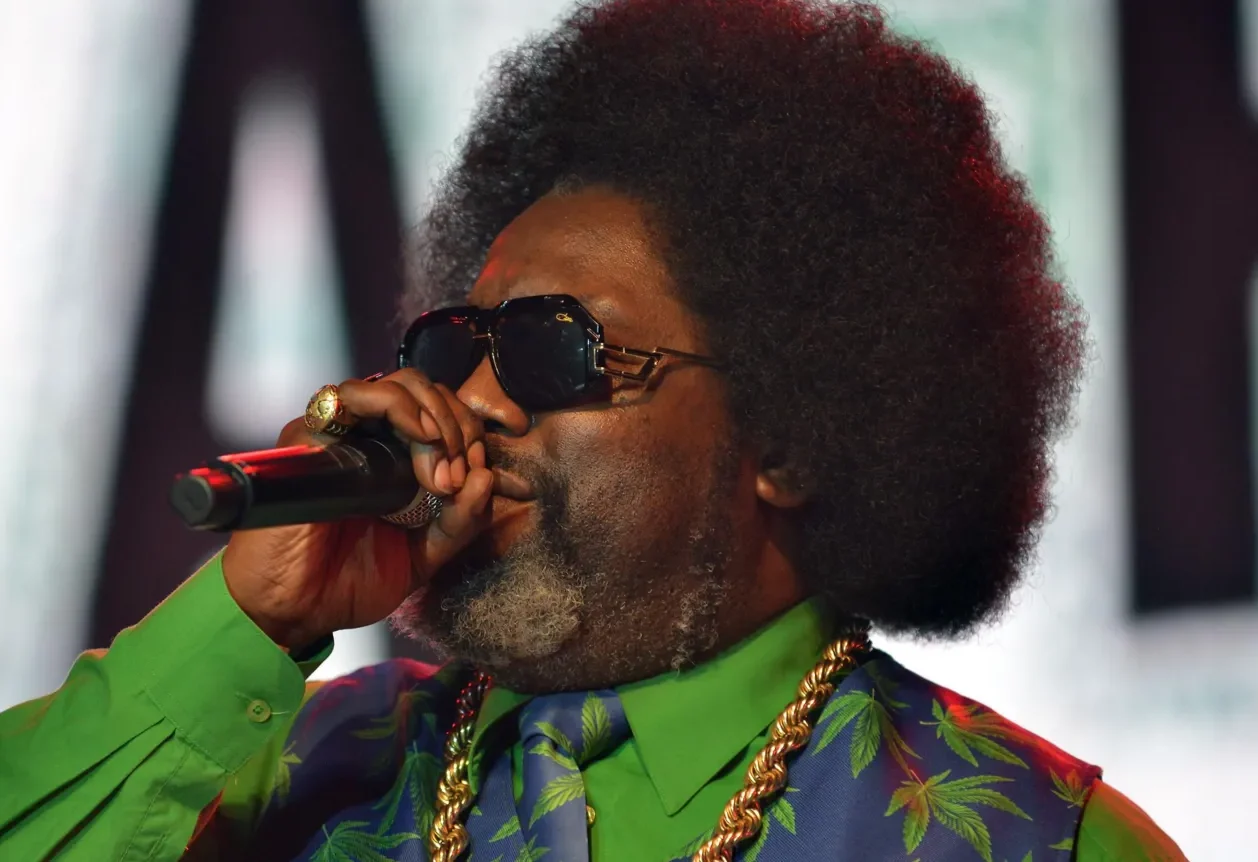
Afroman’s My Fro-losophy refers to the 2011 studio album and the overarching personal worldview of Joseph Edgar Foreman. It centers on themes of self-reliance, laid-back hedonism, and comedic social commentary, marking his evolution from a mainstream novelty act to a prolific, fiercely independent underground hip-hop icon.
The phrase "My Fro-losophy" serves as both a pun on the artist’s signature hairstyle and a manifesto for a career built outside the traditional confines of the music industry. To understand this concept in context, one must examine the intersection of Afroman’s 2000s-era stardom, his transition into the "Hungry Hustler" independent business model, and his later-career resurgence as a folk hero of the digital age.
The Genesis of the Fro-losophy Album
Released in 2011, My Fro-losophy arrived during a pivotal moment in Afroman’s career. A decade removed from the massive commercial success of "Because I Got High" and "Crazy Rap (Colt 45)," Foreman had successfully navigated the fallout of being dropped by a major label. While many artists of the early 2000s faded into obscurity after their initial hits, Afroman leveraged his cult following to build a sustainable, self-managed career.
The album itself is a 16-track collection that functions as a masterclass in independent production. Unlike the polished, radio-ready sheen of his Universal Records debut The Good Times, My Fro-losophy is gritty, self-produced, and stylistically diverse. It blends traditional West Coast G-funk with blues, rock, and soul, often featuring Afroman himself playing live instruments, most notably his signature double-neck guitar and bass.
The Shift to Total Independence
By 2011, the "Fro-losophy" was as much about business as it was about art. Afroman established Hungry Hustler Records, a move that allowed him to bypass the gatekeepers of the recording industry. In the context of the early 2010s—a period where digital piracy had decimated traditional sales and streaming was only beginning to take hold—Afroman’s strategy was focused on direct-to-consumer engagement.
This independence allowed him to release music at a prolific rate, sometimes putting out multiple projects in a single year. My Fro-losophy stands out in this era because it refined his persona. It moved beyond the "stoner comedy" label and showcased a musician who was deeply involved in the technical aspects of his craft, from sequencing to mixing.
Core Pillars of the Fro-losophy Worldview
At its heart, "Fro-losophy" is a lifestyle. For Joseph Foreman, the "Fro" is more than a hairstyle; it is a crown that represents a specific type of Black American identity rooted in the aesthetics of the 1970s funk era but adapted for the modern Midwest and West Coast.
Hedonism and Peace
A central tenet of Fro-losophy is the pursuit of personal peace through simple pleasures. This is frequently represented by references to marijuana, malt liquor, and "pally" (his term for a friendly, laid-back vibe). However, viewing this solely as "drug music" misses the deeper context. Afroman’s lyrics often emphasize the role of these substances as tools for stress management and social cohesion in a world he describes as increasingly high-strung and litigious.
Comedic Social Critique
Afroman uses humor as a surgical tool. In My Fro-losophy and subsequent works, he addresses racial profiling, economic disparity, and the absurdity of local law enforcement with a "laugh-to-keep-from-crying" attitude. By framing these heavy topics through a comedic lens, he makes his social commentary more accessible to a broad audience, effectively Trojan-horsing serious ideas into party anthems.
Musical Versatility
One cannot discuss the context of My Fro-losophy without mentioning Afroman’s technical proficiency. He is a multi-instrumentalist who often records his own bass lines and guitar solos. This musicality separates him from many of his peers in the "comedy rap" subgenre. His "Fro-losophy" dictates that even if the lyrics are funny, the music must be high-quality, soulful, and rooted in the traditions of blues and funk.
Contextualizing the 2022 Raid and the "Lemon Pound Cake" Incident
The most significant contemporary application of Afroman’s Fro-losophy occurred long after the 2011 album, but it perfectly illustrates the concept's resilience. In August 2022, the Adams County Sheriff’s Office in Ohio raided Afroman’s home under the suspicion of drug trafficking and kidnapping—charges that were ultimately proven baseless.
Rather than succumbing to legal pressure or silence, Afroman applied the ultimate Fro-losophical maneuver: he turned the surveillance footage of the raid into a series of music videos and songs, including "Lemon Pound Cake" and "Will You Help Me Repair My Door."
Turning Adversity into Content
This reaction was a pure manifestation of the "Hungry Hustler" mindset. By monetizing the infringement on his privacy, Afroman demonstrated a level of creative defiance that resonated globally. In the 2026 context, this event is seen as a landmark in artist-led social media activism. He didn't just sue the department; he turned them into characters in his own narrative, using his "Fro-losophy" to reclaim power from a state institution.
Technical Analysis of Afroman’s Independent Era
To understand why My Fro-losophy remains a touchstone for independent artists, we must look at the technical and economic metrics of his career during that period.
| Feature | Major Label Era (2001-2004) | Independent "Fro-losophy" Era (2011-Present) |
|---|---|---|
| Primary Label | Universal Records | Hungry Hustler Records |
| Creative Control | High oversight / Radio focus | Absolute / Niche audience focus |
| Revenue Stream | Royalties / Tour support | Merchandise / Direct sales / Social media |
| Production Style | Sample-heavy / Studio engineers | Live instrumentation / Self-engineered |
| Distribution | Physical Retail (Big Box) | Digital Platforms / Touring Merch Table |
| Public Image | The "High" Rapper | The "Independent Hustler" & Activist |
The Musicality of the Fro-losophy Album
The 2011 album My Fro-losophy is a departure from the loop-based production of early hip-hop. Afroman’s use of the double-neck guitar allows him to switch between deep, funky bass grooves and melodic guitar riffs within the same track. This technical ability is a hallmark of his live shows, which often feel more like a rock or blues concert than a traditional rap performance.
Tracks on the album often feature long instrumental outros, allowing the groove to settle in. This reflects a "slow music" philosophy that stands in stark contrast to the fast-paced, 2-minute "TikTok songs" that dominate the 2026 landscape. Afroman’s commitment to the vibe over the hook is what gives his music lasting power.
Lyrical Structure and Storytelling
Afroman is a master of the narrative arc. Drawing from the tradition of Slick Rick and Too $hort, his lyrics are often linear stories. In My Fro-losophy, he details the minutiae of his daily life—from fixing a car to navigating a local grocery store. This groundedness makes his music relatable; he isn't rapping about private jets and million-dollar watches, but about the struggles and joys of the average person who happens to have a massive Afro and a guitar.
Geographic Context: From Palmdale to Ohio
The "Fro-losophy" is also a product of its geography. While Afroman is synonymous with Palmdale, California, his move to Winchester, Ohio, significantly influenced his later work. The juxtaposition of a West Coast rap legend living in rural Ohio created a unique cultural friction that he explored in his music.
This rural setting provided the backdrop for his independent operations. It allowed him to build a home studio and headquarters (the "Hungry Hustler" compound) away from the distractions of the Los Angeles industry. The peace he found in the Midwest is a recurring theme, often contrasted with the "hustle and bustle" and "fake" nature of the Hollywood music scene.
The Impact on Independent Hip-Hop
Afroman’s trajectory has become a blueprint for artists in 2026. He proved that a "legacy act" does not have to rely on nostalgia tours. By constantly creating new content and staying engaged with digital trends—from YouTube to viral social media challenges—he maintained a relevance that many of his contemporaries lost.
His "Fro-losophy" emphasizes that the artist is a brand, a label, and a media house all in one. This DIY ethic is now standard for independent musicians, but Afroman was an early adopter who perfected the model through trial and error.
Frequently Asked Questions
What is the main theme of the "My Fro-losophy" album?
The album primarily focuses on the joys of independence, the struggles of the working-class musician, and the celebration of a laid-back lifestyle. It combines humor with serious musicality, emphasizing Afroman's skill as a multi-instrumentalist and his "Hungry Hustler" business ethic.
How did the 2022 police raid change the context of Afroman’s philosophy?
The raid transformed Afroman from a comedic musician into a symbol of civil liberties. It showcased his ability to use his "Fro-losophy"—humor and independent media—to fight back against systemic injustice. The incident actually boosted his career, proving that his method of turning reality into entertainment is a powerful tool for accountability.
Is Afroman actually playing the instruments on his albums?
Yes. Afroman is a skilled musician who plays both the guitar and the bass. He is famous for his custom double-neck guitar, which he uses to perform bass lines and lead guitar parts during his live shows and on his studio recordings. This musical background is a core component of his unique sound.
Why is Afroman considered an "independent icon"?
After leaving Universal Records in the mid-2000s, Afroman refused to sign another major label deal that would compromise his creative freedom or ownership. He built his own label, Hungry Hustler Records, and has successfully managed his own distribution, touring, and marketing for over two decades, providing a roadmap for other DIY artists.
What does "Hungry Hustler" mean in the context of his music?
"Hungry Hustler" is the name of Afroman's record label and his personal motto. It represents the drive to succeed through hard work and self-reliance, even without the support of the mainstream industry. It's about being "hungry" for success while "hustling" on one's own terms.
Practical Recommendation for Listeners and Artists
For listeners, the best way to experience My Fro-losophy is to listen to it as a cohesive narrative rather than a collection of singles. Pay attention to the transitions and the live instrumentation, which reveal Afroman’s depth as a composer.
For independent artists, the lesson of Afroman’s Fro-losophy is clear: own your masters, build your own platform, and never stop creating. In the 2026 digital economy, the most valuable asset an artist has is their authentic voice and their direct connection to their audience. Whether you are dealing with a bad record deal or a literal raid on your home, the "Fro-losophical" response is to stay calm, stay creative, and turn the struggle into a song.