AC stands for alternating current, which is an electrical current that periodically reverses direction and changes its magnitude continuously with time, in contrast to direct current (DC) which flows in only one direction. Alternating current is the primary format used to deliver electrical power to homes, businesses, and industrial facilities globally due to its efficiency in long-distance transmission and ease of voltage transformation.
Understanding what AC stands for in electricity requires looking beyond a simple definition. The mechanics, mathematical representations, safety profiles, and historical developments of alternating current form the backbone of modern electrical engineering. This guide examines the fundamental principles of alternating current, how it differs from direct current, its real-world applications, and the technical specifications that govern its use in contemporary infrastructure.
Fundamentals of Alternating Current (AC)
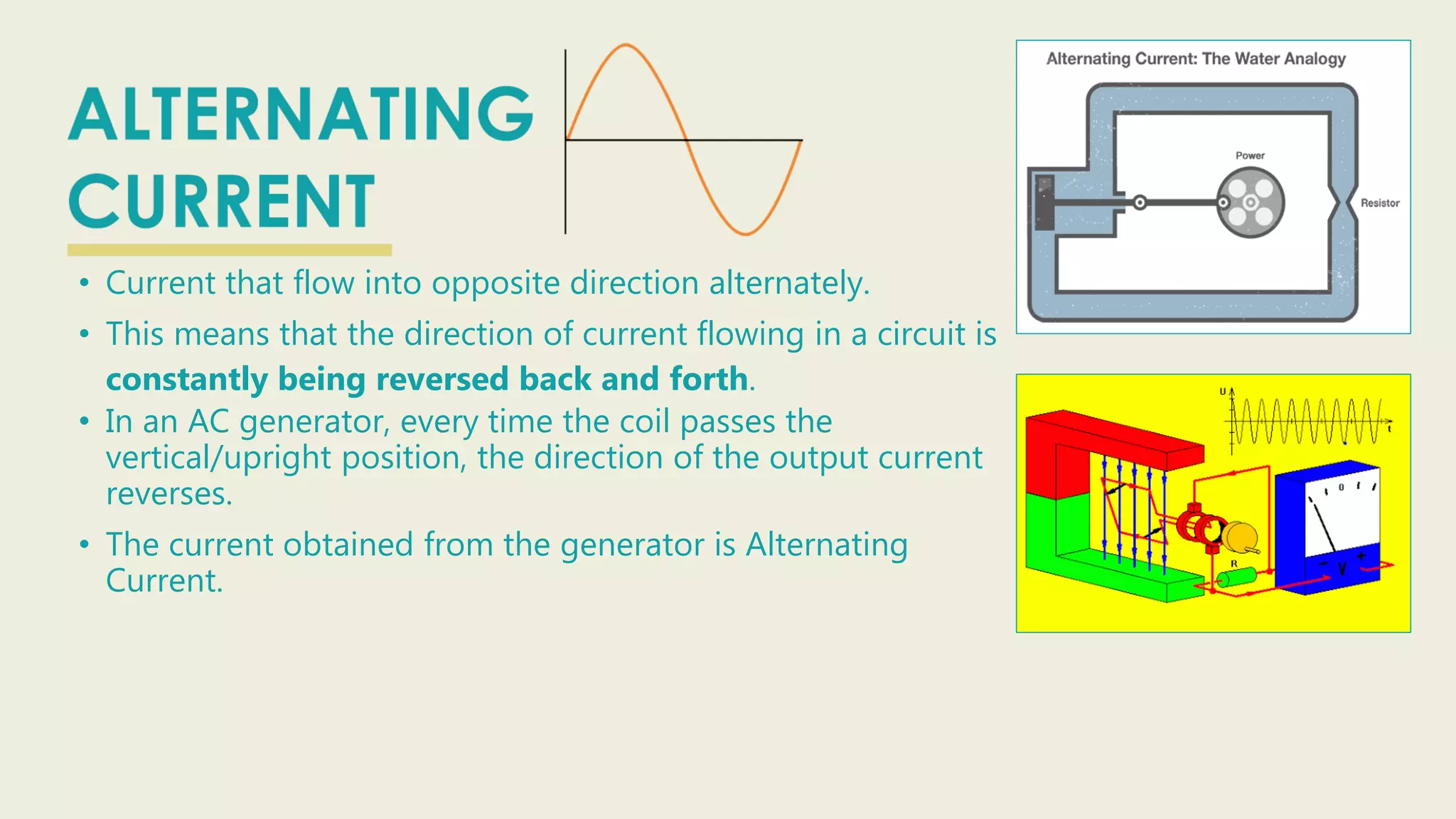
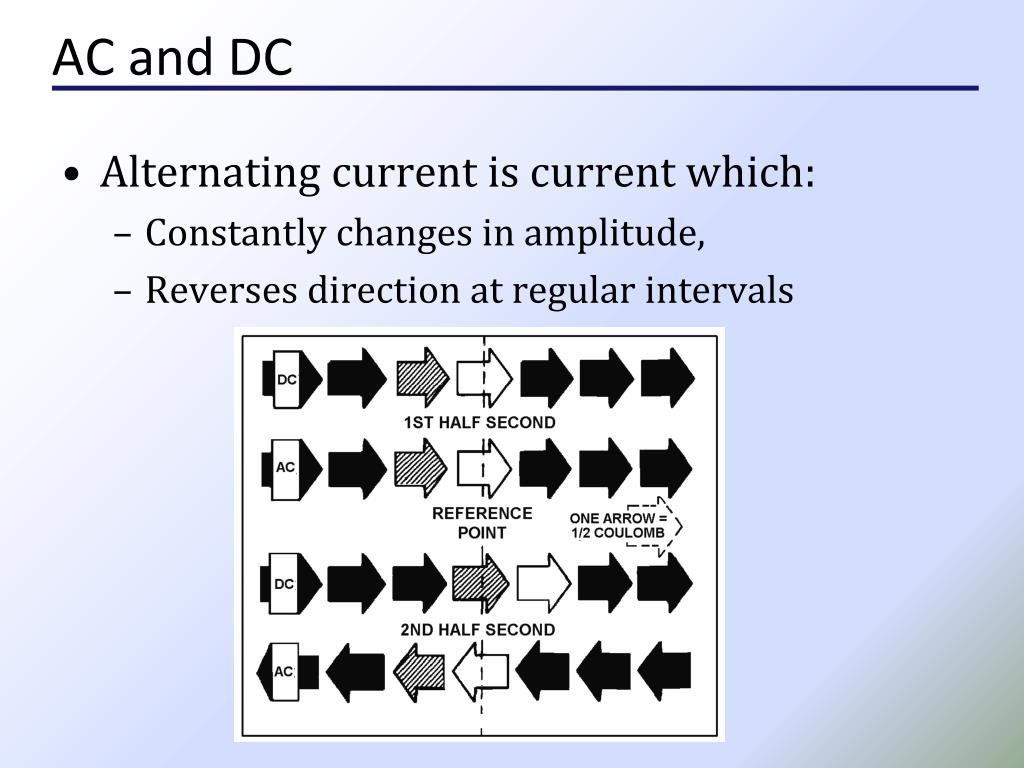
To fully grasp what alternating current means, one must examine the behavior of electrical charge within a conductor. Unlike direct current, where electrons flow steadily in a single direction from the negative terminal to the positive terminal, alternating current causes electrons to oscillate back and forth. This periodic reversal is achieved through the use of electromechanical generators, known as alternators, which convert mechanical energy into electrical energy using electromagnetic induction.
The Sine Wave and Frequency
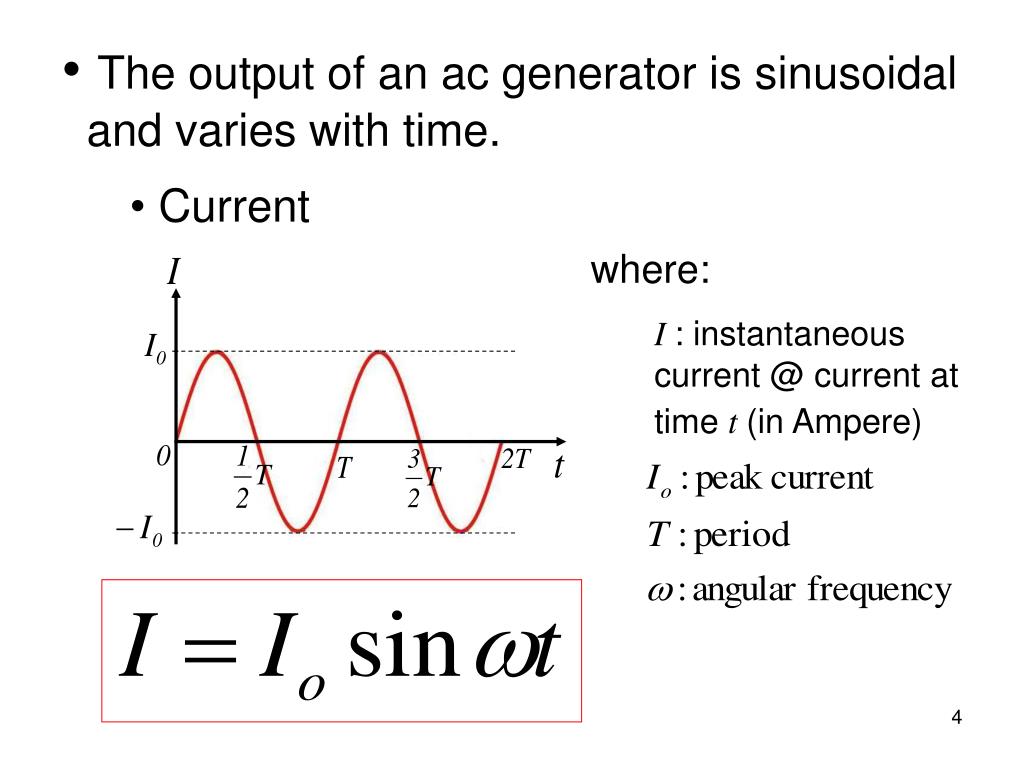
The movement of alternating current is most commonly represented as a sine wave. A sine wave plots the amplitude (voltage or current) on the vertical axis against time on the horizontal axis.
- Waveform: The curve demonstrates how the current rises from zero to a positive peak, decreases back to zero, reverses direction to fall to a negative peak, and finally returns to zero to complete a single cycle.
- Frequency: Measured in Hertz (Hz), frequency describes the number of complete cycles a wave completes in one second. In the United States and parts of the Americas, the standard grid frequency is 60 Hz. In Europe, Asia, and most other regions, the standard is 50 Hz.
- Period: The period is the time required to complete one full cycle, calculated as the reciprocal of frequency ($T = 1/f$). For a 60 Hz system, one cycle takes approximately 16.67 milliseconds.
Voltage Transformation and Transmission
The single greatest advantage of alternating current over direct current is its compatibility with transformers. Transformers rely on electromagnetic induction to alter voltage levels with minimal energy loss.
Power plants generate electricity at moderate voltages, which transformers then step up to extremely high voltages (ranging from 110 kV to over 765 kV) for long-distance transmission across national grids. High-voltage transmission drastically reduces resistive energy losses in power lines, as lower current minimizes thermal dissipation ($I^2R$ losses). Once the electricity reaches populated areas, substation transformers step the voltage back down to safe levels—such as 120V/240V for residential use or 480V for industrial applications.
AC Versus DC: Key Differences and Applications
Both alternating current and direct current are essential for modern technology, but they serve different purposes based on their electrical characteristics.
| Feature | Alternating Current (AC) | Direct Current (DC) |
|---|---|---|
| Direction of Flow | Reverses direction periodically | Flows in a single, constant direction |
| Primary Source | Alternators and AC generators | Batteries, solar panels, rectifiers |
| Voltage Transformation | Easily stepped up or down via transformers | Requires complex electronic conversion |
| Transmission Efficiency | Highly efficient over long distances | Suffers high losses over long distances |
| Standard Frequency | 50 Hz or 60 Hz | 0 Hz (constant) |
| Common Uses | Household appliances, power grids, industrial machinery | Electronics, computers, LEDs, electric vehicles, battery storage |
Why the Power Grid Uses AC
During the late 19th-century "War of the Currents," Nikola Tesla and George Westinghouse championed alternating current against Thomas Edison’s direct current system. Tesla's AC system ultimately won the grid infrastructure race because Edison's DC system could not efficiently transmit power over distances greater than a mile without massive copper conductors and frequent generating stations. AC's ability to utilize transformers meant power could be generated centrally, transmitted thousands of miles at high voltages, and delivered safely to end-users.
The Modern Return of High-Voltage Direct Current (HVDC)
While AC dominates traditional grids, modern technology has reintroduced High-Voltage Direct Current (HVDC) for specific applications. HVDC is more efficient than AC for underwater power transmission and ultra-long-distance overhead lines connecting remote renewable energy sources—such as offshore wind farms or desert solar installations—to distant urban centers. However, transforming and switching HVDC requires expensive converter stations, keeping AC as the standard for local distribution networks.
Safety and Measurement of Alternating Current
Working with alternating current presents unique physiological and technical safety challenges compared to direct current.
Physiological Effects on the Human Body
The human body reacts differently to AC and DC. Because AC continuously reverses direction, even at low frequencies like 50 Hz or 60 Hz, it can easily disrupt the natural electrical impulses of the human heart, leading to ventricular fibrillation at lower current thresholds than DC. Furthermore, alternating current tends to cause muscle tetany, meaning a person gripping an energized AC wire may involuntarily contract their muscles, preventing them from letting go.
Measuring AC: Root Mean Square (RMS)
Because an AC voltage continually fluctuates between positive and negative peaks, standard meters cannot measure it using simple averages (which would equal zero over a full cycle). Instead, engineers use Root Mean Square (RMS) values to measure AC voltage and current.
- The RMS value represents the effective equivalent of a direct current that would deliver the same amount of power to a resistive load.
- For example, a standard US household outlet rated at 120V RMS actually reaches a peak voltage of approximately 170 volts ($\text{Peak Voltage} = \text{RMS Voltage} \times \sqrt{2}$).
Common Misconceptions About AC Electricity
Several myths persist regarding how alternating current functions in everyday environments.
- "Electrons travel rapidly from the power plant to your light switch." In reality, individual electrons in an AC circuit do not travel long distances. They oscillate back and forth within a very small localized space (drift velocity). Energy is transmitted via the electromagnetic wave moving through the conductors, not by physical transit of electrons across the grid.
- "AC and DC cannot be converted into one another." Modern power electronics make conversion seamless. Rectifiers convert AC to DC (used in phone chargers and computer power supplies), while inverters convert DC to AC (used in solar panel systems to feed power back into the grid).
- "Audio signals are purely DC." Audio signals traveling through speaker wires are specialized forms of alternating current that vary in frequency and amplitude to represent sound waves.
Practical Guidance for Homeowners and Technicians
Understanding that AC stands for alternating current is vital for anyone engaging in basic electrical troubleshooting, home improvement, or renewable energy integration.
- Identify Circuit Types: Always verify whether an appliance or electronic device requires AC or DC input. Plugging a DC-native device directly into an AC outlet without a proper power adapter will permanently damage the internal circuitry.
- Use Proper Testing Tools: When testing household outlets, ensure your multimeter is set to measure AC Voltage ($V\sim$ or $VAC$), not DC Voltage ($V-$ or $VDC$). Measuring AC with a DC setting can damage the meter or provide inaccurate readings.
- Adhere to Safety Standards: Adhere strictly to local electrical codes (such as the National Electrical Code in the United States) when modifying or installing wiring. Always turn off the main circuit breaker before servicing fixtures, and use non-contact voltage testers to verify circuits are de-energized.
Alternating current remains the foundational delivery mechanism of electrical power. Its unique mathematical properties, transformation flexibility, and historical establishment ensure it will power electrical grids for the foreseeable future.