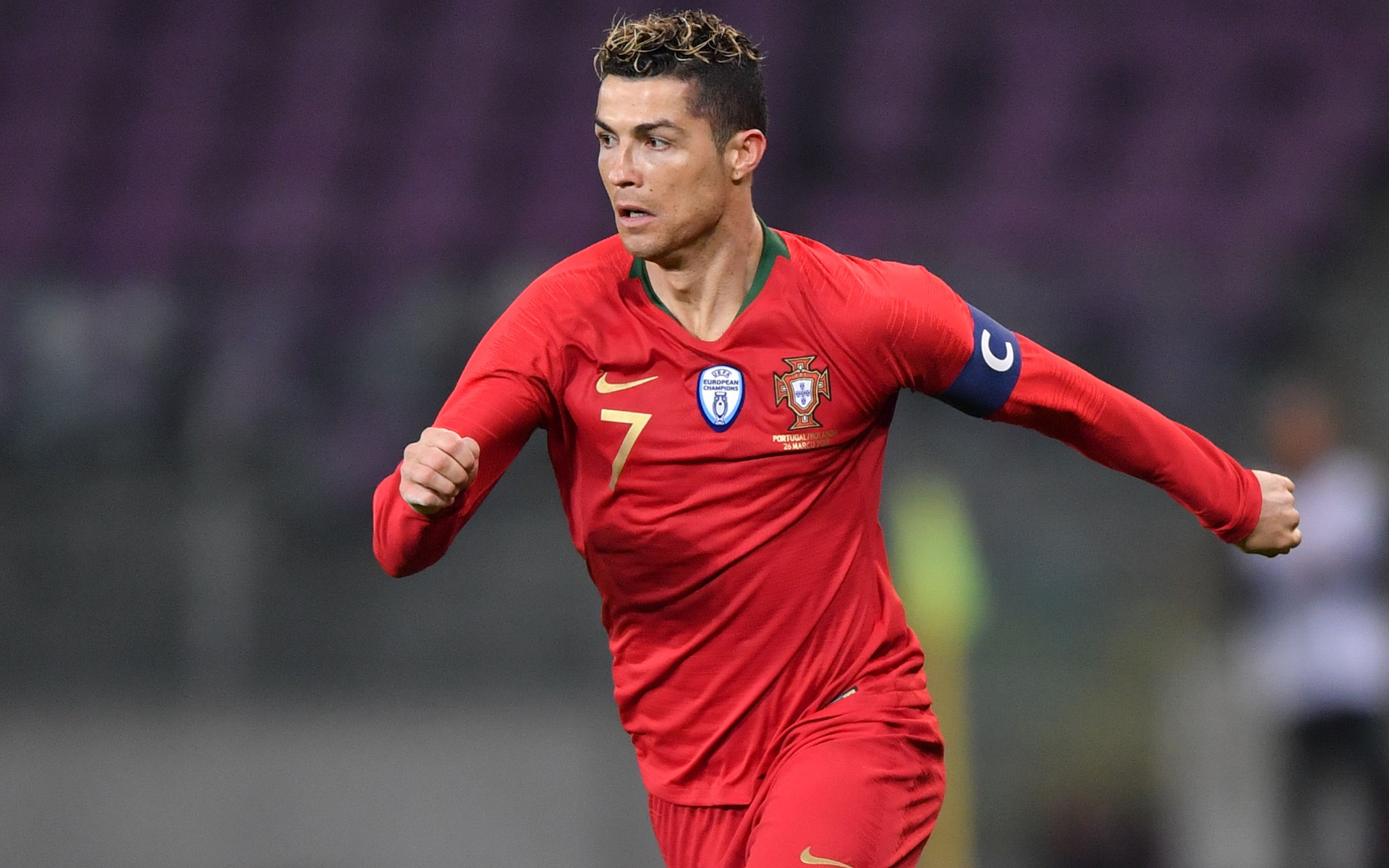
The story behind Cristiano Ronaldo wearing the number 9 revolves around his high-profile transfer to Real Madrid in 2009. At the time, the club’s legendary captain, Raúl González, occupied the number 7. Consequently, Ronaldo donned the number 9 for his debut season (2009–2010) before reclaiming his iconic "CR7" identity the following year.
While the world identifies Cristiano Ronaldo almost exclusively with the number 7, there was a brief yet fascinating period in 2009 and 2010 when the Portuguese superstar was known globally as "CR9." This phase was not merely a stylistic choice but a result of rigid club hierarchy, deep respect for footballing tradition, and a commercial pivot that temporarily shifted one of the biggest brands in sports history. Understanding the story behind the number 9 requires a look at the politics of the Real Madrid dressing room, the legacy of the players who wore the shirt before him, and the statistical dominance Ronaldo maintained even while operating under a different numerical identity.
The World-Record Transfer of 2009
The narrative of the number 9 begins in the summer of 2009. Real Madrid, under the presidency of Florentino Pérez, was embarking on the second "Galácticos" project. After a period of Barcelona dominance, Pérez sought to reclaim the throne by signing the world’s most elite talent in a single window, including Kaká, Karim Benzema, and Xabi Alonso. The crown jewel of this recruitment drive was Cristiano Ronaldo, who joined from Manchester United for a then-world-record fee of £80 million (€94 million).
When Ronaldo arrived in Madrid, he was already a global icon. He had won the Ballon d'Or and the FIFA World Player of the Year in 2008. His brand, CR7, was already established through his years at Manchester United and his blossoming commercial empire. However, upon his arrival at the Santiago Bernabéu, a significant logistical hurdle emerged: the number 7 was not available.
The Raúl Hierarchy and the Choice of Number 9
In the hierarchy of Real Madrid, few figures loomed as large as Raúl González Blanco. As the "Eternal Captain" and the club’s all-time leading scorer at the time, Raúl had worn the number 7 since the mid-1990s. In Spanish football culture, and specifically at a club with the institutional gravity of Real Madrid, seniority is paramount. Despite Ronaldo’s astronomical transfer fee and status as the best player in the world, there was no question of forcing Raúl to relinquish his shirt.
Ronaldo, showing a level of deference that characterized his early relationship with the Madrid veterans, accepted the number 9. This number was vacant following the departure of Javier Saviola. The choice was also a symbolic nod to the "other" Ronaldo—Ronaldo Nazário—who had worn the number 9 with such distinction for Real Madrid earlier in the decade.
The unveiling of Cristiano Ronaldo with the number 9 remains one of the most iconic moments in sports history. On July 6, 2009, approximately 80,000 fans packed the Santiago Bernabéu to see Ronaldo emerge from the tunnel. He wore the white kit with "RONALDO 9" on the back, a sight that felt both historic and temporary to many observers.
The Technical Evolution: Ronaldo as a "Pure 9"
During the 2009–2010 season, Ronaldo’s role on the pitch under manager Manuel Pellegrini was slightly different from the flying winger role he occupied at Manchester United or the goal-scoring "inside forward" he would later become.
In a tactical sense, wearing the number 9 coincided with Ronaldo operating more frequently in central areas. While he still utilized his pace on the flanks, he was often paired in a strike partnership or as the spearhead of an attack that featured Kaká and Gonzalo Higuaín.
The statistics from this lone season as "CR9" are often overlooked due to the sheer volume of goals he scored in subsequent years, but they were staggering for a debutant in La Liga:
| Competition | Appearances | Goals | Assists |
|---|---|---|---|
| La Liga | 29 | 26 | 7 |
| Champions League | 6 | 7 | 0 |
| Total (2009-10) | 35 | 33 | 7 |
Despite a mid-season ankle injury that sidelined him for several weeks, Ronaldo maintained a nearly goal-per-game ratio. This season proved that his brilliance was independent of his shirt number, though the "CR9" branding felt like a placeholder for the return of his true identity.
The Legacy of the Number 9 at Real Madrid
To understand why the number 9 was a fitting temporary home for Ronaldo, one must look at the history of that shirt at the Santiago Bernabéu. Real Madrid’s number 9 has been worn by some of the most clinical finishers in the history of the sport. By taking this number, Ronaldo was joining an elite lineage:
- Alfredo Di Stéfano: Although numbers were not fixed in the modern sense during his era, Di Stéfano is the spiritual father of the Madrid 9, representing the club’s five consecutive European Cups.
- Santillana: Known for his incredible heading ability, Santillana wore the 9 for much of the 1970s and 80s, scoring 290 goals for the club.
- Hugo Sánchez: The Mexican legend defined the number 9 in the late 80s, winning five consecutive Pichichi trophies (La Liga top scorer).
- Ronaldo Nazário: "El Fenómeno" wore the 9 from 2003 to 2007, cementing the number’s association with world-class Brazilian flair and finishing.
When Cristiano took the number 9, he wasn't just taking a vacant slot; he was stepping into a tradition of "Goleadores." This heritage helped bridge the gap until the number 7 became available.
The Marketing Pivot: CR7 vs. CR9
From a commercial perspective, the "CR9" era was a fascinating anomaly. Nike, Ronaldo's primary sponsor, had spent years building the "CR7" brand. When the move to Madrid was finalized and the number 9 was confirmed, a massive marketing pivot was required.
For the 2009–2010 season, merchandise was produced with the CR9 logo. Boots, apparel, and promotional materials all reflected the number 9. Interestingly, this created a series of "limited edition" items. Today, an original 2009–2010 Real Madrid home kit with "Ronaldo 9" is considered a highly sought-after collector's item, as it represents the only year in his professional club career (post-Sporting CP) where he wore a number other than 7 or 28.
However, the brand "CR7" never truly died during this period. Fans continued to refer to him by the moniker, and it was widely understood that the number 9 was a marriage of convenience.
The Return to Number 7
The transition back to his preferred number occurred in the summer of 2010. Raúl, seeking more consistent playing time in the twilight of his career, moved to Schalke 04 in the Bundesliga. His departure left the number 7 vacant for the first time in sixteen years.
With the arrival of José Mourinho as manager in 2010, the club underwent a tactical and cultural shift. One of the first orders of business was the formal reassignment of shirt numbers. Ronaldo immediately took the number 7, and Karim Benzema, who had worn number 11 during his debut season, took over the number 9.
This reshuffle solidified the identities that would define Real Madrid for the next decade. Ronaldo as the "7" became the greatest goal-scorer in the club's history, while Benzema as the "9" became the ultimate facilitator and eventually a Ballon d'Or winner in his own right.
Other Numbers in the Ronaldo Story
While the number 9 is the most famous deviation from his standard 7, Ronaldo has worn other numbers throughout his career that provide context to his journey:
- Number 28 (Sporting CP): This was Ronaldo’s breakout number in Lisbon. When he moved to Manchester United in 2003, he actually requested to keep number 28, but Sir Alex Ferguson insisted he take the number 7 recently vacated by David Beckham.
- Number 17 (Portugal National Team): During Euro 2004 and the 2006 World Cup, the legendary Luís Figo wore the number 7 for Portugal. Ronaldo wore 17 until Figo’s international retirement, after which the number 7 became his permanent possession for the national team.
Comparison of Ronaldo’s Early Career Numbers
The following table outlines the progression of Cristiano Ronaldo's jersey numbers across his professional career up to his second stint at Manchester United and his move to Saudi Arabia.
| Period | Team | Primary Number | Reason for Number |
|---|---|---|---|
| 2002–2003 | Sporting CP | 28 | Assigned youth/first-team number. |
| 2003–2009 | Manchester United | 7 | Assigned by Sir Alex Ferguson (Legacy of Best, Cantona, Beckham). |
| 2003–2006 | Portugal | 17 | Number 7 was held by Luís Figo. |
| 2009–2010 | Real Madrid | 9 | Number 7 was held by Raúl González. |
| 2010–2018 | Real Madrid | 7 | Inherited after Raúl's departure. |
| 2018–2021 | Juventus | 7 | Juan Cuadrado voluntarily vacated the number. |
| 2021–2022 | Manchester United | 7 | Edinson Cavani vacated the number upon Ronaldo's return. |
| 2023–2026 | Al-Nassr | 7 | Standard brand alignment for his Saudi Pro League move. |
The "CR9" Impact on Career Perception
Though it lasted only one season, the number 9 era was crucial in proving that Ronaldo was not a "system player." Moving from the Premier League to La Liga and changing both his team and his shirt number could have disrupted a lesser player’s momentum. Instead, Ronaldo used the number 9 season to dismantle the notion that he was purely a winger.
He showed the Madrid faithful that he could lead the line, score headers, and operate in the congested central areas of the box. This versatility eventually allowed him to evolve his game in his 30s, transitioning from a pace-oriented winger to a lethal penalty-box predator. The number 9 season was, in many ways, a preview of the second half of his career.
Frequently Asked Questions
Why didn't Ronaldo take the number 7 immediately at Real Madrid?
Ronaldo could not take the number 7 because it was occupied by Raúl González, the club's captain and a living legend. Out of respect for Raúl’s seniority and status at the club, Ronaldo opted for the vacant number 9 for his first season.
Who wore the number 9 before Cristiano Ronaldo at Real Madrid?
Immediately prior to Ronaldo, the number 9 was worn by Javier Saviola. Historically, it was also famously worn by Ronaldo Nazário, Hugo Sánchez, and Alfredo Di Stéfano.
Did Ronaldo win any trophies while wearing the number 9?
The 2009–2010 season was a transitional year for Real Madrid. Despite a high points tally in La Liga (96 points), they finished second to Pep Guardiola’s Barcelona and did not win a major trophy that year. Ronaldo's individual success with the number 9 was high, but team silverware arrived after he switched back to number 7.
What happened to the CR9 brand after 2010?
The CR9 brand was largely phased out and replaced by a rejuvenated CR7 marketing campaign once he reclaimed the number 7. However, the trademark for CR9 remains a part of Ronaldo's historical brand portfolio, and the apparel from that era remains a collector's item.
Has any other player worn number 9 for Real Madrid since Ronaldo?
Yes. After Ronaldo switched to number 7 in 2010, Karim Benzema took the number 9 and wore it for over a decade, becoming one of the most successful players to ever hold the shirt. Following Benzema's departure in 2023, the number was later assigned to Kylian Mbappé upon his arrival at the club in 2024.
Final Summary and Next Actions
The story of Cristiano Ronaldo’s number 9 is a testament to the intersection of footballing tradition and modern superstardom. It serves as a reminder that even the world’s most powerful individual brands must sometimes yield to the history and hierarchy of an institution like Real Madrid. While "CR7" is the permanent mark of his legacy, the "CR9" season remains a vital chapter that showcased his adaptability and respect for the legends who came before him.
For fans or collectors looking to verify the authenticity of a "Ronaldo 9" jersey, it is important to check the specific kit design of the 2009–2010 season, which featured a unique sunburst-style embossing behind the club crest. Understanding this specific timeframe helps in appreciating the rarity of this particular phase in his storied career.