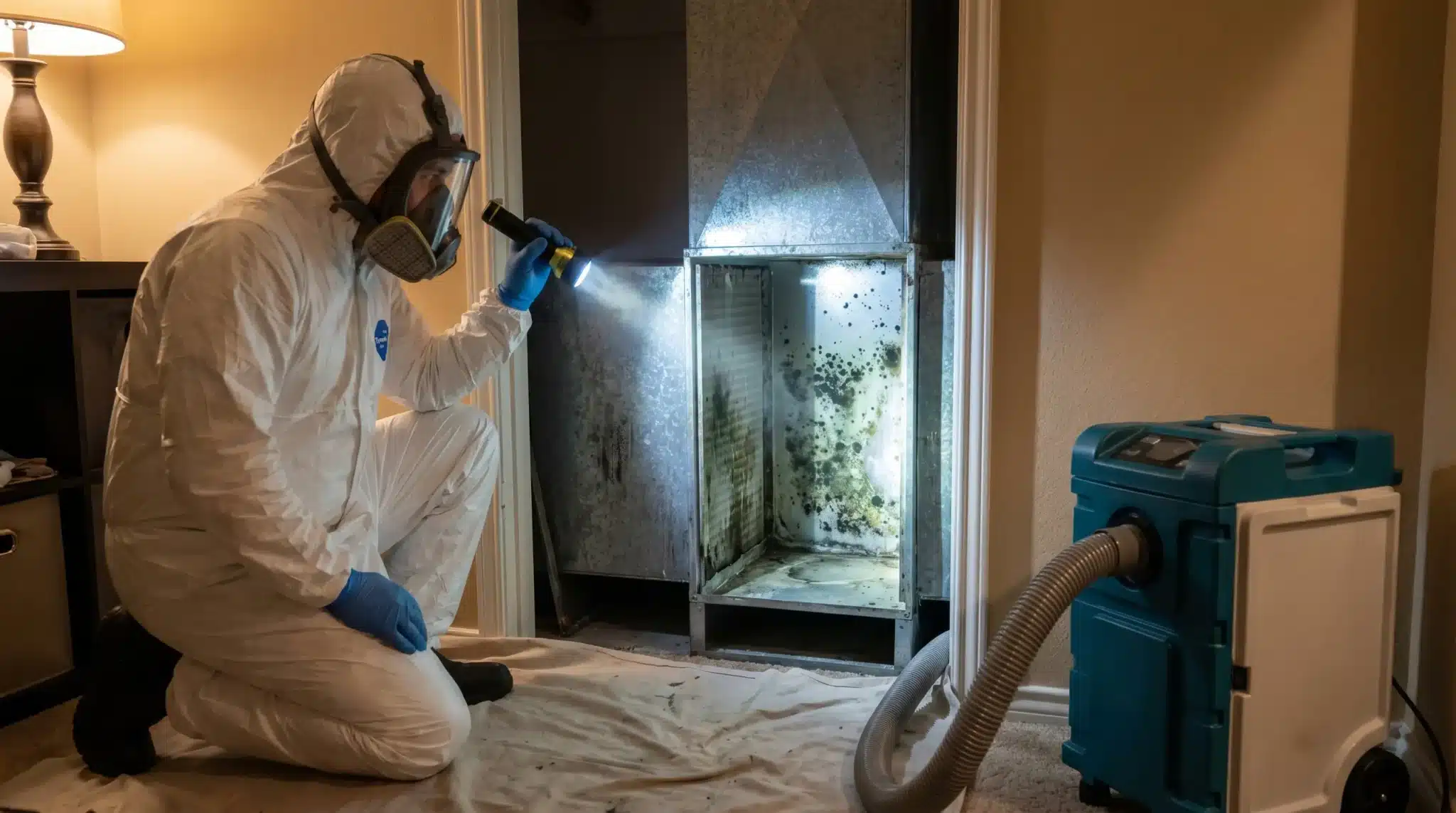
Navigating mold issues in Missouri requires specialized professional support due to the state's humid continental climate, which frequently fosters fungal growth in basements, crawlspaces, and attics. When seeking dependable mitigation, property owners typically evaluate firms based on independent certifications, comprehensive testing protocols, transparent containment procedures, and local regulatory compliance.
The Missouri Mold Problem: Climate, Construction, and Health Risks
Missouri features a varied climate characterized by hot, humid summers and damp transitional seasons. This meteorological profile, combined with older housing stocks in urban centers like St. Louis and Kansas City, creates an ideal environment for mold proliferation.
Humidity levels inside residential and commercial structures frequently exceed the recommended threshold of 50 percent, particularly in subterranean levels such as basements and unconditioned crawlspaces. When indoor humidity remains uncontrolled, airborne spores land on cellulose-rich materials—including drywall, wood framing, insulation, and carpeting—and initiate colonization within 24 to 48 hours.
Health Implications of Indoor Fungal Growth
Exposure to indoor mold contamination can trigger various physiological responses, especially among vulnerable populations such as children, the elderly, and individuals with pre-existing respiratory conditions like asthma or allergies. Common symptoms associated with mold exposure include:
- Nasal and sinus congestion
- Persistent coughing or throat irritation
- Wheezing and shortness of breath
- Skin and eye irritation
- Exacerbation of chronic respiratory illnesses
Beyond physical health risks, structural mold compromises building integrity. Fungi digest organic construction materials, weakening wooden framing elements and destroying drywall structural stability over time. Consequently, prompt intervention by qualified professionals is essential for safeguarding both human health and property equity.
Standards of Practice: Inspection Versus Remediation
A foundational principle in professional mold management is the separation of assessment and mitigation. Industry standards, upheld by organizations such as the American Conference of Governmental Industrial Hygienists (ACGIH) and the Indoor Air Quality Association (IAQA), recommend that the entity performing the initial assessment and testing should not be the same entity executing the physical cleanup. This separation prevents conflicts of interest, ensuring that inspection reports remain unbiased and remediation scopes of work are accurate.
The Inspection Phase
A comprehensive mold inspection is much more than a cursory visual examination. Professional inspectors utilize advanced diagnostic instrumentation to uncover hidden moisture sources and fungal colonies. Standard inspection procedures include:
- Visual Assessment: Examining all accessible areas of the building envelope, including HVAC systems, roofing structures, plumbing chases, and foundational walls.
- Moisture Metering: Deploying pin and non-invasive moisture meters to detect elevated water content within building materials, even behind finished surfaces.
- Thermal Imaging: Utilizing infrared (IR) cameras to identify temperature differentials caused by hidden moisture accumulation behind walls or beneath flooring.
- Air and Surface Sampling: Collecting spore trap air samples and physical surface lifts to establish baseline indoor-to-outdoor spore ratios and identify specific mold genera (such as Aspergillus, Penicillium, or Stachybotrys chartarum, commonly known as "black mold").
The Remediation Phase
Once an independent inspection report outlines the scope of contamination, remediation specialists execute the physical cleanup. Effective mitigation follows strict containment and removal protocols to prevent cross-contamination into unaffected areas of the building. The remediation process typically encompasses:
- Containment: Erecting polyethylene barriers under negative air pressure (utilizing HEPA-filtered air scrubbers) to isolate the work zone.
- Source Removal: Discarding porous materials that cannot be successfully cleaned, such as heavily contaminated insulation or rotted drywall.
- HEPA Vacuuming and Cleaning: Thoroughly cleaning structural framing and non-porous surfaces with high-efficiency particulate air (HEPA) vacuums and antimicrobial agents.
- Post-Remediation Verification (PRV): Conducting clearance testing to confirm that spore counts inside the remediated area have returned to normal, healthy baseline levels.
Evaluating Top-Rated Providers Across Missouri
Because Missouri does not currently mandate a statewide licensing program specifically for mold remediation contractors, property owners must vet companies rigorously. Credible providers distinguish themselves through nationally recognized third-party certifications, such as those issued by the Institute of Inspection Cleaning and Restoration Certification (IICRC) or the National Organization of Remediators and Mold Inspectors (NORMI).
When comparing service providers in the state, evaluating structural capabilities, geographic coverage, and testing transparency is crucial. The following structured breakdown compares key operational attributes commonly found among top-rated providers operating within major Missouri metropolitan regions.
| Evaluation Metric | Elite Providers | Standard Contractors | Unverified Handyman Services |
|---|---|---|---|
| Primary Certifications | IICRC (AMRT), NORMI, ACAC | Basic general contractor license | None or unverified claims |
| Testing Protocol | Independent 3rd-party lab analysis | In-house testing (potential conflict) | Visual guess only |
| Containment Methods | Negative air pressure, HEPA scrubbers | Basic plastic sheeting | Open-air disturbance |
| Clearance Verification | Independent Post-Remediation Verification | Rarely offered | Not available |
| Warranty Coverage | Written workmanship and anti-recurrence guarantees | Verbal promises only | None |
Note: Always verify current active credentials directly with certifying bodies before signing any service agreements.
Key Considerations for Missouri Homeowners
Choosing the right partner for mold inspection and remediation requires careful due diligence. Property owners should review several critical operational factors before committing financial resources to a mitigation project.
Licensing and Insurance Verification
Even in the absence of a dedicated state mold license in Missouri, reputable contractors must hold general liability insurance, workers' compensation coverage, and appropriate local business licenses. General liability insurance must specifically include pollution or microbial remediation endorsements. Standard general liability policies frequently exclude claims arising from mold damage, leaving property owners unprotected if cross-contamination occurs during the project.
Transparent Estimating and Protocols
A trustworthy remediation firm provides a detailed, itemized scope of work derived from an inspection report. Estimates should clearly delineate:
- The exact square footage of containment required.
- The specific containment barriers and negative air equipment to be deployed.
- The exact protocols for handling contaminated porous versus non-porous items.
- The disposal methods utilized for waste materials.
- The inclusion of a Post-Remediation Verification test by an independent third party.
Avoid contractors who offer vague, lump-sum pricing over the phone without conducting an on-site physical evaluation, as true remediation requirements cannot be accurately gauged without visual and diagnostic inspection.
Frequently Asked Questions
Does homeowner insurance cover mold remediation in Missouri?
Most standard homeowners insurance policies in Missouri exclude mold damage unless the fungal growth is the direct result of a sudden, accidental plumbing failure covered elsewhere in the policy. Gradual moisture intrusion, chronic humidity, roof leaks left unaddressed, and flood damage are typically excluded. Property owners should review their specific policy language and consult their insurance agent regarding endorsement options.
How long does the mold remediation process typically take?
The duration of a mold remediation project depends heavily on the extent of the contamination. Minor residential remediation confined to a single bathroom or small crawlspace area may take 1 to 3 days. Large-scale commercial projects or severe residential infestations involving extensive structural demolition and reconstruction can take several weeks from initial inspection to final clearance verification.
Can I clean up mold myself using bleach?
Bleach is generally ineffective on porous building materials such as wood and drywall because the chlorine stays on the surface while the water component sinks deeper into the material, feeding the roots of the mold. Furthermore, disturbing large mold colonies without proper personal protective equipment (PPE) and containment can aerosolize millions of spores, spreading contamination to previously clean areas of the home and posing acute health risks.
What causes mold to return after professional remediation?
Mold will inevitably return if the underlying moisture source is not corrected. Professional remediation removes existing fungal growth, but it does not solve building envelope failures, uncorrected plumbing leaks, or chronically high indoor humidity. Effective remediation must always be paired with moisture mitigation, such as repairing roof leaks, grading soil away from foundations, or installing dedicated crawlspace encapsulation systems and dehumidifiers.
How do I know if a mold remediation company is reputable?
Look for verified industry certifications such as the IICRC Applied Microbial Remediation Technician (AMRT) designation, positive independent customer reviews across multiple platforms, an explicit willingness to work with independent testing hygienists, and comprehensive written warranties that guarantee clearance testing results.
Next Actions for Property Owners
If you suspect mold growth in your Missouri home or business, your immediate priority should be locating the source of moisture and halting any active water intrusion. Contact an independent, certified indoor environmental professional or mold inspector to conduct a thorough diagnostic assessment before hiring a remediation contractor. Ensuring that your inspection and remediation teams remain separate entities will protect your financial investment and guarantee a safe, structurally sound indoor environment.