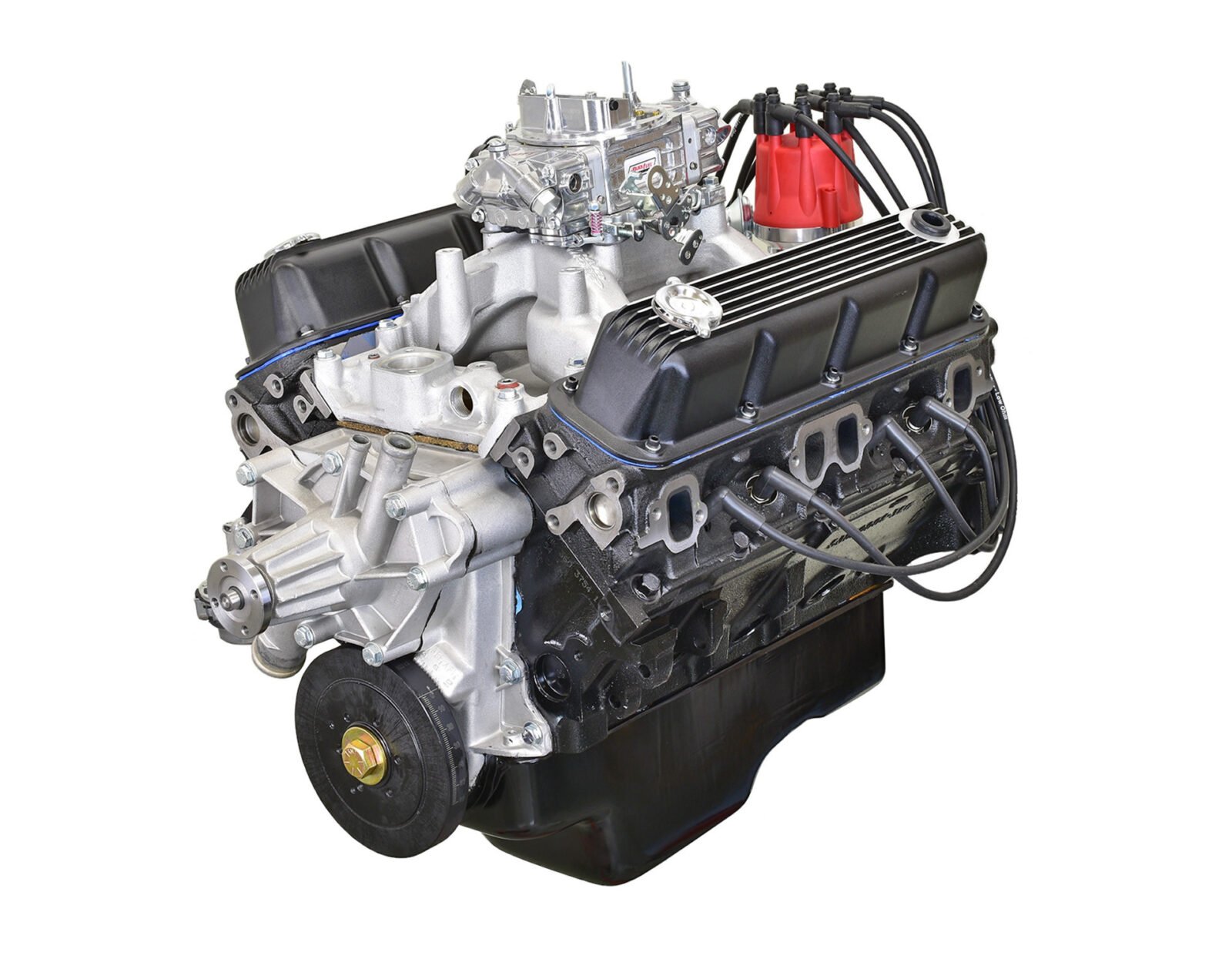
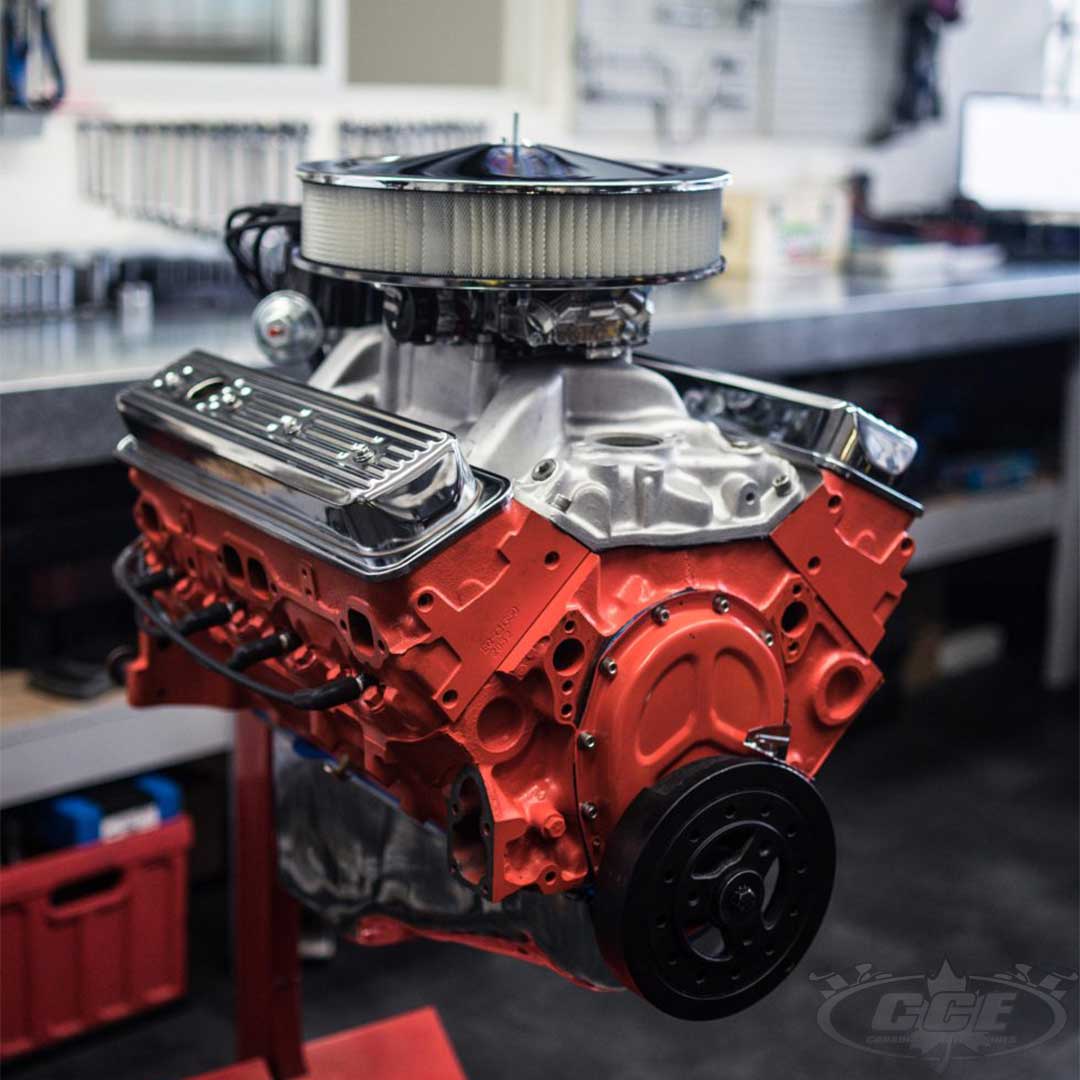
The Chevrolet Performance 350 HO crate engine is a high-output small-block V8 delivering 333 horsepower and 381 lb-ft of torque. Featuring a robust four-bolt main block and high-flow iron Vortec cylinder heads, it serves as a reliable, high-value performance upgrade for street rods, muscle cars, and vintage trucks.
Understanding the 350 HO Platform
The 350 HO (High Output) is a legendary entry in the Chevrolet Performance catalog, often cited as the "best bang for your buck" in the world of crate engines. As of 2026, it remains a staple for enthusiasts who prefer the mechanical simplicity and classic sound of a Small Block Chevy (SBC) over the complexity of modern LS or LT swaps.
The engine is built around a brand-new factory block, rather than a remanufactured core. This ensures that the casting is free of stress fractures or previous machining errors. The "HO" designation is earned through the inclusion of Vortec cylinder heads and a camshaft profile that balances streetable low-end torque with a noticeable mid-range power surge.
Why Choose the 350 HO?
For many restorers, the decision to use the 350 HO comes down to compatibility and cost. Because it utilizes the standard Small Block Chevy footprint, it bolts directly into engine mounts used from 1955 through the late 1980s. It provides a significant performance jump over the "base" 195-250 horsepower 350 engines commonly found in salvage yards or budget rebuilds, without requiring the expensive fuel system and electronic controller upgrades associated with fuel-injected crate motors.
Detailed Technical Specifications
Precision is vital when planning a swap. The 350 HO is designed with a specific combination of rotating assembly components and top-end parts that dictate its power curve and fuel requirements.
The Bottom End: Block and Rotating Assembly
The foundation of the 350 HO is a cast iron, four-bolt main block with a one-piece rear main seal. The four-bolt main configuration provides superior crankshaft stability compared to two-bolt versions, which is essential for maintaining bearing alignment under the stress of high-RPM operation.
- Displacement: 350 cubic inches (5.7L)
- Bore x Stroke: 4.000" x 3.480"
- Compression Ratio: 9.0:1 (Allows for safe operation on 87 or 91 octane pump gas)
- Crankshaft: Nodular iron, 1-piece rear seal
- Connecting Rods: Powdered metal steel
- Pistons: Cast aluminum
The 9.0:1 compression ratio is a strategic choice by GM engineers. It is high enough to produce efficient combustion and crisp throttle response but low enough to prevent detonation (knocking) when using standard pump gasoline, even in heavier vehicles or hotter climates.
The Top End: Heads and Camshaft
The "magic" of the 350 HO lies in its Vortec heads. Introduced in the mid-1990s, these cast-iron heads feature high-velocity intake ports and a combustion chamber design that promotes a more complete burn of the air-fuel mixture.
- Cylinder Heads: Vortec cast iron; 64cc chambers
- Valve Size: 1.940" intake / 1.500" exhaust
- Camshaft Type: Hydraulic flat tappet
- Camshaft Lift: .435" intake / .460" exhaust
- Camshaft Duration (@ .050"): 212° intake / 222° exhaust
Because the engine uses a hydraulic flat tappet camshaft, it is critical to use specialized break-in oils and high-zinc (ZDDP) additives. Modern synthetic oils designed for 2026 model-year vehicles often lack the anti-wear additives required to protect a flat-tappet cam from "wiping" a lobe during its initial heat cycles.
| Feature | 350 HO Specifications |
|---|---|
| Horsepower | 333 HP @ 5000 RPM |
| Torque | 381 LB-FT @ 3500 RPM |
| Max Recommended RPM | 5500 RPM |
| Block Type | Cast iron, 4-bolt mains |
| Cylinder Heads | Vortec (Iron), 64cc |
| Intake Manifold Style | Vortec 8-bolt pattern |
| Rear Main Seal | 1-piece |
| Balance | External (Rear), Internal (Front) |
| Spark Plugs | R44LTS or equivalent |
| Timing | 32° Total @ 4000 RPM |
Installation Guide: Prerequisites and Preparation
Installing a 350 HO requires more than just an engine hoist. Because this engine uses Vortec heads and a one-piece rear main seal, certain parts from an older 350 (pre-1986) may not transfer over.
Required Supporting Components
- Intake Manifold: Standard Small Block Chevy intakes use a 12-bolt pattern. Vortec heads use a unique 8-bolt pattern where the bolts enter the head at a vertical angle. You must purchase a Vortec-specific intake manifold.
- Flexplate or Flywheel: Since this engine uses a one-piece rear main seal, the bolt pattern on the crankshaft flange is smaller than the older two-piece seal engines. You must use a flexplate or flywheel designed for 1986-up 350 engines.
- Fuel Pump: The 350 HO block typically includes a provision for a mechanical fuel pump. However, if you are using an electric pump for EFI conversion, you will need a block-off plate.
- Water Pump: Most 350 HO crate engines are shipped as "long blocks," meaning they do not include a water pump. You must choose between a long or short-style water pump based on your vehicle’s accessory drive alignment.
Tool Checklist
- Engine hoist and load leveler
- Standard SAE socket and wrench set (3/8" to 1-1/8")
- Torque wrench (capable of 10-100 lb-ft)
- Engine stand (for dress-up and component installation)
- Oil pressure primer tool
Step-By-Step Installation Process
1. Unboxing and Inspection
Upon receiving the engine, remove the plastic shroud and inspect the block for any shipping damage. Check the spark plug holes and intake ports for debris. Verify that the oil gallery plugs and freeze plugs are properly seated. Although these are factory-assembled, a quick visual inspection prevents major headaches once the engine is in the car.
2. External Component Assembly (On the Stand)
It is significantly easier to install the intake manifold, distributor, and water pump while the engine is on a stand.
- Intake Manifold: Apply a bead of RTV silicone (like Permatex Black or Ultra Grey) to the front and rear "china walls" of the block. Do not use the rubber end seals provided in some gasket kits, as they are prone to slipping and causing leaks.
- Distributor: Drop the distributor in and ensure the rotor is pointing toward the number one cylinder position at Top Dead Center (TDC).
- Oil Priming: This is the most critical step. Before installing the valve covers, use an oil priming tool and a drill to circulate oil through the engine until you see oil flowing from the rocker arms. This ensures the bearings and camshaft are lubricated for the first start.
3. Dropping the Engine
Using a hoist and load leveler, tilt the engine into the bay. Align the motor mounts with the frame pads. If you are mating the engine to an automatic transmission, ensure the torque converter is fully seated in the pump before bolting the transmission bellhousing to the engine block. Failure to seat the converter will result in immediate transmission pump failure.
4. Plumbing and Electrical
- Cooling: Connect the radiator hoses and heater core lines. If using a Vortec head, ensure your intake manifold has a bypass port if your water pump does not support one.
- Fuel: Connect the fuel line to the carburetor or EFI throttle body.
- Electrical: Connect the starter solenoid, alternator, and the "BAT" terminal on the HEI distributor. Ensure the engine block has a heavy-duty ground strap connected to the vehicle frame.
The Critical Break-In Procedure
The 350 HO uses a flat-tappet camshaft, which means the camshaft lobes and lifters must "mate" during the first 20 minutes of operation. If the engine is allowed to idle immediately after startup, the camshaft may fail.
- Oil Selection: Fill the crankcase with a high-quality 10W-30 conventional oil and a ZDDP break-in additive. Do not use synthetic oil for the first 500 miles.
- The First Start: Once the engine fires, immediately bring the RPM up to 2,000–2,500 RPM.
- Variable Speed: Vary the RPM within that 2,000–2,500 range for 20 to 30 minutes. This flings oil off the crankshaft and onto the camshaft lobes, providing the necessary lubrication.
- Monitor: Watch the oil pressure and coolant temperature gauges constantly. If you see a leak or an overheat condition, shut the engine down, fix the issue, and resume the break-in.
- Oil Change: After the 30-minute break-in, drain the oil and replace the filter. This removes any assembly lubes or metal particulates shed during the initial seating of the components.
Tuning for Performance
To achieve the advertised 333 horsepower, the engine must be tuned correctly. Chevrolet Performance recommends a 750 CFM vacuum-secondary carburetor for most street applications.
Ignition Timing
The 350 HO responds best to a total timing of 32° at 4,000 RPM.
- Base Timing: Typically set between 10° and 12° BTDC.
- Centrifugal Advance: Ensure your distributor is shimmed to provide the remaining advance by 4,000 RPM.
- Vacuum Advance: Connect this to a ported vacuum source on the carburetor to improve fuel economy and idle stability.
Transmission and Gearing
To make the most of the 381 lb-ft of torque, a rear-end gear ratio between 3.08:1 and 3.73:1 is recommended. If using an automatic transmission like the TH350 or 700R4, a torque converter with a stall speed of 2,000–2,400 RPM will allow the engine to enter its power band more effectively during acceleration.
Common Mistakes to Avoid
- Using the Wrong Intake Bolts: Vortec heads require specific 1-1/2" long bolts. Using standard SBC intake bolts will bottom out or strip the threads.
- Neglecting ZDDP: Modern "LS-style" oils will ruin a 350 HO camshaft in less than an hour. Always verify the zinc content of your oil.
- Incorrect Flywheel Balance: The 350 HO is internally balanced at the front (harmonic balancer) but requires a specific weighted flexplate/flywheel for the 1-piece rear main seal. Using an unweighted "neutral" flywheel from an older 350 will cause a severe vibration.
- Inadequate Cooling: Vortec heads can be sensitive to air pockets. Ensure you use a high-quality thermostat with a bypass hole to prevent localized hot spots in the heads.
Frequently Asked Questions
Can I use my old 350 intake manifold on the 350 HO?
No. The 350 HO uses Vortec cylinder heads, which have a different bolt pattern (8 bolts) and taller intake ports than the traditional 12-bolt Small Block Chevy heads. You will need a dedicated Vortec intake manifold, which is available from brands like Edelbrock or Chevrolet Performance.
What kind of fuel does the 350 HO require?
With a 9.0:1 compression ratio, the 350 HO is designed to run comfortably on 91 octane premium pump gas. In many applications with conservative timing, it can run on 87 or 89 octane, but 91 is recommended for peak performance and to prevent detonation under heavy loads.
Does the 350 HO come with a warranty?
As of 2026, Chevrolet Performance typically offers a 24-month/50,000-mile limited warranty on crate engines, provided they are installed in a street-legal vehicle and the break-in procedures are documented. However, using the engine for competitive racing usually voids this coverage.
Can I upgrade the 350 HO to a roller camshaft?
Yes, the block used for the 350 HO is typically a "roller-ready" casting. This means it has the necessary machining for a lifter spider tray and dogbones. Upgrading to a hydraulic roller camshaft eliminates the need for high-zinc oil and can provide even more power, though it requires new lifters, pushrods, and a different timing set.
What spark plugs should I use?
The Vortec heads use a 14mm thread, .750" reach spark plug with a tapered seat. The standard recommendation is the ACDelco R44LTS or an equivalent like the NGK TR5. Do not use the short-reach plugs found in older "camel hump" or smog-era heads, as they will not reach the combustion chamber properly.
Recommendation for Next Actions
If you are ready to proceed with a 350 HO installation, your first step should be to verify your transmission compatibility. Ensure you have the correct flexplate for a 1-piece rear main seal and that your torque converter matches the 30-spline (or relevant) count of your gearbox. Order a high-quality break-in oil kit simultaneously with the engine to ensure you are prepared for the critical first start. For those seeking maximum longevity, consider a "Turn-Key" kit that includes the distributor and carburetor pre-matched to the engine's specifications.