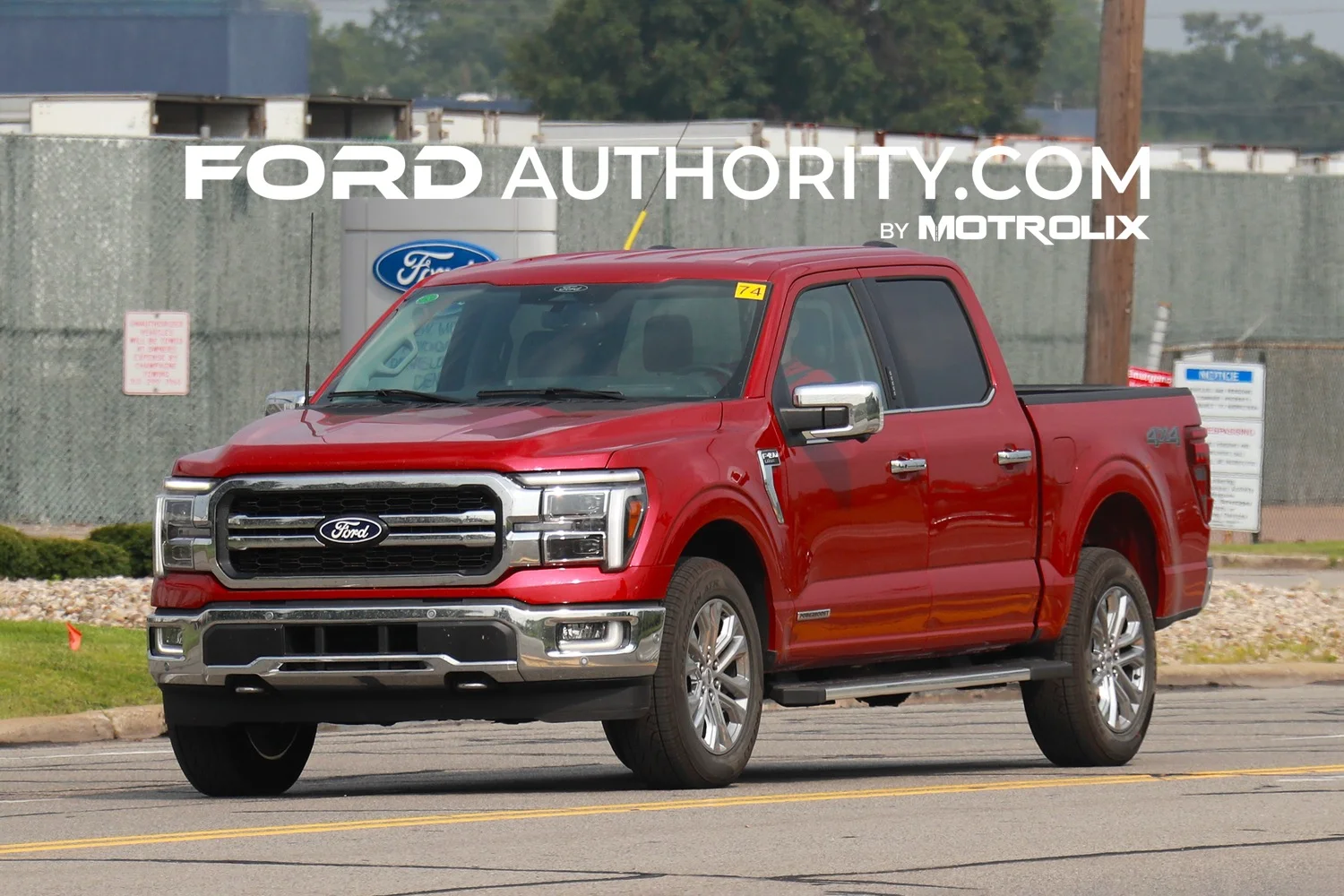
The 2024 Ford F-150 equipped with the 5.0L Coyote V8 engine offers a compelling intersection of traditional performance and modern utility. As the automotive market continues to shift toward smaller displacement and forced induction, this naturally aspirated powerhouse remains a cornerstone for those prioritizing long-term reliability and towing capability. Understanding the pricing landscape and practical application of this specific configuration is essential for buyers navigating the expansive 2024 model year lineup.
The Enduring Appeal of the 5.0L Coyote V8
In a landscape increasingly dominated by the 3.5L EcoBoost and hybrid powertrains, the 5.0L Coyote V8 serves as a distinct choice for a specific segment of truck owners. The engine is renowned for its linear power delivery and lack of reliance on complex turbocharging systems, which many long-term owners associate with reduced maintenance overhead. In the 2024 F-150, this engine is refined to produce 400 horsepower and 410 lb-ft of torque, providing a predictable throttle response that is highly prized for heavy-duty towing and hauling applications.
The practical advantage of the V8 lies in its simplicity compared to high-output turbocharged engines. For the operator who plans to keep their vehicle beyond the standard powertrain warranty, the absence of turbochargers, intercoolers, and associated plumbing reduces the potential points of failure over a ten-year horizon. Furthermore, the 5.0L is uniquely positioned in the F-150 hierarchy as an upgrade option that sits between the standard 2.7L EcoBoost and the premium high-output engines, allowing buyers to customize their truck's performance profile without opting for the more complex electrified setups.
Decoding the Pricing Structure of the 2024 F-150
Determining the "pricing power" of the 5.0L configuration requires an analysis of how Ford structures its trim levels and optional equipment packages. Unlike the base engine, the 5.0L V8 usually carries a manufacturer-suggested retail price (MSRP) premium that must be factored into the overall cost of ownership. In 2026, looking back at the 2024 model year data, the V8 was primarily available as an optional upgrade on mid-to-high-level trims, such as the XLT, Lariat, and King Ranch, while being standard or highly accessible on specialized work-focused configurations.
When evaluating pricing, consumers must account for the following variables:
- Trim-Level Dependencies: The V8 is rarely the entry-level engine. Choosing it often necessitates moving to a higher trim level, which adds costs associated with luxury features, interior materials, and advanced driver-assistance systems.
- Package Bundling: To add the 5.0L engine, Ford often requires the selection of specific towing packages or payload upgrades. These "forced options" increase the bottom-line price but also increase the functional capability of the vehicle.
- Market Fluctuations: While the MSRP is fixed, the "out-the-door" price is influenced by dealer markups, regional incentives, and the specific inventory availability of V8-equipped units versus V6-dominated stock.
Practicality for Heavy-Duty and Commercial Users
The primary metric of practicality for the 2024 F-150 5.0L is its ability to serve as a workhorse. Compared to the turbocharged V6 engines, the V8 provides a more consistent towing experience, especially in environments where sustained load is required. Turbocharged engines, while impressive in torque output, can experience heat saturation during long, high-load towing sessions. The Coyote V8 manages heat dissipation differently, making it a favorite for those who pull livestock trailers, construction equipment, or heavy recreational haulers over mountainous terrain.
Additionally, the compatibility of the 5.0L engine with Ford’s Pro Power Onboard system—though more restricted than the PowerBoost hybrid—allows for sufficient power export for job site tools. The practical user must weigh the fuel economy trade-offs against the durability benefits. While the V8 may consume more fuel during stop-and-go driving, its fuel efficiency under heavy load is often competitive, as it does not require the heavy throttle input that can cause turbo-equipped engines to drop significantly in efficiency.
Comparative Analysis: V8 vs. The Competition
When choosing between the 5.0L V8 and other powertrain options, the decision is rarely based on raw numbers alone, but rather on the intended use case. The following table illustrates the core differences between the 5.0L and its primary in-house competitors within the 2024 lineup.
| Engine Type | Primary Strength | Ideal Use Case | Maintenance Complexity |
|---|---|---|---|
| 2.7L EcoBoost | Fuel Efficiency | Light towing, daily commuting | Moderate |
| 3.5L EcoBoost | Torque/Power | High-altitude towing, speed | High |
| 5.0L Coyote V8 | Reliability/Simplicity | Heavy towing, long-term ownership | Low |
| 3.5L PowerBoost | Efficiency/Export | Mobile office, job site power | Very High |
As indicated in the table, the 5.0L remains the "Goldilocks" engine for buyers who distrust complex forced induction and hybrid systems but require more power than the entry-level engine. The low maintenance complexity is a significant factor for fleet managers and individual contractors who prioritize vehicle uptime.
Maintenance and Long-Term Ownership Costs
Predicting the cost of ownership for a 2024 F-150 5.0L involves looking beyond the initial purchase price. The Coyote engine has a well-documented maintenance cycle. Because it lacks turbochargers, the engine bay is less prone to heat-related degradation of plastic and rubber components. Essential maintenance items, such as spark plug changes and cooling system flushes, remain standard.
From a financial perspective, V8-equipped trucks often maintain a higher resale value in specific secondary markets—particularly among rural, agricultural, or towing-focused demographics. Buyers who purchase the 5.0L in 2024 are essentially paying for the peace of mind that comes with a proven, naturally aspirated platform. However, the owner must be prepared for higher registration fees or insurance premiums in some jurisdictions, as V8 engines are sometimes classified differently by insurers compared to smaller-displacement turbocharged engines.
Common Mistakes When Choosing a Powerplant
A recurring mistake among new F-150 buyers is underestimating the "real-world" fuel consumption of the 5.0L. While the EPA ratings provide a standardized baseline, the Coyote V8 is sensitive to aggressive driving habits. Users who frequently utilize the upper RPM range to hear the engine note or achieve rapid acceleration will see a significant decline in fuel economy. Practicality demands a disciplined driving style to keep operating costs within reasonable bounds.
Another error is failing to verify the towing package requirements. Some buyers assume that selecting the V8 automatically provides the maximum tow rating. In reality, the tow rating is inextricably linked to the axle ratio (e.g., 3.73 vs 3.31) and the specific suspension components included in the chosen trim level. It is vital to consult the Ford Towing Guide to ensure the specific 5.0L build matches the weight of the intended payload.
Evaluating the Value Proposition
The "pricing power" of the 2024 F-150 5.0L is rooted in its status as a premium, niche offering. It is not designed to be the cheapest truck in the fleet, nor is it designed to be the most technologically advanced. Instead, it occupies a position of stability. For the buyer, the value is found in the longevity of the vehicle. If the truck is intended to be used as a tool for a decade or more, the higher initial cost of the V8 is amortized over a longer service life, often resulting in lower cost-per-mile than a more complex powertrain that requires specialized, high-cost repairs once the warranty expires.
Frequently Asked Questions
1. Is the 2024 5.0L V8 compatible with E85 fuel? Yes, the 5.0L Coyote engine is Flex-Fuel capable. This allows owners to utilize E85, which is often cheaper than gasoline, though it does result in lower fuel economy. The practicality of this feature depends on local fuel availability.
2. How does the V8 compare to the 3.5L EcoBoost for towing? The 3.5L EcoBoost provides more torque at lower RPMs, making it feel "zippier" when towing. The 5.0L V8 provides a more linear build-up of power and tends to be more consistent during long-duration, high-heat towing scenarios.
3. Does the 5.0L engine have cylinder deactivation? Yes, modern versions of the Coyote engine utilize variable displacement technology to deactivate cylinders under light loads. This helps bridge the gap between the power of a V8 and the fuel efficiency of a smaller engine during highway cruising.
4. Are there known long-term issues with the 2024 5.0L? The 5.0L is a mature platform. While no mechanical component is immune to failure, the lack of turbochargers eliminates common failure points like wastegate actuators, intercooler leaks, and oil coking in the intake manifold, which are typical concerns for high-mileage turbocharged engines.
5. How do I verify the exact tow capacity of my specific F-150 build? You should use the Ford Towing Calculator on the official manufacturer website, entering your Vehicle Identification Number (VIN) or selecting your specific powertrain, cab, bed length, and axle ratio to get the precise rating for your truck.
Final Recommendation for Buyers
When purchasing a 2024 F-150 with the 5.0L engine, prioritize the gear ratio that best fits your mission. If your primary goal is heavy towing, seek out the 3.73 electronic-locking axle. This combination maximizes the "power" aspect of the engine's capability. For those focused on a balance of highway cruising and occasional towing, the 3.31 or 3.55 ratios offer better fuel economy.
Focus your budget on the mechanical foundation—the engine, the transmission cooling, and the rear axle—rather than solely on luxury interior upgrades if your truck’s primary purpose is practical utility. By choosing the 5.0L, you are investing in a proven engine architecture that favors mechanical simplicity and long-term durability, making it an excellent candidate for long-term ownership in the current truck market.