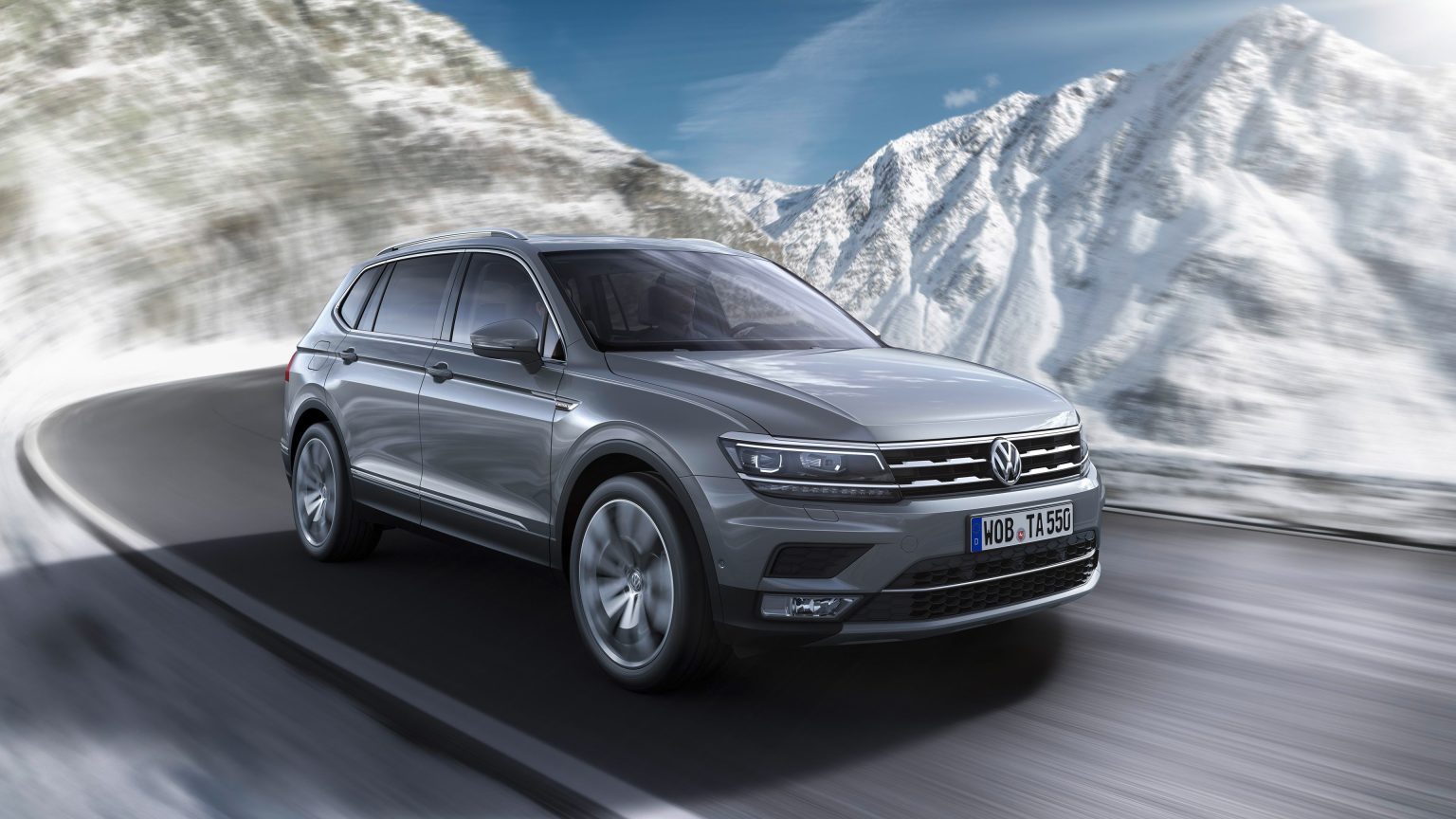
The 2018 model year represents a primary sweet spot for used SUV buyers, offering modern driver-assistance safety features, refined powertrains, and integrated smartphone connectivity at significantly lower price points than new vehicles. Standard safety suites—such as Toyota Safety Sense and Honda Sensing—became widely available across mainstream trim levels in 2018, while infotainment upgrades like Apple CarPlay and Android Auto became standard across multiple automotive brands.
Why the 2018 Model Year Is an Ideal Target for Used SUV Buyers
Evaluating vehicles from the 2018 model year provides distinct mechanical and financial advantages. By this production cycle, many automakers were delivering mature iterations of popular model generations. This means engineering teams had resolved initial product launch glitches, early transmission tuning issues, and software bugs that frequently plague brand-new vehicle redesigns.
From a features perspective, 2018 was a pivotal transition period in automotive design. Automakers integrated advanced driver-assistance systems (ADAS)—including automatic emergency braking, forward collision warning, lane-keeping assist, and adaptive cruise control—as standard equipment on mainstream utility vehicles rather than restricting them to expensive luxury options. Additionally, key infotainment technologies stabilized during this timeframe, establishing smartphone mirroring as an industry standard.
Compact SUVs: Specs, Performance, and Reliability
Compact SUVs represent the largest segment of the pre-owned crossover market, offering a practical balance of fuel economy, maneuverability, interior cargo space, and available all-wheel drive (AWD).
| Compact SUV Segment | Details |
|---|---|
| Toyota RAV4 (2018) | Ultra-reliable, naturally aspirated 2.5L, standard TSS-P |
| Honda CR-V (2018) | Class-leading cargo, 1.5L Turbo / 2.4L NA, Honda Sensing |
| Mazda CX-5 (2018) | Premium cabin, dynamic handling, 2.5L Skyactiv-G |
| Subaru Forester ('18) | Exceptional visibility, standard Symmetrical AWD |
Toyota RAV4 (2018 Model Year)
The 2018 Toyota RAV4 marks the final production year of its fourth generation (XA40 series). Because it sat at the very end of its design cycle, it achieved exceptionally high reliability marks from independent mechanical registries.
- Engine & Drivetrain: Equipped with a naturally aspirated 2.5-liter 4-cylinder engine (2AR-FE) generating 176 horsepower and 172 lb-ft of torque, paired with a proven 6-speed automatic transmission. A Hybrid variant combines a modified 2.5-liter engine with electric motors for a total system output of 194 horsepower and an EPA-estimated combined rating of 32 mpg.
- Safety & Technology: Toyota Safety Sense-P (TSS-P) came standard across all trims (LE, XLE, SE, Adventure, Limited, Platinum). This suite includes pre-collision system with pedestrian detection, lane departure alert with steering assist, automatic high beams, and dynamic radar cruise control.
- Practical Assessment: While the interior features hard plastics and the cabin experiences slightly elevated highway road noise compared to newer redesigns, its mechanical durability is among the highest in its class.
Honda CR-V (2018 Model Year)
The 2018 Honda CR-V was in its second year of its fifth generation. It provides class-leading interior passenger room, an expansive rear seat, and exceptional rear cargo space with a low loading floor height.
- Engine Options: The base LX trim features a reliable 2.4-liter naturally aspirated 4-cylinder engine producing 184 horsepower. Higher trims (EX, EX-L, Touring) utilize a 1.5-liter turbocharged 4-cylinder engine delivering 190 horsepower and 179 lb-ft of torque, mated to a continuously variable transmission (CVT).
- Safety & Features: Honda Sensing driver-assistive technology comes standard on EX trims and above.
- Key Watch-Outs: Early 1.5-liter turbocharged engines experienced fuel-in-oil dilution issues in cold climates. Honda addressed this through a product update campaign that updated software and HVAC control hardware to allow faster engine warmup; buyers should verify service records to confirm these updates were completed.
Mazda CX-5 (2018 Model Year)
For buyers prioritizing chassis dynamics and interior refinement, the 2018 Mazda CX-5 stands out. Positioned near luxury standards, the interior utilizes quiet cabin insulation, soft-touch materials, and supportive seating.
- Engine & Drivetrain: Powered by a 2.5-liter Skyactiv-G 4-cylinder engine producing 187 horsepower and 186 lb-ft of torque, routed through a quick-shifting 6-speed automatic transmission. For 2018, Mazda introduced standard cylinder deactivation technology to improve highway fuel economy.
- Driving Impressions: Crisp steering response, minimal body roll in cornering, and refined braking feedback make it the most engaging driver's choice in the compact segment. Cargo volume is slightly less than the RAV4 or CR-V.
Subaru Forester (2018 Model Year)
The 2018 Forester represents the final year of Subaru’s fourth-generation crossover. It offers excellent outward visibility due to thin roof pillars and large window glass.
- Drivetrain: Standard Symmetrical All-Wheel Drive across all trims. Base power comes from a 2.5-liter 4-cylinder boxer engine producing 170 horsepower, paired with either a 6-speed manual transmission or a Lineartronic CVT. The 2.0XT performance trim offers a 250-horsepower turbocharged engine.
- Safety: Available Subaru EyeSight driver assist technology utilizes dual color cameras mounted near the rearview mirror to provide adaptive cruise control, lane-keep assist, and pre-collision braking.
Midsize 2-Row and 3-Row SUVs: Family Transport and Utility
Midsize SUVs offer increased towing capabilities, optional third-row seating, and expanded cargo room for growing families.
Toyota Highlander (2018 Model Year)
The 2018 Toyota Highlander features a quiet cabin and comfortable ride quality. While its third row is best suited for children or short trips, its overall execution makes it a top choice for families.
- Powertrain: Most models come with a 3.5-liter direct-injected V6 engine (2GR-FKS) producing 295 horsepower and 263 lb-ft of torque, paired with a Direct Shift 8-speed automatic transmission. A base 2.7-liter 4-cylinder was available on early lower trims, but the V6 is strongly recommended for its superior power-to-weight ratio and towing capabilities (up to 5,000 lbs when properly equipped).
- Safety Ratings: Standard Toyota Safety Sense-P and a 5-Star Overall Safety Rating from the National Highway Traffic Safety Administration (NHTSA).
Honda Pilot (2018 Model Year)
The 2018 Honda Pilot provides genuine adult seating room across all three rows and features a versatile center console storage area.
- Engine & Transmission: Powered by a 3.5-liter V6 engine outputting 280 horsepower and 262 lb-ft of torque. LX, EX, and EX-L models feature a traditional 6-speed automatic transmission, while Touring and Elite trims utilize a 9-speed automatic transmission.
- Considerations: Early 9-speed automatic transmissions showed occasional hesitation during low-speed downshifts. Software recalibrations resolved most complaints, but test drivers should evaluate shifting smoothness across both city and highway speeds.
Subaru Outback (2018 Model Year)
Positioned between a wagon and a traditional crossover, the 2018 Subaru Outback received key updates, including improved cabin sound insulation, retuned suspension dampers for smoother ride quality, and standard Apple CarPlay and Android Auto compatibility.
- Powertrains: A 2.5-liter 4-cylinder engine (175 hp) offers high fuel efficiency, while the available 3.6-liter 6-cylinder engine (256 hp) provides enhanced highway passing power and towing capacity. Both pair with a Lineartronic CVT and standard Symmetrical AWD.
Ford Explorer (2018 Model Year)
The 2018 Ford Explorer received minor exterior styling updates and updated technology packages. It provides strong towing ratings and responsive acceleration.
- Powertrain Options: A 3.5-liter naturally aspirated V6 (290 hp), a 2.3-liter EcoBoost turbocharged 4-cylinder (280 hp), and a high-performance 3.5-liter twin-turbo EcoBoost V6 (365 hp) in Sport and Platinum trims.
- Mechanical Note: The naturally aspirated 3.5-liter Duratec V6 utilizes an internal timing-chain-driven water pump. If the pump seal fails, engine coolant can leak directly into the oil pan. Buyers should inspect the oil filler cap for milky coolant contamination and check service records for timing chain/water pump maintenance.
Pre-Owned 2018 SUV Specifications & Feature Comparison
The table below summarizes essential engineering specifications, standard technology, and practical safety evaluations across key 2018 SUV models.
| SUV Model | Segment | Standard Powertrain | Drivetrain Options | EPA Fuel Economy (Combined) | Safety Highlights & Driver Tech | Key Reliability & Maintenance Watch-Outs |
|---|---|---|---|---|---|---|
| Toyota RAV4 | Compact | 2.5L 4-Cyl (176 hp / 6-Spd Auto) | FWD / AWD | 25–26 MPG (Gas) / 32 MPG (Hybrid) | Standard TSS-P (AEB, Lane Keep, Adaptive Cruise) | Exceptionally low defect rate; monitor rear differential seals on AWD models. |
| Honda CR-V | Compact | 1.5L Turbo 4-Cyl (190 hp / CVT) | FWD / AWD | 29–30 MPG | Honda Sensing standard on EX trims and higher | Verify oil dilution service updates on 1.5L Turbo; check CVT fluid service records. |
| Mazda CX-5 | Compact | 2.5L 4-Cyl (187 hp / 6-Spd Auto) | FWD / AWD | 26–28 MPG | i-Activesense available; AEB standard on higher trims | Cylinder deactivation introduced in 2018; verify smooth engine idle and belt condition. |
| Subaru Forester | Compact | 2.5L 4-Cyl (170 hp / CVT or 6-MT) | AWD Standard | 28 MPG (CVT) | EyeSight available; excellent outward driver visibility | Inspect control arm bushings and CVT fluid condition during pre-purchase inspection. |
| Toyota Highlander | Midsize 3-Row | 3.5L V6 (295 hp / 8-Spd Auto) | FWD / AWD | 22–23 MPG | Standard TSS-P; NHTSA 5-Star Overall Safety Rating | High longevity potential; monitor 8-speed automatic shift software updates. |
| Honda Pilot | Midsize 3-Row | 3.5L V6 (280 hp / 6-Spd or 9-Spd) | FWD / AWD | 22–23 MPG | Honda Sensing standard on Touring/Elite trims | Test 9-speed automatic models (Touring/Elite) for shift smoothness; verify timing belt replacement intervals. |
| Subaru Outback | Midsize 2-Row | 2.5L 4-Cyl (175 hp / CVT) | AWD Standard | 28 MPG | EyeSight available; Apple CarPlay & Android Auto standard | Inspect front axle boots, wheel bearings, and windshield glass for chips/cracks. |
| Ford Explorer | Midsize 3-Row | 3.5L V6 (290 hp / 6-Spd Auto) | FWD / AWD | 19–20 MPG | Available Sync 3; blind-spot monitoring on upper trims | Inspect internal water pump for coolant leaks into engine oil; evaluate suspension wear. |
Safety Ratings and Driver-Assistance Technology
Safety engineering saw notable advances in the 2018 model year. Both the Insurance Institute for Highway Safety (IIHS) and the National Highway Traffic Safety Administration (NHTSA) updated test criteria during this window, encouraging automakers to strengthen body structures and add effective forward collision warning systems.
IIHS Safety Standards and Headlight Evaluations
In 2018, the IIHS elevated its criteria for the prestigious Top Safety Pick and Top Safety Pick+ awards by introducing strict evaluations for headlight illumination effectiveness and passenger-side small overlap front crash protection.
- 2018 IIHS Safety Evaluation Metrics
- Crashworthiness Matrix
- Small Overlap Front (Driver Side): Good Rating Required
- Small Overlap Front (Passenger Side): Acceptable/Good
- Moderate Overlap Front: Good Rating Required
- Side Crash Protection: Good Rating Required
- Roof Strength & Head Restraints: Good Rating Required
- Crash Prevention & Lighting
- Front Crash Prevention (Auto Emergency Braking): Superior
- Headlight Performance (LED/Projector vs Halogen): Acceptable
- Crashworthiness Matrix
Top-performing 2018 SUVs with IIHS Top Safety Pick or Top Safety Pick+ designations include:
- Subaru Outback & Subaru Forester: Earned top marks across all crashworthiness evaluations, bolstered by EyeSight's front crash prevention system.
- Toyota RAV4 & Toyota Highlander: Achieved high ratings due to standard automatic emergency braking and collision mitigation technology across all trim levels.
- Mazda CX-5: Recognized for outstanding occupant protection in front and side impacts, alongside effective LED headlight illumination on higher trims.
Mechanical Inspection Checklist for Used 2018 SUVs
When evaluating an 8-year-old vehicle, a comprehensive pre-purchase inspection (PPI) by an independent ASE-certified technician is recommended. Use this specialized inspection checklist tailored to common 2018 model year failure points.
- Under Hood & Fluid Analysis
- Check engine oil level and smell (Verify no fuel dilution)
- Inspect engine coolant reservoir for oil sheen/milky residue
- Check belt condition and water pump housing for leaks
- Transmission & Drivetrain Evaluation
- Test CVT acceleration: Check for hesitation or slipping
- Evaluate traditional multi-speed automatics at slow speeds
- Inspect front/rear differential seals and axle boots
- Suspension, Chassis & Brakes
- Inspect lower control arm bushings for tearing/cracking
- Check shock absorber bodies for hydraulic oil leaks
- Verify brake pad thickness and rotor surface smoothness
- Electrical System & Diagnostics
- Perform full OBD-II scan (Check pending fault codes)
- Test active safety camera calibration (No warning lamps)
- Connect smartphone to test Apple CarPlay / Android Auto
1. Powertrain and Engine System Checks
- Direct-Injection Carbon Deposits: Direct-injected engines (such as those in the Honda 1.5L Turbo, Mazda 2.5L Skyactiv, and Ford EcoBoost lines) can build up carbon on intake valves over extended miles. Listen for rough idling or engine hesitation under light acceleration.
- Coolant and Oil Integrity: Inspect the underside of the engine oil cap and dipstick. A milky emulsion indicates coolant mixing with oil—a symptom of internal gasket or water pump failures (notably on 3.5L V6 Ford engines).
- Turbocharger Operation: For turbocharged models (CR-V 1.5T, Ford EcoBoost), check for excess oil around intercooler piping and test for smooth boost delivery without high-pitched whining noises under heavy throttle.
2. Transmission Performance Assessment
- CVT Characteristics: Continuously Variable Transmissions (found in Honda CR-V, Subaru Forester/Outback, and Nissan Rogue models) operate differently than fixed-gear automatics. They should accelerate smoothly without shuddering, sudden RPM spikes, or persistent whining sounds. Request maintenance records to confirm fluid changes every 30,000 to 60,000 miles.
- Geared Automatics: On 8-speed (Toyota) and 9-speed (Honda/Acura) automatics, check for clean downshifts when coming to a stop and ensure there is no gear hunting during moderate highway climbing.
3. Electrical and Driver-Assistance Systems
- Camera and Radar Calibration: Advanced safety systems rely on windshield-mounted cameras and bumper-mounted radar units. Verify that no warning lights appear on the instrument cluster. Replacing a cracked windshield on vehicles equipped with ADAS requires precise camera recalibration, which can add $300 to $600 to glass replacement costs.
- Infotainment Stability: Test all USB connectivity ports, Bluetooth pairing, touchscreen input responsiveness, and backup camera functionality. Confirm that the system software operates smoothly without random reboots.
Frequently Asked Questions
Which 2018 compact SUV offers the best long-term reliability?
The 2018 Toyota RAV4 consistently rates among the highest in long-term mechanical reliability. Because 2018 was the final production year of its fourth generation, Toyota resolved initial production bugs. Its naturally aspirated 2.5-liter engine and traditional 6-speed automatic transmission are mechanically straight-forward and durable under routine maintenance.
Do all 2018 SUVs come with Apple CarPlay and Android Auto?
No. Smartphone integration was rapidly expanding in 2018, but it was not universal. It came standard on models such as the 2018 Subaru Outback, available on the 2018 Ford Explorer (Sync 3 system), and added to select mid-year models. However, the 2018 Toyota RAV4 and 2018 Toyota Highlander lacked factory Apple CarPlay and Android Auto, utilizing Toyota’s proprietary Entune software instead.
What should I look out for when buying a used 2018 Honda CR-V?
When inspecting a 2018 Honda CR-V equipped with the 1.5-liter turbocharged engine (EX, EX-L, and Touring trims), check service records to confirm that Honda’s product update for engine oil dilution was completed. Additionally, smell the engine oil dipstick for strong gasoline odors, ensure the interior heating system operates effectively in cold weather, and verify regular CVT fluid service intervals.
Is the 2018 Subaru Forester or Outback better for winter driving?
Both vehicles feature Subaru's Symmetrical All-Wheel Drive system, offering exceptional snow and ice traction. The choice depends on your space and comfort preferences. The 2018 Forester provides a higher seating position, superior glass visibility, and a slightly shorter wheelbase for tighter maneuverability. The 2018 Outback features a longer wheelbase, smoother highway ride quality, lower roof loading height for cargo carriers, and upgraded sound insulation.
How do I verify if a used 2018 SUV has open safety recalls?
You can verify open safety recalls for free by obtaining the vehicle's 17-character Vehicle Identification Number (VIN) and entering it into the official NHTSA Recall Lookup Tool. This tool displays any uncompleted safety recalls issued by the vehicle manufacturer.
Final Buyer Guidance and Next Steps
When shopping for a pre-owned 2018 SUV, prioritize vehicles with clear service documentation over lower-mileage examples that lack maintenance history. A well-maintained vehicle with 90,000 miles and documented fluid changes is often a more reliable investment than a 50,000-mile vehicle with skipped maintenance intervals.
Start by narrowing your search to two or three models that fit your seating, cargo, and towing needs. Request a comprehensive vehicle history report (such as Carfax or AutoCheck) to check for title brandings, accident histories, ownership changes, and regional vehicle registration locations (to assess potential undercarriage rust from road salt). Finally, schedule an independent pre-purchase inspection with a certified mechanic to verify engine health, brake and suspension wear, and electronic safety systems before completing your purchase.