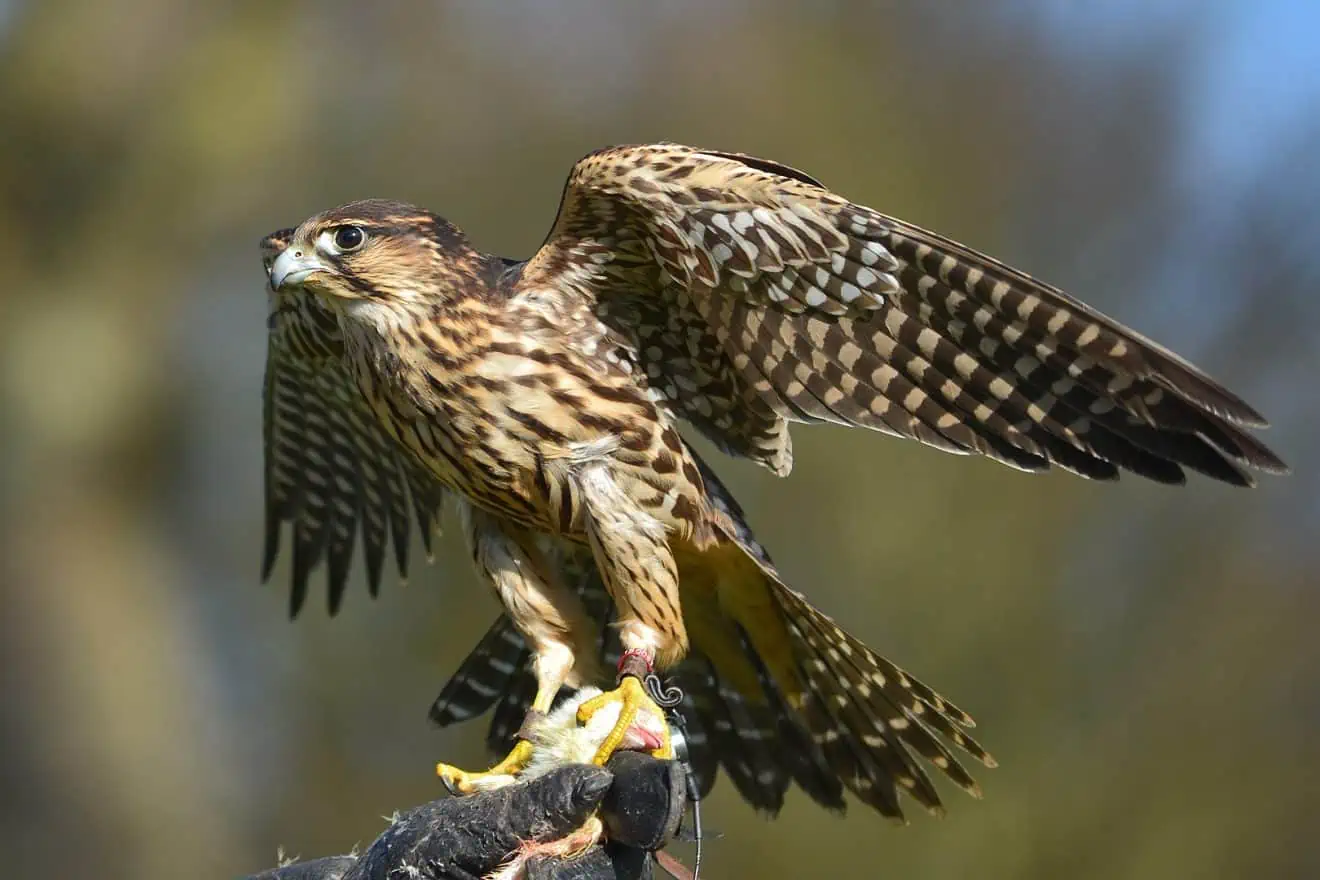
The peregrine falcon (Falco peregrinus) is widely recognized as the fastest animal on Earth, capable of reaching breathtaking speeds exceeding 240 miles per hour (386 kilometers per hour) during its characteristic hunting dive. Beyond its legendary velocity, this raptor exhibits sophisticated physiological adaptations, remarkable global distribution, and a resilient conservation history that makes it one of the most studied birds of prey in ornithology.
1. The Undisputed Speed Champion of the Animal Kingdom
When people discuss the peregrine falcon, the conversation almost always begins with speed. In level flight, these birds are remarkably fast for their size, typically cruising between 40 and 55 miles per hour. However, it is their hunting technique—known as a stoop—that showcases their true kinetic potential.
During a stoop, the falcon folds its wings back into a bullet-like shape to minimize aerodynamic drag and plummets from high altitudes toward its prey, usually catching birds mid-air. Ornithologists and aerodynamicists have recorded stooping speeds exceeding 240 mph. This velocity subjects the bird’s body to intense gravitational and wind pressures, requiring specialized physical adaptations to survive the descent.
2. Specialized Nasal Tubercles Enable Breathing at Extreme Speeds
Plummeting through the air at over 200 miles per hour creates immense wind pressure that could easily force air into a bird's lungs too rapidly, making it difficult or impossible to breathe. To solve this problem, peregrine falcons possess a unique anatomical feature inside their nostrils: small, bony, cone-shaped tubercles.
These nasal tubercles act as baffles, deflecting the powerful rush of oncoming air away from the nostrils. This clever biological engineering slows the airflow down before it enters the respiratory system, allowing the falcon to breathe normally while maintaining maximum speed during a high-speed dive.
3. A Nictitating Membrane Acts as Built-In Aviation Goggles
At high velocities, keeping eyes open against rushing wind and potential debris is a major challenge. Peregrine falcons are equipped with a third eyelid known as a nictitating membrane. This translucent membrane moves horizontally across the eye, acting much like a pair of high-performance aviation goggles.
The membrane continuously wipes away dust, moisture, and wind-borne particles while allowing the falcon to maintain clear, focused vision of its target during the final stages of a stoop. Additionally, falcon eyes feature high densities of photoreceptors, giving them visual acuity that far exceeds human capabilities.
4. Cosmopolitan Distribution Across Six Continents
The peregrine falcon boasts one of the most extensive natural distributions of any bird species in the world. They breed on every continent except Antarctica, thriving in an extraordinary variety of habitats ranging from coastal cliffs and deep river valleys to open tundra and dense urban centers.
This adaptability stems from their dietary specialization—hunting other birds—and their nesting preferences, which rely primarily on elevated ledges rather than specific tree species or ground cover. As a result, peregrine populations have established themselves successfully across diverse climatic zones, from the frigid Arctic Circle to arid desert mountains.
5. Urban Adaptation and Skyscraper Nesting
While peregrines naturally nest on high, sheer cliff faces overlooking open landscapes, they have found an urban equivalent that mimics their ancestral homes: skyscrapers, suspension bridges, and large cathedral roofs. Urban environments offer an abundance of structural ledges for nesting and a steady, year-round food supply consisting of feral pigeons and starlings.
City-dwelling peregrines have become a familiar sight in major metropolitan areas worldwide. Conservation groups and municipal agencies frequently install specialized nesting boxes on high-rise ledges to support these urban pairs, turning city skylines into vital sanctuaries for the species.
| Feature | Natural Habitat (Cliffs) | Urban Habitat (Skyscrapers) |
|---|---|---|
| Nesting Site | Rock ledges, canyon walls, sea cliffs | Building cornices, bridge girders, nest boxes |
| Primary Prey | Doves, seabirds, shorebirds, songbirds | Feral pigeons, starlings, house sparrows |
| Threats | Avian predators, weather extremes | Window collisions, vehicle strikes, urban hazards |
| Territory Size | Often vast, tied to rural river systems | Compact, centered around urban food abundance |
6. The Physics of the Mid-Air Strike
A peregrine falcon rarely kills its prey instantly with its beak. Instead, it relies on momentum and precise physics during the mid-air collision. As the falcon dives, it shapes its feet into a semi-fused fist, striking the target bird with its hind talons.
This high-impact blow is often powerful enough to stun, injure, or kill the prey outright upon contact. If the prey is not killed immediately, the falcon loops back upward to catch the falling animal or uses its hooked beak, which features a specialized "tomial tooth" on the upper mandible designed to sever the spinal cord of its quarry efficiently.
7. Near-Extinction and the DDT Crisis of the Mid-20th Century
Despite their widespread distribution, peregrine falcons suffered catastrophic population declines during the middle of the 20th century. In North America and Europe, populations plummeted due to the widespread agricultural use of synthetic pesticides, most notably dichlorodiphenyltrichloroethane (DDT).
When falcons consumed prey contaminated with DDT, the chemical accumulated in their bodies and disrupted calcium metabolism. This physiological failure resulted in female peregrines laying eggs with shells so thin and fragile that they broke under the weight of incubating parents, causing widespread reproductive failure and pushing the species toward regional extinction.
8. A Landmark Success Story in Endangered Species Recovery
The precipitous decline of the peregrine falcon served as a major catalyst for modern wildlife conservation. Following the banning of DDT in the United States in 1972 under the Environmental Protection Agency, scientists and conservationists launched intensive captive breeding and release programs.
Organizations such as The Peregrine Fund bred thousands of captive falcons and systematically reintroduced them into their historical habitats across North America and Europe. These collaborative efforts proved remarkably successful, leading to the removal of the American peregrine falcon from the U.S. Endangered Species list in 1999.
9. Sexual Dimorphism and Female Dominance
Like many birds of prey, peregrine falcons exhibit pronounced reverse sexual dimorphism, meaning the females are noticeably larger and heavier than the males. A female peregrine can weigh up to 30 to 50 percent more than her male counterpart.
This size difference serves a distinct evolutionary purpose. While the smaller, more agile male is responsible for hunting lighter prey and providing food during the incubation phase, the larger female remains at the nest site to defend the eggs and chicks from larger predators, utilizing her superior mass and power when physical confrontation is necessary.
10. Lifelong Pair Bonds and High Site Fidelity
Peregrine falcons are generally monogamous and form strong, long-lasting pair bonds that often persist for multiple breeding seasons, sometimes lasting until one partner dies. They return to the same nesting territories year after year, demonstrating strong site fidelity.
Courtship displays are elaborate and acrobatic, featuring high-altitude synchronized flights, dramatic steep dives, and mid-air food passes where the male transfers prey directly to the female's talons upside down. Once established on a territory, a pair will fiercely defend their nesting ledge from intruders, including eagles, ravens, and other raptors.
Frequently Asked Questions About Peregrine Falcons
How fast can a peregrine falcon actually fly?
In level, flapping flight, a peregrine falcon flies at speeds between 40 and 55 miles per hour. However, during its high-speed hunting dive, or stoop, it can achieve speeds exceeding 240 miles per hour, making it the fastest-moving creature on Earth.
What do peregrine falcons eat?
Peregrine falcons are specialized avian predators, meaning their diet consists almost entirely of other birds. They hunt species ranging in size from small songbirds, starlings, and pigeons to larger ducks, gulls, and shorebirds, catching them almost exclusively while in flight.
Are peregrine falcons endangered today?
No, peregrine falcons are no longer considered endangered globally. Following successful conservation interventions, habitat protections, and the ban of DDT in the 1970s, populations rebounded strongly. They are currently classified as a species of Least Concern by the International Union for Conservation of Nature (IUCN).
Where do peregrine falcons build their nests?
Natural nests, known as scrapes, are simple depressions scratched into gravel or soil on high, sheer cliffs, bluffs, or river gorges. In urban areas, they frequently utilize high-rise building ledges, bridge structures, and designated artificial nesting boxes that simulate elevated cliff habitats.
Why was DDT harmful to peregrine falcons?
DDT caused eggshell thinning by interfering with calcium deposition during egg formation. The resulting shells were too fragile to support the weight of incubating adults, leading to widespread nesting failures and severe population crashes across North America and Europe before the chemical was banned.
Conclusion
The peregrine falcon stands as a masterclass in evolutionary adaptation, combining elite aerodynamic design, sophisticated respiratory biology, and remarkable ecological resilience. From surviving the existential threat of DDT to mastering the concrete cliffs of modern cities, these raptors continue to captivate scientists and bird enthusiasts alike. Protecting their natural habitats and maintaining vigilant environmental monitoring ensures that the fastest animal on the planet will continue to soar across global skies for generations to come.