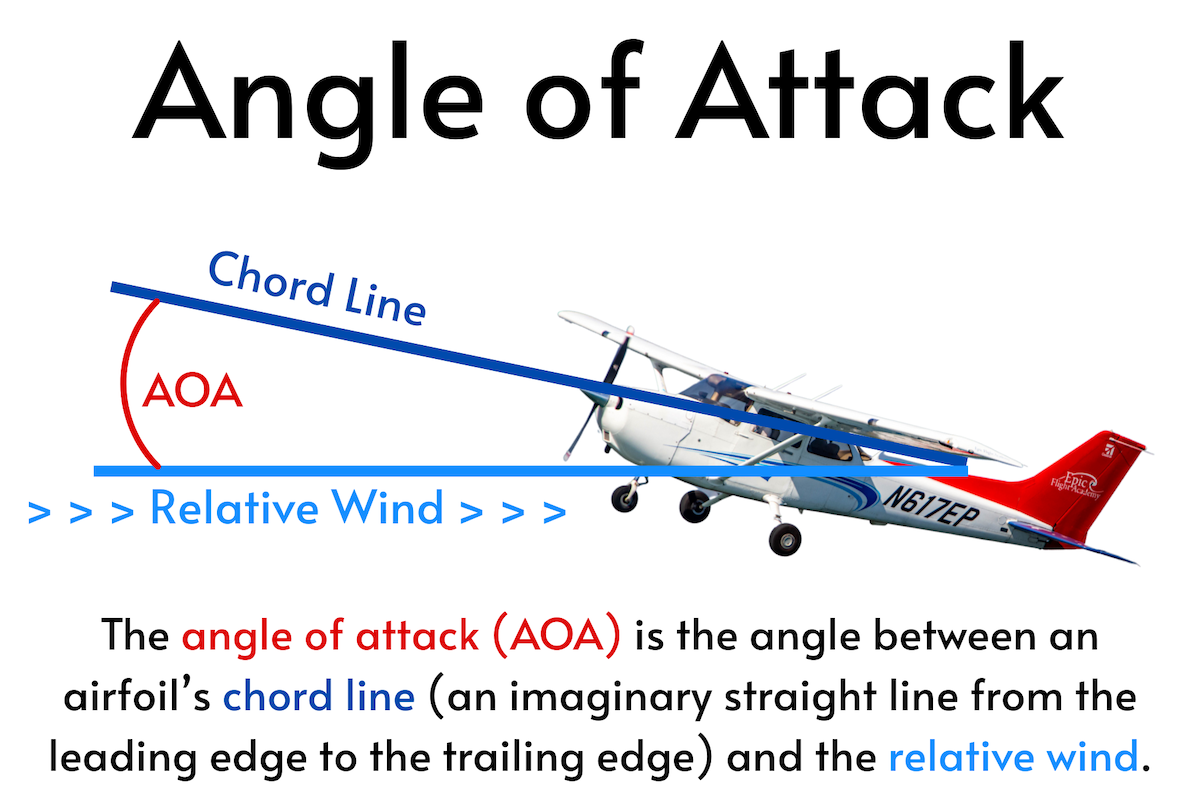
An airfoil typically stalls at a critical angle of attack ranging between 15 and 20 degrees. This specific threshold, known as the critical angle of attack, is the point where the airflow can no longer follow the upper contour of the wing, leading to a sudden loss of lift and an increase in drag.
Understanding the Critical Angle of Attack
In aerodynamics, the angle of attack (AoA) is the angle formed between the chord line of an airfoil and the direction of the relative wind. It is a fundamental concept for pilots and aeronautical engineers because it directly dictates how much lift a wing produces. Unlike the aircraft's pitch—which refers to where the nose is pointed relative to the horizon—the angle of attack is strictly concerned with the wing's orientation relative to the air moving toward it.
The relationship between lift and the angle of attack is generally linear at lower angles. As a pilot increases the AoA, the lift coefficient increases, allowing the aircraft to maintain altitude at slower speeds. However, this relationship only holds true up to a certain point. As of 2026, modern flight schools and engineering programs emphasize that every airfoil has a fixed "critical angle of attack." Once this limit is exceeded, the wing enters a state of aerodynamic stall.
It is a common misconception that stalls are caused by low airspeed. While stalls often occur at low speeds, they are exclusively a result of exceeding the critical AoA. An aircraft can stall at any airspeed and any altitude if the pilot pulls back on the controls aggressively enough to force the wing past its critical angle.
The Physics of Flow Separation
To understand why an airfoil stalls at approximately 15 to 20 degrees, one must examine the behavior of the boundary layer—the thin layer of air directly in contact with the wing's surface. At low angles of attack, the air flows smoothly over the curved upper surface of the wing. Because of the wing's shape, the air must travel faster over the top than the bottom, creating a region of low pressure that generates lift.
The Boundary Layer and Kinetic Energy
As the angle of attack increases, the air on the upper surface must navigate an increasingly steep "hill" created by the wing's curvature. To do this, the air particles require sufficient kinetic energy to overcome the friction of the wing's surface and the opposing pressure forces. At lower angles, the momentum of the air is enough to keep the flow attached from the leading edge all the way to the trailing edge.
The Adverse Pressure Gradient
When the wing reaches its critical angle, it creates what engineers call a strong adverse pressure gradient. Near the trailing edge, the air pressure is higher than it is near the middle of the wing's upper surface. As the AoA increases, the air moving toward the trailing edge is effectively trying to move from a low-pressure zone into a high-pressure zone.
Eventually, the kinetic energy of the boundary layer is exhausted. The air particles slow down, stop, and even begin to reverse direction. This reversal causes the flow to "detach" or separate from the wing. Instead of a smooth, lift-generating stream, the air becomes a turbulent wake of eddies and vortices. This turbulence destroys the pressure differential required for lift, resulting in a stall.
Variables Influencing the Stall Angle
While 15 to 20 degrees is the standard range for most conventional aircraft, several factors can shift this window or change how the stall manifests. Aerodynamic research, including data maintained by NASA’s Glenn Research Center, highlights that airfoil geometry and environmental conditions play significant roles.
Airfoil Shape and Thickness
The physical profile of the wing is the primary determinant of its stall characteristics.
- Thick, Cambered Airfoils: Often found on cargo planes or bush planes, these wings typically have a higher critical AoA and a more "gentle" stall. The flow separation starts slowly at the trailing edge and moves forward, giving the pilot more warning.
- Thin, Symmetrical Airfoils: Found on high-performance aerobatic aircraft or supersonic jets, these wings often have a lower critical AoA. When they stall, the separation often happens almost simultaneously across the entire wing surface, leading to an abrupt drop in lift.
Surface Contamination
Even a minor change to the wing's surface can drastically reduce the critical angle of attack. Frost, ice, or even a heavy accumulation of insects can disrupt the boundary layer. According to the Federal Aviation Administration (FAA), surface roughness as thin as coarse sandpaper can reduce lift by as much as 30% and cause the wing to stall at a much lower angle of attack than specified in the pilot's operating handbook.
Leading Edge Devices
In 2026, most commercial transport aircraft utilize sophisticated leading-edge slats. These devices, when extended, allow high-pressure air from the bottom of the wing to flow over the top, "re-energizing" the boundary layer. This delayed flow separation allows the aircraft to reach an angle of attack of 25 degrees or more before stalling, which is vital for safe takeoffs and landings at heavy weights.
Types of Aerodynamic Stalls
Stalls are not limited to straight-and-level flight. Because the critical angle of attack is a physical constant of the wing's design, it can be exceeded in various flight regimes.
| Stall Type | Trigger Mechanism | Common Scenario |
|---|---|---|
| Power-Off Stall | High pitch at low engine power | Landing approach |
| Power-On Stall | Excessive pitch at high engine power | Takeoff or go-around |
| Accelerated Stall | Increased load factor (G-force) | Steep turns or abrupt pull-ups |
| Secondary Stall | Improper recovery (pulling up too soon) | Following an initial stall recovery |
| Deep Stall | Turbulent air blankets the elevator | T-tail aircraft at high AoA |
Accelerated Stalls
An accelerated stall is particularly dangerous because it can occur at high airspeeds. If a pilot enters a steep turn, the "effective weight" of the aircraft increases due to centrifugal force. To maintain altitude, the pilot must increase back-pressure on the yoke, which increases the angle of attack. If the turn is sharp enough, the wing will hit its critical angle of attack (15°–20°) even though the airspeed is well above the "normal" stall speed.
Deep Stalls (Super Stalls)
Deep stalls are a specific risk for aircraft with T-tail configurations, where the horizontal stabilizer is mounted on top of the vertical fin. At extremely high angles of attack, the turbulent wake from the stalled main wing can rise up and completely blanket the tail. This prevents the elevator from generating the downward force needed to push the nose down and recover, effectively locking the aircraft in a stalled state.
Recognizing and Recovering from a Stall
Aviation safety in 2026 relies heavily on both pilot training and automated systems to prevent exceeding the critical angle of attack. Pilots are trained to recognize the "symptoms" of an approaching stall before the actual separation occurs.
- Buffeting: This is a physical vibration felt through the airframe and controls. It is caused by the turbulent air from the separating boundary layer hitting the tail surfaces.
- Reduced Control Effectiveness: As airspeed slows and flow becomes turbulent, the ailerons and elevators feel "mushy" or less responsive.
- Stall Warning Systems: Most modern aircraft are equipped with a stall horn or a "stick shaker" that activates 5 to 10 knots before the stall actually occurs, providing a safety buffer.
The Recovery Process
The universal remedy for a stall is to reduce the angle of attack. This is achieved by moving the control column forward (nose-down). By lowering the nose, the pilot realigns the chord line of the wing with the relative wind, allowing the airflow to re-attach to the upper surface. Once the flow is re-attached and lift is restored, the pilot can then add power and gently level the wings to return to normal flight.
Current 2026 Standards in Stall Prevention
As of 2026, technology has moved toward "Stall Persistence" and advanced "Envelope Protection." Many modern Fly-By-Wire (FBW) systems, such as those found on newer Airbus and Boeing models, include flight envelope protection that makes it physically impossible for a pilot to pull the stick back far enough to exceed the critical angle of attack under normal law.
Furthermore, Angle of Attack (AoA) indicators have become standard equipment even in many general aviation cockpits. Unlike a traditional airspeed indicator, which only tells the pilot how fast they are moving, an AoA indicator provides a real-time visualization of how close the wing is to its critical 15-to-20-degree limit, regardless of weight, bank angle, or density altitude.
Frequently Asked Questions
Does the stall angle change with altitude?
The critical angle of attack remains constant regardless of altitude. However, because the air is less dense at higher altitudes, the aircraft must travel at a much higher true airspeed to reach the pressure differential required for flight. While the stall speed (IAS) might remain relatively consistent, the margin for error decreases at high altitudes due to the effects of Mach tuck and high-speed buffeting.
Can a wing stall if the nose is pointed down?
Yes. If an aircraft is descending rapidly and the pilot pulls back sharply on the controls, the relative wind may be coming from "below" the aircraft's path. In this scenario, the angle between the wing and that relative wind can exceed 20 degrees, causing a stall even though the nose is pointed toward the ground.
Why do some wings stall at the root first?
Designers often build wings with "washout," meaning the wing is slightly twisted so the root has a higher angle of incidence than the tip. This ensures the wing root reaches its critical AoA first. By stalling at the root first, the aircraft provides a gentle buffet warning while the ailerons (located near the tips) remain in smooth air, allowing the pilot to maintain roll control during the recovery.
Is the stall angle the same for all aircraft?
No. While 15 to 20 degrees is common for general aviation, high-speed fighter jets with delta wings can sometimes reach much higher angles of attack (30 to 40 degrees) using "vortex lift," where controlled turbulence over the wing generates lift at extreme angles. Conversely, some very thin, high-speed airfoils may stall at as little as 10 to 12 degrees.
Practical Recommendations for Pilots and Engineers
For those operating or designing aircraft in 2026, the most critical takeaway is the distinction between airspeed and the angle of attack. To ensure safety:
- Trust the AoA Indicator: If your aircraft is equipped with an AoA gauge, prioritize its feedback over the airspeed indicator during high-load maneuvers or slow-flight phases.
- Keep Surfaces Clean: Never attempt to fly with frost or ice on the wings. Even a thin layer can reduce your critical AoA from 18 degrees down to 10 degrees without warning.
- Practice Recovery: Regularly practice stall recognition and recovery in a flight simulator or with a qualified instructor to ensure that the nose-down recovery movement becomes a subconscious reflex.