In 2026, a good APR for a student loan generally falls between 5.5% and 8.0% for undergraduate federal loans and between 4.5% and 10% for private loans, depending on creditworthiness. While federal rates are fixed by law annually, private "good" rates are those that beat or match federal PLUS loan rates for highly qualified borrowers.
Selecting a student loan involves more than just checking the monthly payment; it requires a granular understanding of the Annual Percentage Rate (APR). Unlike a simple interest rate, the APR accounts for the interest rate plus any fees—such as origination or documentation fees—providing a more accurate picture of the total cost of borrowing. As we navigate the financial landscape of 2026, the definition of a "good" rate has shifted due to broader economic trends, the Secured Overnight Financing Rate (SOFR), and federal legislative updates.
Understanding the Difference Between Interest Rate and APR
Before identifying a target APR, it is essential to distinguish it from a base interest rate. The interest rate is the percentage of the principal balance charged by the lender for the use of the money. However, student loans often come with administrative costs.
For federal loans, the government charges an origination fee (a percentage of the total loan amount) that is deducted from the disbursement. For example, if you borrow $10,000 with a 1% origination fee, you only receive $9,900, but you still owe $10,000 plus interest. The APR factors this "lost" money back into the cost, resulting in a figure slightly higher than the nominal interest rate. When comparing private lenders, some may offer a "0% fee" structure, which makes their interest rate and APR identical. Always use the APR as your primary comparison metric to ensure an "apples-to-apples" evaluation.
Federal Student Loan Rates for the 2025-2026 Academic Year
Federal student loans are often the benchmark for what constitutes a "good" rate because they offer unique protections like income-driven repayment (IDR) plans, deferment, and potential forgiveness programs. The rates for federal loans are set annually based on the high yield of the 10-year Treasury note auctioned in May.
As of the 2025-2026 cycle, federal rates have stabilized following the volatility of the mid-2020s. For undergraduate students, a good APR is the standard federal rate, which currently sits around 6.53%. For graduate students, the Direct Unsubsidized rate is typically higher, often hovering near 8.08%. Parent and Grad PLUS loans, which require a credit check, generally carry the highest federal APRs, often exceeding 9%.
Why Federal Rates Matter
Even if a private lender offers a slightly lower APR than a federal loan, the federal loan might still be the "better" deal. This is because the APR does not reflect the value of federal subsidies (where the government pays the interest while you are in school) or the safety net of being able to pause payments during economic hardship. A "good" APR for a federal loan is essentially the lowest one available for your specific degree level, as these rates are non-negotiable and apply to everyone regardless of credit score.
Defining a Good APR for Private Student Loans
Private student loans are a different environment entirely. Unlike federal loans, private lenders—including banks, credit unions, and online fintech companies—base your APR on your (or your cosigner’s) credit score, income, and financial history.
In 2026, a "good" private APR is one that is lower than the federal Direct PLUS loan rate. If a student or their cosigner has an excellent credit score (780 or higher), they can often secure variable rates as low as 4.5% or fixed rates starting at 5.2%. Conversely, for a borrower with "fair" credit (mid-600s), a good rate might be anything under 12%, though these borrowers should be cautious, as rates can climb as high as 15% to 18%.
Fixed vs. Variable APRs
A critical decision in 2026 is choosing between a fixed and a variable APR.
- Fixed APR: This rate remains the same for the life of the loan. It provides predictability and protection against future economic shifts. In a stable or rising rate environment, a fixed APR of 6% to 7.5% is considered excellent.
- Variable APR: These rates are tied to an index, such as the SOFR. They often start lower than fixed rates but can increase over time. A good starting variable APR in 2026 is 4.5% to 5.5%. Borrowers should only choose this if they plan to pay off the loan quickly or if they believe market rates will decline.
Comparative APR Benchmarks for 2026
The following table outlines what borrowers should expect to see across different loan types and credit profiles. This serves as a guide for determining if an offer you receive is competitive.
| Loan Type | Typical APR Range (2026) | What is Considered "Good"? |
|---|---|---|
| Federal Undergraduate (Subsidized) | 6.53% (Fixed) | 6.53% (Standard) |
| Federal Graduate (Unsubsidized) | 8.08% (Fixed) | 8.08% (Standard) |
| Federal Parent/Grad PLUS | 9.08% (Fixed) | 9.08% (Standard) |
| Private (Excellent Credit 750+) | 4.8% – 7.5% | Under 6.5% |
| Private (Good Credit 700-749) | 7.6% – 10.5% | Under 8.5% |
| Private (Fair Credit 650-699) | 10.6% – 14.5% | Under 11.5% |
| Student Loan Refinance | 4.2% – 9.0% | Under 6.0% |
Factors That Influence Your Personal APR
If you find that the APRs you are being offered are higher than the "good" benchmarks listed above, several factors are likely at play. Understanding these can help you take steps to lower your rate before signing a promissory note.
The Power of the Cosigner
Most undergraduate students have a "thin" credit file, meaning they haven't had credit cards or loans long enough to build a high score. For private loans, adding a cosigner with a high income and a credit score above 750 is the most effective way to drop an APR by 3% to 5%. In the 2026 market, many lenders offer "cosigner release" programs, allowing the student to take over the loan entirely after making a certain number of on-time payments.
Debt-to-Income Ratio (DTI)
Lenders examine how much of your monthly income is already committed to debt payments. Even with a high credit score, a borrower with a high DTI may be offered a higher APR because the lender perceives a higher risk of default. For students, lenders often look at the prospective DTI or the cosigner's current DTI.
Loan Term Length
Generally, the shorter the repayment term, the lower the APR. A 5-year repayment plan will almost always have a lower APR than a 15-year or 20-year plan. While the monthly payments on a 5-year plan are significantly higher, the total interest paid over the life of the loan is drastically lower.
Strategies to Secure a Lower APR
If you are looking to beat the market averages in 2026, consider these specific strategies:
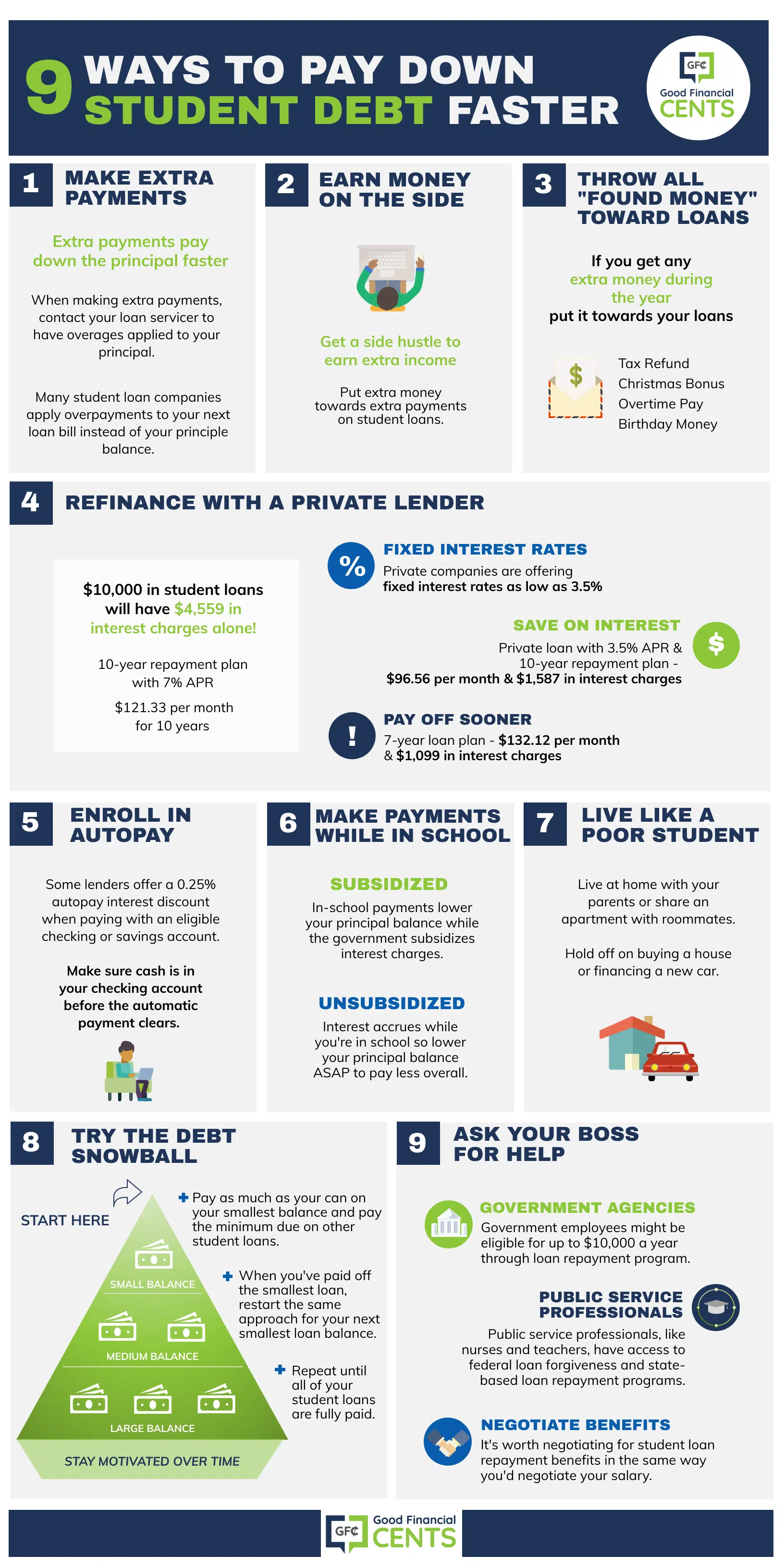
- Autopay Discounts: Almost all lenders, including the federal government, offer a 0.25% interest rate reduction if you enroll in automatic payments. While 0.25% sounds small, on a $50,000 loan, it can save hundreds of dollars over ten years.
- Loyalty Discounts: Some major banks offer an additional 0.25% to 0.50% APR reduction if you already hold a checking or savings account with them.
- Rate Shopping: When applying for private loans, apply to multiple lenders within a 30-day window. Credit scoring models typically treat multiple inquiries for the same type of loan as a single "hard pull," protecting your credit score while allowing you to compare offers.
- Improving Credit Before Applying: If you have six months before you need the funds, focus on paying down credit card balances to lower your credit utilization. This can boost your score quickly and lead to a better APR tier.
When to Consider Refinancing for a Better APR
Refinancing involves taking out a new private loan to pay off your existing federal or private loans. In 2026, this is a popular strategy for graduates who have entered the workforce and seen an increase in their credit score and income.
A good APR for refinancing is one that is at least 1% to 2% lower than your current weighted average interest rate. However, caution is required when refinancing federal loans into private ones. By doing so, you permanently lose access to federal benefits such as Public Service Loan Forgiveness (PSLF) and the SAVE (Saving on a Valuable Education) plan or its 2026 equivalents. Only refinance federal loans if you have a stable job, a robust emergency fund, and no intention of utilizing federal forgiveness programs.
Common Mistakes When Evaluating APRs
One of the most frequent errors is focusing solely on the "starting at" rates advertised on lender websites. These "teaser rates" are usually reserved for the top 1% of borrowers—those with near-perfect credit and high incomes opting for the shortest possible repayment terms.
Another mistake is ignoring the impact of capitalization. If you choose to defer payments while in school, the interest "accrues" (builds up) and is then "capitalized" (added to the principal) when you enter repayment. An APR that looks "good" can still result in a massive balance if the interest is allowed to compound for four years. Whenever possible, pay at least the interest while in school to keep the effective cost of your APR in check.
Frequently Asked Questions
Is a 10% APR bad for a student loan?
In the context of 2026, a 10% APR is considered high for an undergraduate federal loan or a private loan with a cosigner. However, for a graduate student or an independent borrower with a "fair" credit score, 10% is relatively common. If you are offered 10%, you should explore adding a cosigner or checking federal options first.
Can I lower my APR after I have already taken out the loan?
You cannot lower the APR on an existing federal loan unless Congress passes new legislation. For private loans, the only way to lower your APR is through refinancing once your credit score or income has improved. Most borrowers wait until they have graduated and been employed for at least six to twelve months before attempting to refinance.
Does the school I attend affect my APR?
For federal loans, no; the rates are the same regardless of the institution. For some private lenders, yes. Certain fintech lenders use "merit-based" or "outcome-based" underwriting, which considers your major and the historical earning potential of graduates from your specific university when determining your APR.
Should I choose the lowest APR if it means a higher monthly payment?
This depends on your cash flow. A lower APR with a shorter term (higher monthly payment) saves you the most money in the long run. However, if the high payment leaves you with no emergency savings, you risk default. It is often better to choose a slightly higher APR with a manageable payment than a low APR that stretches your budget to the breaking point.
Are variable APRs dangerous in 2026?
Variable APRs are not inherently "dangerous," but they are unpredictable. If the economy experiences a sudden inflationary spike, your rate could rise significantly. Most variable loans have a "cap" (often around 18%), but reaching that cap would be financially devastating for most students. Only choose a variable rate if you have the flexibility to pay the loan off if rates start to climb.
Final Recommendation
To find the best APR in 2026, start by maximizing your federal subsidized and unsubsidized loan options. These offer the most stability and protection. If you must turn to private lenders, ensure you have a creditworthy cosigner and compare at least three different offers. Aim for an APR that stays under 8% to ensure that your future debt-to-income ratio remains healthy and your education remains a sound financial investment.