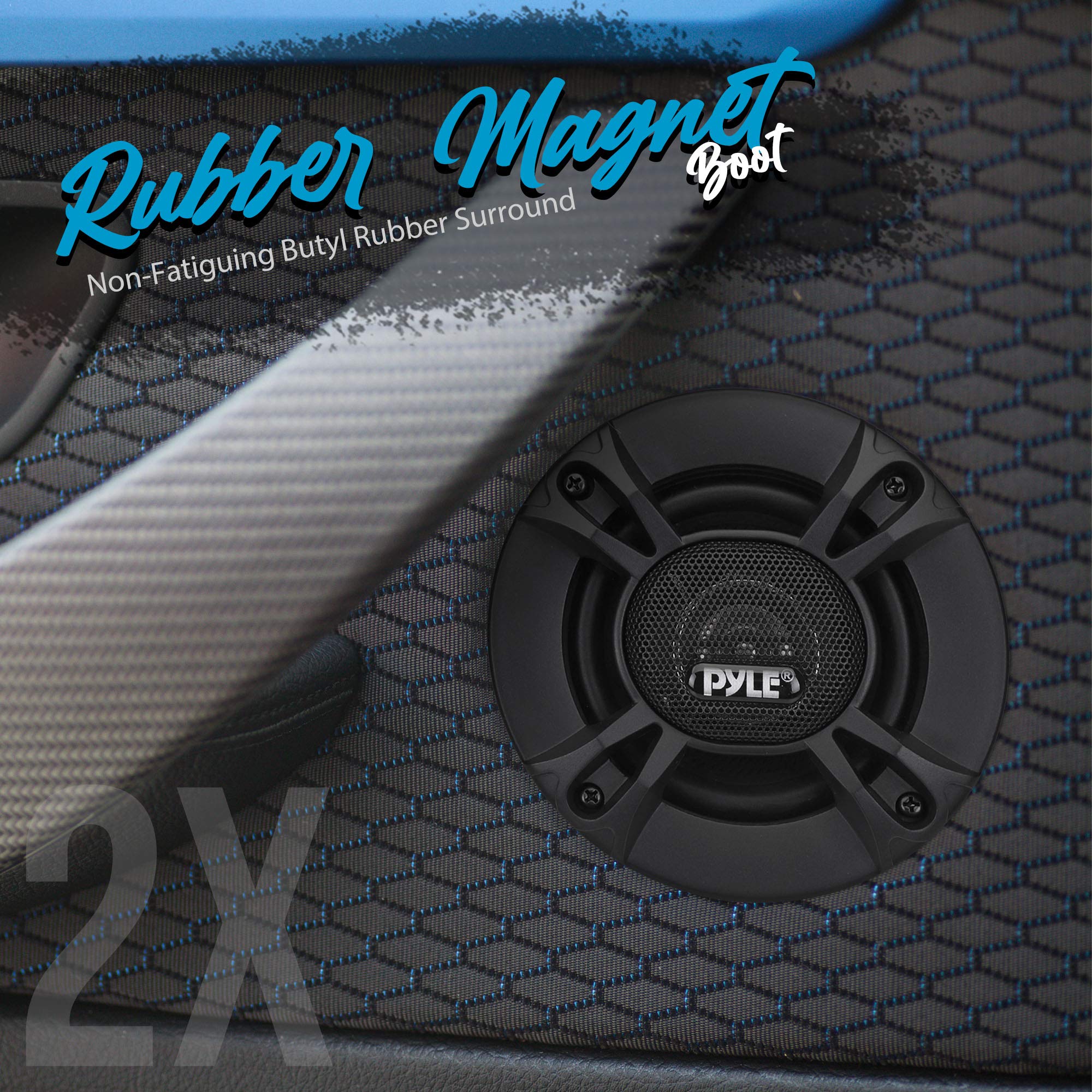
No, car speakers are not universal. While many aftermarket speakers follow standardized sizes like 6.5 inches or 6x9 inches, physical dimensions, mounting depths, bolt patterns, and electrical impedance vary significantly between vehicle makes and models. Proper fitment requires matching the specific speaker specifications to your car’s factory housing and electrical system.
The Myth of Universal Fitment in Car Audio
When upgrading a vehicle's sound system, many enthusiasts assume that a speaker labeled as a specific size will automatically fit any vehicle designed for that size. This is a common misconception that often leads to frustration during the installation process. In the automotive industry of 2026, manufacturers continue to prioritize interior aesthetics and space efficiency, which results in highly specialized speaker enclosures and mounting locations.
While the aftermarket industry has done an admirable job of creating "standardized" sizes, the term "universal" is a misnomer. A speaker that fits perfectly in the front door of a 2022 Toyota RAV4 might be completely incompatible with a 2024 Ford F-150, even if both are technically designed for 6.5-inch drivers. Understanding the nuances of physical dimensions, electrical requirements, and mounting hardware is essential for anyone looking to improve their mobile audio experience.
Physical Dimensions and Mounting Constraints
The most immediate hurdle to universality is the physical space available within the vehicle’s door panels, dash, or rear deck. Car manufacturers do not follow a global mandate for speaker housing design. Instead, they design the audio system to fit the specific geometry of the cabin.
Diameter and Shape
Standardized sizes like 5.25-inch, 6.5-inch, and 6x9-inch are the most common, but these measurements are often approximate. A "6.5-inch" speaker from one brand may have a slightly larger outer frame than a 6.5-inch speaker from another. Furthermore, many modern European vehicles use proprietary shapes or sizes (such as 4-inch or 8-inch mid-bass drivers) that do not align with common aftermarket offerings.
Mounting Depth
One of the most overlooked factors is mounting depth. Even if a speaker fits the diameter of the hole, the magnet assembly might be too deep. In many car doors, the window glass slides down directly behind the speaker location. If the aftermarket speaker is too deep, the window will strike the back of the magnet, potentially shattering the glass or damaging the speaker. High-performance speakers often feature larger, deeper magnets to handle more power, making them harder to fit in compact or modern slim-door vehicles.
Bolt Patterns and Brackets
Rarely do the screw holes on an aftermarket speaker line up perfectly with the factory holes in the car door. Manufacturers like Honda, Toyota, and GM often use a three-bolt triangular pattern or a proprietary plastic bracket system. To install a "standard" round speaker, you typically need an adapter bracket. While these brackets make the speaker compatible, they prove that the speaker itself is not universal.
Electrical Compatibility: Impedance and Power
Beyond the physical fit, the electrical characteristics of a speaker must match the vehicle's output. Connecting the wrong speaker to a factory amplifier can result in poor sound quality or, in some cases, hardware failure.
Impedance (Ohms)
Most aftermarket car speakers are rated at 4 ohms. However, many premium factory systems (such as those by Bose, JBL, or Harman Kardon) operate at 2 ohms or even 1 ohm. If you replace a 2-ohm factory speaker with a 4-ohm aftermarket speaker, the volume will be significantly lower because the amplifier cannot push as much power into the higher resistance. Conversely, installing a 2-ohm speaker on a system designed for 4 ohms can cause the head unit or amplifier to overheat and fail.
Sensitivity and Efficiency
Factory head units usually have very low power output (often 10–15 watts RMS per channel). Aftermarket speakers are often designed to handle much higher power and may have lower sensitivity. This means they require more "juice" to produce the same volume level as the cheap, paper-cone factory speakers they replaced. Without an external amplifier, some "upgraded" speakers may actually sound worse than the originals.
Wiring Harnesses
Car manufacturers use unique plastic "molex" connectors for their speakers. Aftermarket speakers come with generic spade terminals. To install them, you must either cut the factory wires (not recommended) or purchase vehicle-specific wiring harness adapters. These adapters are essential for maintaining the integrity of the vehicle's electrical system and ensuring proper phase (polarity).
Component vs. Coaxial Systems
The type of speaker system currently in your car also dictates what you can buy. Speakers generally fall into two categories:
- Coaxial Speakers: These are "all-in-one" units where the tweeter is mounted on a bridge over the woofer. These are the closest things to a universal replacement for low-end factory systems.
- Component Speakers: These separate the woofer and the tweeter into two distinct pieces, often with an external crossover network. If your car has tweeters in the dashboard or A-pillars and woofers in the doors, you have a component system. Replacing this with a coaxial speaker might result in muffled sound because the high frequencies will be firing at your ankles rather than your ears.
Modern Complications: ANC and Digital Processing
As of 2026, many vehicles are equipped with Active Noise Cancellation (ANC). These systems use the car's speakers to play "anti-noise" frequencies that cancel out engine or road drone. If you install aftermarket speakers with different frequency response curves or add an amplifier without a bypass module, the ANC system may create loud, low-frequency feedback or "booming" sounds that make the car nearly undriveable.
Additionally, many modern infotainment systems use complex Digital Signal Processing (DSP) to "fix" the sound of cheap factory speakers. When you install high-quality aftermarket speakers, the factory DSP is still applying its old equalization curves, which can make the new speakers sound harsh or distorted. Resolving this often requires a DSP correction interface, adding another layer of complexity to the "universal" fitment dream.
Comparative Overview of Common Speaker Sizes
The following table outlines the most common speaker sizes and their typical applications in the automotive market.
| Speaker Size | Common Locations | Pros | Cons |
|---|---|---|---|
| 3.5 Inch | Dashboards, Center Channels | Clear high-end detail; fits tight spaces. | Very little bass response; easily distorted. |
| 5.25 Inch | Rear Doors, Kick Panels | Common in older or compact cars. | Limited mid-bass; often requires adapters. |
| 6.5 Inch | Front/Rear Doors | The industry standard; huge variety. | Depth issues are common in modern doors. |
| 6.75 Inch | Front Doors (GM/Chrysler) | Slightly more surface area than 6.5". | Often confused with 6.5"; fitment varies. |
| 6x8 / 5x7 Inch | Ford, Mazda, Nissan Doors | Large cone area for good mid-bass. | Oval shape is less efficient for sound quality. |
| 6x9 Inch | Rear Decks, Truck Front Doors | Excellent bass for a full-range speaker. | Large footprint; requires significant depth. |
How to Verify Fitment for Your Vehicle
Because speakers are not universal, you must perform due diligence before purchasing. Follow these steps to ensure a successful upgrade:
- Use a Fitment Database: Websites like Crutchfield maintain extensive databases where they have physically measured thousands of vehicles. This is the most reliable way to see what fits your specific year, make, and model.
- Check the "Bottom Mount" Depth: If a website lists a speaker as fitting, double-check the mounting depth. If it’s over 3 inches, you may need to measure the clearance inside your door with the window down.
- Identify Your Sound System: Determine if you have a "Base" system or a "Premium" (Bose/Sony/etc.) system. Premium systems almost always have non-standard impedance and external amplifiers that complicate replacement.
- Look for Brackets and Harnesses: Search for "Speaker adapter brackets" and "Wiring harnesses" for your specific vehicle. If these don't exist, you may have to fabricate custom mounts.
Common Installation Mistakes
Even with the right size, errors during installation can lead to poor performance.
- Ignoring Phase: If you swap the positive and negative wires on one speaker but not the other, they will be "out of phase." This causes the sound waves to cancel each other out, resulting in almost zero bass.
- Forgetting the Gasket: Speakers need an airtight seal against the mounting surface. If air leaks around the edges of the speaker, the sound will be thin and "tinny." Most pros use foam rings (Fast Rings) or silicone baffles to seal the speaker to the door panel.
- Bypassing the Crossover: If you are installing component speakers, you must use the included crossover. Sending bass frequencies to a small tweeter will destroy it instantly.
Frequently Asked Questions
Can I put 6.5-inch speakers in a 6x9-inch opening?
Yes, but you will need an adapter plate. Many manufacturers sell plastic or MDF (Medium Density Fibreboard) plates that allow a smaller round speaker to sit securely in a larger oval hole. This is a common practice because 6.5-inch speakers often provide better sound clarity than 6x9-inch models.
Why do some speakers come with different mounting holes?
Aftermarket manufacturers often include "multi-hole" mounting rings. These frames have various slots and holes designed to align with the different bolt patterns used by manufacturers like Toyota or GM. While this makes them "more universal," it does not guarantee fitment in all vehicles.
Do I need to replace my head unit to get better sound?
Not necessarily. Many people keep the factory head unit to maintain the original look of the dash and the functionality of steering wheel controls. However, if the factory head unit has a heavily processed signal, you might need a "Line Output Converter" (LOC) or a DSP to clean up the signal before it reaches your new speakers.
Will aftermarket speakers void my car's warranty?
Generally, no. In the United States, the Magnuson-Moss Warranty Act protects consumers, stating that a manufacturer cannot void a warranty simply because an aftermarket part was used. However, if your installation causes a short circuit that fries the car's computer, that specific damage will not be covered.
Is it better to buy speakers with a higher wattage rating?
Higher wattage (RMS) indicates how much power a speaker can handle, not how loud it will be. If you are using a low-power factory radio, a speaker with a very high wattage rating might actually sound worse because it is "under-driven." Look for a high "Sensitivity" rating (90dB or higher) if you aren't adding an amplifier.
Final Recommendation
When upgrading your car audio, the "universal" label is a trap for the unwary. To ensure a successful installation, you must move beyond general sizes and look at the technical specifications of your specific vehicle. Start by consulting a verified fitment guide and checking the impedance of your factory system. If you are dealing with a modern vehicle from 2024–2026, consider how integrated features like ANC or factory EQ will interact with your new hardware. For most users, purchasing a vehicle-specific installation kit—including brackets and wiring adapters—is the only way to make a "standard" speaker work in a non-universal environment.