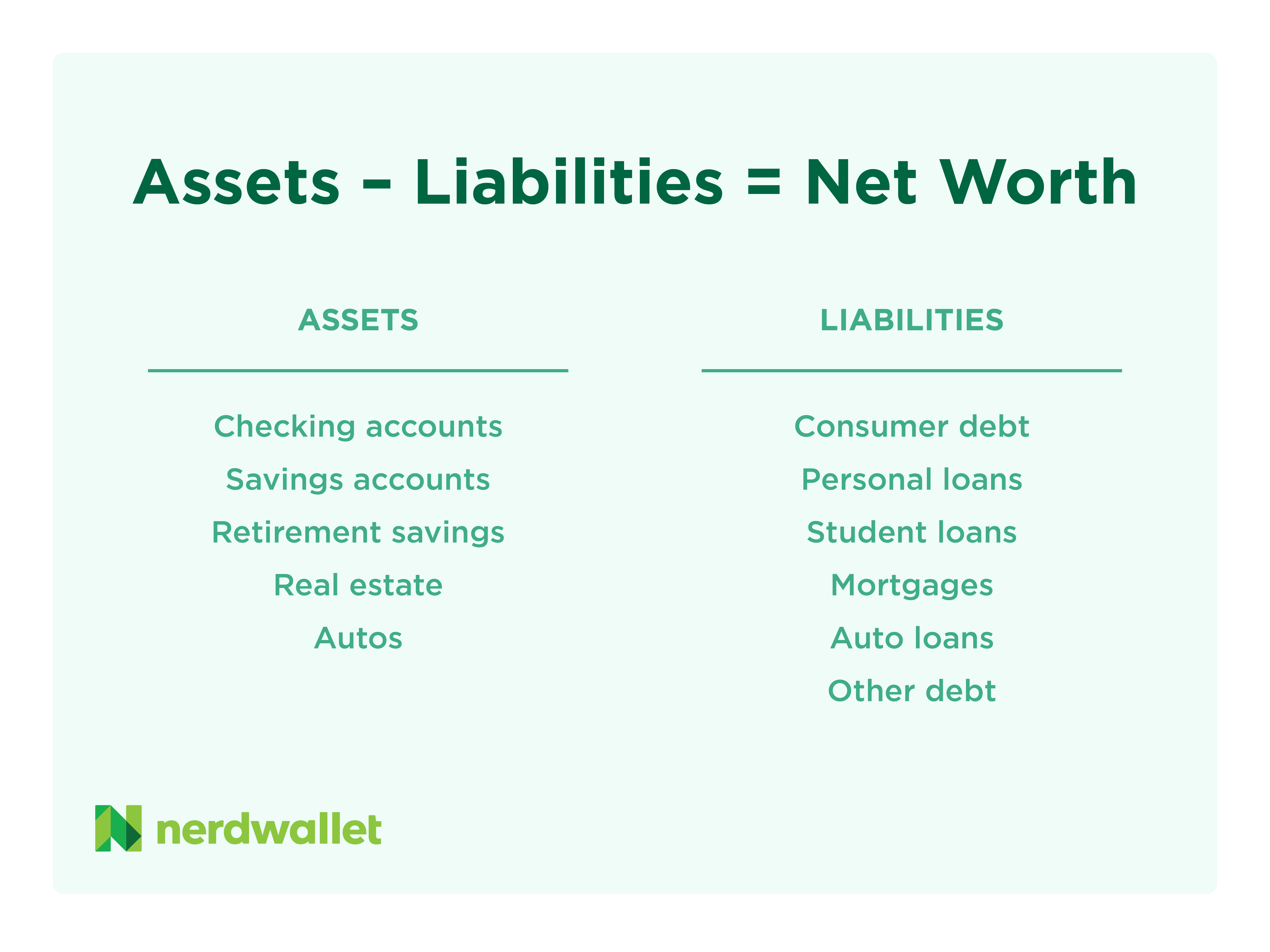
Business ownership is fundamentally included in net worth calculations as a significant asset. To determine your net worth, you must calculate the fair market value of your ownership stake in a business and subtract any associated business liabilities for which you are personally responsible. This figure represents the equity value of the enterprise.
Calculating personal net worth is a standard practice for tracking financial progress, applying for high-level credit, or planning for retirement. For entrepreneurs and investors, the business is often the largest single component of their wealth. However, unlike a bank account balance or a stock portfolio, a business's value is not always transparent or easily liquidated. In 2026, with the increasing complexity of digital assets and diverse corporate structures, accurately reflecting a business’s impact on your personal balance sheet requires a nuanced understanding of valuation and legal structures.
Understanding the Role of Business Assets in Personal Net Worth
At its most basic level, net worth is defined as the total value of everything you own (assets) minus everything you owe (liabilities). Business equity is categorized as a non-liquid asset. Because you have a legal claim to the value of the company—whether you are a solo practitioner or a majority shareholder in a corporation—that value must be accounted for to get an accurate picture of your financial standing.
The inclusion of a business in your net worth is not merely about the cash in the company’s bank account. It encompasses the entirety of the business’s economic value, including physical inventory, real estate, equipment, intellectual property, and "goodwill"—the intangible value of the brand and its customer base. For many high-net-worth individuals, business equity accounts for more than 50% of their total wealth, making it the most volatile and critical metric in their financial profile.
How Different Business Structures Impact Your Net Worth
The legal structure of your business dictates how you record it on a personal financial statement. In 2026, the distinction between personal and corporate entities remains a cornerstone of financial accounting, affecting both liability and valuation.
Sole Proprietorships
In a sole proprietorship, there is no legal separation between the owner and the business. Every asset owned by the business is technically owned by you, and every business debt is a personal liability. When calculating net worth, you typically list business assets (like tools, computers, or professional vehicles) and business debts (like a commercial line of credit) directly alongside your personal items.
Partnerships and LLCs
For Limited Liability Companies (LLCs) and partnerships, the calculation shifts to your specific percentage of ownership. If you own 40% of an LLC, your net worth includes 40% of the company’s equity value. Because these entities often have operating agreements that restrict how and when you can sell your share, the "liquid" value might be lower than the "book" value, but for net worth purposes, the full equity share is recorded.
S-Corps and C-Corps
Corporate structures treat the business as a separate legal person. Your "asset" is the shares of stock you own. If the company is publicly traded, valuation is easy: multiply the number of shares by the current market price. For private corporations, you must determine the value of the shares through a private valuation, which considers the company's earnings, assets, and market position.
Valuation Methods: How Much Is Your Business Actually Worth?
The most difficult part of including a business in your net worth is determining its current price tag. Unlike a savings account, a business's value fluctuates based on market conditions, interest rates, and internal performance. Professional appraisers generally use three primary approaches.
The Asset-Based Approach
This method calculates the "net asset value" by subtracting total business liabilities from the fair market value of all business assets. This is most common for companies that are not currently profitable or those that hold significant tangible assets, such as real estate holding companies or equipment rental firms. In 2026, this remains the most conservative way to value a business, as it essentially looks at the "liquidation value."
The Market-Based Approach
The market approach relies on "comparables." It looks at what similar businesses in the same industry and geographic location have recently sold for. This often uses a multiple of earnings (such as EBITDA—Earnings Before Interest, Taxes, Depreciation, and Amortization) or a multiple of revenue. For example, a specialized software-as-a-service (SaaS) company might be valued at 5x its annual recurring revenue, whereas a local landscaping business might be valued at 2x its annual profit.
The Income-Based Approach
This approach is based on the idea that a business is worth the present value of all its future profits. The most common technique is the Discounted Cash Flow (DCF) analysis. It projects future earnings and then "discounts" them back to today’s dollars using a specific interest rate. This is the preferred method for high-growth companies where future potential far outweighs current physical assets.
Separating Personal and Business Liabilities
A common mistake in net worth calculation is double-counting or misattributing debt. To maintain an accurate personal financial statement, you must distinguish between recourse and non-recourse debt.
- Recourse Debt: If you have personally guaranteed a business loan (common for small business owners), that debt is a personal liability. Even if the business defaults, the lender can come after your personal assets. This must be factored into your net worth.
- Non-Recourse Debt: If a business debt is tied solely to the corporation and you have no personal liability, it reduces the "business equity" value but should not be listed as a separate personal liability.
Understanding this distinction is vital for accurate financial reporting, especially when applying for a mortgage or a personal loan where the lender examines your debt-to-income ratio.
The Difference Between Book Value and Fair Market Value
When reviewing a balance sheet, you will often see "Book Value." This is the original cost of assets minus depreciation. For net worth purposes, Book Value is usually irrelevant.
Your net worth should reflect Fair Market Value (FMV)—the price a willing buyer would pay a willing seller in an arm’s length transaction. For example, a piece of machinery might have a book value of $0 because it has been fully depreciated for tax purposes, but it might still be worth $50,000 on the open market. Conversely, "Goodwill" might be high on the books after an acquisition, but if the brand has lost its market share, the FMV could be significantly lower.
| Valuation Method | Best Used For | Primary Calculation Factor |
|---|---|---|
| Asset-Based | Retailers, Real Estate, Liquidations | Total Assets - Total Liabilities |
| Market-Based | Common Small Businesses (Cafes, HVAC) | Industry multiples (SDE or EBITDA) |
| Income-Based (DCF) | Tech Startups, High-Growth Firms | Projected future cash flows |
| Public Market Cap | Publicly traded companies | Share price x total shares outstanding |
Challenges of Including Private Business Interests
While a business is technically part of your net worth, it is often treated differently by financial institutions because of liquidity risk. You cannot "spend" the equity in your business to buy groceries or pay a mortgage without selling the company or taking a distribution.
Furthermore, many private businesses are subject to a Discount for Lack of Marketability (DLOM). If you own a 20% stake in a family business, that stake is worth less than 20% of the total company value because it is very hard to find a buyer for a minority interest in a private firm. Professional valuations often shave 15% to 35% off the theoretical value to account for this difficulty in selling.
Why You Should Regularly Calculate Your Business's Impact on Net Worth
Maintaining an updated net worth statement that includes your business is essential for several reasons:
- Estate Planning: The IRS and state tax authorities look at the fair market value of your business interests when calculating estate taxes. Knowing this value now allows for better tax shielding strategies.
- Exit Strategy: If you plan to retire by 2030, you need to know if the current trajectory of your business value will meet your retirement needs.
- Insurance Adequacy: If your business value increases significantly, your life insurance and "key person" insurance coverage may need to be adjusted to protect your family or partners.
- Lending and Credibility: High-level investment opportunities often require "Accredited Investor" status, which is partially determined by having a net worth of over $1 million (excluding your primary residence). Your business value is a key contributor to meeting this threshold.
Common Pitfalls in Calculating Business Equity
Many business owners inadvertently inflate or deflate their net worth by failing to account for the following:
- Deferred Taxes: If you sell your business, you will likely owe capital gains taxes. Some conservative planners subtract the estimated tax hit from the business value to find a "net-net" worth.
- Key Person Dependency: If the business cannot operate without you, its market value might be much lower than you think. A buyer will pay less for a company that risks collapsing once the founder leaves.
- Obsolete Inventory: Valuation based on old inventory figures can lead to an inflated net worth. In 2026, technology and consumer trends move fast; inventory should be valued at its current "clearance" or market price, not its original cost.
FAQ
Does my salary from the business count toward my net worth?
No. Salary is income, not an asset. While income can help you build assets (like savings), it is not included in a net worth calculation. Only the retained earnings within the business and the overall equity value of the entity are considered assets.
Should I include my business's intellectual property in my net worth?
Yes, if the intellectual property (IP) has a quantifiable market value. Trademarks, patents, and proprietary software are "intangible assets." While they are difficult to value, they are often the most valuable part of a modern business and should be included in a professional valuation.
What if my business has more debt than assets?
If your business has "negative equity," it technically reduces your net worth. However, if the business is a corporation or LLC and you have not personally guaranteed the debt, your personal net worth is usually protected and the "value" of that business asset is simply recorded as zero rather than a negative number.
How often should I update the business value in my net worth statement?
For most owners, an annual update is sufficient. However, if your industry experiences a major shift—such as a significant change in interest rates or a new technological disruption—you may want to re-evaluate quarterly to ensure your financial planning remains accurate.
Do I need a professional appraiser to include my business in my net worth?
For personal tracking, a "ballpark" estimate based on industry multiples is often enough. However, for legal matters, tax filings, or selling the business, a certified professional valuation (such as a CVA - Certified Valuation Analyst) is necessary to provide a defensible number.
Practical Recommendation
To accurately include your business in your net worth, start by gathering your most recent balance sheet and income statement. If you are a small business owner, use a Market-Based Approach by researching the standard "SDE Multiple" (Seller’s Discretionary Earnings) for your specific industry. Multiply your annual profit by this industry standard—usually between 2.0 and 4.0 for small firms—to get a realistic estimate of your equity. If your business is complex or holds significant real estate, consult with a financial advisor or a valuation expert to ensure your personal balance sheet reflects the true economic reality of your holdings.