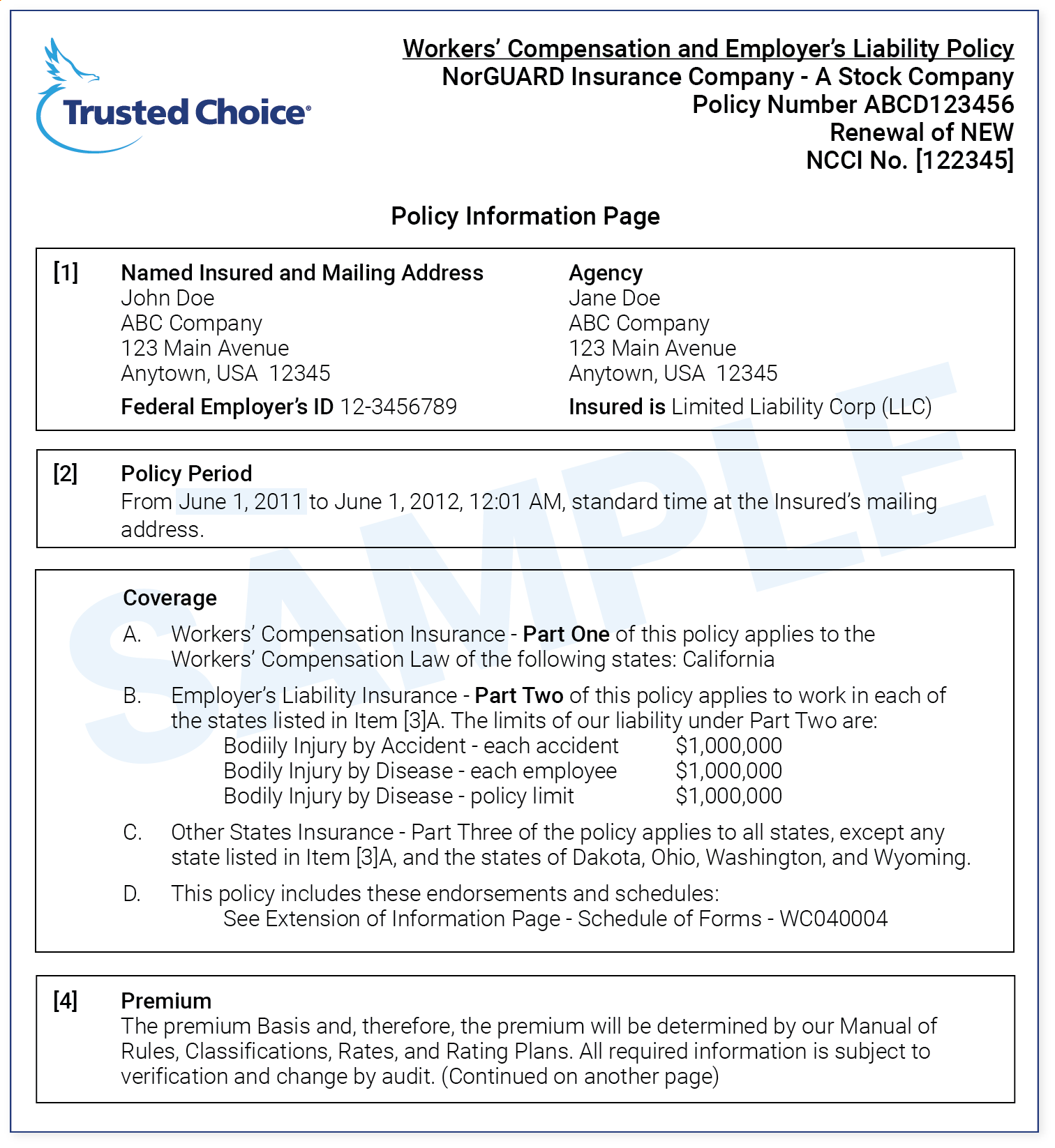
In California, attaching a building management company to a property owner's workers' compensation policy as a co-insured or named insured requires meeting strict Workers' Compensation Insurance Rating Bureau (WCIRB) common ownership rules, which mandate greater than 50% shared ownership across the entities. Independent management companies without common ownership cannot simply be added as additional named insureds. Instead, protection must be structured through separate policies, Alternate Employer Endorsements, or client-PEO arrangements.
Understanding how workers' compensation coverage applies to commercial property managers, building owners, and onsite maintenance personnel is critical under California labor law. Misconfiguring these policy relationships can trigger severe premium audit penalties, uncovered workplace injury claims, and uninsured employer liability under the California Labor Code.
The Legal and Regulatory Framework for California Workers' Compensation
California operates under a strict, no-fault statutory workers' compensation system governed by the California Labor Code and oversight from the California Department of Insurance (CDI). Under Labor Code Section 3700, every California employer—including commercial property owners and building management firms—must secure workers' compensation coverage for all employees, whether full-time, part-time, or seasonal.
Unlike Commercial General Liability (CGL) policies, where adding a third-party building manager as an "Additional Insured" is standard procedure, workers' compensation policies do not allow casual addition of separate legal entities. Workers' compensation covers statutory obligations owed directly to employees. Because an employer’s liability is exclusive under California Labor Code Section 3600, policy structures must precisely align with the legal entity that holds the employment relationship.
The Workers' Compensation Insurance Rating Bureau of California (WCIRB) establishes the rules governing policy issuance, experience modifications, and entity combinability. Under the California Workers' Compensation Uniform Statistical Reporting Plan, insurance carriers must verify that every entity listed on a single policy satisfies rigorous ownership relationships to prevent risk shifting or manual classification manipulation.
Building Management & Owner Entities:
- Does Common Ownership Exceed 50%?
- YES: Combinable Under WCIRB Rules (Rule 3)
- Can share single policy
- Combined Experience Mod
- Unified payroll reporting
- NO: Must Maintain Separate Workers' Comp Policies
- Use Alternate Employer Endorsements where applicable
- Provide COIs & Waivers
- YES: Combinable Under WCIRB Rules (Rule 3)
WCIRB Combination of Entities: The 50% Ownership Threshold
When property owners or asset managers ask to "attach" a building management firm to an existing workers' compensation policy in California, insurance underwriters must first apply WCIRB Rule 3 (Combination of Entities).
What Qualifies for Entity Combination?
To combine multiple legal entities—such as a building owner LLC and a property management corporation—onto a single workers' compensation policy, the entities must share more than 50% common ownership.
- Corporations: More than 50% of the voting stock of each corporation must be owned by the same individual, group of individuals, or parent company.
- Limited Liability Companies (LLCs): More than 50% of the membership interest (ownership percentage) in each LLC must be held by the same owners.
- Partnerships: The same general partners must hold more than 50% of the ownership interest across both entities.
If Property Owner LLC "A" and Building Management Inc. "B" share 51% or higher common ownership, the insurer can issue a single policy listing both entities as Named Insureds. In this scenario, payroll from both entities is reported together, and a single Experience Modification Rate (Ex-Mod) is calculated for the combined operation.
Unrelated Third-Party Management Companies
When a building owner contracts an independent third-party property management company—where no common ownership exists—the WCIRB strictly prohibits adding the management company as a named insured to the owner's policy (or adding the owner to the management company's policy).
Attempting to add an unrelated building management company as a named insured to a workers' compensation policy creates an unauthorized combination of entities. If discovered during an insurer audit or claim investigation:
- The carrier will retroactively unbundle the policy.
- Back premiums will be assessed against each separate entity based on actual payroll.
- Claims submitted by employees of the unapproved entity may face coverage disputes or delays, exposing the property owner to statutory penalties for uninsured status under California Labor Code Section 3700.5.
Employer Status and Onsite Staffing Structures
Determining how building management is attached to a workers' compensation policy requires analyzing who legally employs the onsite workers. Commercial property operations in California typically rely on one of four staffing models:
| Model | Description |
|---|---|
| 1. Direct Owner Employees | Owner pays payroll directly; Manager supervises. |
| 2. Direct Manager Employees | Manager pays payroll; Owner reimburses via fee. |
| 3. Dual/Special Employment | Both entities share operational control/liability. |
| 4. Third-Party Subcontractors | Specialized vendors (janitorial, security, HVAC). |
1. Direct Employees of the Property Owner
In some commercial office buildings or residential complexes, building engineers, janitors, and administrative staff are paid directly by the property owner entity (e.g., 100 Main Street Investors LLC). The management company acts strictly as an agent, directing daily duties without issuing Form W-2s to the workers.
- Policy Structure: The property owner carries the primary workers' compensation policy covering these employees.
- Management Attachment: The building management company does not need to be a named insured. However, the management company should request an Alternate Employer Endorsement from the owner's carrier to protect itself if an injured worker names the manager as a co-employer in a workers' compensation claim.
2. Direct Employees of the Management Company
In the most common arrangement, the property management firm directly hires, pays, and manages all building personnel. The cost of labor is billed back to the property owner as part of the property management agreement or operating budget.
- Policy Structure: The management firm carries its own California workers' compensation policy covering all its property management employees.
- Owner Attachment: The property owner entity does not hold the workers' compensation policy. The manager provides the owner with a Certificate of Insurance (COI) showing statutory workers' compensation coverage and often includes a Waiver of Subrogation endorsement favoring the owner.
3. Dual and Special Employment Relationships
California law recognizes the doctrine of special employment (also referred to as joint or dual employment). If a property owner exercises direct operational control over a building manager's employee—or vice versa—both entities may be held jointly liable for a workplace injury under California Labor Code Section 3602.
If a dual employment relationship exists:
- The general employer (the primary hiring entity) maintains the main workers' compensation policy.
- The special employer (the controlling entity) must ensure it is protected via an Alternate Employer Endorsement (Form WC 00 03 01 A) attached to the general employer’s policy, or carry its own policy covering special employees.
Key Insurance Mechanisms and Endorsements
Because an independent building management company cannot simply be attached as an "Additional Insured" on a California workers' compensation policy, commercial risk managers use specific standard endorsements issued by the National Council on Compensation Insurance (NCCI) and approved for use in California by the CDI.
| Endorsement Name | Purpose in Building Management |
|---|---|
| Alternate Employer Endorsement (WC 00 03 01 A) | Protects managing agent when supervising another entity's direct employees. |
| Waiver of Our Right to Recover (WC 00 03 13) | Prevents the workers' comp insurer from suing owner/ manager after paying benefits to an injured worker. |
| Designated Workplaces (WC 00 05 01 / WC 00 05 02) | Limits policy coverage to specific building locations managed by the company. |
Alternate Employer Endorsement (WC 00 03 01 A)
The Alternate Employer Endorsement is the primary legal mechanism used when employees of one company (e.g., the property owner) work under the direct supervision of another company (e.g., the building manager).
When attached to the primary employer's policy, this endorsement:
- Names the alternate employer (the building management company) in the schedule.
- Extends workers' compensation coverage to claims brought against the management company by the primary employer’s workers.
- Ensures that the management company receives the benefit of the exclusive remedy doctrine, preventing the injured worker from suing the management company in civil court for negligence related to the workplace injury.
Waiver of Our Right to Recover From Others Endorsement (WC 00 03 13)
Commonly referred to as a Waiver of Subrogation, this endorsement prevents the workers' compensation insurance carrier from stepping into the shoes of an injured worker to recover claim costs from a third party.
For example, if a building manager’s employee is injured due to a structural defect on the property owner's building, the manager's workers' compensation carrier might pay benefits and then sue the property owner for reimbursement. A Waiver of Subrogation (WC 00 03 13) added to the manager’s policy naming the property owner prohibits the insurer from taking legal action against the owner.
Labor Contractor and Professional Employer Organization (PEO) Rules
When building managers utilize a Professional Employer Organization (PEO) or co-employment arrangement, California Insurance Code Section 11665 mandates that PEOs must maintain separate payroll records and policy endorsements for each client entity. If a building management firm uses a PEO, the owner cannot be "attached" to the PEO master policy unless explicitly scheduled under client-specific reporting guidelines.
Comparing Options for Attaching Building Management Coverage
The following table outlines how workers' compensation coverage and policy attachments are structured across common commercial real estate management arrangements in California:
| Management & Ownership Relationship | Legal Policy Structure | Can Building Manager Be Attached as Named Insured? | Required Endorsements & Documents | Primary Regulatory & Audit Risks |
|---|---|---|---|---|
| Common Ownership (>50%) | Single Policy listing both entities | Yes | Combined Entity Schedule (WCIRB Rule 3) | Improper allocation of classification codes across entity operations. |
| Third-Party Management (Direct Manager Payroll) | Manager holds separate policy; Owner holds separate policy | No | Certificate of Insurance (COI), Waiver of Subrogation (WC 00 03 13) | Owner assuming liability for unverified, uninsured management staff. |
| Third-Party Management (Direct Owner Payroll) | Owner holds primary policy | No | Alternate Employer Endorsement (WC 00 03 01 A) favoring Manager | Manager exposed to civil lawsuits from injured building employees. |
| Special / Dual Employment Structure | Primary employer holds main policy | No | Alternate Employer Endorsement (WC 00 03 01 A) | Premium audit re-classifications and co-employer fault disputes. |
| Subcontracted Building Services (Janitorial/HVAC) | Vendor holds separate policy | No | COI with Statutory Workers' Comp, Waiver of Subrogation | Unlicensed contractor status converting vendor workers into owner employees under Labor Code 2750.5. |
Operational Compliance Steps for California Property Managers and Owners
To ensure compliance with California law and avoid costly premium audit adjustments, commercial property owners and building management companies should execute a structured workflow when setting up management agreements.
- Step 1: Determine Ownership & Legal Entities
50% Common Ownership?: Combine Entities under Single Policy (WCIRB Rule 3)
- <50% or Unrelated?: Proceed to Step 2
- Step 2: Identify Employer of Record
- Owner Pays Payroll Direct: Owner buys policy + adds Alternate Employer (WC 00 03 01 A) for Manager
- Manager Pays Payroll Direct: Manager buys policy + provides COI & Waiver of Subrogation (WC 00 03 13) to Owner
- Step 3: Verify Vendor & Subcontractor Coverage (Labor Code 2750.5)
- Collect COIs annually; verify active status on CSLB / CDI databases
Step 1: Audit Entity Ownership Structure
Before requesting policy changes from an insurance broker, calculate the exact percentage of shared ownership between the property-owning legal entity (e.g., LP, LLC, Corporation) and the management firm.
- If ownership is 50% or less, do not attempt to add the building management company as a named insured.
- If ownership exceeds 50%, submit ownership organizational charts to the insurance carrier for WCIRB combinability approval.
Step 2: Establish Direct Payroll and Employment Records
Clarify within the Property Management Agreement (PMA) which entity issues W-2s to onsite personnel. The entity paying wages must report payroll under its designated class codes (e.g., Code 9015 for Building Operation - Caretaker/Superintendent, or Code 9012 for Building Operation - Commercial Properties).
Step 3: Implement Alternate Employer Endorsements
If property owner employees perform work under the direction of the building manager, execute an Alternate Employer Endorsement (WC 00 03 01 A) naming the management company. Ensure the endorsement specifically lists:
- The exact legal name of the management entity.
- The physical address of the managed commercial building.
- The state of operations (California).
Step 4: Secure Waivers of Subrogation
Require the management company—and all onsite third-party vendors—to provide a Waiver of Our Right to Recover From Others Endorsement naming the property owner and its asset management entity. Verify that the waiver applies to specific work performed at the target property location.
Step 5: Protect Against Statutory Employee Status (Labor Code 2750.5)
Under California Labor Code Section 2750.5, an unlicensed or uninsured contractor working on a commercial property is legally presumed to be an employee of the party that hired them. If a building manager hires an uninsured maintenance vendor, the property owner could be held liable for workplace injuries sustained by the vendor's workers.
- Regularly verify that all property management subcontractors maintain active workers' compensation coverage through the California Department of Insurance database.
Common Pitfalls and Premium Audit Risks
1. The "Additional Insured" Misunderstanding
A frequent mistake made by building managers is requesting an "Additional Insured" certificate for workers' compensation. ISO standard forms (such as CG 20 10 used in general liability) do not exist for workers' compensation insurance. Insurers that attempt to write "Additional Insured" on a Workers' Comp COI create an invalid document that provides no legal protection under California law.
2. Experience Modification Rate (Ex-Mod) Contagion
When entities are incorrectly combined under WCIRB Rule 3 without meeting the 50% threshold, the claims history of the building management firm impacts the Ex-Mod of the property owner. If a high-claim management firm is unbundled after a WCIRB audit, the carrier will recalculate Ex-Mods retroactively for up to three years, resulting in sudden, substantial premium demands.
3. Misclassification of Property Management Payroll
California WCIRB rules differentiate between off-site administrative property managers and on-site operational staff:
- Class Code 8740: Property Management - Salespersons, Lessees, or Real Estate Agents (strictly white-collar, non-maintenance duties).
- Class Code 9012: Caretaker, Property Manager, or Superintendent - Resident or On-site (includes physical inspection, maintenance, and facility oversight).
If a building management firm mischaracterizes on-site engineering staff as Class Code 8740, an insurance audit will reclassify the payroll to Code 9012, triggering substantial audit premium adjustments.
Frequently Asked Questions
Can a property owner add a building management company as an additional insured on a California workers' compensation policy?
No. Workers' compensation insurance does not permit standard "Additional Insured" designations. An independent building management company can only be listed as a Named Insured if it shares more than 50% common ownership with the property owner under WCIRB rules. Otherwise, protection must be arranged using an Alternate Employer Endorsement or separate policies.
What is the difference between an Additional Named Insured and an Alternate Employer Endorsement in California?
An Additional Named Insured shares full policy ownership, premium responsibility, and experience rating with the primary policyholder (requiring >50% common ownership). An Alternate Employer Endorsement (WC 00 03 01 A) does not confer ownership; instead, it extends statutory workers' compensation coverage to a secondary supervising entity (like a building manager) for employees hired by the primary employer.
What happens if a building manager relies on an invalid workers' compensation policy structure in California?
If the policy structure does not comply with WCIRB rules, the insurance carrier may deny coverage during a claim or unbundle the policy during a premium audit. If an employee injury occurs and coverage is voided, the property owner and manager may face civil litigation, statutory penalties under California Labor Code Section 3700.5, and stop-work orders issued by the California Division of Labor Standards Enforcement (DLSE).
Why do property management agreements require a Waiver of Subrogation?
A Waiver of Subrogation (WC 00 03 13) prevents the workers' compensation insurance carrier from suing the property owner to recover claim payouts made to an injured property management employee. It reinforces the contractual hold-harmless provisions between the owner and the management firm.
Who is liable if a third-party janitorial worker is injured at a managed commercial building?
Liability depends on employment status and licensing. If the janitorial company is licensed and maintains active workers' compensation, the vendor's policy covers the claim. However, if the vendor is uninsured, California Labor Code Section 2750.5 establishes a legal presumption that the janitor is an employee of the hiring entity (the building manager or property owner), shifting workers' compensation liability to them.
Next Actions for Property Managers and Building Owners
To verify that your commercial property management structure complies with California workers' compensation regulations:
- Review Your Management Agreement: Audit the indemnification and insurance clauses in your current Property Management Agreement (PMA) to confirm who is designated as the employer of record for onsite personnel.
- Verify Common Ownership: If you seek to combine building owner LLCs and management entities onto one policy, obtain legal documentation proving greater than 50% shared ownership to submit for WCIRB validation.
- Request Correct Endorsements: Work with an insurance broker licensed by the California Department of Insurance to attach Form WC 00 03 01 A (Alternate Employer) or Form WC 00 03 13 (Waiver of Subrogation) rather than generic liability endorsements.
- Audit Vendor Certificates: Establish an automated tracking system to verify active workers' compensation policies for all building service vendors, preventing secondary liability under California Labor Code Section 2750.5.
Disclaimer: This article provides operational guidance on California insurance rules and does not constitute formal legal or insurance counseling. Real estate owners and property managers should consult a qualified California insurance broker or employment attorney to address specific policy configurations.