Asian Life Insurance Company Limited (ALICL) is a prominent publicly traded life insurance provider in Nepal, offering a diverse array of life insurance products including endowment, money-back, term, and whole life policies designed to provide financial security and long-term savings for Nepali citizens. As of 2026, the company operates an extensive network of branches and sub-branches across the country, serving as a significant player in the national insurance sector under the regulatory framework of the Nepal Insurance Authority (NIA).
Understanding Asian Life Insurance Company Limited
Asian Life Insurance Company Limited was incorporated on April 3, 2008, under the Company Act of Nepal. Since its inception, the company has focused on expanding the reach of life insurance services, particularly in regions where financial literacy and insurance penetration have historically been low. As a public limited company listed on the Nepal Stock Exchange (NEPSE), it adheres to stringent financial reporting and transparency standards mandated by the national regulator.
The core mission of the company centers on providing risk-mitigation solutions that allow families to maintain financial stability in the event of the policyholder’s death or disability, while simultaneously encouraging systematic long-term saving habits. In the current economic climate of 2026, the company continues to play a vital role in mobilizing domestic savings into productive long-term investments, which in turn supports Nepal's broader economic development.
The Regulatory Framework and Policyholder Protection
In Nepal, the insurance industry is governed by the Nepal Insurance Authority (NIA), formerly known as the Beema Samiti. Asian Life Insurance operates under the strict guidelines set forth by this regulatory body. These regulations ensure that the company maintains an adequate solvency margin, protecting the interests of policyholders by ensuring that the insurer has sufficient assets to meet its future liabilities.
For the policyholder, this means that the products offered by Asian Life Insurance are subject to standardized valuation and premium calculation norms. The company is required to file its product designs, premium rates, and mortality tables with the NIA for approval before they are launched in the market. This regulatory oversight provides an essential layer of security, ensuring that contractual obligations—such as the payment of death benefits or maturity claims—are backed by robust financial reserves and reinsurance arrangements.
Navigating the Product Portfolio
Asian Life Insurance offers a variety of products tailored to the diverse financial needs of the Nepali population. These generally fall into several distinct categories, each serving a unique purpose in a personal financial plan.
Endowment Plans
Endowment plans are among the most popular products in Nepal. These combine life insurance coverage with a savings component. If the policyholder survives the term of the policy, they receive a maturity benefit (the sum assured plus any accrued bonuses). If the policyholder passes away during the term, the nominee receives the death benefit. These plans are often used for long-term goals such as children’s education or marriage funds.
Money-Back Plans
Money-back policies offer periodic payouts to the policyholder throughout the policy term. This liquidity can be beneficial for individuals who prefer to receive installments of their sum assured at specific intervals, while still maintaining life cover. This is a common choice for those seeking a balance between regular income and long-term protection.
Term Assurance
Term life insurance provides purely death benefit protection for a specified period. It is generally the most affordable form of insurance as it does not include a savings or investment component. This is ideal for young earners who want high-value protection at a low premium cost.
Whole Life Plans
Whole life plans provide coverage for the entire duration of the policyholder’s life, provided the premiums are paid. These policies often accumulate a cash value over time and are utilized for estate planning and legacy building.
Comparative Overview of Insurance Product Categories
| Product Type | Primary Benefit | Risk Profile | Best For |
|---|---|---|---|
| Endowment | Maturity benefit + Life cover | Low (Guaranteed) | Long-term wealth/Goal savings |
| Money-Back | Periodic cash flow + Life cover | Low (Guaranteed) | Near-term liquidity needs |
| Term Insurance | Pure protection | Very Low | Maximum coverage, low cost |
| Whole Life | Lifelong protection | Low | Legacy/Estate planning |
The Process of Purchasing a Policy
Securing a policy with Asian Life Insurance involves several procedural steps, all of which are designed to comply with "Know Your Customer" (KYC) and Anti-Money Laundering (AML) regulations in Nepal.
- Selection: Prospective policyholders should first assess their financial needs, budget, and risk appetite. Consulting with a licensed insurance agent or visiting a branch is a standard way to receive a needs assessment.
- Application: The applicant must complete a proposal form. This form requires comprehensive information regarding the applicant's age, health status, occupation, and income. It is critical to provide accurate information, as non-disclosure of pre-existing health conditions can jeopardize future claims.
- Medical Examination: Depending on the age of the applicant and the sum assured, the company may require a medical examination. This is conducted by an empaneled medical officer to determine the risk category of the applicant.
- Premium Payment: Once the proposal is accepted, the premium amount is calculated. Policies can be paid on a yearly, half-yearly, quarterly, or monthly basis.
- Policy Issuance: After the payment of the first premium and completion of underwriting, the company issues the insurance bond, which serves as the legal contract between the insurer and the insured.
Managing Your Policy: Premiums, Loans, and Claims
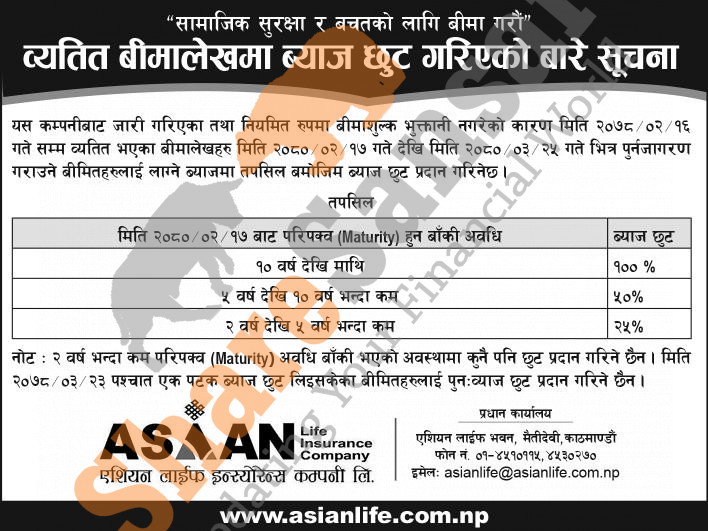
Maintaining an active life insurance policy requires consistent premium payments. If a premium is missed, there is typically a "grace period." If the premium remains unpaid after this period, the policy may lapse. A lapsed policy can be revived, but it often requires the payment of overdue premiums along with applicable interest and potentially a new statement of health.
Policy Loans
One of the distinct advantages of many endowment and money-back policies issued by Asian Life Insurance is the ability to take a loan against the policy. Once a policy has acquired a "surrender value" (usually after two or three years of premium payments), the policyholder can borrow against it. This provides an emergency source of liquidity without the need to terminate the insurance contract.
The Claims Process
The claim process is the most critical stage of the insurance contract. In the event of a death claim, the nominee must notify the company, submit the death certificate, the original policy bond, and the claim forms provided by the company. If the death is due to an accident, additional documentation like a police report (FIR) or post-mortem report may be required. The company then investigates the claim, and if found valid, disburses the sum assured and any vested bonuses to the nominee.
Common Challenges and Considerations for Policyholders
Understanding the limitations of insurance is as important as understanding the benefits. One common challenge faced by policyholders in Nepal is the lack of awareness regarding the difference between insurance and speculative investment. It is essential to view life insurance primarily as a protection tool.
Another consideration is inflation. A sum assured that seems substantial today may lose its purchasing power over a 20-year term. Policyholders are encouraged to periodically review their coverage and consider additional "riders"—such as critical illness, accidental death, or permanent disability coverage—to enhance their protection. Riders are add-on benefits that increase the scope of the policy for a relatively small additional premium.
Frequently Asked Questions
Can I change my nominee after the policy is issued?
Yes, you can change your nominee at any time during the term of the policy. You must submit a written request to the nearest Asian Life Insurance office and follow the official administrative procedure to update your policy records.
What happens if I forget to pay my premium on time?
Most policies provide a grace period (often 15 to 30 days depending on the frequency of payment). If you fail to pay during this window, the policy lapses. You can revive a lapsed policy by paying the outstanding premiums with interest and, in some cases, submitting a declaration of good health.
Are the bonuses guaranteed?
Bonuses in traditional insurance products are generally not guaranteed. They are declared periodically by the company based on their actuarial valuation and financial performance. These bonuses are then added to your policy and paid at the time of maturity or death.
Can I buy a policy online?
As of 2026, many insurance services in Nepal have shifted toward digital integration. Asian Life Insurance provides digital platforms for premium payments and tracking policy status, though the initial purchase often involves a physical meeting or a verified digital application process to ensure proper documentation.
Is my policy premium tax-deductible?
Under current Nepali tax laws, life insurance premiums are generally eligible for tax deductions up to a specific limit. Policyholders should consult their latest annual tax filing guidelines or the company’s portal to understand how to claim these benefits.
Next Steps for Prospective Policyholders
If you are considering a policy with Asian Life Insurance, the most practical first step is to visit their official website to view the current product brochures or contact a local branch manager. Do not rush into a policy based solely on the advice of a sales representative; request a "Product Disclosure Sheet" for the specific policy you are interested in. This document contains the technical details, including surrender values, premium payment terms, and exclusion clauses, which are vital for making an informed financial decision.
Always ensure that your contact details, including your email and phone number, are updated with the company so that you receive timely notifications regarding your premium due dates and any company updates. By maintaining an active, well-documented, and understood policy, you ensure that your financial protection remains effective when it is needed most.