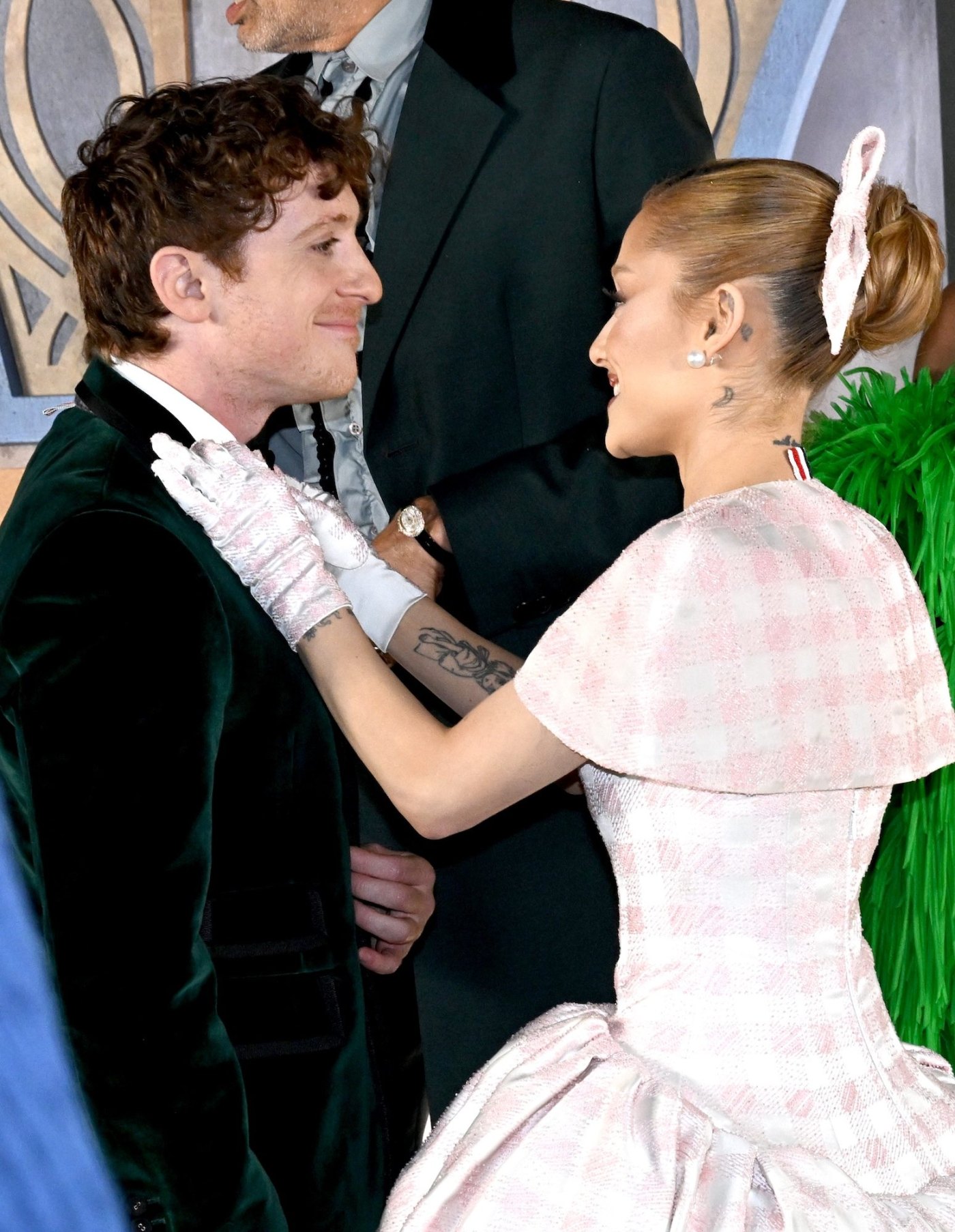
Ariana Grande’s time on the set of Jon M. Chu’s cinematic adaptation of Wicked marked a pivotal milestone in modern musical filmmaking. Portraying Glinda the Good, Grande underwent years of vocal restructuring, worked on massive physical sets in England, and committed to recording her vocals live on camera alongside co-star Cynthia Erivo.
Preparing for Oz: Ariana Grande’s Casting and Vocal Transformation
When Universal Pictures announced that Ariana Grande was cast as Galinda Upland (later Glinda) in the two-part film adaptation of Wicked, the decision reflected both a casting match and a rigorous professional pivot. Grande, who built a global pop career on multi-platinum records and contemporary R&B vocal stylings, had to systematically transform her vocal mechanics and physical delivery to suit legitimate musical theater soprano demands.
- Pop Vocal Technique
- Chest-heavy mix & belt
- Modern vocal inflection
- Studio track multi-tracking
- Musical Theater Soprano
- Head-voice resonance & legit placement
- Classical diction & vowel alignment
- Unamplified acoustic projection
To achieve the precise acoustic placement required for classic theater compositions like "Popular" and "No One Mourns the Wicked," Grande trained extensively with renowned vocal coach Eric Vetro. The training involved modifying her speech pattern, posture, and breath control to transition from a chest-heavy mix to a resonant, classical head-voice register. This structural shift ensured she could sustain high vocal lines while executing demanding physical choreography on set without vocal strain.
Beyond vocal conditioning, Grande’s physical transformation was meticulously documented throughout pre-production and principal photography. She dyed her hair to Glinda’s signature platinum blonde, adjusted her physical carriage to reflect the character's theatrical pomp, and paused her pop music career for over two years to fully immerse herself in the role.
Live Vocal Recording and Audio Engineering on Set
One of the most technically ambitious decisions made by director Jon M. Chu and sound mixer Simon Hayes was the commitment to record live vocals on set rather than relying on pre-recorded studio track lip-syncing. While conventional film musicals routinely use studio playbacks during filming to guarantee audio perfection, Grande and Erivo insisted on performing live during takes to preserve emotional authenticity and spontaneous character interaction.
- Performers on Set
- Live Microphones (Hidden Lavaliers & Micro-boom arrays)
- Ear Prompters / IFBs (fed by Live Accompaniment Track / On-Set Piano)
- Production Sound Desk
- Mixes raw vocal stems with minimal acoustic leakage
This technical choice introduced unique operational challenges for the audio engineering team on set:
- Acoustic Isolation on Massive Soundstages: Filming took place on expansive sets where natural echoes could distort vocal clarity. Sound crews used specialized directional lavalier microphones concealed within costumes, hair pieces, and headwear to isolate vocal tracks from ambient background noises.
- In-Ear Monitoring Systems: Performers wore custom-fitted, skin-toned ear prompters (IFBs) that fed them instrumental tracks or live piano accompaniment playing in real-time off-camera. This allowed Grande to hear her key and tempo without ambient music blaring across the set, preventing music bleed into her active microphone.
- Dynamic Physical Blocking: During high-energy numbers such as "Popular," Grande executed intricate physical comedy, jumping onto furniture and twirling across physical set structures. Audio engineers had to constantly monitor wireless transmitter frequencies and dynamic microphone gain to capture clean, unclipped vocal signals despite sudden shifts in body position.
The result of this live approach is a soundtrack that captures natural breath, emotional variance, and real-time comedic timing that cannot be replicated through post-production dubbing.
Physical Worldbuilding: Sets, Costumes, and Practical Effects
In an era dominated by green screens and digital background replacement, the production design team led by Nathan Crowley prioritized practical worldbuilding. Principal photography took place primarily at Sky Studios Elstree in Hertfordshire, England, along with extensive outdoor builds across the English countryside.
| Production Element | Technical Implementation & Scale |
|---|---|
| Munchkinland Set | Practical village build with 9 million planted tulips |
| Shiz University | Fully constructed interior/exterior architectural stages |
| Emerald City Train | Functioning 16-ton physical locomotive built on tracks |
| Costume Engineering | Multi-layered silk gowns by Paul Tazewell with support |
The 9-Million-Tulip Munchkinland Build
In Ivinghoe, Buckinghamshire, the production crew physically planted over 9 million real tulips to construct the lush, sprawling fields of Munchkinland. Grande performed key early scenes in these practical fields, providing authentic natural lighting, physical depth, and tangible environmental interaction that aided her performance.
Architectural Scale at Shiz University
The sets for Shiz University featured full-scale stone arches, wooden libraries, and functional waterways. Performing within physical locations allowed Grande and the cast to navigate real steps, open actual doors, and interact with weighted physical props, elevating the realism of the musical’s staging.
Costume Design by Paul Tazewell
Academy Award-nominated costume designer Paul Tazewell engineered Glinda’s elaborate wardrobe to balance historical grandiosity with physical mobility. Grande’s iconic pink gowns featured structural boning, layered tulle, and custom internal harnesses designed to distribute weight evenly across her frame. This design permitted unrestricted diaphragm movement necessary for high-register soprano singing while enabling wire-work stunts during grand entrances.
Collaborative Dynamics: Working with Cynthia Erivo and Jon M. Chu
The core emotional center of Wicked relies on the complex relationship between Glinda and Elphaba. On set, Ariana Grande and Tony-winner Cynthia Erivo built a collaborative partnership that directly influenced their performance dynamics.
Jon M. Chu (Director / Creative Vision)
- Ariana Grande (Glinda)
- Cynthia Erivo (Elphaba)
- Live Harmonies (between Glinda and Elphaba)
Vocal Harmonization: Grande and Erivo frequently adjusted their vocal arrangements in real time on set, blending Erivo’s rich, soulful belt with Grande’s bright soprano timbre. Their synchronization during duets like "Defying Gravity" and "For Good" was performed live, requiring total mutual trust and precise breath timing.
Supportive On-Set Environment: Due to the physical demands of long shooting days and emotional scenes, the lead actors established a supportive work culture. Off-camera vocal warm-ups, joint physical conditioning, and constant communication helped them manage the physical toll of the production.
Jon M. Chu’s Directorial Focus: Director Jon M. Chu encouraged extended takes, allowing Grande to explore comedic improvisation within Glinda’s character arc. Chu focused on grounding the fantasy setting in realistic human emotion, prompting Grande to dig deeper into Glinda’s underlying vulnerabilities rather than playing her purely as an eccentric caricature.
Production Timeline and Filming Challenges
Principal photography for Wicked began in the United Kingdom in December 2022. The schedule faced major industry disruptions, most notably the 2023 SAG-AFTRA strike, which halted production in July 2023 with only ten days of filming remaining for the principal cast.
- 2022 Dec: Principal Photography Begins in UK
- 2023 Jul: SAG-AFTRA Strike Suspends Production (10 days remaining)
- 2024 Jan: Filming Resumes & Wraps Principal Photography
- 2024 Nov: Wicked Part 1 World Theatrical Release
- 2025 Nov: Wicked Part 2 World Theatrical Release
Despite the multi-month delay, the cast and crew reassembled in January 2024 to complete final sequences, including key musical climaxes. The seamless transition between pre-strike and post-strike footage stands as a testament to the consistency maintained by the hair, makeup, costume, and audio departments.
Technical Specifications & Production Summary Table
The table below summarizes key technical, logistical, and production facts regarding Ariana Grande’s work on the set of Wicked.
| Production Category | Technical & Logistical Details | Primary Department / Lead |
|---|---|---|
| Primary Filming Locations | Sky Studios Elstree (Hertfordshire) & Ivinghoe (Buckinghamshire), UK | Production Management |
| Vocal Capture Method | 100% Live Vocal Capture on Set via Hidden Microphones & In-Ear IFB Track Sync | Sound Mixer Simon Hayes |
| Vocal Preparation | Classical Soprano / Musical Theater Technique Training | Vocal Coach Eric Vetro |
| Costume Design | Custom corsetry, physical gowns engineered for breath control and harness integration | Designer Paul Tazewell |
| Production Design | Practical sets including 9 million live tulips, practical train systems, and stone university stages | Designer Nathan Crowley |
| Principal Photography Windows | Dec 2022 – Jul 2023 (Paused); Completed Jan 2024 | Universal Pictures / Marc Platt Productions |
| Cinematography Format | Large-format digital cameras optimized for physical scale and natural lighting | Director of Photography Alice Brooks |
Frequently Asked Questions About Ariana Grande on the Set of Wicked
Did Ariana Grande actually sing live on the set of Wicked?
Yes. Rather than relying solely on pre-recorded playback tracks, Ariana Grande and Cynthia Erivo performed their vocals live on set during filming. Wireless, hidden lavalier microphones captured their singing in real time, while custom in-ear monitors fed them instrumental accompaniment to maintain key and tempo without ambient sound leakage.
How did Ariana Grande change her voice for her role as Glinda?
Ariana Grande underwent months of intensive vocal retraining with vocal coach Eric Vetro. She transitioned from her signature pop/R&B vocal style, which utilizes a heavy chest mix and modern inflections, to a classical musical theater soprano technique. This involved developing her head-voice resonance, refining her diction, and adopting classical breath support to meet the operatic demands of the score.
Where were the sets for Wicked constructed?
The majority of the physical sets were constructed at Sky Studios Elstree in Hertfordshire, England. Additionally, outdoor practical builds—such as the massive Munchkinland set featuring 9 million live-planted tulips—were constructed on location in Ivinghoe, Buckinghamshire.
Why was filming on the set of Wicked delayed in 2023?
Filming was paused in July 2023 due to the SAG-AFTRA strike, which affected productions worldwide. At the time of the shutdown, the production was just ten days away from completing principal photography. The cast and crew returned to the set in January 2024 to wrap up the remaining scenes.
Who designed Ariana Grande’s costumes on the set?
Ariana Grande’s wardrobe was designed by Tony and Emmy-winning costume designer Paul Tazewell. The costumes were specifically engineered to allow full chest expansion for live operatic singing while accommodating physical stunt harnesses for flying and suspended sequences.
Key Takeaways and Next Steps for Viewers
For fans, film scholars, and musical theater enthusiasts analyzing Ariana Grande's work on Wicked, several practical steps offer a deeper appreciation of the production craftsmanship:
- Listen to the Live Audio Mixes: Pay close attention to the vocal dynamics on the official cast recording and film tracks, noting the organic breath placement, acoustics, and live vocal interaction between performers.
- Examine Behind-the-Scenes Featurettes: Study official studio featurettes released by Universal Pictures that showcase sound mixer Simon Hayes’ microphone setups, Nathan Crowley’s practical set builds, and Paul Tazewell’s costume engineering.
- Compare Vocal Techniques: Compare Grande’s pop discography (such as Positions or Eternal Sunshine) with her vocal placement in Wicked to observe how subtle shifts in resonance, posture, and vowel shapes alter vocal timbre.