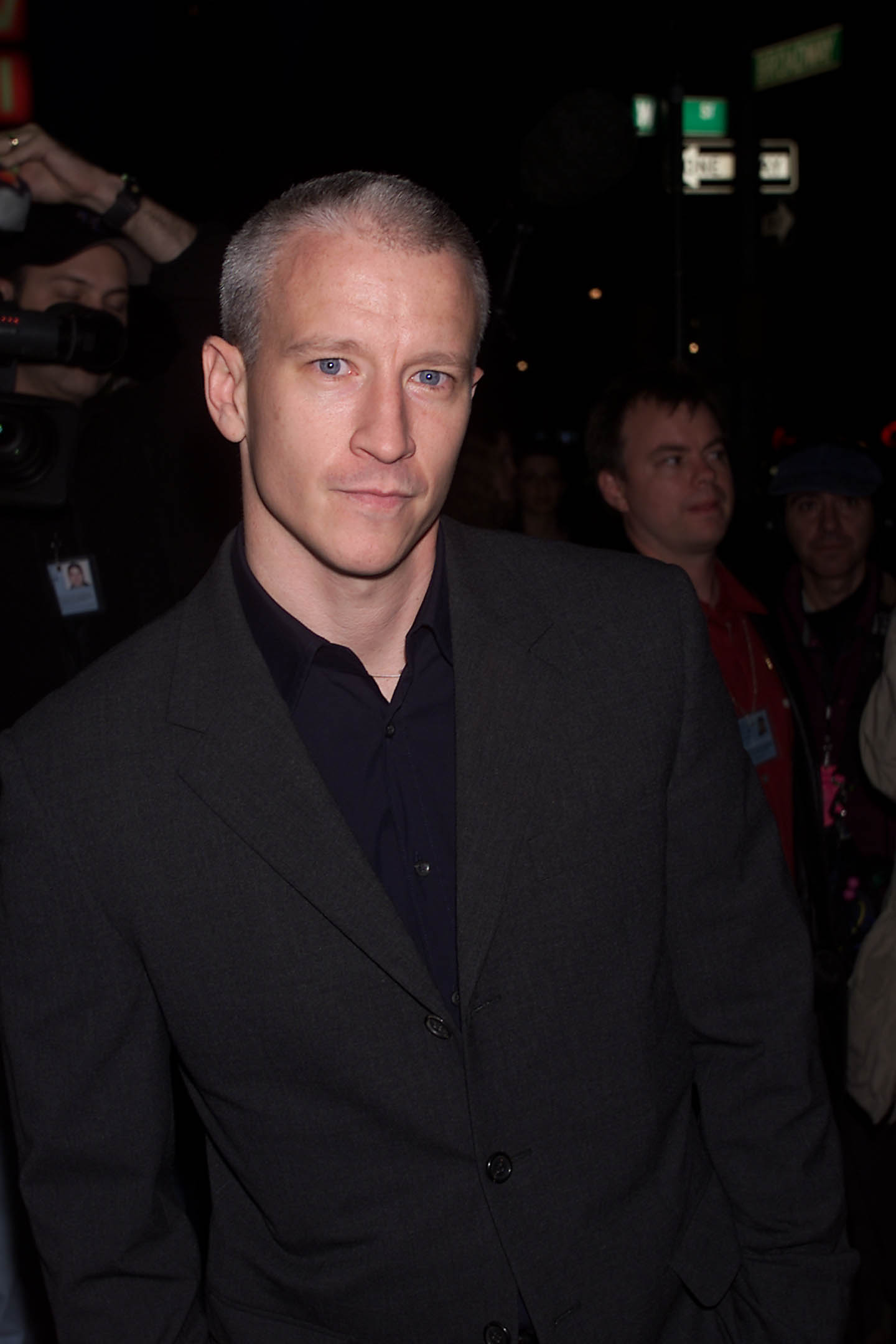
Anderson Cooper’s youth was defined by a stark contrast between Gilded Age privilege and profound personal tragedy. Born into the prominent Vanderbilt family, he navigated a modeling career and elite education at Yale before forging an independent path as a self-taught war correspondent in the early 1990s.
Long before he became the face of CNN’s primetime lineup, Anderson Cooper was a young man attempting to reconcile a famous lineage with a deep-seated desire for anonymity and purpose. His journey from a child of Manhattan royalty to a gritty, independent journalist is a narrative of resilience, curiosity, and a deliberate distancing from the comforts of his inheritance. By 2026, looking back at his decades-long career, it is clear that the foundations of his journalistic integrity were poured during his tumultuous and adventurous twenties.
The Vanderbilt Heritage and Early Influences
Born on June 3, 1967, in New York City, Anderson Hays Cooper was the son of Wyatt Emory Cooper and Gloria Vanderbilt. While the Vanderbilt name carried the weight of historical wealth and social standing, Cooper’s early life was more focused on the creative and intellectual pursuits of his parents. His father, Wyatt, was an accomplished author and screenwriter from a humble background in Mississippi, while his mother, Gloria, was a world-renowned fashion icon, artist, and heiress.
As a young boy, Cooper was exposed to the heights of New York’s cultural elite. However, he often describes his upbringing as one where he felt more like an observer than a participant in the social spectacle. This "outsider looking in" perspective would eventually become a hallmark of his reporting style. His parents encouraged independence, a trait that would manifest early in his decision to earn his own money despite the family’s resources.
The Impact of Early Loss
The defining characteristic of Cooper’s youth was not wealth, but grief. In 1978, when Anderson was just ten years old, his father died during open-heart surgery. This loss shattered the stability of his childhood and forced a young Cooper to confront the fragility of life. He has often noted in interviews that his father’s death was the end of his childhood, marking the beginning of a more serious, vigilant approach to the world.
A decade later, tragedy struck again. In 1988, while Anderson was a student at Yale, his older brother, Carter Cooper, died by suicide. Carter jumped from the terrace of their mother’s 14th-floor penthouse while Gloria Vanderbilt watched in a desperate, unsuccessful attempt to stop him. For a young Anderson Cooper, this second loss was transformative. He became obsessed with the concept of survival and why some people endure catastrophe while others are consumed by it. This obsession became the primary driver for his entry into journalism, specifically his desire to report from conflict zones where life and death were constant companions.
Education and a Brief Stint in Modeling
Before he was a journalist, a young Anderson Cooper was a student at the Dalton School in Manhattan. Even as a teenager, he sought experiences far removed from his social circle. At age 17, after graduating from Dalton a semester early, he traveled across Africa on a "trekking" trip, where he contracted malaria and was hospitalized in Kenya. This experience served as his first real taste of international travel and the unpredictable nature of the world beyond the United States.
Upon returning, Cooper attended Yale University, where he studied political science and international relations. During his college years, he did not initially pursue journalism. Instead, he explored various interests, including a brief, somewhat reluctant stint as a model.
The Modeling Years
From age 10 to 13, Cooper modeled for major brands through Ford Models. He appeared in campaigns for Ralph Lauren, Calvin Klein, and Macy’s. He was even photographed as a baby by the legendary Diane Arbus for Harper’s Bazaar. While the modeling world provided him with financial independence at a young age, he has frequently expressed that he did not enjoy the work, viewing it merely as a means to an end rather than a career aspiration.
At Yale, he was a member of the Manuscript Society, one of the university’s secret senior societies. He graduated in 1989 with a Bachelor of Arts. Despite his prestigious education, Cooper found that the traditional gates of entry into the news industry were closed to him. He famously applied for an entry-level position at ABC News but was rejected, a setback that led him to create his own path into the field.
The Self-Made War Correspondent
Frustrated by the lack of opportunities in mainstream media, the young Cooper decided to bypass the traditional hierarchy. In his early twenties, he realized that if no one would hire him as a reporter, he would have to become one on his own terms.
He borrowed a friend’s Hi8 video camera and, with the help of a friend who could forge a press pass, he traveled to Myanmar (Burma) to meet with students fighting the government. This "fake it until you make it" approach was born out of a desperate need to find a place where his internal sense of loss matched the external reality.
From Burma to Somalia
Cooper’s independent reporting from Myanmar caught the attention of Channel One, a digital news network that was then broadcast to American schools. They hired him as a fact-checker and eventually as a correspondent. This role allowed him to travel to some of the most dangerous regions in the world during the early 1990s.
During this period, a young Anderson Cooper reported on:
- The famine and civil war in Somalia: He witnessed the devastating effects of the conflict, often traveling with minimal security.
- The Bosnian War: He spent time in Sarajevo under siege, learning the technical and emotional nuances of reporting from a combat zone.
- The aftermath of the Rwandan Genocide: These experiences solidified his reputation as a fearless and empathetic journalist who was willing to go where others wouldn't.
By the time he was 25, Cooper had seen more of the world’s tragedies than most veteran journalists. His hair, which began turning gray in his early twenties, became a visual metaphor for the weight of the experiences he was documenting.
Transitioning to National Prominence
In 1995, at the age of 28, Cooper’s hard work in the field finally paid off when he was hired by ABC News as a correspondent. He eventually rose to the position of co-anchor on the overnight program World News Now. Despite his success in hard news, Cooper took an unconventional detour in 2000 to host the reality TV show The Mole.
While critics at the time questioned the move, Cooper argued that he needed a mental break from the intensity of war reporting. The experience proved his versatility and helped him build a more relatable public persona. However, the events of September 11, 2001, drew him back to serious journalism. Shortly after, he joined CNN, where he would eventually launch Anderson Cooper 360° in 2003.
Key Milestones: Anderson Cooper's Early Life and Career
| Age | Year | Event/Milestone | Significance |
|---|---|---|---|
| 10 | 1978 | Death of father, Wyatt Cooper | Ended his "childhood" and sparked a lifelong interest in survival. |
| 10-13 | 1977-80 | Modeling for Ralph Lauren/Calvin Klein | Provided early financial independence from his mother's wealth. |
| 21 | 1988 | Death of brother, Carter Cooper | The primary catalyst for his pursuit of journalism in conflict zones. |
| 22 | 1989 | Graduated from Yale University | Academic foundation in Political Science and International Relations. |
| 23 | 1990 | First independent trip to Burma | Entry into journalism via a self-produced report and a fake press pass. |
| 25 | 1992 | Joins Channel One News | First professional role as a correspondent covering global crises. |
| 28 | 1995 | Joins ABC News | Entry into major network journalism as a national correspondent. |
| 34 | 2001 | Joins CNN | The beginning of his tenure at the network that defined his career. |
The Evolution of the "Silver Fox"
One of the most frequent topics associated with a young Anderson Cooper is his physical appearance, specifically his hair. While many know him for his iconic white-silver hair, he was born with dark brown hair. He has noted that he began graying in his early twenties, likely accelerated by the stress of his field assignments and personal tragedies.
By his early thirties, his hair had fully transitioned to the silver-white color that became his trademark. For Cooper, this physical change was something he initially tried to hide, but he eventually embraced it as part of his identity. In the context of 2026, his appearance remains one of the most recognizable in media, serving as a visual link to the young man who once navigated the streets of Sarajevo with a camera and a sense of purpose.
Common Questions Regarding Anderson Cooper’s Youth
Did Anderson Cooper inherit the Vanderbilt fortune when he was young?
No. Despite common misconceptions, Anderson Cooper did not receive a massive inheritance as a young man. His mother, Gloria Vanderbilt, was clear with her children that there was no trust fund. Cooper has frequently stated that he grew up knowing he had to work for his own living, which fueled his drive to succeed in the competitive field of journalism. Upon Gloria's death in 2019, Cooper did inherit most of her estate, but his wealth was already largely self-made by that point.
What was Anderson Cooper’s first job in journalism?
His first professional role was as a fact-checker for Channel One, a news program for students. Before that, he essentially worked as a freelance, self-funded correspondent. He spent his own money to travel to war zones, filmed his own footage, and sold the segments to Channel One, which eventually led to a full-time staff position.
Why did Anderson Cooper start graying so early?
Cooper has joked that he is "genetically predisposed" to gray hair, but he also acknowledges the intense stress of his early twenties. Between the suicide of his brother and his work in active combat zones like Somalia and Bosnia, the physiological impact of chronic stress likely played a role in his hair turning white by his early thirties.
Did he ever serve in the military or the government?
While he studied political science and interned at the CIA for two summers during college, Cooper never pursued a career in government or the military. He found the CIA work to be "less exciting than it looks in movies" and realized that he preferred the role of an observer and storyteller rather than a participant in government intelligence.
Was Anderson Cooper always open about his personal life when he was younger?
No. Throughout his youth and early career, Cooper was intensely private. He did not publicly come out as gay until 2012, long after he had established himself as a major news anchor. During his younger years, he focused almost exclusively on his work, maintaining a professional boundary between his personal life and his reporting from the field.
The Lasting Legacy of His Formative Years
The trajectory of a young Anderson Cooper is a study in the power of choosing one's own identity. He could have easily remained a fixture of New York high society, living off the prestige of the Vanderbilt name. Instead, he chose a path of discomfort, danger, and rigorous work.
The empathy that characterizes his modern reporting—whether covering natural disasters or political upheavals—is directly rooted in the tragedies he faced as a young man. His early experiences taught him that the world can change in an instant, and that the most important stories are often found where others are afraid to look.
For those looking to understand his career in 2026, studying his youth is essential. It reveals that his success was not an inevitability of his birthright, but the result of a deliberate, often difficult, journey of self-discovery through the lens of a camera.
Practical Action: For aspiring journalists, Cooper’s early career offers a blueprint for unconventional entry into the industry. Rather than waiting for permission or an internship, focus on developing a niche, traveling to underserved areas, and learning the technical skills of solo production. The modern digital landscape offers even more avenues for self-starting than the Hi8 camera era of the early 90s.