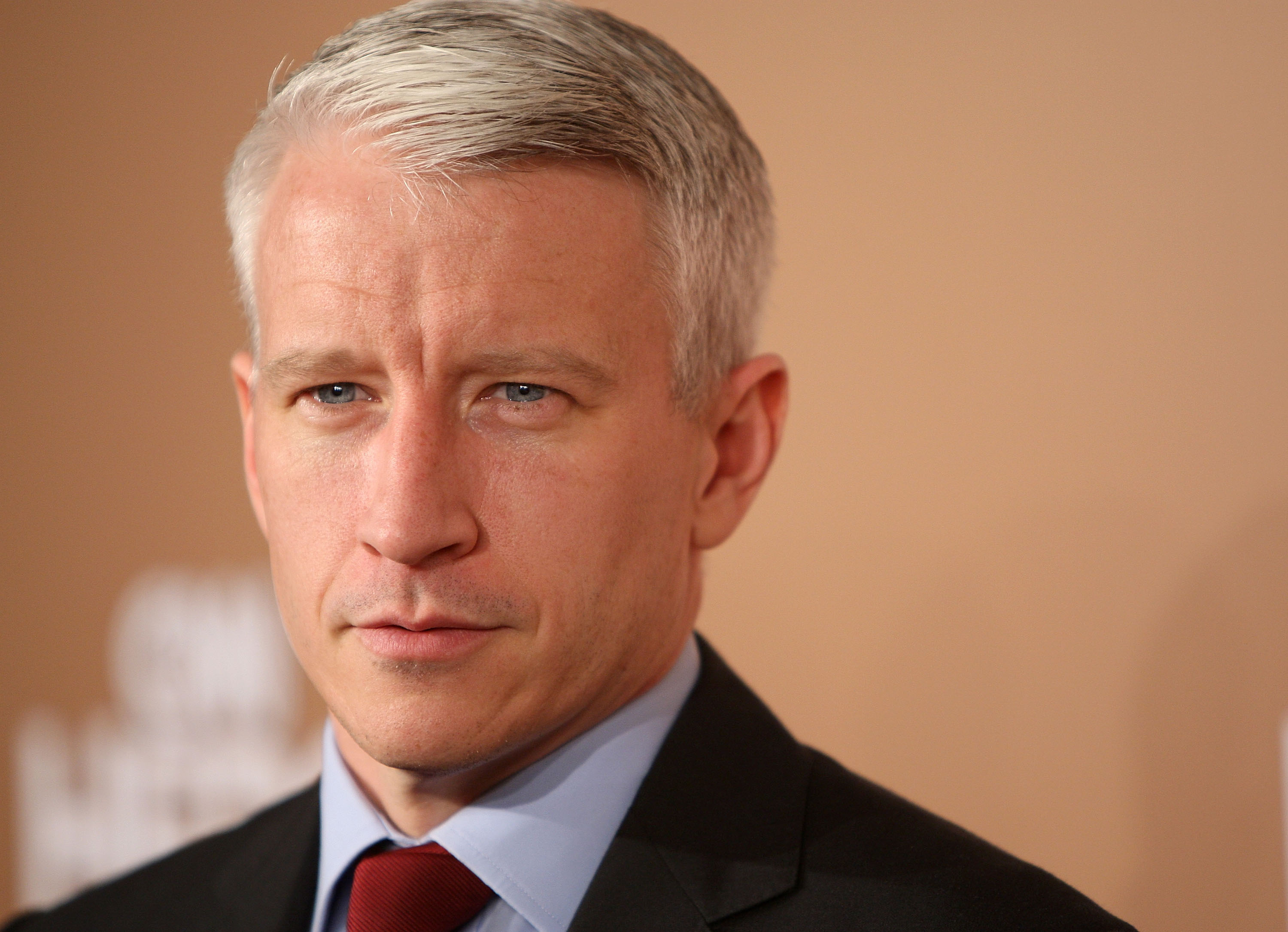
Anderson Cooper’s signature grey hair is the result of genetics, with the graying process beginning when he was in his early 20s. By the time he reached his late 30s, his hair had transitioned almost entirely to its famous "salt and pepper" and eventually white-silver hue, a trait he shares with several members of his family.
As of 2026, Anderson Cooper remains one of the most recognizable faces in broadcast journalism, and his "Silver Fox" persona is as much a part of his professional identity as his reporting from global conflict zones. While many public figures in the media industry go to great lengths to conceal the signs of aging, Cooper’s decision to embrace his natural color early in his career helped redefine grooming standards for men in the spotlight. To understand why his hair turned grey so early, one must look at the intersection of biological inheritance, the science of hair pigmentation, and the specific timeline of his career.
The Genetic Roadmap: Why It Happened So Early
The primary reason for Anderson Cooper’s grey hair is genetics. Premature graying—defined as hair turning grey before the age of 20 in Caucasians—is almost entirely determined by the DNA passed down from one’s parents. In Cooper’s case, he has frequently cited his family history as the blueprint for his silver locks.
While his mother, the iconic Gloria Vanderbilt, was known for her dark hair (which she maintained with color in her later years), the Cooper side of the family and other Vanderbilt relatives often displayed early transitions to grey or white hair. Cooper has mentioned in various interviews that he noticed his first grey hairs while he was still a student at Yale University or shortly thereafter.
The Role of the IRF4 Gene
Scientists have identified a specific gene, IRF4, which is responsible for regulating melanin production and storage. Melanin is the pigment that gives hair its color. When the IRF4 gene triggers a slowdown in melanin production at a younger age, the result is premature graying. In Cooper’s case, his biological clock for hair pigmentation was set to "accelerated." By the time he was working as a correspondent for ABC News in the mid-1990s, the "salt" was already beginning to outweigh the "pepper."
A Timeline of the "Silver Fox" Transformation
Tracking the evolution of Anderson Cooper’s hair provides a visual history of his rise in the news industry. Unlike many of his contemporaries who experimented with dyes to maintain a "youthful" appearance for the camera, Cooper’s transition was documented in real-time on national television.
- The Early 1990s (Channel One News): During his early days as a young reporter traveling to Myanmar and Somalia, Cooper had a full head of light brown hair. However, closer inspection of footage from this era reveals the very beginning of silver strands around the temples.
- The ABC News Years (1995–2000): As a correspondent and later the host of the reality show The Mole, his hair was noticeably salt-and-pepper. This was the era where viewers first began to associate his look with a "distinguished" journalistic authority.
- The CNN Launch (2001–2005): When Anderson Cooper 360° premiered, the transformation was nearly complete. His hair had transitioned to a bright, uniform silver. This coincided with his coverage of major events like Hurricane Katrina, where his appearance and his reporting style both garnered significant national attention.
- The 2010s to 2026: In the last decade, Cooper’s hair has settled into a consistent, bright white-silver. In 2026, he continues to style it in a classic, short-tapered cut that emphasizes the clarity of the color.
The Decision Not to Dye: Authenticity in Media
One of the most frequent questions regarding Cooper’s hair is whether he ever attempted to dye it back to its original brown. Cooper has been remarkably candid about this, admitting in a 2016 interview with Kelly Ripa that he once considered it but quickly realized it wasn't for him. He noted that the maintenance required to keep up with his fast-growing hair would be "too much work" and that dyed hair often looks "fake" under the harsh fluorescent lights of a television studio.
The decision to remain natural was a strategic—if unintentional—branding masterclass. In an industry that often prizes a generic, youthful look, Cooper’s silver hair provided him with an air of "instant gravitas." It allowed him to look older and more experienced than he actually was during his 30s, which is a significant advantage in the world of hard news where credibility is everything.
Comparison of Media Figures and Early Graying
| Figure | Age When Graying Noticed | Approach to Hair Color |
|---|---|---|
| Anderson Cooper | Early 20s | Embraces natural silver; no dye used. |
| Steve Martin | Early 30s | Fully white by age 35; became his trademark. |
| Andy Cohen | 40s | Embraces salt-and-pepper look; often jokes with Cooper about it. |
| George Clooney | 30s | Transitioned slowly to "Silver Fox" status; natural. |
| Matt LeBlanc | Early 20s | Dyed it throughout Friends; went natural afterward. |
The Biological Mechanism of Graying
To understand "explained" grey hair, we must look at what is happening inside the follicle. Hair color is produced by cells called melanocytes. These cells inject pigment (melanin) into the hair shaft as it grows.
Melanin Depletion
There are two types of melanin: eumelanin (dark brown or black) and pheomelanin (yellow or red). As we age, the melanocytes in the hair follicle undergo "oxidative stress." This stress causes the cells to wear out and eventually stop producing pigment. When the pigment is gone, the hair grows out transparent. Because of the way light reflects off these transparent strands, they appear grey, silver, or white.
Why Some People Go Grey in Their 20s
For the average person, graying begins in the mid-30s. However, for those like Cooper, the "stem cell niche" at the base of the hair follicle—which houses the reservoir of melanocytes—depletes much faster. This is almost exclusively a hereditary trait. If your father or grandfather went white in their 20s, there is a high statistical probability you will as well.
Can Stress Cause This?
While popular lore suggests that stress "turns hair grey overnight," the reality is more nuanced. Chronic stress can accelerate the process of oxidative stress on melanocytes, but it cannot change the color of hair that has already grown out of the scalp. In Cooper’s case, the sheer speed and uniformity of his graying point toward a genetic predisposition rather than the environmental stress of his high-pressure career.
The Psychological Impact of Early Graying
For many men, the onset of grey hair in their 20s or 30s can be a source of anxiety, often associated with the loss of youth. Anderson Cooper has spoken about the "shock" of seeing himself in the mirror and realizing he no longer looked like the "young person" he felt he was.
However, Cooper’s public presence has served as a form of "exposure therapy" for the general public. By seeing a successful, vibrant, and fit individual with silver hair, the cultural stigma surrounding graying has diminished. Psychologists often note that public figures who embrace aging help to normalize the process for the audience, reducing "aging anxiety" in the general population.
Maintenance and Grooming of Silver Hair
While Cooper does not dye his hair, maintaining that specific shade of silver in 2026 requires some attention. Silver and white hair lacks pigment, making it more susceptible to environmental damage and yellowing.
Preventing Yellowing (Brassing)
White hair can easily pick up yellow tints from pollutants, cigarette smoke, or even minerals in hard water. To maintain the crisp, "cool" silver tone seen on CNN, Cooper likely uses a purple shampoo (or toning shampoo). These products contain violet pigments that neutralize yellow tones, keeping the white looking bright and clean.
Texture Management
Grey hair often has a different texture than pigmented hair. Because the follicle produces less sebum (natural oil) as we age, grey hair can feel coarser or "wirier." Modern grooming for silver hair focuses on high-moisture conditioners and smoothing pomades to ensure the hair remains soft and reflects light well, which is essential for television.
Frequently Asked Questions
Did Anderson Cooper's hair turn grey because of a specific event?
No. There is no evidence or claim from Cooper that a specific traumatic event caused his hair to change color. While he has covered many stressful and tragic events, including the death of his brother and father at young ages, his hair color is attributed to natural genetic progression that started before his major career milestones.
Does Anderson Cooper use a "silver" dye to make it look brighter?
Cooper has stated that he does not use dye. The brightness of his hair on television is a combination of his natural white-silver pigment and the high-quality studio lighting used by CNN. Modern broadcast cameras are also calibrated to handle high-contrast colors, which makes his hair appear particularly vibrant.
When did Anderson Cooper become fully grey?
Cooper has noted that by the time he was 35, he was "mostly grey." By 40, the transition to a full silver-white was essentially complete. He has joked that he doesn't even remember what his original hair color looked like without looking at old archival footage from his 20s.
Is premature graying a sign of health issues?
In most cases, including Cooper's, premature graying is not a sign of poor health. It is a benign genetic trait. However, in some rare instances, early graying can be linked to Vitamin B12 deficiency, thyroid issues, or vitiligo. Cooper has never indicated that his hair color is related to any underlying medical condition.
How does he style his hair in 2026?
As of 2026, Cooper maintains a short, professional cut with a slight side part. He avoids long styles, as silver hair can often look unkempt if it lacks structure. The short length allows the "whiteness" of the hair to frame his face, which is a classic grooming technique for men with his hair type.
Practical Recommendations for Those Graying Early
If you find yourself following the "Anderson Cooper path" of early graying, consider the following expert grooming steps:
- Evaluate Your Genetics: Look at your parents and grandparents. If they went grey early, your transition is likely natural and inevitable. Understanding this can help you move toward acceptance rather than trying to "fix" a biological certainty.
- Invest in a Quality Toning Shampoo: To prevent your silver from looking dull or yellow, use a purple-toned shampoo once or twice a week. This is the secret to the "bright" silver look.
- Choose the Right Cut: Grey hair benefits from structure. Work with a barber who understands how to taper the sides to keep the look modern. A messy or overly long style can sometimes make silver hair appear thinner than it actually is.
- Consider the "Authenticity" Factor: In many professional environments, especially in 2026, natural grey hair is viewed as a sign of transparency and confidence. Before reaching for a box of dye, consider if the "Silver Fox" look might actually enhance your professional brand, as it did for Cooper.
Anderson Cooper’s grey hair is more than just a physical trait; it is a testament to the power of genetics and the impact of authenticity in the public eye. By refusing to conform to traditional "youth-obsessed" beauty standards, Cooper has provided a roadmap for aging with style and grace.