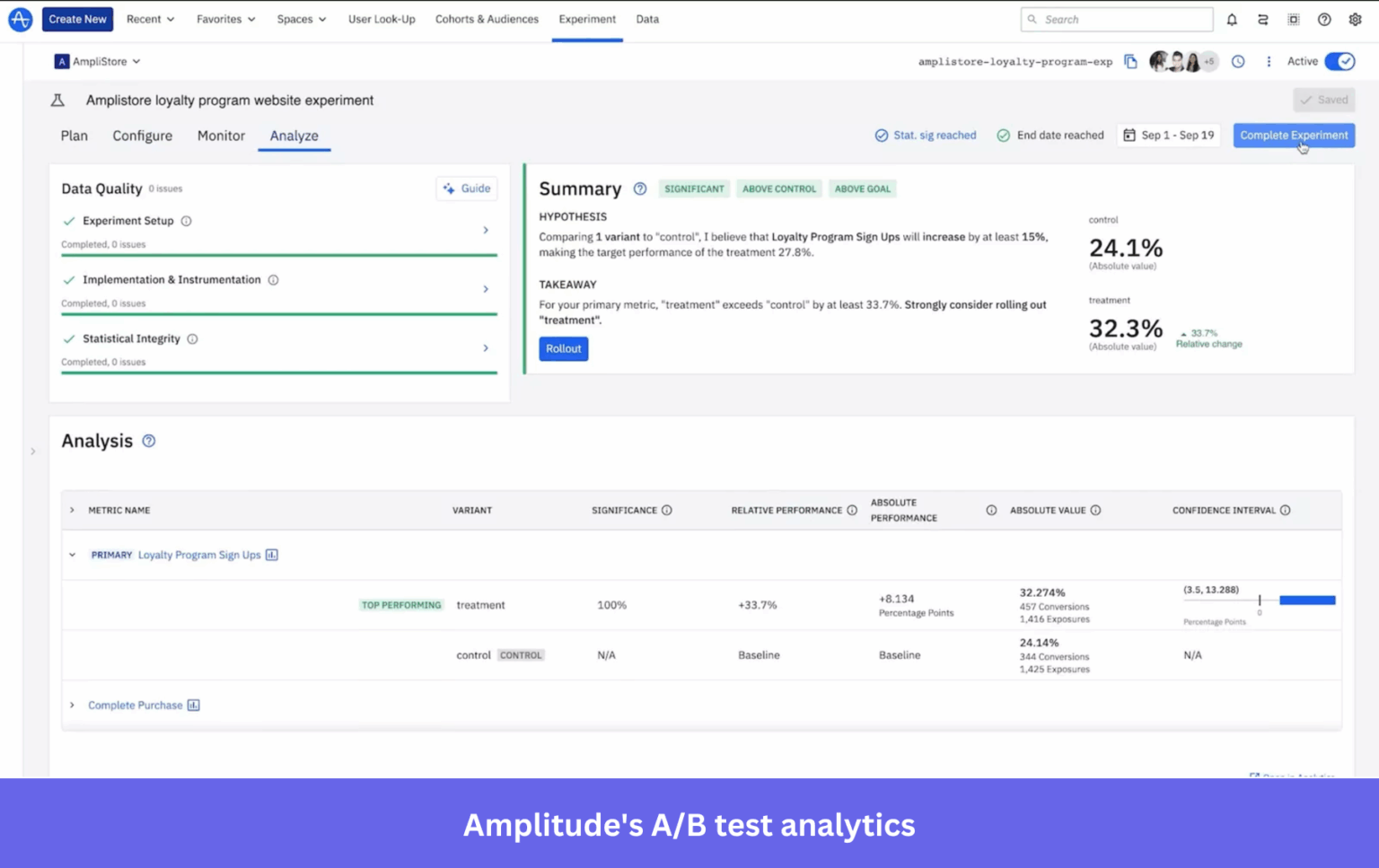
Implementing Amplitude A/B testing while maintaining regulatory compliance requires a delicate balance between optimizing user experience and adhering to strict data privacy laws like GDPR, CCPA, and HIPAA. Organizations must configure tracking event schemas, manage user consent, and anonymize user properties to prevent unauthorized data collection during experimentation.
Introduction to Amplitude Experimentation and Compliance
Product analytics and experimentation platforms like Amplitude allow digital teams to run A/B tests, feature flags, and multivariate experiments to optimize user journeys. However, as regulatory frameworks governing digital privacy expand globally, running these tests introduces significant legal and technical risks. When product teams deploy tracking code to assign users to variant buckets, they often process sensitive user attributes, device identifiers, and behavioral data.
Regulatory compliance in A/B testing means ensuring that every data point collected during an experiment adheres to privacy laws, industry standards, and internal governance frameworks. Failure to align experimentation practices with legal requirements can result in severe financial penalties and reputational damage. To navigate this landscape successfully, organizations must understand how Amplitude captures data, how user consent interfaces with variant assignment, and how to configure governance controls within the platform.
Core Regulatory Frameworks Impacting Digital Experimentation
Organizations conducting digital experimentation must navigate a complex web of overlapping legislation. Each framework imposes distinct requirements on how user data is collected, processed, and retained during A/B testing workflows.
The General Data Protection Regulation (GDPR)
Operating within the European Union or targeting EU residents brings organizations under the strict purview of the GDPR. Under this regulation, experimentation data—including randomized variant IDs, event properties, and user IDs—often qualifies as personal data because it can be linked to an identifiable natural person.
Key GDPR principles that impact Amplitude A/B testing include:
- Lawfulness, Fairness, and Transparency: Users must be fully informed about what experiments they are part of and why data is being collected.
- Purpose Limitation: Data collected for product optimization or experimentation cannot be repurposed for unauthorized profiling.
- Data Minimization: Teams must only collect the minimum set of event properties necessary to determine the winning variant.
- Storage Limitation: Experimentation logs must not be retained indefinitely; retention schedules must align with the stated purpose of the analysis.
The California Consumer Privacy Act (CCPA) and CPRA
For companies operating in California, the CCPA and its expansion, the California Privacy Rights Act (CPRA), regulate the collection and sale or sharing of consumer personal information. While A/B testing is generally conducted for internal optimization rather than commercial data sharing, companies must still provide clear opt-out mechanisms. If user behavioral data from an experiment is shared with third-party data processors or integrated into customer data platforms (CDPs) without proper contractual safeguards, it may violate state thresholds.
Industry-Specific Regulations (HIPAA and GLBA)
In sectors such as healthcare and finance, additional regulations apply. If an organization subject to the Health Insurance Portability and Accountability Act (HIPAA) runs A/B tests on a patient portal, tracking mechanisms must not capture Protected Health Information (PHI) alongside experimentation variants. Similarly, financial institutions governed by the Gramm-Leach-Bliley Act (GLBA) must secure non-public personal information (NPI) against unauthorized exposure through client-side tracking scripts.
Data Governance and Privacy Controls in Amplitude
Amplitude provides built-in governance tools designed to help organizations control data quality and regulatory compliance. Effectively utilizing these features reduces the risk of non-compliance during active experimentation cycles.
User Identification and Pseudonymization
A/B testing relies heavily on stable user identifiers to ensure a user sees the same variant across multiple sessions and devices. However, passing personally identifiable information (PII) such as email addresses, phone numbers, or real names directly into Amplitude user properties violates both data privacy regulations and Amplitude's terms of service.
To remain compliant, organizations must implement robust pseudonymization techniques:
- Hash Identifiers: Convert internal user IDs using secure cryptographic hashing algorithms (such as SHA-256) before sending them to Amplitude as user IDs or device IDs.
- Avoid Raw PII: Ensure developers never map form inputs, login credentials, or profile names to event properties.
- Manage Anonymous IDs: Utilize anonymous client-side identifiers for pre-login states, and cleanly merge IDs upon authentication only after user consent has been established.
Data Masking and Event Filtering
Even with strict guidelines, developers may accidentally push sensitive data into event payloads. Amplitude's data governance features allow teams to apply blocklists, transform event names, and filter out unauthorized properties before they are permanently stored in the project database. Setting up regular audits of incoming schemas ensures that tracking plans remain compliant as product features evolve.
Managing User Consent in A/B Testing Workflows
Consent management is the cornerstone of legal compliance for digital experimentation. Running an A/B test without verifying whether a user has consented to tracking can invalidate the experiment and breach privacy laws.
Integrating Consent Management Platforms (CMPs)
Organizations should synchronize their Consent Management Platform (such as OneTrust, TrustArc, or Cookiebot) with Amplitude. The tracking implementation must verify user consent status before initializing the Amplitude SDK or firing assignment events.
- Opt-In Jurisdictions (e.g., GDPR): The Amplitude SDK should remain dormant, or tracking should be completely disabled, until the user actively clicks "Accept" on the cookie banner or consent preference center.
- Opt-Out Jurisdictions (e.g., CCPA): Tracking may initiate by default, but the system must immediately respect a "Do Not Sell or Share My Personal Information" request by calling Amplitude's privacy APIs to opt the user out of tracking.
Handling Unconsented Users in Variant Assignment
A major methodological challenge in A/B testing is maintaining statistical validity when a portion of the user base denies consent. If unconsented users are excluded from the experiment entirely, sample ratio mismatches (SRM) or selection bias can skew results.
Product teams should evaluate whether server-side evaluation can assign variants anonymously without logging persistent behavioral data for unconsented users, or ensure that analytics pipelines account for missing consent cohorts transparently.
Technical Implementation Strategies for Compliance
Achieving regulatory compliance requires specific engineering practices when deploying Amplitude SDKs or using client-side versus server-side experimentation architectures.
Client-Side vs. Server-Side Tracking
The choice of implementation architecture directly impacts how data privacy regulations apply to your experimentation setup.
| Architecture | Compliance Advantages | Compliance Risks |
|---|---|---|
| Client-Side (SDK) | Easier integration with browser-level consent tools; straightforward cookie management. | Exposes tracking payloads to browser extensions; relies on client execution where data leakage is harder to control. |
| Server-Side (API) | Greater control over data minimization; PII never touches the client browser; centralized logging. | Requires complex infrastructure to manage session states, caching, and user consent synchronization. |
Data Retention and Deletion Protocols
Regulations such as GDPR grant users the "Right to Be Forgotten" (Article 17). When a user requests data deletion, organizations must be able to purge their records across all connected systems, including product analytics and experimentation logs. Amplitude provides user deletion APIs that allow organizations to submit batch deletion requests for specific user IDs, ensuring compliance with data subject access requests (DSARs).
Common Compliance Pitfalls in Experimentation
Even with advanced tooling, organizations frequently encounter pitfalls that jeopardize their regulatory standing during A/B tests.
Accidental PII Collection via Free-Text Fields
Product teams often run experiments on search bars, feedback forms, or onboarding text inputs. If an Amplitude event tracks the value property of a search input field without sanitization, users typing sensitive personal data (such as medical conditions or financial queries) will inadvertently transmit PII to the analytics platform. Teams must implement regex validation and client-side sanitization before tracking free-text inputs.
Ignoring Cross-Device Tracking Restrictions
Modern A/B tests often track users across mobile apps, responsive web browsers, and desktop platforms. Linking these sessions incorrectly or persisting tracking cookies beyond legal limits can breach privacy frameworks that restrict persistent user tracking without explicit, renewed consent.
Frequently Asked Questions
Can I run Amplitude A/B tests without user consent under GDPR?
Generally, no. Performance and analytics cookies generally require prior user consent under GDPR and ePrivacy regulations unless they strictly fall under narrow exemptions for essential service delivery, which standard optimization and A/B testing rarely satisfy.
How do I handle data deletion requests for users in Amplitude experiments?
You must utilize Amplitude’s User Deletion API or data management settings to submit requests containing the target user ID. This ensures historical event data and experiment exposure logs associated with that user are systematically removed from the system.
Does Amplitude store PHI if I use it in a healthcare application?
Amplitude is not inherently HIPAA-compliant by default unless configured under a specific enterprise agreement with a Business Associate Agreement (BAA) in place. Even with a BAA, product teams must ensure no raw PHI is passed into event properties.
How does client-side experiment bucketing affect cookie compliance?
Client-side bucketing relies on local storage or cookies to persist variant assignments. If these cookies are set before the user provides consent, it may violate cookie laws. Using server-side evaluation or deferring SDK initialization until consent is granted mitigates this issue.
Summary and Recommended Next Actions
Ensuring regulatory compliance while leveraging Amplitude for A/B testing requires alignment between legal, product, and engineering teams. Organizations should prioritize auditing current tracking plans for accidental PII collection, integrating consent management platforms directly with initialization logic, and establishing clear data retention and deletion workflows.
For your next steps, conduct a comprehensive audit of all active Amplitude event schemas, verify that user hashing protocols are correctly implemented, and confirm that your consent management platform successfully blocks or permits tracking based on user jurisdiction.