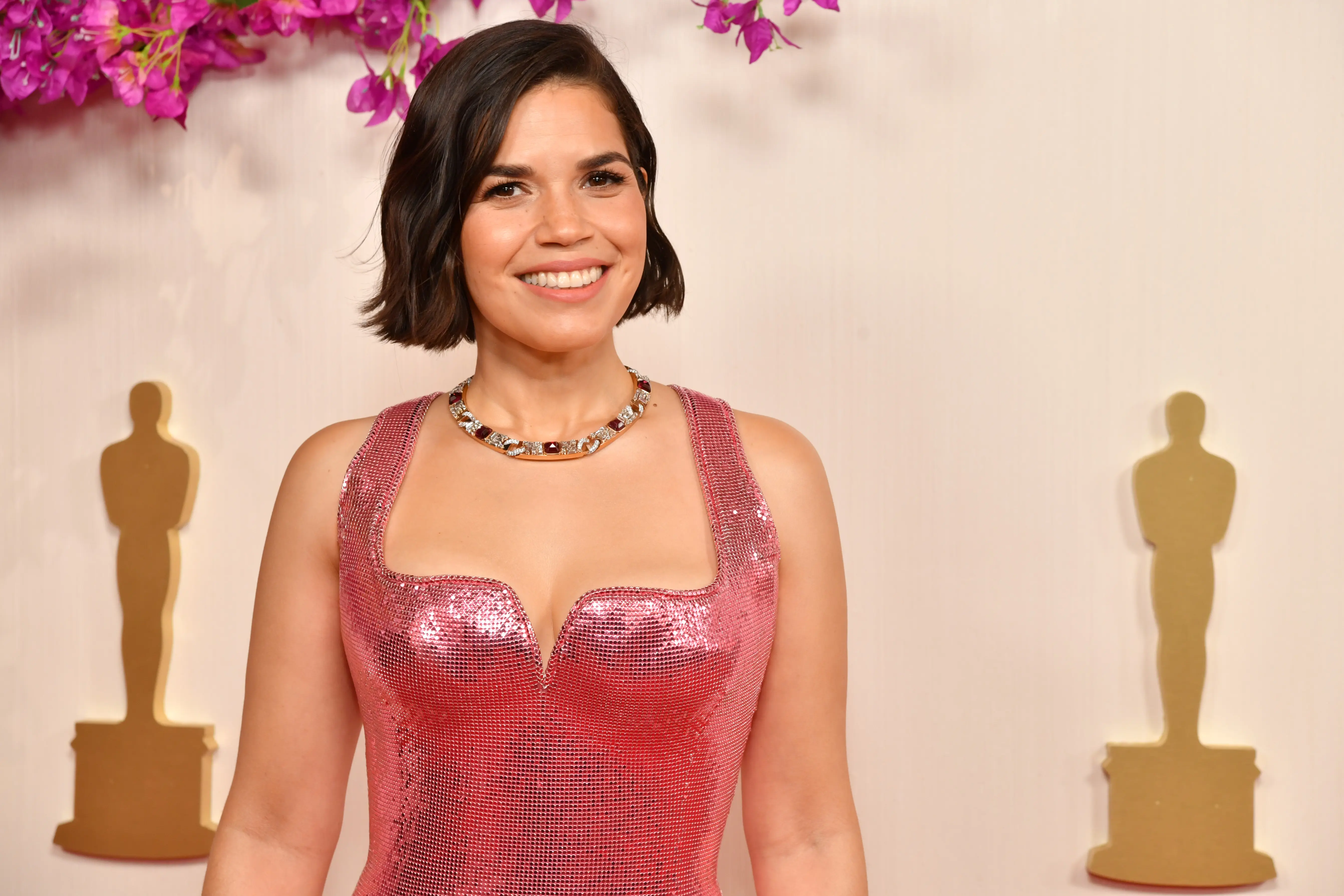
America Ferrera discovered her complex ancestral history on the PBS series Finding Your Roots during Season 3, Episode 4. Through the research of Dr. Henry Louis Gates Jr., she learned about her paternal great-grandfather, General Gregorio Ferrera, a revolutionary leader in Honduras, and confirmed her genetic heritage as a mixture of Indigenous Lenca, European, and African ancestry.
The exploration of personal history is more than a simple exercise in curiosity; for public figures like America Ferrera, it serves as a bridge between their contemporary American identity and the deep historical currents of their ancestral homelands. Ferrera, known for her roles in Ugly Betty, Superstore, and the Barbie movie, has long been an advocate for immigrant rights and Latino representation. Her appearance on Finding Your Roots provided a foundational look at the biological and historical forces that shaped her family’s trajectory from the mountains of Honduras to the United States.
The Significance of America Ferrera’s Participation in Finding Your Roots
When America Ferrera sat down with Dr. Henry Louis Gates Jr., she brought with her the typical questions of a first-generation American. Born in Los Angeles to Honduran parents, Ferrera’s understanding of her family tree was limited by the geographic and emotional distances that often accompany the immigrant experience. The episode, titled "The Tragedy of the Horizon," also featured political commentator Ana Navarro and actress S. Epatha Merkerson, creating a narrative tapestry that explored different facets of the American experience.
For Ferrera, the journey was particularly poignant because of her complicated relationship with her father, Carlos Gregorio Ferrera. He returned to Honduras when she was young and passed away before they could fully reconcile or discuss their family history in detail. Finding Your Roots effectively stepped into that void, using archival records and genetic science to provide the answers that her father could not. This process highlighted the show's dual methodology: the "book of life," which uses paper trails like birth certificates and military records, and DNA analysis, which reveals deep-time migratory patterns.
Uncovering the Paternal Legacy: General Gregorio Ferrera
The most striking revelation of the episode was the history of Ferrera’s paternal great-grandfather, Gregorio Ferrera. While many families have legends of "famous" ancestors, the records presented to America confirmed that her great-grandfather was a monumental, albeit controversial, figure in Honduran history. Gregorio Ferrera was a revolutionary general and a leader of the indigenous Lenca people who rose to prominence in the early 20th century.
During the 1920s and early 1930s, Honduras was characterized by intense political instability, often exacerbated by the influence of foreign fruit companies—a period frequently referred to as the "Banana Wars." Gregorio Ferrera was a central figure in these conflicts. He was known for leading several armed rebellions against the central government, often retreating into the mountains of Intibucá to regroup. For America, seeing newspaper clippings and military documents that described her ancestor as a "rebel leader" and a "man of the people" was transformative. It reframed her father’s lineage from one of abandonment to one of historical consequence.
The Political Turmoil of Early 20th Century Honduras
The research conducted by the Finding Your Roots team detailed how General Ferrera was not merely a soldier but a political force. He represented a specific faction of Honduran society that felt marginalized by the elite-led government in Tegucigalpa. His story ended tragically; he was killed in 1931 during one of his uprisings.
Understanding this history allowed America Ferrera to connect her own modern-day activism with a genetic and historical predisposition toward leadership and social struggle. The "General" wasn't just a distant relative; he was a manifestation of the Lenca resistance to centralized authority, a trait that Ferrera noted seemed to echo in her own drive to advocate for underrepresented communities.
The Maternal Journey and the Immigrant Experience
While the paternal side of the family was defined by high-stakes politics and revolution, the maternal side of America’s tree offered a look at the quiet resilience of the Honduran working class. Her mother, Griselda Aída del Carmen Hilary, moved her children to the United States in the 1970s, seeking the stability and opportunity that had been elusive in their homeland.
The show highlighted the incredible work ethic of her mother, who worked as the director of housekeeping for a major hotel chain to provide for her six children. In the context of genealogy, this narrative shift is crucial. It balances the "Great Man" theory of history—represented by General Ferrera—with the lived reality of the "Great Woman" who ensured the family’s survival through migration. This part of the episode resonated with many viewers who share the experience of being raised by single immigrant parents who sacrificed their own social standing in their home country to ensure their children’s success in the U.S.
Genetic Results: A Map of Central American Identity
The DNA results provided a scientific breakdown of America Ferrera’s ancestry, moving beyond the paper records to the cellular level. Like many people of Latin American descent, her results showed a significant degree of "Mestizaje"—the blending of different ethnic groups as a result of the colonial history of the Americas.
Her admixture results typically included:
- Indigenous Americas: A plurality of her DNA, specifically linked to the regions of Honduras and the broader Mayan sphere of influence.
- European: Primarily Spanish, reflecting the colonial history of Central America.
- Sub-Saharan African: A smaller but significant percentage, which is common in the Caribbean and Central American coastal regions due to the history of the transatlantic slave trade.
Indigenous Roots and Cultural Connection
The confirmation of her Lenca ancestry was particularly moving. The Lenca are the largest indigenous group in Honduras, and they have fought for centuries to maintain their cultural identity and land rights. For America, who grew up in the melting pot of Los Angeles, this specific tribal identification provided a sense of "grounding."
In the 2026 landscape of identity politics, this type of discovery is viewed as a vital step in "decolonizing" one's personal history. It moves the conversation from a broad "Latina" label to a specific "Lenca-Honduran" heritage. This distinction is important for indigenous visibility, as it acknowledges that these cultures are not extinct but are living components of the modern Latino diaspora.
Comparative Summary of Ancestral Revelations
The following table summarizes the key findings from America Ferrera’s appearance on the program, contrasting the paternal and maternal lines discovered through research.
| Feature | Paternal Line (Ferrera) | Maternal Line (Hilary) |
|---|---|---|
| Key Figure | General Gregorio Ferrera | Griselda Aída del Carmen Hilary |
| Historical Role | Revolutionary General / Political Leader | Immigrant Matriarch / Housekeeping Director |
| Primary Location | Intibucá, Honduras | Tegucigalpa, Honduras / Los Angeles, USA |
| Major Discovery | Led multiple armed rebellions in the 1920s | Overcame extreme poverty to relocate 6 kids |
| Ancestry Markers | High Indigenous Lenca concentration | Mixed European/Indigenous/African |
| Thematic Focus | Political legacy and historical conflict | Resilience, migration, and the American Dream |
Historical Context: Why Her Story Resonates in 2026
As of 2026, the episode remains a touchstone for discussions regarding Central American heritage. In the decade since the episode first aired, the geopolitical situation in the "Northern Triangle" (Honduras, Guatemala, and El Salvador) has continued to drive migration to the United States. Ferrera’s story provides a historical lens through which to view these modern movements.
By showing that her ancestors were involved in the foundational struggles of the Honduran state, the show refutes the idea that immigrants come from "nowhere" or have no stake in their original homelands. Instead, it positions them as the latest chapter in a long history of political and social evolution. For the audience in 2026, where genealogy has become a multi-billion dollar industry, Ferrera's episode serves as a masterclass in how to integrate painful historical truths with personal pride.
Impact on Her Career and Activism
America Ferrera has often cited her discovery on the show as a turning point in how she views her responsibility as a public figure. Knowing that her great-grandfather died fighting for the rights of the Lenca people and for a specific vision of Honduras added weight to her own work with organizations like Voto Latino and her efforts to produce content that centers the Latino experience.
In her later roles, including her acclaimed performance in Barbie, Ferrera has channeled this sense of "inherited strength." The knowledge that she comes from a line of leaders—both the military kind and the domestic kind—has allowed her to speak with greater authority on issues of identity and belonging. The episode of Finding Your Roots didn't just give her a family tree; it gave her a manifesto for her own life’s work.
How to Watch the Episode and Explore Your Own Roots
For those interested in viewing America Ferrera’s journey, the episode is widely available through various educational and streaming platforms. It serves as a starting point for anyone looking to bridge the gap between family legends and documented facts.
- PBS Passport: Members can stream the full catalog of Finding Your Roots, including Season 3.
- Educational Institutions: Many libraries and universities provide access to the series via databases like Alexander Street or Kanopy.
- Digital Purchase: The episode is available on major platforms like Amazon Prime Video and Apple TV.
To begin a similar journey, experts recommend starting with the "home archive"—interviewing the oldest living relatives and digitizing any old photographs or documents. For those with Honduran or Central American roots, the Honduran National Archive and various Catholic Church records (available through FamilySearch) are invaluable resources for tracing lineages back to the 19th century and beyond.
Frequently Asked Questions
What did America Ferrera learn about her father on Finding Your Roots?
She learned that her father, Carlos Gregorio Ferrera, was the grandson of a famous Honduran general. Because she was estranged from her father for much of her life, the show provided her with a connection to his heritage that she had never been able to establish personally. This helped her find a sense of peace regarding his absence during her upbringing.
Who was General Gregorio Ferrera?
Gregorio Ferrera was a prominent revolutionary leader in Honduras during the early 20th century. He was of Lenca indigenous descent and was known for his military prowess and his role in the civil wars that plagued Honduras in the 1920s. He was a populist figure who often fought against the influence of foreign corporations and the centralized government.
What is the Lenca heritage mentioned in the episode?
The Lenca are an indigenous people of southwestern Honduras and eastern El Salvador. They have a distinct language (now largely extinct but being revived) and a rich tradition of pottery and communal land management. Identifying as Lenca was a significant moment for Ferrera, as it connected her to the pre-colonial history of Central America.
How accurate are the DNA results in Finding Your Roots?
The show uses state-of-the-art genetic testing provided by companies like 23andMe and AncestryDNA, combined with analysis from leading geneticists. While percentages can shift slightly as databases grow, the broad ancestral markers (Indigenous, European, African) are highly accurate and provide a reliable map of a person's deep ancestry.
Can I find my own ancestors if they were from Honduras?
Yes, though it can be challenging. Many Honduran records are held by the Catholic Church (parish records) or in the National Archives. Because many records have been damaged by weather or political unrest, DNA testing is often a vital secondary tool for Central Americans to find "genetic cousins" and reconstruct their trees through shared matches.
Next Steps for Aspiring Genealogists
If you are inspired by America Ferrera’s story, the best next step is to document your own oral history. Do not wait for a television show to begin the process. Record your parents' and grandparents' stories today, focusing on the names of towns and any mention of "important" or "notorious" ancestors. These stories often contain the kernels of truth that lead to major archival breakthroughs.