Aluminum is classified as a post-transition metal because it exhibits high electrical and thermal conductivity, characteristic metallic luster, and extreme malleability. Unlike metalloids, it lacks semi-conductive properties, and unlike nonmetals, it readily loses electrons to form cations. Its position on the periodic table confirms its definitive status as a metal.
The Atomic Foundation: Why Aluminum is Classified as a Metal
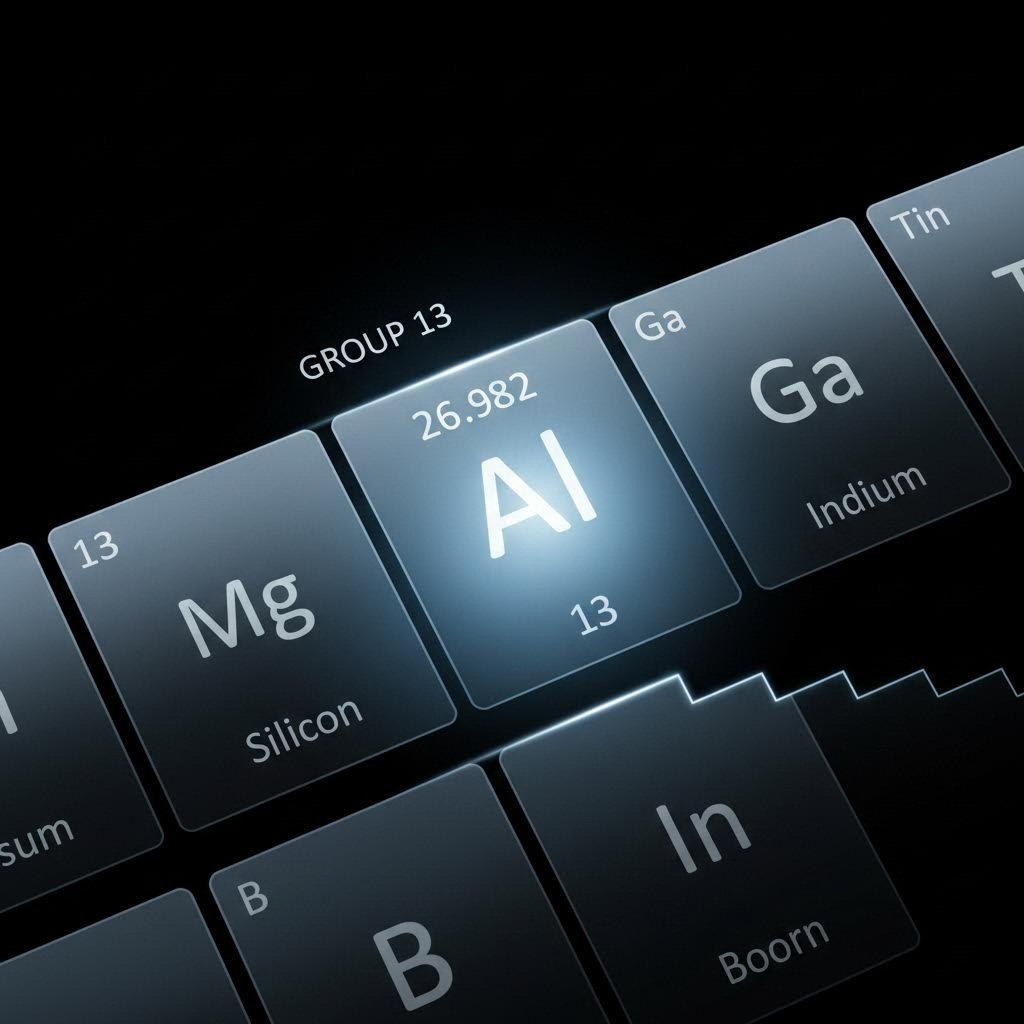
To understand why aluminum is a metal and not a nonmetal or metalloid, we must first look at its position on the periodic table and its underlying atomic structure. Aluminum, symbolized as Al with an atomic number of 13, resides in Group 13 and Period 3. In the context of 2026 chemical standards, the International Union of Pure and Applied Chemistry (IUPAC) continues to categorize aluminum as a post-transition metal, a group of metallic elements located between the transition metals and the metalloids.
The fundamental reason for this classification lies in its electron configuration: $[Ne] 3s^2 3p^1$. Aluminum has three valence electrons. In chemical reactions, aluminum has a low ionization energy, meaning it can easily lose these three electrons to achieve a stable, noble-gas-like electron configuration. This process results in the formation of $Al^{3+}$ cations. The ability to lose electrons and form positive ions is a defining characteristic of metals. Nonmetals, by contrast, tend to gain or share electrons, and metalloids exhibit a mix of these behaviors.
Furthermore, the bonding in solid aluminum is purely metallic. This involves a "sea of delocalized electrons" that move freely through a lattice of positive ions. This delocalization is responsible for the high electrical and thermal conductivity that distinguishes aluminum from metalloids like silicon or nonmetals like sulfur. While silicon's electrons are tightly bound in covalent bonds (making it a semiconductor), aluminum’s electrons are free-flowing, making it a high-performance conductor.
The Periodic Table "Staircase" and Aluminum’s Position
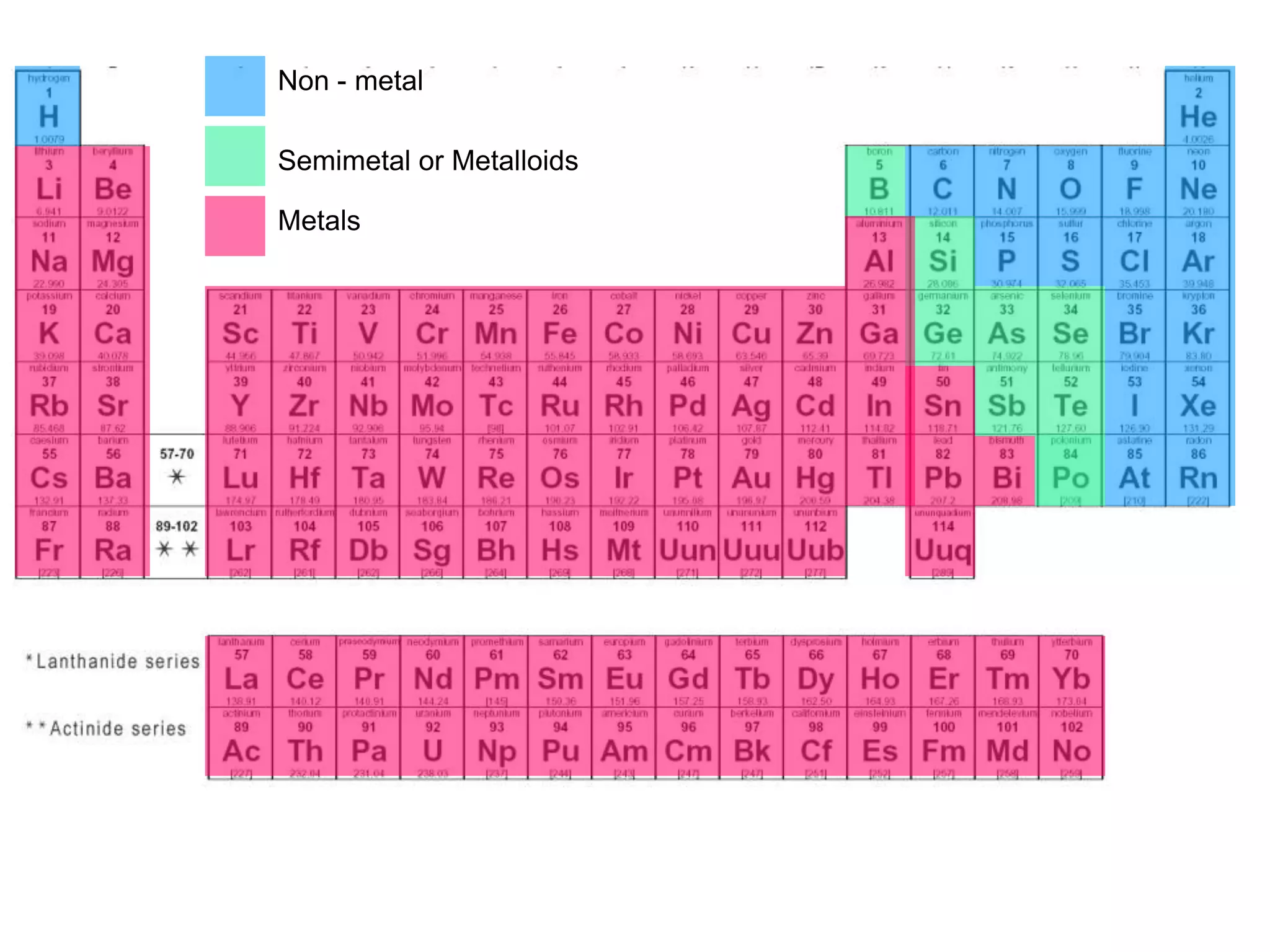
The periodic table is often divided by a zig-zag line, frequently referred to as the "staircase," which separates metals on the left from nonmetals on the right. Metalloids, such as boron, silicon, germanium, and arsenic, typically sit directly on this line. Aluminum is physically adjacent to this line, which occasionally leads to confusion among students and laypeople.
However, being near the line does not make aluminum a metalloid. In the landscape of 2026 inorganic chemistry, the distinction is based on the dominance of metallic traits. While elements like boron (above aluminum) are clearly metalloids due to their covalent network structures and low conductivity, aluminum exhibits the crystalline structure of a metal (face-centered cubic).
The Myth of Aluminum as a Metalloid
The confusion often stems from aluminum's amphoteric nature. An amphoteric substance is one that can react as both an acid and a base. Aluminum oxide ($Al_2O_3$) reacts with both hydrochloric acid and sodium hydroxide. Because many metalloids also show amphoteric behavior, some older textbooks or fringe chemical classifications tentatively grouped aluminum with metalloids.
Modern consensus rejects this based on physical evidence. A true metalloid must demonstrate properties intermediate between metals and nonmetals, specifically regarding electrical semi-conductivity. Aluminum does not possess a "band gap" in the way that silicon or germanium does; it is a true conductor with zero band gap at room temperature. Therefore, it is a metal, not a metalloid.
Physical Properties that Confirm Metallic Status
The physical manifestation of aluminum provides the most tangible evidence of its metallic status. For an element to be considered a metal, it must meet several criteria regarding its state and behavior under mechanical stress.
Malleability and Ductility
One of the most striking features of aluminum is its extreme malleability. This is the ability of a material to be deformed under compressive stress, such as being rolled into thin foils. In 2026, aluminum foil remains a staple in both industrial and domestic applications due to this property. Nonmetals are generally brittle and shatter when struck, while metalloids are also typically brittle and cannot be drawn into wires (ductility) or hammered into sheets without breaking. Aluminum's ability to be extruded into complex architectural shapes or drawn into fine electrical wiring is a quintessential metallic trait.
Luster and Reflectivity
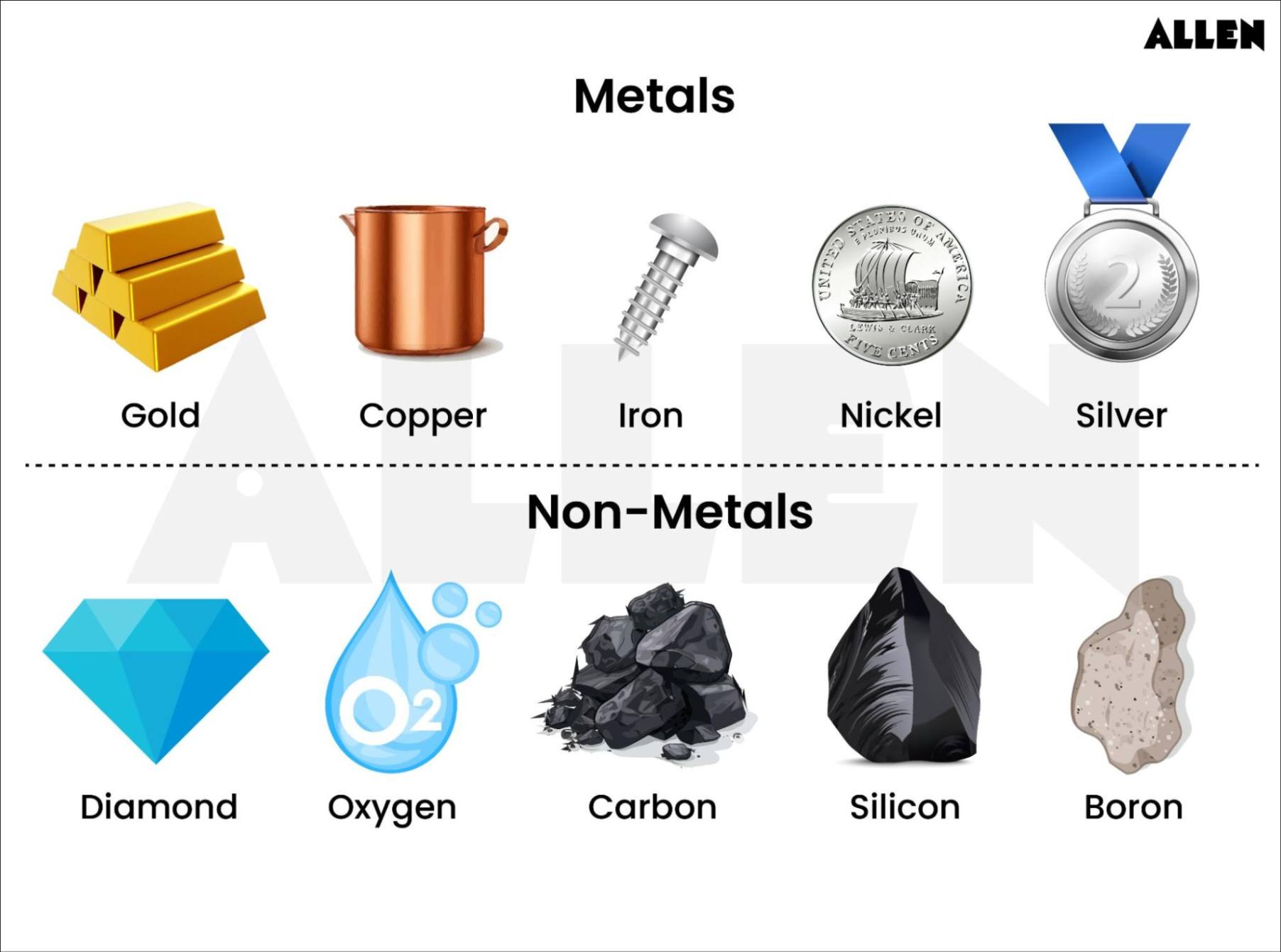
Aluminum possesses a high metallic luster, meaning it reflects light efficiently. This is due to the delocalized electrons on the surface absorbing and re-emitting photons. This property is utilized in the production of high-quality mirrors and reflective coatings for telescopes. Nonmetals like carbon (in the form of coal) or sulfur are dull, and while some metalloids like silicon have a shiny appearance, they do not possess the same broad-spectrum reflectivity as aluminum.
Conductivity: Thermal and Electrical
In the global shift toward electrification observed in 2026, aluminum's conductivity is more relevant than ever. Metals are characterized by high thermal and electrical conductivity. While copper is a better conductor, aluminum is significantly lighter, making it the preferred choice for high-voltage overhead power lines.
| Property | Aluminum (Metal) | Silicon (Metalloid) | Phosphorus (Nonmetal) |
|---|---|---|---|
| Electrical State | Conductor | Semiconductor | Insulator |
| Physical Appearance | Shiny, Silver-Grey | Lustrous, Grey-Black | Dull, Waxy (White) or Powdery (Red) |
| Mechanical Nature | Malleable, Ductile | Brittle | Brittle (Solid phase) |
| Chemical Bonding | Metallic | Covalent Network | Covalent Molecular |
| First Ionization Energy | Low (577.5 kJ/mol) | Moderate (786.5 kJ/mol) | High (1011.7 kJ/mol) |
| Common Ion Formed | $Al^{3+}$ (Cation) | Rarely forms ions | $P^{3-}$ (Anion) |
Chemical Behavior and the Post-Transition Distinction
Aluminum is often called a "post-transition metal" because it is located to the right of the transition metals (the d-block) but still displays the classic characteristics of a metal. Its chemical behavior is dominated by its tendency to lose electrons, but it has some unique quirks that separate it from alkali metals like sodium or alkaline earth metals like magnesium.
The Passivation Layer
Unlike many other metals that corrode continuously, aluminum reacts almost instantaneously with atmospheric oxygen to form a thin, tenacious layer of aluminum oxide. This process is known as passivation. This oxide layer is only a few nanometers thick, yet it protects the underlying metal from further oxidation. This is why aluminum is widely used in 2026 for outdoor structures and marine environments. While some might mistake this lack of "rusting" for a nonmetallic trait, it is actually a result of a highly reactive metallic surface forming a protective ceramic-like coating.
Reaction with Acids and Bases (Amphoterism)
As mentioned earlier, aluminum is amphoteric.
- In Acid: $2Al + 6HCl \rightarrow 2AlCl_3 + 3H_2$
- In Base: $2Al + 2NaOH + 6H_2O \rightarrow 2Na[Al(OH)_4] + 3H_2$
While this ability to react with bases is a trait shared with metalloids like antimony, it does not override the metallic bonding and high conductivity that define the element. In the context of chemical engineering, this amphoterism is an essential factor to consider when choosing storage containers for chemicals, as aluminum will degrade in both highly acidic and highly alkaline environments.
The Role of Aluminum in 2026 Technology
As we navigate the year 2026, the demand for aluminum as a metal has surged, particularly in the green energy sector. Because it is a metal, it can be alloyed with other elements to enhance its strength-to-weight ratio, a process not possible with nonmetals or metalloids in the same structural capacity.
Aerospace and Automotive Alloys
The aerospace industry relies heavily on aluminum-lithium and aluminum-scandium alloys. These alloys capitalize on the metallic crystal lattice of aluminum, allowing smaller atoms to fit into the gaps (interstitial) or replace aluminum atoms (substitutional), thereby increasing hardness. Nonmetals like oxygen or nitrogen are often considered impurities in these lattices, demonstrating that aluminum's utility is tied directly to its metallic nature.
Recycling and Sustainability
Aluminum is often referred to as the "green metal." Because it is a metal with a relatively low melting point ($660.3^\circ C$) compared to transition metals like iron, it can be recycled using only 5% of the energy required to produce "primary" aluminum from bauxite ore. In 2026, the circular economy heavily relies on the ability to melt and reform this metal without losing its inherent metallic properties, a feat that is chemically impossible for nonmetals like coal or complex metalloid structures that degrade upon repeated processing.
Common Misconceptions: Addressing the Confusion
Despite the clear scientific evidence, several factors contribute to the ongoing debate or confusion regarding aluminum’s classification.
- Density: Aluminum is a "light metal" with a density of approximately $2.70 \text{ g/cm}^3$. This is much lower than iron ($7.87 \text{ g/cm}^3$) or gold ($19.3 \text{ g/cm}^3$). Some people erroneously associate "metal" with "heavy." However, density is not a defining characteristic of metals; lithium is a metal and is less dense than water.
- The Boron Relationship: Because aluminum is directly below boron (a metalloid) in Group 13, there is a periodic trend expectation that aluminum might share boron's properties. However, the jump from Period 2 to Period 3 involves a significant increase in atomic radius and the addition of electron shielding, which makes it much easier for aluminum to lose electrons than boron. This shift is what transitions the group from a metalloid (boron) to a metal (aluminum).
- Chemical Nomenclature: In some specialized metallurgical contexts, "non-ferrous metals" are discussed in ways that contrast them so sharply with steel that the "metal" identity feels different. Regardless of the industry jargon used in 2026, the chemical identity remains steadfast.
Practical Comparison: Aluminum vs. True Metalloids
To further solidify the understanding that aluminum is a metal, it is helpful to compare it directly to silicon, the most common metalloid.
- Structure: Silicon forms a covalent diamond-like tetrahedral structure. Aluminum forms a metallic face-centered cubic structure.
- Electron Mobility: In silicon, electrons require a specific amount of energy (the band gap) to move into the conduction band. In aluminum, there is no such barrier; the valence and conduction bands overlap.
- Temperature Sensitivity: As temperatures rise, the conductivity of metalloids typically increases because more electrons gain the energy to jump the band gap. In aluminum (and all metals), conductivity decreases as temperature rises because increased atomic vibrations interfere with the flow of electrons.
This thermal-electrical behavior is the "smoking gun" for physicists and chemists alike. Aluminum’s decrease in conductivity at high temperatures is a hallmark of metallic behavior, diametrically opposed to the behavior of metalloids.
Frequently Asked Questions
Is aluminum a transition metal?
No, aluminum is not a transition metal. Transition metals are defined by their partially filled d-electron subshells (Groups 3 through 12). Aluminum is a post-transition metal (or "poor metal") because its d-subshell is completely filled and it is located in the p-block of the periodic table.
Why is aluminum sometimes called a "poor metal"?
The term "poor metal" is an older, informal name for post-transition metals. It refers to the fact that these metals often have lower melting points, are softer, and have higher electronegativity than the transition metals. However, in modern 2026 terminology, "post-transition metal" is the preferred and more accurate scientific term.
Can aluminum ever behave like a nonmetal?
While aluminum is fundamentally a metal, it can form covalent bonds in certain compounds, such as aluminum chloride ($AlCl_3$) in its vapor phase. This covalent character is an exception rather than the rule and occurs because the $Al^{3+}$ ion is small and has a high charge density, which can polarize the electron clouds of nearby anions. This does not change its classification as a metal.
Why do some periodic tables color aluminum differently?
Different periodic tables use color coding to highlight various groupings. Some might color-code by block (aluminum is p-block), others by state at room temperature, and others by specific categories like "other metals" or "post-transition metals." Regardless of the color used, the underlying data confirms it is a metal.
Is aluminum a semiconductor?
No, aluminum is a conductor. It does not have the band gap necessary to function as a semiconductor. Metalloids like silicon and germanium are the primary elements used for semi-conductive purposes in electronics.
Final Recommendation for Identification
When identifying the classification of aluminum, always prioritize physical conductivity and bonding type over chemical amphoterism. While aluminum shares some chemical similarities with metalloids (like its reaction with bases), its physical properties—high electrical conductivity, metallic luster, malleability, and the presence of a metallic lattice with delocalized electrons—are definitive. For any academic, industrial, or professional purpose in 2026, classify aluminum strictly as a metal, specifically a post-transition metal.