Allstate offers universal life insurance through its extensive network of agents and financial representatives. These policies provide permanent protection, combining a death benefit with a cash value component that grows over time. Allstate’s universal life products are characterized by flexible premiums and adjustable death benefits, allowing policyholders to adapt their coverage to changing financial needs.
Universal life insurance (UL) occupies a unique space in the insurance market, bridging the gap between the affordability of term life and the lifelong guarantees of whole life. As of 2026, Allstate continues to position its universal life products as foundational tools for long-term financial planning, estate preservation, and supplemental retirement savings. Understanding the nuances of how these policies function is essential for anyone looking to secure their family’s future while maintaining financial liquidity.
The Fundamentals of Allstate Universal Life Insurance
Universal life insurance is a form of permanent life insurance. Unlike term insurance, which expires after a set period (such as 10, 20, or 30 years), a universal life policy from Allstate is designed to remain in force for the duration of the insured’s life, provided the policy is sufficiently funded.
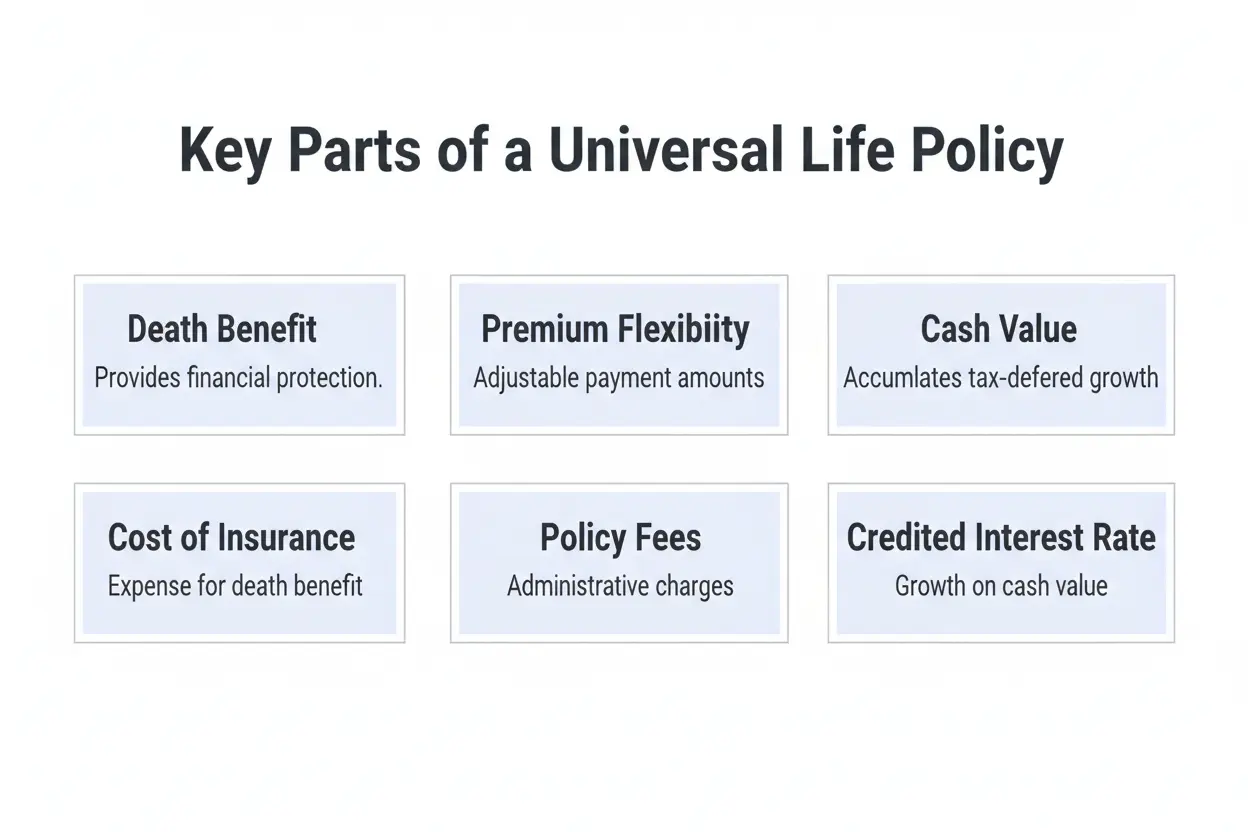
The defining characteristic of Allstate's universal life insurance is its "unbundled" structure. In a whole life policy, the premium, death benefit, and cash value growth are fixed and inseparable. In contrast, a universal life policy separates these elements. This allows the policyholder to see exactly how much of their premium is going toward the cost of insurance (COI), how much is being used for administrative fees, and how much is being credited to the cash value.
How Cash Value Accumulates
When you pay a premium into an Allstate universal life policy, a portion is applied to the insurance costs and fees. The remainder is deposited into a cash value account, where it earns interest. In 2026, Allstate offers different methods for interest crediting depending on the specific type of universal life policy chosen. This cash value grows on a tax-deferred basis, meaning you do not pay taxes on the gains as long as the money remains within the policy.
Premium Flexibility
One of the primary reasons consumers choose Allstate for universal life is the flexibility regarding premium payments. Within certain limits defined by the Internal Revenue Service (IRS) and the policy terms, you can increase, decrease, or even skip premium payments if the cash value is large enough to cover the monthly cost of insurance. This is particularly beneficial for individuals with fluctuating incomes, such as business owners or freelancers.
Types of Universal Life Insurance Available Through Allstate
Allstate agents typically offer two primary variations of universal life insurance. Each serves a different risk profile and financial objective.
1. Traditional Universal Life Insurance
Traditional UL focuses on stability. The interest credited to the cash value is determined by the insurer based on the performance of their general account investments, usually high-quality bonds. Allstate provides a guaranteed minimum interest rate, ensuring that the cash value grows even in a low-interest-rate environment. This option is ideal for those who want permanent coverage with more flexibility than whole life but without the volatility of the stock market.
2. Indexed Universal Life (IUL) Insurance
Indexed Universal Life has become a flagship product for Allstate agents in 2026. With an IUL policy, the interest credited to the cash value is linked to the performance of a financial index, such as the S&P 500.
- The Floor: Allstate IUL policies include a "floor" (often 0%), which protects the cash value from market losses. If the index drops, your cash value does not lose principal due to market performance.
- The Cap: In exchange for the floor, there is usually a "cap" or a "participation rate" that limits the maximum growth in a single year.
- The Goal: IUL is designed for individuals seeking higher growth potential than traditional UL while maintaining a safety net against market downturns.
Key Features and Policy Riders
To make their universal life insurance more robust, Allstate offers several riders—optional add-ons that customize the policy to your specific needs. These riders allow the policy to function as more than just a death benefit provider.
Accelerated Death Benefit Rider
Most Allstate universal life policies include an accelerated death benefit rider at no or low cost. This allows the policyholder to access a portion of the death benefit while they are still alive if they are diagnosed with a terminal illness. In 2026, many versions also include provisions for chronic or critical illness, which can help cover long-term care costs or medical bills.
Waiver of Premium Rider
If the insured becomes totally disabled and is unable to work, the waiver of premium rider ensures that the policy remains in force without the need for further premium payments. This protects the life insurance plan from lapsing during a period of financial hardship caused by disability.
Children’s Term Rider
This rider allows you to add a small amount of term life insurance coverage for your children under your own universal life policy. This is often more cost-effective than purchasing separate policies for each child and usually includes the option to convert the coverage to a permanent policy when the child reaches adulthood.
Guaranteed Insurability Rider
This feature allows the policyholder to purchase additional amounts of insurance at specific ages or life events (like marriage or the birth of a child) without having to undergo a new medical exam. This is a critical protection if your health declines later in life.
Comparison of Allstate Life Insurance Products
Choosing the right policy requires comparing the attributes of universal life against other common insurance types. The following table highlights the differences as of 2026.
| Feature | Term Life | Whole Life | Universal Life (UL) | Indexed Universal Life (IUL) |
|---|---|---|---|---|
| Duration | Temporary (10–30 years) | Permanent (Life) | Permanent (Life) | Permanent (Life) |
| Premiums | Fixed & Affordable | Fixed & Higher | Flexible | Flexible |
| Cash Value | None | Guaranteed Growth | Variable (Fixed Interest) | Variable (Index-Linked) |
| Death Benefit | Fixed | Guaranteed | Adjustable | Adjustable |
| Risk Level | Low | Low | Low to Moderate | Moderate |
| Best For | Short-term needs | Lifelong stability | Flexibility & Planning | Growth & Protection |
Managing Costs and Premium Factors in 2026
The cost of universal life insurance at Allstate is not a "one size fits all" figure. Because the policy is permanent and builds cash value, it is more expensive than term insurance but often more accessible than whole life for higher face amounts.
Underwriting and Pricing
Allstate uses a comprehensive underwriting process to determine your premium. Factors include:
- Age and Gender: Generally, the younger you are when you start the policy, the lower the cost of insurance.
- Health Status: Allstate evaluates medical history, BMI, and current health through a medical exam or "fluidless" underwriting for qualified applicants.
- Lifestyle Choices: Tobacco use, high-risk hobbies, and driving records significantly impact the cost.
- Face Amount: The higher the death benefit, the higher the base cost.
The Cost of Insurance (COI)
A critical aspect of universal life insurance that policyholders must understand is the rising cost of insurance. Unlike whole life, where the cost is leveled across the life of the policy, the actual cost of the "insurance" portion inside a UL policy increases as you get older.
To keep the policy active in later years, the cash value must be sufficient to cover these rising costs. If a policy is "underfunded" in the early years, the policyholder may be required to pay significantly higher premiums later to prevent the policy from lapsing. Allstate agents use "illustrations" to show how the policy is projected to perform over 20, 30, or 40 years based on various interest rate scenarios.
Tax Advantages of Allstate Universal Life
Universal life insurance is often utilized by high-net-worth individuals as a tax-advantaged financial vehicle. In 2026, the tax benefits remain a primary selling point for Allstate's permanent products.
- Tax-Free Death Benefit: In almost all cases, the proceeds paid to beneficiaries upon the death of the insured are free from federal income tax.
- Tax-Deferred Growth: The interest credited to the cash value account is not taxed annually. This allows for compound growth that is more efficient than a taxable brokerage account.
- Tax-Free Policy Loans: Policyholders can borrow against the cash value of their Allstate policy. These loans are generally not considered taxable income, provided the policy remains active. This can be a strategic source of liquidity for retirement or emergency expenses.
Why Choose Allstate for Universal Life?
While many companies offer universal life insurance, Allstate provides specific advantages related to its size and service model.
The Value of Local Agents
Allstate operates through a network of local agents who provide personalized financial reviews. Universal life is a complex product that requires regular monitoring. Having a local agent in 2026 means you have a dedicated professional to help you adjust your premiums or death benefit as your life changes—such as when you pay off a mortgage or prepare for retirement.
Financial Strength Ratings
When you buy permanent life insurance, you are making a commitment that may last 50 years or more. It is vital that the company is financially stable enough to pay the claim decades from now. Allstate consistently maintains high ratings from independent agencies like A.M. Best, Standard & Poor’s, and Moody’s. These ratings reflect the company's ability to meet its ongoing insurance policy and contract obligations.
Integration with Other Policies
Allstate’s "bundling" approach allows policyholders to manage their life insurance alongside their home, auto, and umbrella policies. While life insurance isn't typically "discounted" in the same way auto insurance is for bundling, having all policies under one roof simplifies financial management and ensures that your agent has a holistic view of your protection needs.
Common Pitfalls and How to Avoid Them
Universal life insurance requires more "hands-on" management than other types of insurance. To ensure your Allstate policy performs as expected, avoid these common mistakes:
- Underfunding the Policy: Paying only the minimum premium might keep the policy active today but could lead to a lapse later in life as the cost of insurance rises. It is often recommended to pay more than the minimum to build a healthy cash value buffer.
- Ignoring Annual Reviews: Market conditions and interest rates change. An annual review with your Allstate agent is necessary to ensure the interest being credited is sufficient to meet your long-term goals.
- Excessive Policy Loans: While borrowing from your policy is a benefit, unpaid loans reduce the death benefit and can eventually cause the policy to lapse if the loan balance plus interest exceeds the cash value.
Frequently Asked Questions
Can I change my death benefit with an Allstate universal life policy?
Yes. One of the primary features of universal life insurance is the ability to adjust the death benefit. You can request to decrease the coverage as your debts (like a mortgage) decrease. You can also request an increase, though this typically requires a new medical exam to prove insurability.
What happens if I stop paying premiums?
If you stop paying premiums, Allstate will deduct the monthly cost of insurance and administrative fees from your policy's accumulated cash value. As long as there is enough cash value to cover these costs, the policy will remain in force. Once the cash value is exhausted, the policy will enter a grace period and eventually lapse.
Is the cash value in an Allstate IUL guaranteed?
The principal in your cash value account is protected by a 0% floor, meaning you won't lose money due to a market index decline. However, the monthly cost of insurance and fees are still deducted. Therefore, if the index remains flat and no premiums are paid, the cash value could still decrease due to these internal costs.
How does Allstate's universal life insurance differ from whole life?
Allstate's whole life insurance has fixed premiums and a guaranteed death benefit, but it lacks the flexibility of universal life. Universal life allows you to adjust how much you pay and how much coverage you have, making it more adaptable to life's changes.
Can I withdraw money from my Allstate universal life policy?
Yes, you can either take a partial withdrawal or a policy loan. Withdrawals are generally tax-free up to the "basis" (the total amount of premiums you have paid). Loans are also generally tax-free but carry an interest rate and will reduce the death benefit if not repaid.
Final Recommendation
Allstate universal life insurance is a powerful and flexible financial tool for those who require permanent protection and want a say in how their policy is funded. It is particularly well-suited for individuals who anticipate changes in their financial situation over the coming decades and those interested in tax-advantaged cash accumulation.
If you are considering this coverage in 2026, your next step should be to request a formal policy illustration from an Allstate agent. This document will provide a year-by-year projection of your premiums, cash value growth, and death benefit based on your age and health. Review this illustration carefully to ensure the policy remains sustainable even in conservative interest-rate scenarios. By proactively managing the policy, you can ensure that it remains a cornerstone of your family's financial security for life.