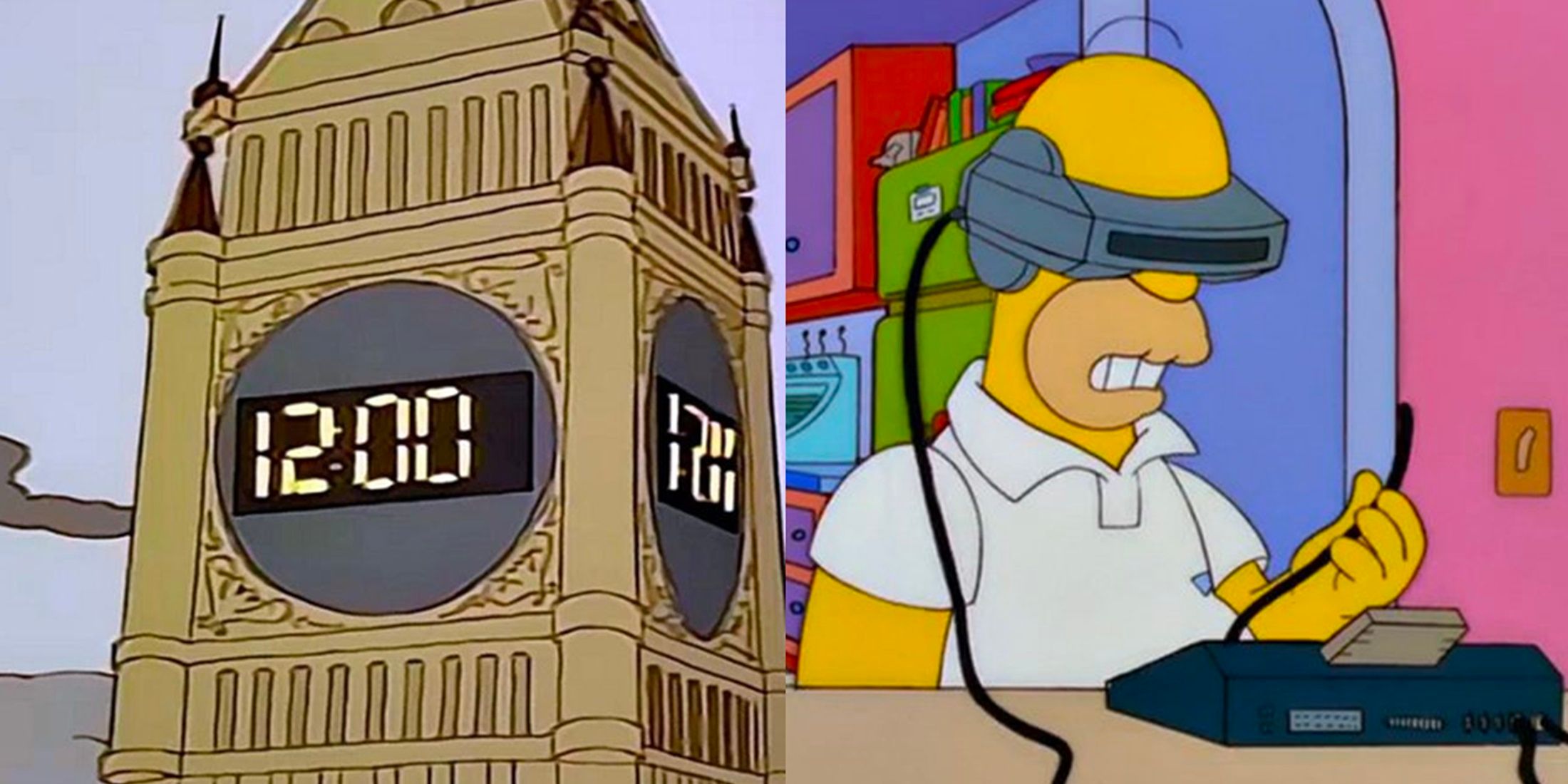
The cultural phenomenon of The Simpsons predicting real-world events stems from a combination of the show’s exceptionally long run spanning over three decades, its writers' room consisting of Harvard mathematicians and satirical satirists, and the sheer statistical probability that a massive volume of jokes will occasionally intersect with actual future occurrences.
The Origins and Mechanics of the Writers' Room
To understand how The Simpsons has seemingly developed a knack for prophesying future events, one must examine the unique intellectual ecosystem of its writers' room. Active since 1989, the animated sitcom has produced hundreds of episodes, generating thousands of individual scenes, throwaway gags, and background details.
Many early and classic-era writers—such as Al Jean, Mike Reiss, David X. Cohen, and Ken Keeler—came from prestigious academic backgrounds, particularly mathematics, physics, and computer science at institutions like Harvard University. This analytical rigor infused the scripts with a penchant for plausible absurdity. When crafting jokes about the future, the writers frequently employed logical extrapolations of existing technological, political, and social trends.
For instance, if a writer in the late 1990s wanted to make a funny exaggeration about handheld communication, they imagined a device that could autocorrect text terribly or recognize touchscreen handwriting. When Apple released the Newton or when smartphones eventually materialized decades later, those exaggerated punchlines retroactively looked like uncanny prophecies. It was not mysticism or time travel, but rather sharp satirical foresight based on the trajectory of consumer technology and geopolitical patterns.
Examining the Most Famous Verified Predictions
While internet rumor mills often attribute hundreds of far-fetched predictions to the show, a select group of iconic moments stand out because of their striking accuracy. These specific instances are frequently cited by fans and media outlets alike when discussing the show's prophetic reputation.
1. The Donald Trump Presidency (2000)
In the season 11 episode "Bart to the Future" (aired March 19, 2000), Lisa Simpson becomes President of the United States and mentions inheriting a severe budget crunch "from President Trump." At the time, Donald Trump was a businessman and celebrity known for brief flirtations with third-party presidential runs, making his inclusion a satirical nod to an eccentric billionaire scenario. Sixteen years later, in November 2016, Trump was elected to the presidency, sending shockwaves through the fandom and cementing this episode as the show's most famous political coincidence.
2. The Disney-Fox Merger (1998)
In the season 10 episode "When You Wish Upon a Star" (aired November 8, 1998), a visual gag shows 20th Century Fox as "A Division of Walt Disney Co." Nearly twenty years later, in March 2019, The Walt Disney Company officially acquired 21st Century Fox in a massive media merger, turning a fleeting visual joke into corporate reality.
3. The Higgs Boson Mass (2012)
In the 1998 episode "The Wizard of Evergreen Terrace," Homer becomes an inventor and writes an equation on a blackboard. British physicist and writer Simon Singh later pointed out that if you solve Homer’s equation, you get a mass for the Higgs boson particle that is only a fraction of a bit larger than the actual mass of the Higgs boson discovered by CERN scientists in 2012, fourteen years later.
4. The 2014 World Cup Results and Corruption
The 2014 episode "You Don't Have to Live Like a Referee" featured Germany defeating Brazil in the World Cup and a major corruption scandal involving high-ranking soccer officials. Just months after the episode aired, Germany defeated Brazil 7-1 in the actual World Cup semifinal, and international authorities arrested several FIFA officials on widespread corruption charges.
The Role of Coincidence, Statistics, and Confirmation Bias
The perception that The Simpsons predicts the future is heavily influenced by cognitive biases, most notably confirmation bias and the law of truly large numbers. With more than 750 episodes produced, the show has featured tens of thousands of individual premises, visual gags, and background jokes.
Statistically, when any creative work generates that volume of content over thirty-four years, a small percentage of random guesses, absurd scenarios, and satirical exaggerations are bound to align with actual historical events. Human psychology naturally focuses on the hits while completely ignoring the thousands of misses. Nobody remembers the episodes predicting scenarios that never came to pass, such as domed cities cutting off entire towns from the outside world (The Simpsons Movie) or sentient mechanical plant-workers taking over Springfield.
Furthermore, internet culture actively amplifies these supposed prophecies. Misattributed images, heavily edited video clips, and outright fabricated screenshots frequently circulate on social media platforms like TikTok, X (formerly Twitter), and Facebook. These fabricated claims often pair unrelated episodes with recent news events, creating an exaggerated illusion of total clairvoyance that far exceeds the actual record of the show.
Comparison of Notable Simpsons Predictions vs. Internet Myths
To distinguish between actual satirical coincidences and fabricated internet folklore, the following table breaks down several widely discussed predictions, verifying their authenticity and context.
| Event / Claim | Episode and Original Air Date | Status / Nature of Prediction | Reality and Context |
|---|---|---|---|
| Donald Trump Presidency | "Bart to the Future" (March 19, 2000) | Verified coincidence | Lisa mentions a Trump presidency as a satirical worst-case scenario. Trump won the office 16 years later. |
| Disney Buys Fox | "When You Wish Upon a Star" (November 8, 1998) | Verified visual gag | A sign outside the studio reads "20th Century Fox: A Division of Walt Disney Co." Disney acquired Fox in 2019. |
| Faulty Voting Machines | "Treehouse of Horror XIX" (November 2, 2008) | Verified satirical gag | Homer tries to vote for Barack Obama, but an electronic voting machine registers John McCain instead. Similar real-world machine glitches occurred in later elections. |
| The 9/11 Terrorist Attacks | "New York City Against Homer" (September 21, 1997) | Internet Myth | A brochure features a $9 price tag next to the Twin Towers, forming a "9/11" visual shape. This was a coincidence of standard design, not a prediction. |
| Smartwatches | "Lisa's Wedding" (March 19, 1995) | Plausible extrapolation | Characters communicate via wristwatches. While impressive for 1995, wrist-comms were a sci-fi trope dating back to Dick Tracy. |
| The Titanic Submersible Incident | "Homer's Paternity Suit" (January 8, 2006) | Internet Myth / Coincidence | A man explores a sunken ship in a small submersible and gets stuck. Viral social media posts linked this to the 2023 OceanGate tragedy, though the plots share little actual detail beyond deep-sea exploration. |
Frequently Asked Questions
How many predictions has The Simpsons actually made?
While clickbait articles often claim the show has made hundreds of accurate predictions, animation historians and long-time showrunners generally point to fewer than twenty genuinely striking coincidences. The vast majority of purported predictions are either broad satirical tropes, common technological trends, or completely fabricated images created by internet users after an event has already occurred.
Did The Simpsons predict the COVID-19 pandemic?
No. A widely shared meme claimed a 1993 episode titled "Marge in Chains" predicted the coronavirus via the "Osaka Flu." In reality, the episode featured a fictional Asian flu originating from Osaka, Japan, spread through mailed juicers, which bears no resemblance to the origins or mechanics of COVID-19.
Are the writers of The Simpsons time travelers?
While fans often joke that the writing staff possesses supernatural foresight, the writers themselves frequently debunk this notion in interviews. They emphasize that writing thousands of jokes about current cultural, political, and technological trends inevitably results in a few accidental bulls-eyes simply due to probability and logical extrapolation.
Why do people believe the show can predict the future?
The belief persists due to confirmation bias, viral social media algorithms, and the human tendency to look for patterns. When a bizarre animated joke matches a real-world headline decades later, it creates a memorable viral moment that overshadows the millions of jokes that had no relation to reality.
Conclusion and Cultural Legacy
Ultimately, the enduring fascination with the predictions of The Simpsons speaks less about supernatural clairvoyance and more about the show's razor-sharp cultural observation. By holding up a mirror to society, exaggerating human vanity, and anticipating the logical conclusions of modern technology, the writers crafted a timeless satire. Whether through educated guesses, mathematical intuition, or simple blind luck, the series remains an unmatched fixture in television history, capturing the unpredictable nature of the modern world with uncanny wit.