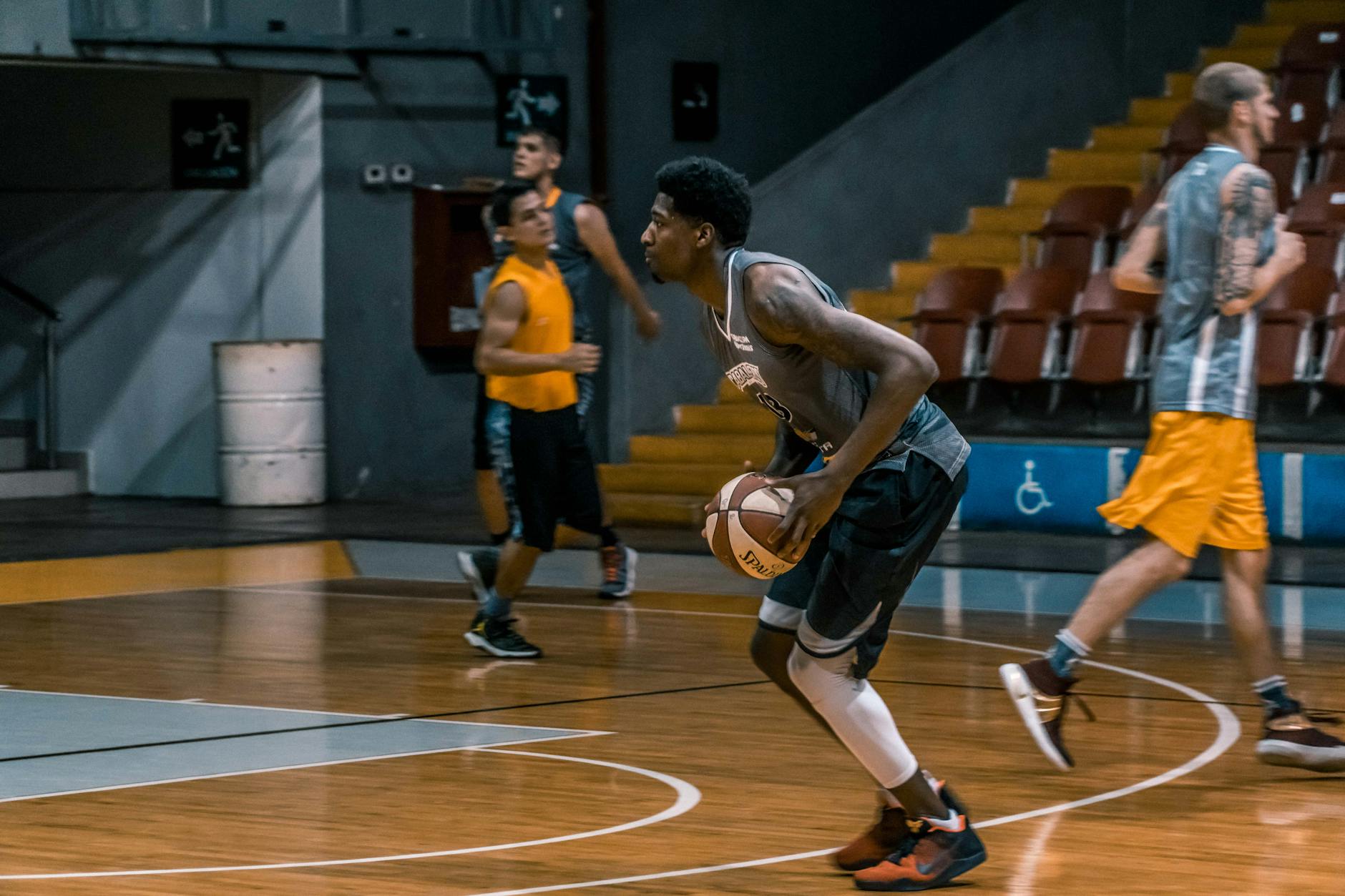
In the modern NBA, positions are categorized by a traditional five-man numbering system: the Point Guard (1), Shooting Guard (2), Small Forward (3), Power Forward (4), and Center (5). While these roles have evolved into a "positionless" style of play, they remain the fundamental framework for roster construction, defensive assignments, and offensive strategy.
The landscape of professional basketball in 2026 is a blend of specialized skill sets and extreme versatility. While the traditional designations provide a baseline for understanding how a team operates, the lines between these roles have blurred significantly. To understand how an NBA team functions today, one must look at both the historical responsibilities of these positions and the technical evolution that has redefined them for the current era.
The Point Guard (1): The Floor General
The Point Guard, or the "1," is traditionally the team's primary ball-handler and playmaker. In the 2026 NBA season, the requirements for this position have expanded beyond simple passing. A modern Point Guard must be a dual-threat capable of scoring from the perimeter while maintaining a high basketball IQ to manage the tempo of the game.
Playmaking and Court Vision
The primary responsibility of the Point Guard is to initiate the offense. This involves bringing the ball up the court against defensive pressure and executing the coach’s play-calls. Effective playmaking requires elite "court vision"—the ability to anticipate player movements and find open teammates before the defense can react. A key metric for evaluating this role is the assist-to-turnover ratio, which measures a player's efficiency in creating scoring opportunities without surrendering possession.
Defensive Point of Attack
Defensively, the Point Guard is usually the first line of defense, responsible for "point of attack" pressure. They must be agile enough to navigate around screens (specifically the pick-and-roll) and fast enough to stay in front of the league’s quickest players. In the current era, many teams employ a "switching" defense, requiring Point Guards to occasionally defend larger players, making lateral quickness and core strength more vital than ever.
The Evolution of the Scoring PG
Historically, players like John Stockton epitomized the pass-first Point Guard. However, the modern era, influenced by players like Stephen Curry and Damian Lillard, has shifted the expectation toward high-volume three-point shooting. In 2026, a Point Guard who cannot shoot from the perimeter is often considered a spacing liability, as defenders will "drop" into the paint, effectively clogging the driving lanes for the rest of the team.
The Shooting Guard (2): The Perimeter Specialist
The Shooting Guard, or the "2," is often the team's best perimeter scorer. Traditionally known as "off-guards," these players spend a significant portion of the game working without the ball, using screens to get open for jump shots.
Floor Spacing and Gravity
The most critical technical contribution of a Shooting Guard is "gravity." A high-percentage shooter forces their defender to stay attached to them at all times, even when they don't have the ball. This stretches the defense horizontally and vertically, creating "lanes" for Point Guards to drive or Centers to work in the post. Without an effective Shooting Guard, the court becomes "cramped," making it significantly harder for the offense to function.
The "3-and-D" Archetype
In 2026, the most sought-after version of the Shooting Guard is the "3-and-D" player. These athletes specialize in two things: hitting three-point shots and providing elite perimeter defense. Because they don't require the ball in their hands to be effective, they are the "glue" that allows superstars to thrive. Defensively, they are often tasked with guarding the opponent’s best perimeter scorer, requiring a combination of length, anticipation, and stamina.
Secondary Playmaking
While their primary focus is scoring, many modern Shooting Guards act as secondary playmakers. If the Point Guard is trapped or heavily guarded, the Shooting Guard must be capable of initiating a secondary pick-and-roll. This versatility prevents the offense from stagnating when the primary option is neutralized.
The Small Forward (3): The Versatile Wing
The Small Forward, or the "3," is arguably the most versatile position on the court. Usually standing between 6'6" and 6'9", these players possess the size of a frontcourt player but the agility and skill of a guard.
Two-Way Impact
A Small Forward is often judged by their "two-way" ability—being equally impactful on both offense and defense. Because of their size and speed, they are the primary candidates for "switching" defenses. A premier Small Forward can defend positions 1 through 4, making them the most valuable defensive assets in a coach’s arsenal.
The Point Forward Concept
In the current NBA landscape, the "Point Forward" has become a dominant archetype. Players like LeBron James and Luka Dončić have shown that a player with the size of a Small Forward can function as the primary playmaker. This creates a massive mismatch, as smaller guards cannot easily contest their vision or passing lanes, and larger defenders often lack the lateral quickness to keep up with them on the perimeter.
Slashing and Transition Play
Small Forwards are often the primary "slashers"—players who use their physical tools to drive to the basket and finish through contact. They are also vital in transition (the fast break). Their ability to rebound and immediately push the ball up the floor allows teams to score before the opposing defense can set itself.
The Power Forward (4): The Modern Stretch Four
The Power Forward, or the "4," has undergone the most radical transformation of any position in the last two decades. Once reserved for "bruisers" who focused on rebounding and interior scoring, the position is now defined by mobility and shooting.
The Stretch Four Revolution
The "Stretch Four" is a Power Forward who can shoot from behind the arc. By pulling the opposing team’s Power Forward out of the paint and onto the perimeter, the Stretch Four vacates the interior of the court. This "spacing" is the foundation of modern NBA offensive geometry. In 2026, a Power Forward must be able to hit the corner three-point shot at a high clip to remain a starter-level talent.
Interior Defense and Help-Side Rim Protection
While the offensive role has moved outside, the defensive role remains rooted in the frontcourt. The Power Forward is often the "help" defender. When a guard gets beat off the dribble, the Power Forward must rotate from the "weak side" to contest the shot at the rim. This requires elite timing and "verticality"—the ability to jump straight up to contest a shot without committing a foul.
Rebounding and Boxing Out
Despite the perimeter shift, the fundamental task of securing rebounds remains. The Power Forward must battle for "second-chance" opportunities on offense and ensure the opponent doesn't get them on defense. This involves "boxing out"—using one's body to shield an opponent away from the basket as the ball falls.
The Center (5): The Anchor
The Center, or the "5," is typically the tallest player on the team. Traditionally, the Center lived in the "paint" (the restricted area near the basket), but the 2026 NBA Center is a much more dynamic creature.
Rim Protection
The Center is the anchor of the defense. Their primary job is to protect the rim, serving as the final deterrent for any player driving to the basket. High block numbers are a sign of a good Center, but the more valuable (and harder to measure) skill is "shot alteration"—forcing opponents to change their shooting arc or pass the ball away because of the Center's presence.
The "Unicorn" and Playmaking Bigs
The modern Center era is defined by "Unicorns"—players like Nikola Jokić and Victor Wembanyama who possess the size of a Center but the skills of a guard. Many elite teams now run their entire offense through the Center at the "high post" (near the free-throw line). From this vantage point, the Center can hand off the ball, shoot over smaller defenders, or pass to cutting teammates.
Screens and the Pick-and-Roll
On offense, the Center is the primary screen-setter. In a pick-and-roll, the Center sets a physical barrier for the Point Guard’s defender. After the screen, the Center can either "roll" to the basket for a lob or "pop" to the three-point line for a jumper. This two-man game is the most frequently used action in professional basketball.
Comparative Overview of NBA Positions
The following table summarizes the typical physical profiles and primary technical responsibilities for each position in the 2026 NBA season.
| Position | Typical Height | Primary Offensive Role | Primary Defensive Role | Key Technical Skill |
|---|---|---|---|---|
| Point Guard (1) | 6'0" - 6'4" | Playmaking / Initiation | Point of Attack / Steals | Ball-handling & Passing |
| Shooting Guard (2) | 6'3" - 6'6" | Floor Spacing / Scoring | Perimeter Containment | 3-Point Shooting |
| Small Forward (3) | 6'6" - 6'9" | Versatile Scoring / Slashing | Wing Defense / Switching | Athleticism & Versatility |
| Power Forward (4) | 6'8" - 6'11" | Spacing / Interior Support | Help-side Rim Protection | Shooting & Rebounding |
| Center (5) | 6'11" - 7'4" | Screens / Interior Scoring | Rim Protection / Anchoring | Shot Blocking & Positioning |
The Shift Toward Positionless Basketball
In 2026, the concept of "Positionless Basketball" is no longer a trend; it is the standard. Coaches increasingly look for players based on their "functional roles" rather than their height-based designations.
Functional Roles vs. Traditional Titles
Instead of 1 through 5, many analysts and coaches now categorize players into three broad groups:
- Initiators: Players who handle the ball and start the offense (regardless of whether they are 6'2" or 6'10").
- Wings: Versatile players who operate on the perimeter, defend multiple positions, and shoot from the arc.
- Bigs: Players who primarily provide rim protection, rebounding, and interior presence, even if they can also shoot.
The Value of Versatility
The most successful teams are those that can "switch" everything on defense. This requires having five players on the court who are all roughly the same size (between 6'7" and 6'10") and possess the lateral quickness to guard a Point Guard and the strength to guard a Center. This "cloning" of positions has led to a league where specific titles matter less than the ability to execute multiple skills.
Frequently Asked Questions
Which NBA position is the most important in 2026?
While every role is vital, the "Initiator" (traditionally the Point Guard) remains the most impactful. Because the NBA is a star-driven league centered on pick-and-roll efficiency, the player who makes the decisions with the ball in their hands usually dictates the outcome of the game. However, the rise of "playmaking bigs" has made the Center position arguably the most unique and difficult to fill with elite talent.
How has the height requirement for NBA positions changed?
Height requirements have become more fluid. We see "undersized" Centers who are only 6'8" but have 7'3" wingspans, and "oversized" Point Guards like Cade Cunningham or Luka Dončić who are 6'7" or taller. In the modern game, wingspan and standing reach are often considered more important than height in shoes, as length is what truly disrupts passing lanes and contests shots.
Can a player play multiple positions in the NBA?
Yes, most NBA players are expected to be "multi-positional." A player might be a Shooting Guard on offense but be tasked with defending Small Forwards on the other end. This is often referred to as "positional fluidity." The ability to "slide" up or down a position depending on the lineup is what keeps players in the league.
What is a "Sixth Man"?
A Sixth Man is not a specific position but a role. This is the first player to come off the bench. Usually, the Sixth Man is a high-level scorer who could start on most teams but is used to provide an offensive spark against the opponent's second unit. They often play minutes comparable to the starters and are frequently on the floor during the closing minutes of the game.
Why do some teams play "Small Ball"?
"Small Ball" is a tactical decision to remove a traditional Center and replace them with a faster, shooting-oriented player (usually a Small or Power Forward). The goal is to increase the speed of the game and create defensive mismatches by forcing the opponent’s slow-footed Center to defend on the perimeter. While it increases offensive potential, it often comes at the cost of rebounding and rim protection.
Summary of Next Actions for Fans and Players
For those looking to deepen their understanding of NBA positions, the next step is to observe "lineup data." Instead of looking at individual stats, analyze how a team’s "Net Rating" changes when they swap a traditional Center for a Stretch Four. For aspiring players, the clear directive of the 2026 era is skill diversification. Regardless of your height, developing a reliable three-point shot and the lateral quickness to defend multiple positions is the most viable path to the professional level.