To find every Joker appearance in film, fans must navigate through sixty years of cinematic history, spanning live-action blockbusters, psychological character studies, and acclaimed animated features. As of 2026, the Joker has been portrayed by six different actors in major live-action theatrical releases, ranging from Cesar Romero’s campy 1966 debut to Joaquin Phoenix’s Academy Award-winning duology and the gritty, emerging "Reevesverse" iteration.
The Joker remains the most enduring antagonist in the DC Multiverse. Unlike many other villains who undergo occasional reboots, the Joker is frequently reimagined to reflect the cultural anxieties of the era. Whether he is a prankster with a painted-on mustache, a calculating mobster, an agent of pure chaos, or a victim of systemic societal failure, each film provides a unique lens into the character's fractured psyche. For fans looking to complete their viewing history, this guide categorizes every significant film appearance, performance style, and the narrative continuity to which they belong.
The Evolution of the Joker in Live-Action Cinema
The Joker’s transition from the comic book page to the silver screen has been defined by radical shifts in tone. Understanding the "All Joker Movie List" requires recognizing that these films do not exist in a single timeline. Instead, they occupy distinct cinematic universes created by visionary directors.
The Silver Age Camp: Cesar Romero (1966)
The first theatrical appearance of the Joker occurred in the 1966 film Batman, a spin-off of the popular television series starring Adam West. Cesar Romero brought a manic, high-energy theatricality to the role that defined the "Clown" aspect of the character.
Romero famously refused to shave his signature mustache for the role, leading the production team to simply apply white greasepaint over it. This Joker was less a murderer and more a flamboyant criminal mastermind whose gadgets—like the "Joker-mobile"—and elaborate puns were his primary weapons. While modern fans may find this version jarring compared to today’s darker interpretations, Romero’s performance laid the foundation for the character’s mainstream popularity.
The Gothic Mobster: Jack Nicholson (1989)
When Tim Burton reimagined the Caped Crusader in 1989’s Batman, he cast Jack Nicholson as a more menacing, yet still darkly humorous, Joker. This version provided a concrete origin story, naming the character Jack Napier—a high-ranking mob enforcer who falls into a vat of chemicals during a botched heist at Axis Chemicals.
Nicholson’s Joker combined the vanity of a gangster with the aesthetics of a surrealist artist. He didn’t just want to control Gotham; he wanted to "brighten" it through chemical warfare and macabre art. This film was a turning point for the franchise, proving that the Joker could be a formidable, lethal threat while maintaining a grotesque sense of style.
The Agent of Chaos: Heath Ledger (2008)
Christopher Nolan’s The Dark Knight (2008) introduced what many consider the definitive cinematic Joker. Heath Ledger’s portrayal moved away from comic book tropes and into the realm of domestic terrorism and nihilistic philosophy.
Ledger’s Joker lacked a definitive origin, famously offering conflicting stories about how he got his scars. This lack of history reinforced his role as a force of nature rather than a man with a motive. His performance was posthumously honored with the Academy Award for Best Supporting Actor, marking the first time a superhero film received such prestigious recognition in a major acting category. Fans revisit this film for its intense psychological stakes and its exploration of the thin line between the hero and the villain.
The Modern Psychopath: Jared Leto (2016–2021)
Jared Leto’s Joker in the DC Extended Universe (DCEU) took a radically different approach. Appearing in Suicide Squad (2016) and later in the "Knightmare" sequence of Zack Snyder’s Justice League (2021), this version was a tattooed, grill-wearing crime lord inspired by modern cartel aesthetics.
Leto’s portrayal focused on the Joker’s toxic relationship with Harley Quinn and his role within the broader DC superhero landscape. While his initial appearance was met with mixed reviews due to limited screen time, his return in the Snyder Cut provided a more somber, post-apocalyptic take on the character that resonated more deeply with long-term fans.
The Psychological Character Study: Joaquin Phoenix (2019–2024)
In 2019, Todd Phillips’ Joker broke away from the traditional "superhero" genre entirely. Starring Joaquin Phoenix as Arthur Fleck, the film served as a standalone psychological thriller that examined mental illness, class warfare, and societal neglect.
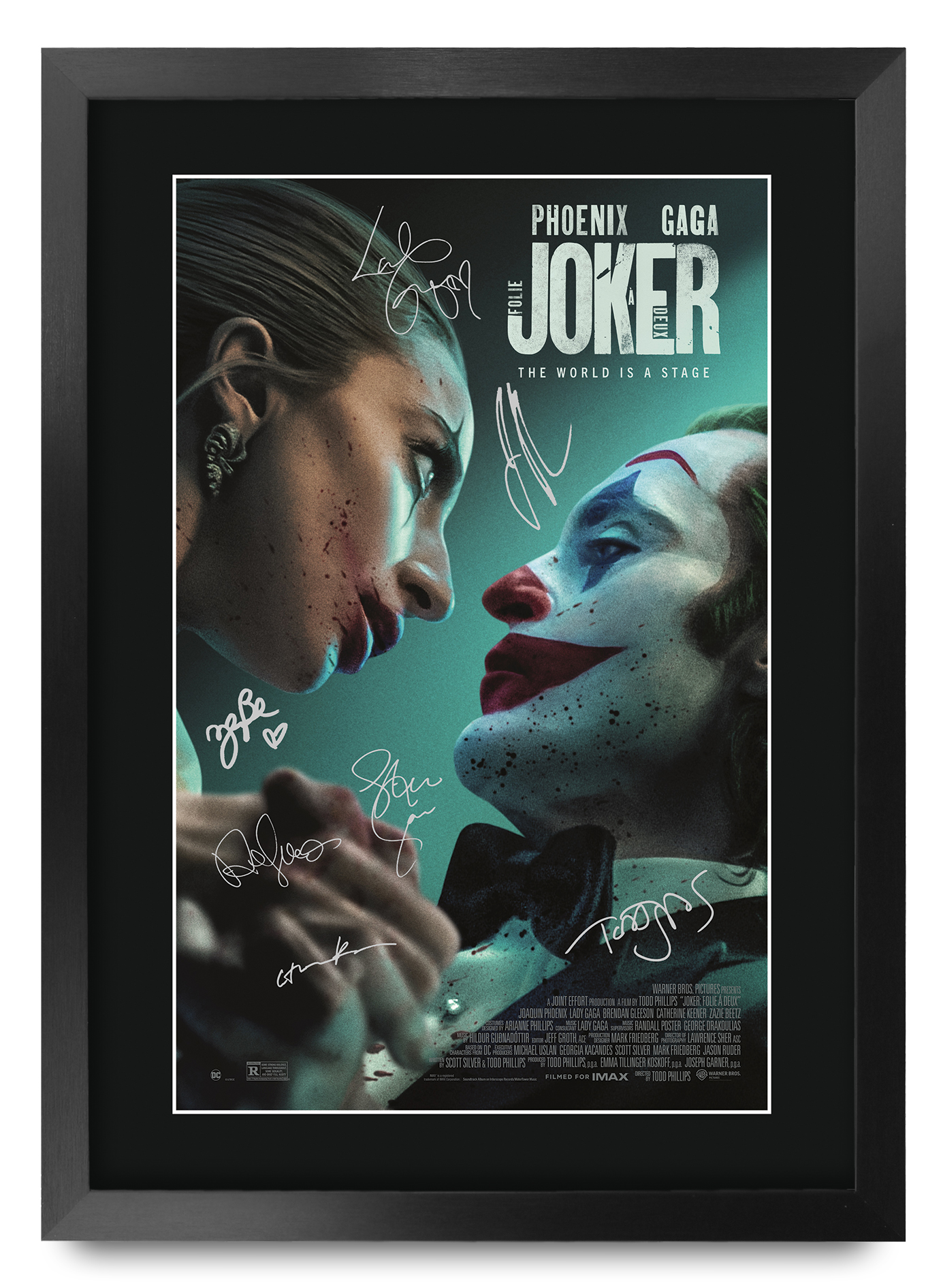
Phoenix’s portrayal earned him the Academy Award for Best Actor, making the Joker one of the few characters (alongside Vito Corleone) to win Oscars for two different performers. The 2024 sequel, Joker: Folie à Deux, expanded this universe by introducing a musical element and exploring Fleck’s internal world alongside Lady Gaga’s Lee Quinzel. By 2026, this duology stands as the most commercially and critically successful standalone villain series in history.
The Emerging Threat: Barry Keoghan (2022–2026)
Matt Reeves’ The Batman (2022) introduced a brief but terrifying glimpse of a new Joker, played by Barry Keoghan. Known as the "Unseen Arkham Inmate," this version is characterized by severe physical deformities and a pre-existing history with Robert Pattinson’s Batman. With the release of The Batman Part II in late 2026, Keoghan’s role has become a focal point for fans of the darker, detective-focused "Reevesverse" continuity.
Complete List of Theatrical Joker Appearances
The following table provides a comprehensive overview of the Joker’s major film roles, categorized by actor and cinematic universe.
| Film Title | Release Year | Actor | Primary Theme/Style |
|---|---|---|---|
| Batman | 1966 | Cesar Romero | Campy, theatrical prankster |
| Batman | 1989 | Jack Nicholson | Darkly humorous mobster |
| The Dark Knight | 2008 | Heath Ledger | Nihilistic agent of chaos |
| Suicide Squad | 2016 | Jared Leto | Modern criminal/Gangster |
| The Lego Batman Movie | 2017 | Zach Galifianakis (Voice) | Satirical/Self-aware |
| Joker | 2019 | Joaquin Phoenix | Psychological tragedy |
| Zack Snyder's Justice League | 2021 | Jared Leto | Post-apocalyptic nihilist |
| The Batman | 2022 | Barry Keoghan | Grotesque Arkham inmate |
| Joker: Folie à Deux | 2024 | Joaquin Phoenix | Romantic/Musical delusion |
| The Batman Part II | 2026 | Barry Keoghan | Manipulative mastermind |
The Joker in Animated Feature Films
While live-action films garner the most mainstream attention, the animated "All Joker Movie List" contains some of the character's most faithful and terrifying adaptations. For many fans, the voice performance of Mark Hamill is the gold standard for the character.
Batman: Mask of the Phantasm (1993)
Released theatrically as an extension of the iconic Batman: The Animated Series, this film is often cited by critics as one of the best Batman movies ever made. Mark Hamill’s Joker is both hilarious and genuinely frightening, serving as a chaotic element in a story about Bruce Wayne’s lost love.
Batman: The Killing Joke (2016)
An adaptation of the seminal graphic novel by Alan Moore, this R-rated animated film explores the Joker's attempt to prove that "one bad day" can turn even the most righteous man insane. While the film’s prologue was controversial, the core adaptation featuring Kevin Conroy and Mark Hamill remains a cornerstone of Joker lore.
The Lego Batman Movie (2017)
Zach Galifianakis voiced a version of the Joker that focused on the emotional codependency between the hero and the villain. This film is essential for fans because it satirizes every previous iteration of the Joker, from the 1966 camp to the 2008 grimness, making it a "meta" celebration of the character's history.
Key Performance Comparison: Why the Styles Differ
Fans often debate which Joker is "best," but the reality is that each actor serves the specific needs of their director’s vision.
- Physicality vs. Dialogue: Heath Ledger and Joaquin Phoenix utilized extreme physical transformations—Ledger with his nervous tics and Phoenix with his emaciated frame and haunting laugh. In contrast, Jack Nicholson and Cesar Romero relied on witty dialogue and flamboyant costuming.
- Origin vs. Mystery: The 1989 and 2019 films provide detailed origins (Jack Napier and Arthur Fleck). However, The Dark Knight and The Batman (2022) suggest that the character is more effective when his past remains an enigma, allowing him to represent an abstract concept like "chaos" or "corruption."
- The "Clown" vs. The "Killer": Some films emphasize the Joker's desire to be funny (even if only to himself), while others focus on his capacity for extreme violence. The 2024 Folie à Deux took this a step further by using music to bridge the gap between his internal fantasy and external reality.
Frequently Asked Questions (FAQ)
Which Joker movie won the most Oscars?
The Joker has been involved in several Academy Award-winning films. The Dark Knight (2008) won two Oscars (Best Supporting Actor and Best Sound Editing). The 2019 Joker won two Oscars (Best Actor and Best Original Score). Collectively, the character is one of the most recognized figures in Academy history.
Is Joaquin Phoenix's Joker connected to Robert Pattinson's Batman?
No. The Joker (2019) and Joker: Folie à Deux (2024) take place in a standalone universe known as "DC Elseworlds." Robert Pattinson's Batman operates in the "Reevesverse," which features Barry Keoghan as its version of the Joker.
Who has played the Joker the most times in movies?
If including voice acting, Mark Hamill has the most credits across films and television. In live-action, Joaquin Phoenix is the first actor to play the character in two different theatrical feature films (Joker and Folie à Deux). Jared Leto also appeared in two films, though one was a director's cut (Suicide Squad and Zack Snyder’s Justice League).
What is the best order to watch Joker movies for a new fan?
New fans should start with The Dark Knight (2008) for the best balance of modern storytelling and iconic villainy. For those interested in the character's psychology, the 2019 Joker is the next logical step. Fans of comic book accuracy should seek out the animated Batman: Mask of the Phantasm.
Does the Joker die in any of the movies?
Yes. The Joker dies in Batman (1989) after falling from a cathedral. He also "dies" or is implied to be deceased in several animated features and alternative timelines, though his death is often left ambiguous to allow for a potential return.
Final Recommendation for Fans
To truly appreciate the "All Joker Movie List," fans should view the films as a reflection of the eras in which they were made. If you are looking for a weekend marathon, start with the 1989 Batman to see the character's gothic roots, follow it with The Dark Knight for the peak of the superhero-thriller genre, and conclude with the 2019 Joker to see how the character evolved into a standalone cinematic icon. With Barry Keoghan’s portrayal expanding in 2026, now is the perfect time to catch up on the legacy of DC’s most fascinating antagonist.