Alice Son, a prominent scholar in international space law, has reshaped the discourse on satellite liability by advocating for a modernized "fault-based" regime that accounts for autonomous collision avoidance and space debris. Her work emphasizes transitioning from state-centric responsibility to a framework that incorporates private operator accountability and standardized Space Traffic Management (STM) protocols.
The Evolution of Satellite Liability and the Influence of Alice Son
As we navigate the complexities of Earth's orbits in 2026, the sheer density of active satellites and derelict debris has rendered the traditional legal frameworks of the 20th century insufficient. The foundational document for this field, the 1972 Convention on International Liability for Damage Caused by Space Objects (the Liability Convention), was drafted in an era when only a few nation-states possessed launch capabilities. Today, with thousands of commercial satellites launched annually by private entities, the legal landscape has shifted from theoretical diplomacy to high-stakes litigation and risk management.
Alice Son’s contributions to this field center on the "modernization of attribution." In her seminal research, she argues that the binary nature of the Liability Convention—which distinguishes between absolute liability for damage on Earth and fault-based liability for damage in space—fails to define what constitutes "fault" in an era of machine-learning-driven maneuvers. As of 2026, her theories are being integrated into national space policies, helping regulators determine who pays when two autonomous systems fail to avoid a collision.
The Historical Foundation: The 1972 Liability Convention
To understand the future Alice Son envisions, one must first grasp the existing rules. The Liability Convention established two primary tiers of responsibility:
- Absolute Liability (Article II): A launching state is strictly liable to pay compensation for damage caused by its space object on the surface of the Earth or to aircraft in flight. No proof of negligence is required.
- Fault-Based Liability (Article III): In the event of damage being caused elsewhere than on the surface of the Earth (i.e., in orbit), the launching state is liable only if the damage is due to its fault or the fault of persons for whom it is responsible.
Son points out that Article III is notoriously vague. In 1972, "fault" was understood through the lens of human error or mechanical failure. In 2026, with the advent of "NewSpace" and mega-constellations, the definition of fault must evolve to include software failures, sensor inaccuracies, and deviations from internationally recognized traffic "rules of the road."
The "Son Doctrine": Defining Fault in the Age of Autonomy
One of the most significant challenges in modern space law is the reliance on autonomous collision avoidance systems (ACAS). Companies like SpaceX and OneWeb utilize onboard algorithms to perform "conjunction assessment" and execute avoidance maneuvers without direct human intervention.
Alice Son’s research focuses on the "Duty of Care" for satellite operators. She proposes that "fault" should be measured against a standardized set of operational benchmarks. If an operator’s satellite ignores a high-probability conjunction warning or fails to share its orbital telemetry data with a centralized Space Traffic Management system, that operator should be found at fault.
The Problem of Attribution and Space Situational Awareness (SSA)
Liability cannot be assigned without accurate data. This is where Son’s work intersects with Space Situational Awareness (SSA). In 2026, the ability to track objects as small as 1 cm is crucial. However, even with advanced radar and optical tracking, "blind spots" exist.
Son argues for a "probabilistic liability" model in cases where the source of debris cannot be identified with 100% certainty but can be narrowed down to a specific constellation or deployment event. This controversial approach seeks to prevent the "hit and run" phenomenon in Low Earth Orbit (LEO), where operators might escape liability because their debris was too small to be definitively tagged.
Commercial Space and the Shift to Private Accountability
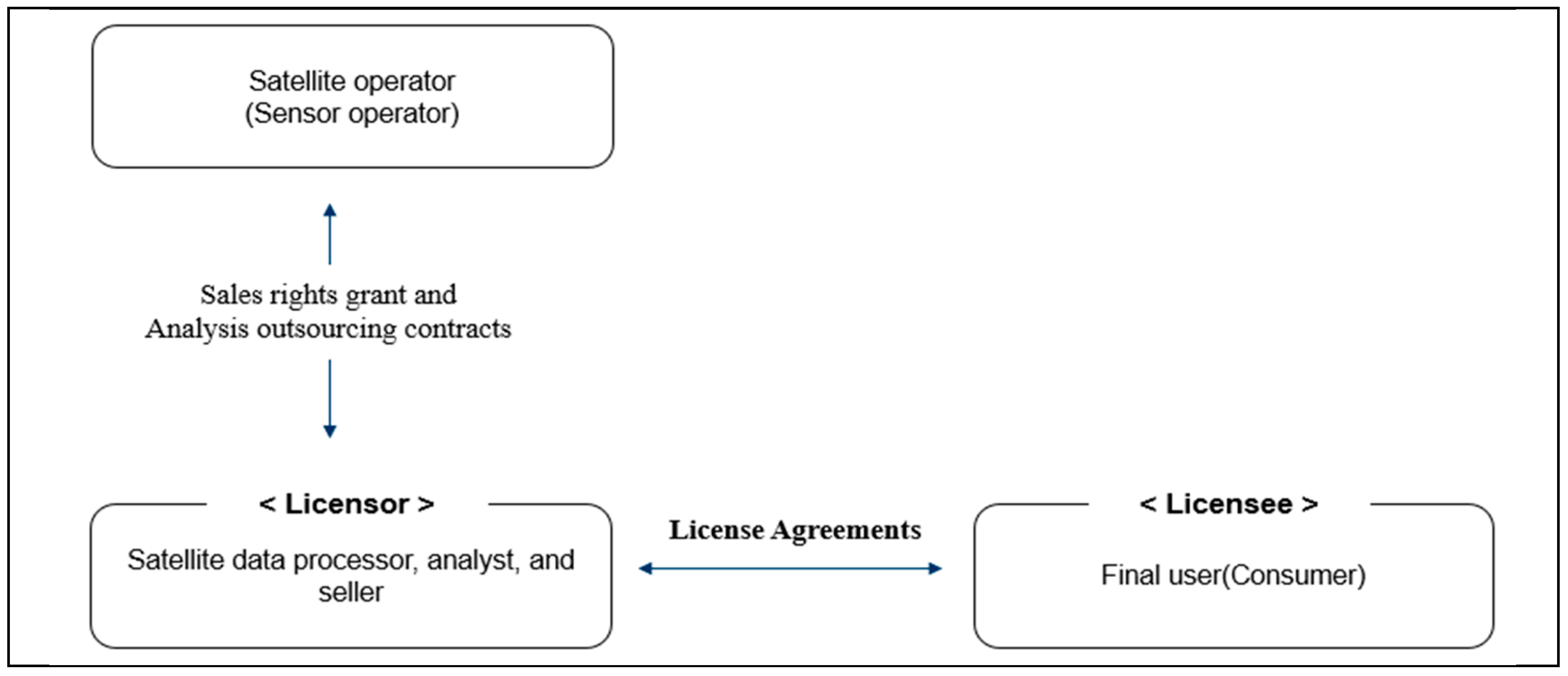
While the Liability Convention places the ultimate burden on the "Launching State," modern space commerce is increasingly private. Alice Son has been a vocal advocate for the harmonization of national laws to ensure that private companies carry sufficient third-party liability insurance.
In the United States, the Federal Communications Commission (FCC) and the Federal Aviation Administration (FAA) have already begun implementing stricter "de-orbit" requirements, mandating that satellites be removed from orbit within five years of mission completion. Son’s framework suggests that failure to comply with these "end-of-life" protocols should constitute prima facie evidence of negligence in future liability claims.
The Role of Mandatory Insurance Pools
A key component of the future of satellite liability is the development of insurance structures that can survive a "Kessler Syndrome" event—a cascade of collisions that renders certain orbits unusable. Son proposes a "Global Space Impact Fund," similar to oil spill response funds, where operators contribute based on the number of satellites they have in orbit. This fund would cover damages caused by "untreatable debris" where no fault can be assigned to a specific actor.
Comparative Analysis of Liability Frameworks
The following table compares the traditional 1972 framework with the "Modernized Fault Regime" proposed by Alice Son and other contemporary legal scholars as of 2026.
| Feature | 1972 Liability Convention | 2026 "Son Doctrine" Proposals |
|---|---|---|
| Primary Actor | Nation-States (Launching States) | Private Operators & Launching States |
| Definition of Fault | Undefined/General Negligence | Adherence to STM & Telemetry Sharing |
| Debris Coverage | Limited to identifiable "Space Objects" | Includes fragments and "Untraceable Debris" |
| Avoidance Responsibility | Manual/State-controlled | Autonomous System Compliance |
| Insurance Requirement | Varies by National Law | Mandatory Global Minimums per Satellite |
| Dispute Resolution | Diplomatic Channels/Claims Commission | Fast-track Arbitration & Technical Tribunals |
Technical Challenges in 2026 Satellite Operations
The practical application of Alice Son's liability theories faces several technical hurdles. As satellite numbers grow toward the 100,000 mark by the end of the decade, the following factors complicate the legal landscape:
1. Data Integrity and "Spoofing"
For a fault-based system to work, the data used to determine a collision's cause must be unimpeachable. Son warns of the legal risks associated with GPS spoofing or hacking. If a satellite is "hijacked" and used as a kinetic weapon, who is liable? Under the 1972 Convention, the launching state is still responsible, but Son argues for "cyber-force majeure" clauses that protect operators who can prove they met rigorous cybersecurity standards.
2. The Small Debris Dilemma
Currently, the vast majority of orbital debris consists of fragments too small to track but large enough to destroy a satellite. If a piece of 20-year-old debris from a defunct Soviet-era rocket hits a modern weather satellite, the Liability Convention allows for a claim against the Russian Federation. However, the process is so slow and politically charged that it is rarely used. Son’s future involves a shift toward "No-Fault Insurance" for small-debris strikes, funded by industry-wide levies.
3. Mega-Constellation Interference
Liability isn't just about physical collisions. It also concerns "harmful interference" with radio frequencies and optical astronomy. Alice Son has expanded her scope to include "Environmental Liability" in space, suggesting that the light pollution and spectrum crowding caused by mega-constellations could eventually lead to class-action lawsuits from scientific communities and other sovereign nations.
Practical Steps for Satellite Operators in 2026
For companies operating in this evolving legal environment, Alice Son’s research provides a roadmap for mitigating risk. Proactive operators are moving beyond mere compliance with current laws and are adopting "Future-Proof" legal strategies.
- Implement High-Fidelity Telemetry: Ensure that all satellites are equipped with independent tracking beacons that operate even if the primary bus fails.
- Adhere to the 5-Year Rule: Prioritize de-orbiting strategies, such as drag sails or propellant reserves, to meet the shortened post-mission disposal timelines.
- Participate in Open SSA: Share orbital data transparently with organizations like the Space Data Association to establish a record of "responsible behavior."
- Review Launch Contracts: Ensure that indemnification clauses specifically address the "fault" standards being adopted by major spacefaring nations like the US, UK, and members of the European Space Agency (ESA).
Addressing Unresolved Issues: The Global Claims Commission
Despite the progress made by scholars like Alice Son, a major hurdle remains: the lack of a permanent, binding judicial body for space disputes. The 1972 Convention provides for a "Claims Commission," but its decisions are only binding if both parties agree beforehand.
Son’s recent work calls for the establishment of an International Space Court or a specialized chamber within the Permanent Court of Arbitration. This body would utilize technical experts to analyze "black box" data from satellites to determine fault with scientific precision, bypassing the slow diplomatic maneuvers that have historically hindered space law enforcement.
Frequently Asked Questions
Who is Alice Son in the context of space law?
Alice Son is a legal expert and researcher who specializes in the intersection of international law, space debris, and satellite liability. She is best known for her work on reforming the 1972 Liability Convention to better suit the era of commercial mega-constellations and autonomous space operations.
What is the difference between absolute liability and fault-based liability?
Absolute liability (Article II of the 1972 Convention) means the launching state is responsible for damage on Earth regardless of who is at fault. Fault-based liability (Article III) applies to damage in space and requires proof that the operator or state acted negligently or intentionally caused the damage.
How does the "5-year rule" affect satellite liability?
Adopted by many agencies by 2026, the 5-year rule requires satellites in Low Earth Orbit to be de-orbited within five years of their mission's end. Alice Son argues that failing to meet this deadline should be considered evidence of "fault" in the event the derelict satellite causes a collision.
Can a private company be sued directly under the Liability Convention?
Technically, no. The 1972 Convention is a treaty between states. If a private company's satellite causes damage, the victim nation sues the "Launching State." However, that state usually has national laws (like the US Space Commerce Act) that allow them to recover the costs from the private company responsible.
What happens if a satellite is hit by untraceable debris?
This is currently a "legal grey area." Under traditional law, if you can't identify the owner of the debris, you cannot claim damages. Alice Son proposes a global insurance pool or impact fund to compensate operators for losses caused by these "orphan" debris fragments.
Does Alice Son's framework cover satellite "hacking"?
Yes. Her "Modernized Fault Regime" includes provisions for cybersecurity. It suggests that while states are generally liable, an operator might be cleared of "fault" if they can prove they followed all international cybersecurity protocols but were victims of an unprecedented "cyber-force majeure" event.
Recommendation for Stakeholders
For legal counsel and orbital analysts, the most important action in 2026 is the integration of documented "Best Practices" into daily operations. As Alice Son’s theories become the basis for new international norms, the "Standard of Care" will be defined by what the most responsible actors are currently doing. Operators should prioritize transparent data sharing and robust end-of-life disposal to minimize their liability profile in an increasingly litigious orbital environment.
Disclaimer: This article provides an analysis of legal trends and scholarly theories as of 2026 and does not constitute formal legal advice. For specific liability concerns, consult with a qualified international space law practitioner.