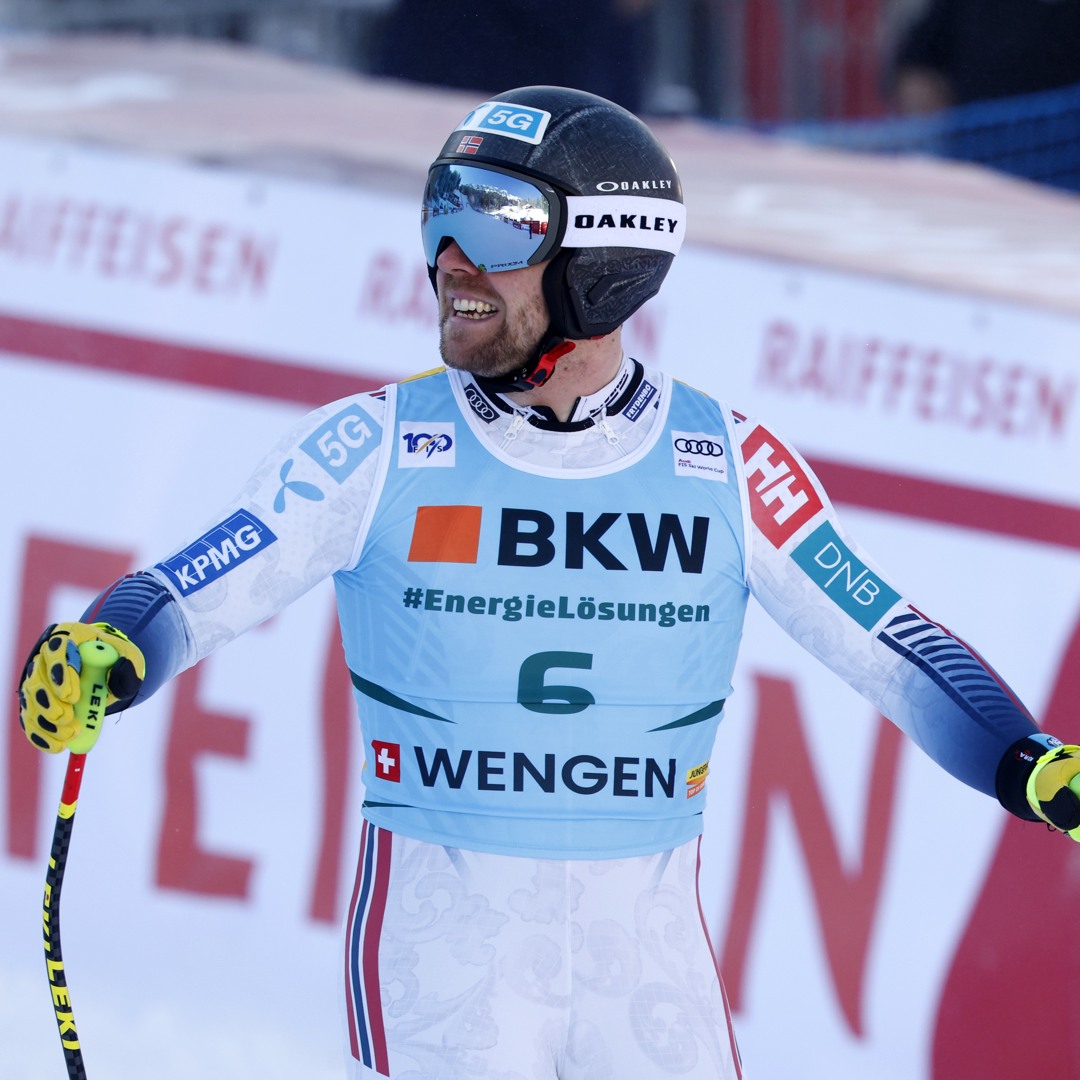
Aleksander Aamodt Kilde is a Norwegian alpine ski racer and World Cup overall champion, widely recognized as one of the most dominant speed specialists of his generation. Specializing in Downhill and Super-G, Kilde has secured multiple Crystal Globes and Olympic medals, and as of 2026, he remains a central figure in the sport’s pursuit of technical excellence and resilient comeback narratives following a life-altering injury in 2024.
The Evolution of a Speed Specialist
Born in Bærum, Norway, in 1992, Aleksander Aamodt Kilde emerged from a national program with a storied history of producing "Attacking Vikings"—a moniker given to the elite Norwegian alpine team. Following in the footsteps of legends like Lasse Kjus, Kjetil André Aamodt (to whom he is not related, despite the shared middle name), Aksel Lund Svindal, and Kjetil Jansrud, Kilde had massive boots to fill.
His early career was marked by steady progression. Unlike some prodigies who dominate immediately, Kilde’s rise was built on physical conditioning and a meticulous understanding of aerodynamics. He won the Giant Slalom title at the Junior World Championships in 2013, signaling his versatility, but his heart was always in the speed disciplines. By the mid-2010s, he began asserting himself on the World Cup circuit, eventually securing his first Super-G Crystal Globe in the 2015/16 season.
What separates Kilde from his peers is his "power-to-weight" ratio. Often cited as one of the strongest athletes in the history of the sport, his training regimens became legendary within the FIS (International Ski Federation) community. This physical strength allows him to maintain a compact aerodynamic tuck in high-speed sections while possessing the raw power to absorb the violent compressions found on legendary tracks like the Stelvio in Bormio or the Birds of Prey in Beaver Creek.
The 2019/20 Overall World Cup Title
The pinnacle of Kilde's career arrived during the 2019/20 season when he captured the Overall World Cup title. This achievement is particularly significant because it broke a long-standing dominance by technical specialists (Slalom and Giant Slalom skiers) over the overall standings.
Kilde’s victory was a masterclass in consistency. While he was a favorite in the speed events, he also picked up crucial points in the Alpine Combined and Giant Slalom. Winning the "Big Crystal Globe" cemented his status as the best all-around skier in the world that year, proving that a speed-focused athlete could still outpace technical specialists if they maintained a high level of performance across multiple disciplines.
Key Milestones Leading to Global Stardom
- First World Cup Win (2016): Secured his first victory in a Downhill at Garmisch-Partenkirchen, signaling his arrival as a threat in the blue-ribbon event.
- Olympic Success (2022): At the Beijing Winter Olympics, Kilde took home the Silver medal in Alpine Combined and the Bronze in Super-G, finally adding Olympic hardware to his extensive World Cup trophy cabinet.
- World Championship Medals (2023): In Courchevel-Méribel, he earned Silver medals in both Downhill and Super-G, narrowly missing the gold in two of the closest races in championship history.
The Wengen Crash and the Road to 2026
The narrative of Aleksander Aamodt Kilde changed forever on January 13, 2024, during the legendary Lauberhorn Downhill in Wengen, Switzerland. In the final "Zielschuss" section of the longest course on the circuit, Kilde lost control and crashed into the safety netting at over 120 km/h.
The injuries were catastrophic. He suffered a deep laceration to his calf, which resulted in significant blood loss and required immediate emergency surgery to prevent permanent nerve damage. Additionally, he sustained a severe shoulder dislocation that involved complex nerve trauma. While many athletes would have considered retirement, Kilde embarked on a rehabilitation process that redefined the limits of sports medicine.
The Complexity of Nerve Recovery
The most significant hurdle in Kilde’s recovery was not the laceration, but the nerve damage in his shoulder. For an alpine skier, the shoulder is critical for balance, pole planting, and stabilizing the upper body against the centrifugal forces of a turn.
Throughout late 2024 and 2025, Kilde underwent multiple corrective surgeries. Nerve regeneration is a notoriously slow process, often measuring progress in millimeters per month. His absence from the 2024/25 season was a blow to the sport, but it allowed him to focus entirely on the 2026 Winter Olympics in Milano Cortina. By the start of the 2025/26 season, Kilde’s return to the snow became the most anticipated story in alpine skiing, representing a triumph of willpower over clinical prognosis.
Technical Analysis: The Kilde Style
Kilde is often described as a "modern" speed skier. Unlike the "gliders" of the past who relied on soft touch and natural feel for the snow, Kilde utilizes a highly aggressive, athletic style.
- Low Aerodynamic Profile: Kilde is known for having one of the lowest and most stable "tucks" in the business. By keeping his chest low and his back flat, he minimizes wind resistance, which is vital on flatter sections where momentum is everything.
- Edge Pressure: In Super-G, where turns are tighter than in Downhill, Kilde uses his immense leg strength to drive his skis into the ice. This allows him to take a more direct line (the "tighter" line) than his competitors, shaving hundredths of a second off his time.
- Tactical Bravery: Speed skiing is as much a mental game as a physical one. Kilde’s ability to "send it"—to maintain high speeds in low-visibility or bumpy conditions—is what sets him apart during the most dangerous sections of the World Cup tour.
Career Statistics and Achievements
The following table outlines the major honors achieved by Kilde throughout his career leading into the current 2026 period.
| Achievement Type | Discipline | Year(s) |
|---|---|---|
| Overall World Cup Title | Total Points | 2019/20 |
| World Cup Discipline Globe | Super-G | 2015/16, 2021/22 |
| World Cup Discipline Globe | Downhill | 2021/22, 2022/23 |
| Olympic Silver Medal | Alpine Combined | 2022 (Beijing) |
| Olympic Bronze Medal | Super-G | 2022 (Beijing) |
| World Championship Silver | Downhill | 2023 (Courchevel) |
| World Championship Silver | Super-G | 2023 (Courchevel) |
| Junior World Champion | Giant Slalom | 2013 |
The Power Couple: Kilde and Shiffrin
Beyond his individual results, Kilde is one half of alpine skiing's most famous couple, alongside American superstar Mikaela Shiffrin. Their relationship has been a focal point of media attention, particularly during their shared periods of injury recovery in 2024.
The duo has been vocal about the mental health challenges of professional skiing and the pressures of the World Cup circuit. Kilde often credits Shiffrin with providing the emotional support necessary to navigate the darkest days of his 2024 injury recovery. Their partnership has humanized the sport, showing the vulnerability behind two of the most successful athletes in history.
Equipment and Partnerships
Kilde has long been associated with Atomic, the Austrian ski manufacturer. His collaboration with their technicians has been vital in developing the "Redster" line of speed skis. Unlike technical skis, which are designed for quick pivots, Kilde's Downhill skis are longer (typically 218cm) and engineered for maximum stability at high speeds.
His partnership with Oakley and Red Bull further highlights his status as a global sports icon. These brands have supported his various "comeback" documentaries, which have provided fans with an inside look at the grueling nature of professional ski racing and the high-tech training facilities in Austria and Norway where he prepares.
Frequently Asked Questions
Is Aleksander Aamodt Kilde related to Kjetil André Aamodt?
Despite the common middle name and the shared Norwegian heritage, Aleksander Aamodt Kilde and Kjetil André Aamodt are not related. Kilde has noted in several interviews that the name "Aamodt" is his mother's maiden name, and while he looks up to the legendary Kjetil André, they come from different families.
What was the specific nature of Kilde's 2024 injury?
Kilde suffered a high-speed crash in Wengen that resulted in a severe laceration to his right calf, which damaged several nerves and required emergency surgery to save the leg's function. He also sustained a complex shoulder dislocation with nerve damage (brachial plexus involvement), which required a much longer recovery period than a standard fracture or ligament tear.
Has Kilde won the Hahnenkamm Downhill in Kitzbühel?
Yes, Kilde has won the legendary Hahnenkamm Downhill on the "Streif" in Kitzbühel, Austria. Winning in Kitzbühel is considered the highest honor in speed skiing, often equated to winning a major in golf or a Grand Slam in tennis. He secured back-to-back victories there in 2022 and 2023.
How does Kilde train for the speed disciplines?
Kilde’s training is centered on "eccentric strength," which is the ability of muscles to withstand force while lengthening. During a Downhill run, a skier's legs must absorb forces equivalent to several times their body weight. His gym work includes heavy squats, plyometrics, and core stability exercises, often documented through his social media channels to inspire younger athletes.
What are Kilde's goals for the 2026 Winter Olympics?
Going into the 2026 Milano Cortina Olympics, Kilde’s primary goal is the Gold medal in Downhill. Having already secured Silver and Bronze in previous games, the Downhill Gold remains the only major accolade missing from his resume. His recovery has been specifically timed to ensure he reaches peak physical form for the races in Bormio, a track where he has historically performed very well.
The Future of Norwegian Alpine Skiing
As Kilde moves into the latter stages of his career in 2026, his role has shifted slightly from pure competitor to a mentor within the Norwegian team. The "Attacking Vikings" culture relies on a flat hierarchy where veteran racers share their "lines" and tactical insights with younger skiers.
Kilde’s resilience following his 2024 crash has set a new standard for the team. His ability to return to a sport that nearly cost him his mobility is a testament to the Norwegian sporting philosophy: "Sterkere Sammen" (Stronger Together). Whether or not he adds more Crystal Globes to his collection, his legacy as one of the most physically gifted and mentally tough racers in history is already secure.
For fans and analysts, the 2025/26 season represents the final chapter of a legendary career. The focus is no longer just on how fast Kilde can go, but on the fact that he is back on the mountain at all. His journey remains a powerful reminder of the risks inherent in alpine skiing and the extraordinary character required to master its most dangerous disciplines.