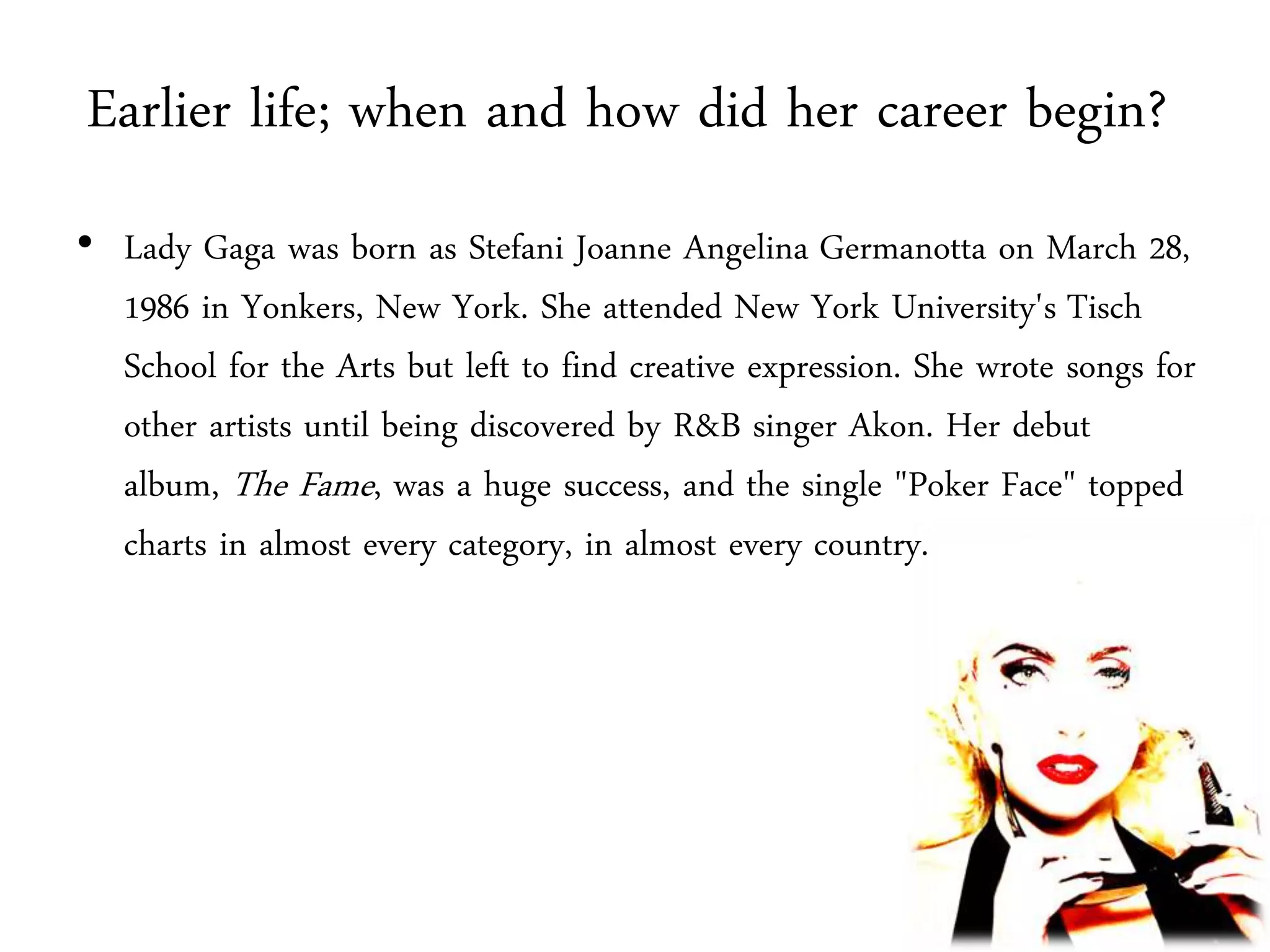
In 2007, music mogul Akon signed Lady Gaga to his sub-label, KonLive Distribution, after she was dropped by Island Def Jam. Recognizing her potential as a songwriter and performer, Akon struck a joint-venture deal with Interscope Records, effectively "discovering" her for the mainstream market and facilitating the production of her debut album, The Fame.
The narrative of music history is often defined by singular moments of recognition where established stars identify the potential of unknown talent. One of the most consequential instances of this occurred in 2007 when Akon, then at the height of his "Smack That" and "Lonely" fame, encountered a young Stefani Germanotta. At the time, the future Lady Gaga was a struggling songwriter who had recently been released from her first major label contract. Akon’s decision to sign her not only saved her burgeoning career but also fundamentally shifted the sound of global pop music for the next decade.
The Prequel: Stefani Germanotta and the Def Jam Disappointment
To understand how Akon "discovered" Lady Gaga, one must first look at the period immediately preceding their meeting. In 2006, Stefani Germanotta was signed to Island Def Jam by the legendary L.A. Reid. However, the partnership was short-lived. Within three months, the label dropped her, a move Reid would later famously describe as the "biggest mistake" of his career.
During this period, Germanotta was performing in the Lower East Side rock and burlesque scene in New York City. She was experimenting with a fusion of glam rock, pop, and electronic music. Despite her rejection from Def Jam, her talent as a songwriter was undeniable. She transitioned into a role as a staff songwriter at Interscope Records, writing hits for artists like the Pussycat Dolls, Britney Spears, and Fergie.
It was within the halls of Interscope and through the ears of producer Vincent Herbert that the path to Akon began. Herbert, who headed Streamline Records (an Interscope imprint), recognized that Gaga was more than just a writer; she was a star. However, she needed the right platform and a powerful advocate to convince the upper echelons of the industry to take a second chance on her.
The 2007 Meeting: Akon’s "Lightbulb" Moment
In late 2007, Akon was visiting the Interscope offices when he heard Gaga’s voice on a demo track. He was immediately struck by the unique texture of her vocals and the sophistication of her melodic structure. Akon has frequently recounted this moment in interviews, noting that he didn't just hear a singer; he heard a "movement."
Akon’s discovery was not merely about finding a voice; it was about recognizing a brand. At the time, R&B and Hip-Hop dominated the Billboard charts. The "Gaga" sound—a heavy, European-influenced synth-pop—was considered a risk in the American market. Akon, however, had a global perspective. Having spent significant time in Europe and Africa, he understood that the dance-pop sound was ready to explode in the United States.
He famously told Jimmy Iovine, then the head of Interscope, that he wanted to sign Gaga to his own label, KonLive Distribution. Because Gaga was already under contract as a songwriter at Interscope, this resulted in a joint-venture agreement. Akon essentially "bought into" her career, providing the financial backing, creative mentorship, and industry "clout" necessary to launch a global campaign.
The KonLive Partnership and Creative Synergy
The signing to KonLive was the catalyst for The Fame. Akon didn't just sign the papers; he became an executive producer and a mentor. He paired Gaga with RedOne, a producer who shared Akon’s vision for a global, dance-heavy sound. This trio—Gaga, Akon, and RedOne—spent much of late 2007 and early 2008 in the studio crafting the tracks that would define a generation.
The Role of RedOne
While Akon provided the platform, RedOne provided the sonic architecture. Akon had worked with RedOne previously and knew his ability to blend heavy "four-on-the-floor" beats with pop hooks. When Akon introduced Gaga to RedOne, the chemistry was instantaneous. Their first collaboration resulted in "Boys Boys Boys," followed quickly by the world-shaking "Just Dance."
Strategic Collaboration
Akon’s vocal presence on "Just Dance" was a strategic masterstroke. In 2008, Akon was a "radio darling." By featuring himself on Gaga’s debut single and appearing in the music video, he lent her his existing fan base and credibility. This "stamp of approval" ensured that radio programmers, who might have been skeptical of a theatrical pop-rock artist, gave the track the necessary airplay.
Breaking Down the "Discovery" Timeline (2006–2008)
The transition from a dropped artist to a global phenomenon happened with remarkable speed once the right players were involved. The following table outlines the critical milestones in the Akon-Gaga discovery timeline.
| Year | Milestone | Impact on Career |
|---|---|---|
| 2006 | Signed to Island Def Jam | Initial entry into the major label system. |
| 2006 | Dropped by L.A. Reid | Forced her into songwriting roles for other artists. |
| 2007 | Interscope Songwriter Contract | Allowed her to showcase talent to executives like Jimmy Iovine. |
| 2007 | Akon signs Gaga to KonLive | The official "discovery" and beginning of her global launch. |
| 2008 | "Just Dance" Released | Debut single featuring Akon; reaches #1 in multiple countries. |
| 2008 | The Fame Album Launch | Establishes Gaga as a dominant force in pop music. |
Why Akon’s Intervention Mattered: The Industry Context
To appreciate the depth of this discovery, one must look at the technical and financial state of the music industry in 2007. The industry was reeling from the collapse of physical CD sales and the rise of digital piracy. Labels were extremely risk-averse.
Gaga’s persona—heavily influenced by David Bowie, Freddie Mercury, and the 1970s avant-garde—did not fit the "cookie-cutter" pop star mold of the mid-2000s. Without Akon’s intervention, Gaga might have remained a successful, albeit anonymous, songwriter. Akon’s "discovery" was essentially an act of industry arbitrage: he saw a high-value asset that the market had mispriced and invested his own capital and reputation to correct that valuation.
The Financial Legacy
Akon has often stated in business interviews that his discovery of Lady Gaga allowed him to eventually "retire" from active performing if he chose to. As the owner of KonLive, Akon held a significant percentage of the backend royalties and master recording rights for Gaga's early work. This partnership serves as a masterclass in music business entrepreneurship. In 2026, looking back at the nearly two decades of Gaga’s career, the dividends from those 2007 contracts remain some of the most lucrative in the history of Interscope Records.
Beyond the Contract: Mentorship and Artistic Freedom
Akon’s role was more than just contractual; it was protective. In the early stages of her career, there was pressure from some executives to tone down Gaga's "theatricality" to make her more "radio-friendly." Akon reportedly pushed back against these suggestions. He understood that Gaga’s visual identity—the "Haus of Gaga" aesthetic—was inseparable from her music.
By giving her the space to be eccentric while providing the structured pop production of KonLive, Akon allowed Gaga to bridge the gap between "indie-weird" and "mainstream-pop." This balance is what eventually led to the 2009 "Gaga-mania" that saw her dominate every award show and fashion magazine globally.
The "Akon Signature" on Gaga’s Early Sound
While Gaga is a classically trained pianist and a formidable composer, the "KonLive sound" is evident throughout The Fame. You can hear Akon’s influence in:
- The Percussive Vocals: The rhythmic, almost "staccato" delivery in songs like "Poker Face" mirrors Akon’s own melodic phrasing.
- Global Appeal: The emphasis on club-ready beats ensured the music worked in Ibiza and Dubai just as well as it did in New York.
- Collaborative Ecosystem: Akon brought in his network of writers and engineers to polish the tracks, ensuring they met the "radio-ready" standards of 2008.
Frequently Asked Questions
Did Akon actually write Lady Gaga's songs?
No, Akon did not write Lady Gaga’s lyrics or melodies. Gaga is the primary songwriter on all her tracks. However, Akon served as an Executive Producer, which involves overseeing the creative direction, selecting producers, and contributing to the overall "sound" and arrangement of the tracks. He is credited as a background vocalist on "Just Dance" and "Money Honey."
Was Lady Gaga "homeless" when Akon found her?
While often romanticized in pop culture, Gaga was not homeless, but she was living a "struggling artist" lifestyle in a small apartment on the Lower East Side. She was working multiple jobs and performing in dive bars. Akon’s discovery provided her with the financial stability and professional infrastructure to quit those jobs and focus entirely on her art.
How much money did Akon make from Lady Gaga?
Specific figures are private, but industry analysts estimate that through his label KonLive, Akon earned tens of millions of dollars from Gaga’s first two album cycles (The Fame and The Fame Monster). He has joked in several interviews that he essentially "retired" on the royalties from those records.
Are Akon and Lady Gaga still working together in 2026?
By 2026, the formal business relationship between KonLive and Lady Gaga has largely concluded as Gaga has evolved into a global icon with her own production entities. However, both artists have maintained a high degree of mutual respect. Their partnership is viewed as a successful "incubation" period that served its purpose and allowed both parties to flourish independently.
Who else did Akon discover through KonLive?
In addition to Lady Gaga, Akon’s label was instrumental in the careers of T-Pain (through Nappy Boy/Konvict), Kardinal Offishall, and Colby O'Donis. Gaga remains his most successful and culturally significant discovery.
The Long-Term Impact on the Music Industry
The discovery of Lady Gaga in 2007 changed the trajectory of the music business. It proved that a performer could be high-concept, theatrical, and "strange" while still achieving massive commercial success. It also validated the "joint venture" model where an active artist (Akon) uses their platform to launch a new artist, a template that many have tried to replicate since, though rarely with the same level of success.
For Akon, discovering Gaga solidified his legacy as a mogul rather than just a hitmaker. For Gaga, Akon was the gatekeeper who saw past the "burlesque" exterior and recognized the "Mother Monster" waiting to be born. As we reflect on this history in 2026, the 2007 signing remains a pivotal moment that saved pop music from a period of stagnation and ushered in a new era of creative audacity.
Practical Recommendation: For those interested in the evolution of pop production, listen to the 2008 album The Fame alongside Akon’s Freedom (released the same year). The shared DNA in production styles provides a fascinating look at how Akon’s discovery of Gaga influenced his own creative output and the broader landscape of the late 2000s.