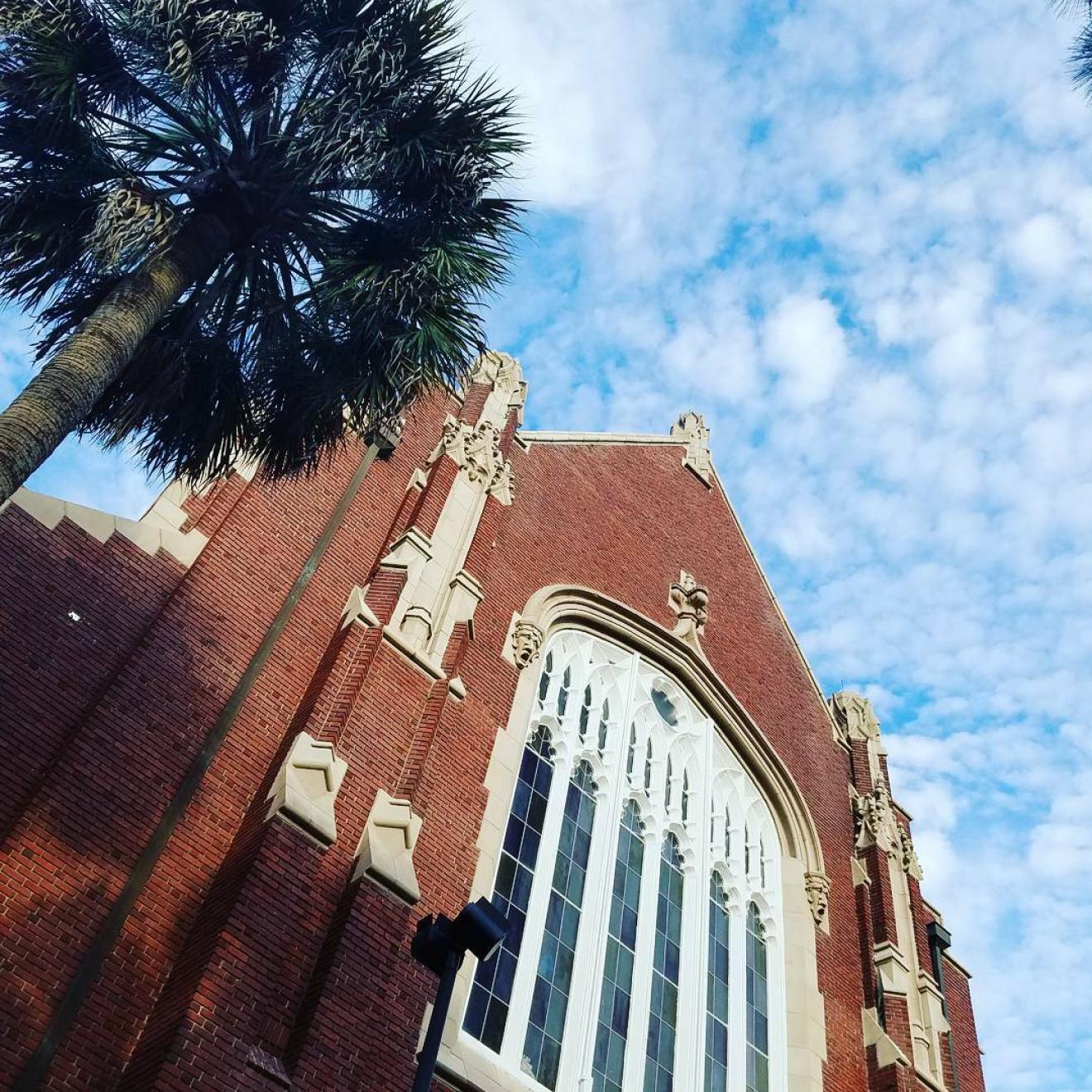
Florida stands as one of the premier global hubs for aerospace engineering, space exploration, and aviation training. Driven by the presence of NASA’s Kennedy Space Center, Cape Canaveral Space Force Station, and major defense contractors like SpaceX, Blue Origin, Boeing, and Lockheed Martin, aerospace colleges in Florida offer students unmatched direct access to internships, cutting-edge research facilities, and post-graduation employment pipelines.
The Strategic Advantage of Studying Aerospace in Florida
Choosing an aerospace college in Florida provides distinct academic and professional benefits that few other regions can match. The state's eastern coastline, commonly known as the Space Coast, hosts active orbital launch complexes, research parks, and private space flight infrastructure. This commercial and government infrastructure creates a dense ecosystem of industry partnerships, federal research grants, and specialized labor demand.
Aerospace programs in Florida generally fall into two distinct academic pathways:
- Aerospace Engineering (BSAE/MSAE/Ph.D.): Focuses on aerodynamics, propulsion, orbital mechanics, structural mechanics, and flight dynamics. These programs train engineers to design, build, and test aircraft, spacecraft, satellites, and missile systems.
- Aeronautical Science and Aviation Operations: Focuses on flight training, air traffic management, airport operations, commercial spaceflight management, and safety systems for students seeking careers as professional pilots or aviation executives.
When evaluating programs, regional accreditation by the Southern Association of Colleges and Schools Commission on Colleges (SACSCOC) and program-specific engineering accreditation by the ABET Engineering Accreditation Commission serve as essential benchmarks of academic rigor and industry recognition.
Top Aerospace Colleges and Universities in Florida
- Florida Aerospace Ecosystem
- Public Universities
- University of Central Florida
- University of Florida
- FAMU-FSU College of Engineering
- Private Universities
- Embry-Riddle Aeronautical University
- Florida Institute of Technology
- Primary Industry Partners
- NASA Kennedy Space Center
- Cape Canaveral Space Force Station
- SpaceX & Blue Origin
- Lockheed Martin, Boeing, & Northrop Grumman
- Public Universities
1. Embry-Riddle Aeronautical University (Daytona Beach)
Embry-Riddle Aeronautical University (ERAU) is globally recognized as a premier institution dedicated entirely to aviation and aerospace disciplines. Its primary resident campus in Daytona Beach features extensive laboratories, wind tunnels, and flight simulation complexes specifically tailored for space systems and aeronautics.
- Primary Degree Offerings: Bachelor of Science in Aerospace Engineering, B.S. in Spaceflight Operations, B.S. in Aeronautical Science (Commercial Pilot Track), Master of Science in Aerospace Engineering, and Ph.D. in Aerospace Engineering.
- Key Specializations: ERAU’s undergraduate aerospace engineering curriculum allows students to choose formal tracks in Aeronautics (aircraft design), Astronautics (spacecraft and rockets), or Propulsion (jet and rocket engines).
- Research and Infrastructure: The campus houses the MicaPlex (John Mica Engineering and Aerospace Innovation Complex), which facilitates applied research in robotics, advanced materials, cybersecurity, and space systems alongside industry incubator partners.
- Industry Connections: Due to its targeted specialization, ERAU serves as one of the single largest suppliers of entry-level engineers and pilots to commercial airlines, NASA, and major defense firms across the United States.
2. University of Central Florida (Orlando)
Located less than an hour west of Cape Canaveral, the University of Central Florida (UCF) maintains an integral role in Florida’s space economy. Its Department of Mechanical and Aerospace Engineering (MAE) within the College of Engineering and Computer Science enrolls one of the largest engineering student bodies in the nation.
- Primary Degree Offerings: B.S. in Aerospace Engineering (BSAE), M.S. in Aerospace Engineering, and Ph.D. in Aerospace Engineering.
- Key Specializations: UCF emphasizes space systems engineering, turbomachinery, thermofluid systems, structural mechanics, and flight dynamics.
- Research and Infrastructure: UCF hosts the Center for Advanced Turbomachinery and Energy Research (CATER) and the Resilient Autonomous Systems Lab. The university maintains active research contracts with the U.S. Air Force, U.S. Space Force, and NASA.
- Industry Connections: UCF is historically the top workforce provider to the Space Coast, sending hundreds of graduates annually to Lockheed Martin, NASA Kennedy Space Center, L3Harris Technologies, and Northrop Grumman.
3. University of Florida (Gainesville)
As Florida's flagship public land-grant research university, the University of Florida (UF) offers elite-tier engineering education through its Department of Mechanical and Aerospace Engineering within the Herbert Wertheim College of Engineering.
- Primary Degree Offerings: B.S. in Aerospace Engineering, M.S. in Aerospace Engineering, and Ph.D. in Aerospace Engineering.
- Key Specializations: Atmospheric flight mechanics, space mechanics, controls and dynamics, fluid dynamics, and aerospace structures.
- Research and Infrastructure: UF houses state-of-the-art research centers including the Center for Intelligent Machines and Robotics (CIMAR) and advanced high-speed wind tunnel facilities capable of analyzing complex aerodynamic behaviors.
- Industry Connections: UF attracts substantial national research funding from organizations including DARPA, the National Science Foundation (NSF), NASA, and the Office of Naval Research (ONR), preparing students primarily for high-level R&D, defense engineering, and doctoral research tracks.
4. Florida Institute of Technology (Melbourne)
Florida Institute of Technology (Florida Tech / FIT) was founded in 1958 to educate scientists, engineers, and technicians working at Cape Canaveral during the early days of the U.S. space program. Located in Melbourne, FIT sits directly adjacent to Florida’s primary aerospace industrial corridor.
- Primary Degree Offerings: B.S. in Aerospace Engineering, B.S. in Aviation Management, M.S. in Aerospace Engineering, and Ph.D. in Aerospace Engineering.
- Key Specializations: Aerodynamics and fluid mechanics, structures and materials, combustion and propulsion, and flight controls/spacecraft design.
- Research and Infrastructure: FIT operates specialized laboratories for thermal-fluid sciences, laser optics, rocket propulsion testing, and composite materials testing. Its proximity to Melbourne Orlando International Airport enables integrated flight and engineering research.
- Industry Connections: FIT maintains close ties with Space Coast firms, including L3Harris Technologies (headquartered in Melbourne), Northrop Grumman's Manned Aircraft Design Center of Excellence, and Collins Aerospace.
5. FAMU-FSU College of Engineering (Tallahassee)
The FAMU-FSU College of Engineering is a unique joint engineering school serving both Florida A&M University (a historically Black university) and Florida State University. This partnership gives students access to resources from two major institutions.
- Primary Degree Offerings: B.S. in Mechanical Engineering with an Aerospace Option, M.S. in Mechanical Engineering (Aerospace Focus), and Ph.D.
- Key Specializations: Aeropropulsion, high-speed aerodynamics, flow control, and advanced thermal management systems.
- Research and Infrastructure: The college is home to the Florida Center for Advanced Aero-Propulsion (FCAAP), a state-designated center of excellence featuring supersonic and subsonic wind tunnels, acoustics labs, and advanced flow diagnostics.
- Industry Connections: FCAAP collaborates directly with federal research labs and commercial aerospace companies, offering undergraduates and graduate students deep technical exposure to next-generation propulsion research.
Detailed Comparison of Florida Aerospace Programs
The following matrix outlines the key structural, financial, and institutional differences across the leading aerospace colleges in Florida:
| Institution | Institution Type | ABET-Accredited BSAE Program? | Estimated Annual Tuition (In-State / Out-of-State) | Primary Academic Strengths | Key Geographic Advantage |
|---|---|---|---|---|---|
| Embry-Riddle Aeronautical University | Private / Non-Profit | Yes | ~$44,000 / ~$44,000 | Commercial Aviation, Spaceflight Operations, Propulsion | Daytona Beach / Direct proximity to launch infrastructure |
| University of Central Florida | Public Research | Yes | ~$6,370 / ~$22,470 | Space Systems, Turbomachinery, Autonomous Controls | Orlando / Direct workforce pipeline to Space Coast |
| University of Florida | Public Research | Yes | ~$6,380 / ~$28,660 | High-Speed Aerodynamics, Structural Mechanics, Flight Controls | Gainesville / Flagship research funding and labs |
| Florida Institute of Technology | Private / Non-Profit | Yes | ~$43,000 / ~$43,000 | Commercial Spacecraft Design, Propulsion, Aviation Safety | Melbourne / Located inside Space Coast tech corridor |
| FAMU-FSU College of Engineering | Public Research (Joint) | Yes (via Mechanical Engineering) | ~$5,600 / ~$21,500 (FSU/FAMU rates vary slightly) | Aero-Propulsion, High-Speed Aerodynamics, Flow Control | Tallahassee / State-designated FCAAP research hub |
Note: Tuition figures reflect baseline tuition fees and are subject to official university adjustments, lab fees, and institutional updates.
Degree Pathways: Aerospace Engineering vs. Aviation Degrees
Prospective students must differentiate between technical engineering degrees and operational aviation degrees to ensure alignment with their long-term career goals.
- Choosing Your Aerospace Pathway
- Aerospace Engineering
- Calculus & Physics Heavy
- Thermodynamics & Fluids
- Spacecraft & Rocket Design
- Focus: Design & Build
- Aviation & Space Operations
- Flight Training & Ratings
- Air Traffic & Operations
- Space Mission Logistics
- Focus: Fly & Manage
- Aerospace Engineering
Aerospace Engineering (BSAE)
- Core Physics and Mathematics: Requires differential equations, multivariable calculus, linear algebra, vector mechanics, and university physics (calculus-based).
- Technical Curriculum: Includes statics, dynamics, mechanics of materials, thermodynamics, fluid mechanics, compressible flow, orbital mechanics, control systems, and senior capstone design projects (such as designing a launch vehicle payload or aircraft system).
- Career Outcomes: Aerospace Engineer, Systems Engineer, Propulsion Engineer, Structural Designer, Flight Test Engineer, Guidance/Navigation/Control (GNC) Engineer.
Aviation, Aeronautical Science, and Spaceflight Operations
- Operational Focus: Combines flight training (Private Pilot, Instrument Rating, Commercial Pilot, Multi-Engine) with aviation weather, aerodynamics for aviators, human factors, and aviation law.
- Space Operations Focus: Focuses on commercial space launch regulations, space mission logistics, payload integration, trajectory safety, and spaceport administration.
- Career Outcomes: Commercial Airline Pilot, Military Aviator, Corporate Flight Operations Specialist, Air Traffic Controller, Launch Operations Manager, Spaceport Safety Specialist.
Admission Requirements and Academic Prerequisites
Securing admission into competitive aerospace programs in Florida requires strong quantitative background preparation during high school or transfer coursework.
High School Applicants
- Mathematics Preparation: Completion of pre-calculus is universally required; Advanced Placement (AP) or International Baccalaureate (IB) Calculus (AB or BC) is strongly recommended.
- Science Preparation: Chemistry and calculus-based Physics provide necessary foundation work for first-year engineering coursework.
- Standardized Testing: While some public universities in Florida evaluate test-optional trends, engineering programs heavily consider SAT/ACT math sub-scores to determine placement into Calculus I during the first semester.
University Transfer Applicants
Students transferring from state colleges (such as Eastern Florida State College or Valencia College) via Florida’s Articulated Associate in Arts (A.A.) pathway must complete fundamental engineering prerequisites prior to upper-division enrollment:
- Calculus I, II, and III (MAC 2311, MAC 2312, MAC 2313)
- Differential Equations (MAP 2302)
- Physics with Calculus I and II with Labs (PHY 2048/L and PHY 2049/L)
- General Chemistry I with Lab (CHM 1045/L)
Career Pipelines and the Florida Space Coast Ecosystem
Florida’s aerospace graduates enter one of the fastest-growing space economies in the world. The regional infrastructure provides distinct direct-hire channels across several major sectors:
| Commercial Space | Defense & Defense | Government & R&D |
|---|---|---|
| SpaceX | Lockheed Martin | NASA (KSC) |
| Blue Origin | Boeing Space Systems | U.S. Space Force |
| United Launch Alliance | L3Harris Tech | Naval Air Warfare Center (NAWCAD) |
| Relativity Space | Northrop Grumman |
- Commercial Space Operations: Companies operating at Cape Canaveral Space Force Station and Kennedy Space Center hire propulsion, avionics, launch ops, and payload specialists for high-frequency launch schedules.
- Defense and Aircraft Manufacturing: Defense contractors across Central and South Florida develop specialized aircraft, defense systems, missile systems, and secure communications arrays.
- Federal Civil Service: NASA’s Kennedy Space Center offers student programs, such as the NASA Pathways Internship Program, which provides paid civil service experience and direct pathways to full-time employment upon graduation.
Frequently Asked Questions
Which college in Florida is best for aerospace engineering?
Determining the "best" college depends on student priorities. For a specialized private university environment with dedicated aviation and aerospace facilities, Embry-Riddle Aeronautical University is widely considered a top choice. For high-ranking public research institutions with lower in-state tuition and strong engineering foundations, the University of Florida and the University of Central Florida offer top-tier ABET-accredited programs with massive research budgets and direct industry ties.
Are aerospace engineering degrees in Florida ABET-accredited?
Yes, the undergraduate aerospace engineering degree programs at Embry-Riddle Aeronautical University, University of Central Florida, University of Florida, and Florida Institute of Technology are accredited by the Engineering Accreditation Commission of ABET. The FAMU-FSU College of Engineering offers an ABET-accredited Mechanical Engineering degree with an specialized Aerospace track.
Is Florida standard in-state tuition applicable to out-of-state aerospace students?
Out-of-state students attending public universities in Florida (UF, UCF, FSU) generally pay out-of-state tuition rates unless they qualify for specific waivers. However, non-resident students participating in programs through the Academic Common Market (for eligible Southern Regional Education Board states without equivalent aerospace programs) or those receiving merit-based out-of-state tuition waivers may qualify for reduced rates.
What is the difference between Embry-Riddle and Florida Tech?
Both are private, non-profit universities located on or near Florida's Space Coast offering aerospace programs. Embry-Riddle (Daytona Beach) is significantly larger and focuses strictly on aviation, aerospace engineering, spaceflight operations, and pilot training. Florida Tech (Melbourne) is a broader STEM-focused research university that offers aerospace engineering alongside computer science, marine biology, ocean engineering, and general sciences.
Can international students study aerospace engineering in Florida?
Yes, international students can enroll in aerospace engineering programs in Florida under F-1 visa status. However, international students should note that certain defense-related internships, launch facility access points, and full-time jobs at defense contractors may be restricted to U.S. citizens or lawful permanent residents due to ITAR (International Traffic in Arms Regulations) and EAR (Export Administration Regulations) federal laws.
Next Steps for Applicants
To select and apply to the optimal aerospace college in Florida, prospective students should follow these key steps:
- Verify ABET Accreditation: Ensure the specific degree program (Aerospace Engineering vs. General Engineering Technology) aligns with professional licensing (PE) and industry hiring standards via the official ABET directory.
- Determine Program Focus: Decide between an operational flight/aviation management path (Aeronautical Science) or an engineering design path (Aerospace Engineering).
- Schedule Campus and Facility Tours: Visit campuses to inspect specific labs, such as UCF's CATER facilities, Embry-Riddle's MicaPlex, or Florida Tech's propulsion labs.
- Prepare Math and Science Foundations: Maximize preparation in calculus and physics coursework to meet upper-division engineering progression requirements.
- Explore Financial Aid and Space Grant Fellowships: Investigate state-specific scholarships like Florida Bright Futures (for Florida residents) and opportunities through the Florida Space Grant Consortium (FSGC) for research funding.