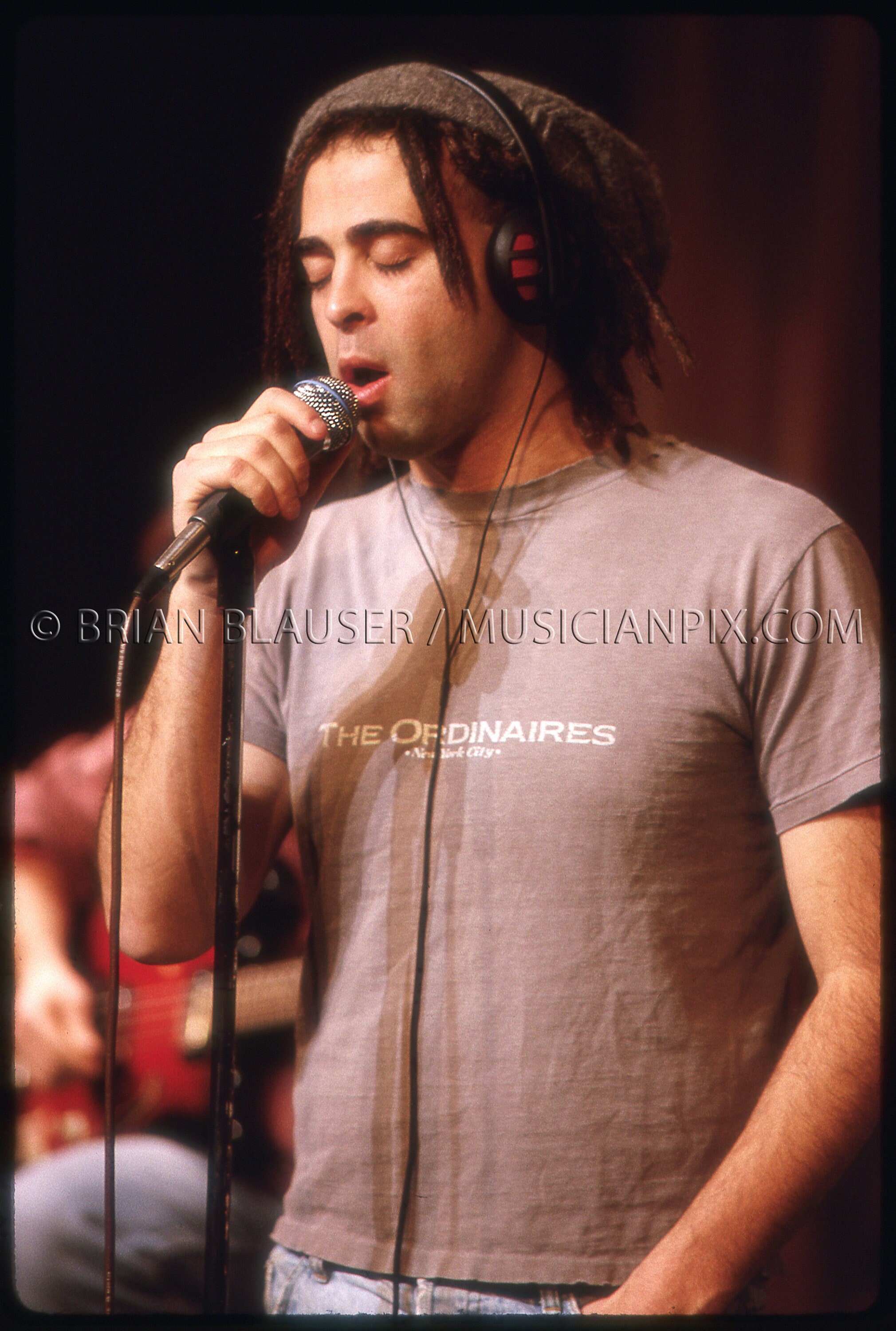
Adam Duritz defined a distinct corner of 1990s alternative rock as the frontman, primary songwriter, and driving creative force behind Counting Crows. Emerging from the San Francisco Bay Area music scene, Duritz captured the emotional anxiety, romantic longing, and existential confusion of the decade through multi-platinum albums like August and Everything After (1993) and Recovering the Satellites (1996).
The Rise of Counting Crows: From Bay Area Clubs to Global Stardom
Before becoming one of the most recognizable voices on 1990s alternative radio, Adam Duritz spent years honing his craft in Northern California. In the late 1980s and early 1990s, he performed with the Bay Area band The Sordid Humor before forming Counting Crows in 1991 alongside guitarist David Bryson. The duo initially performed acoustic sets in San Francisco and Berkeley coffeehouses, focusing heavily on narrative songwriting and melodic structure.
As the lineup expanded to include bassist Matt Malley, keyboardist Charlie Gillingham, drummer Steve Bowman, and guitarist Dan Vickrey, the band developed an organic, roots-influenced sound. This acoustic-leaning, organ-drenched instrumentation set them apart from the heavy grunge distortion dominating Seattle and the grunge-rock radio waves of the early 1990s.
- 1991: Band Formed (San Francisco)
- Jan 1993: Rock Hall Performance (Standing in for Van Morrison)
- Sept 1993: "August and Everything After" Released
- 1994: "Mr. Jones" Hits MTV Heavy Rotation & Billboard Top 10
- Oct 1996: "Recovering the Satellites" Debuts at #1
- Nov 1999: "This Desert Life" Released
A major turning point occurred in January 1993, months before the band had even released a debut record. When legendary singer-songwriter Van Morrison declined to attend his induction into the Rock and Roll Hall of Fame, Counting Crows were invited to fill in and perform his classic track "Caravan." Introduced by Robbie Robertson of The Band, Duritz’s impassioned performance caught the immediate attention of music industry executives and prominent critics, laying the foundation for their meteoric rise later that year.
Lyrical Craft, Vocal Style, and Emotional Authenticity
Adam Duritz’s work in the 1990s stood out for its unvarnished lyricism and conversational vocal delivery. While mainstream rock was often defined by ironical detachment or raw aggression, Duritz brought a literary, hyper-vulnerable sensibility to his music, drawing inspiration from songwriters like Bob Dylan, Van Morrison, Jackson Browne, and Rickie Lee Jones.
| Lyric Motifs | Vocal Delivery | Concert Method |
|---|---|---|
| • Alienation | • Conversational | • Live Riffs |
| • Winter Imagery | • Spoken-word | • Lyric Shifts |
| • Fame Paradox | • Strained Belts | • Interpolations |
| • Mental Health | • Dynamic Spans | • Extended Jams |
Key Characteristics of Duritz’s 1990s Artistry
- Conversational Cadence: Duritz rarely sang in traditional verse-chorus patterns without altering the rhythm. He frequently stretched syllables, introduced spoken-word passages, and pushed vocal phrasing ahead of or behind the beat to mimic natural speech.
- Recurrent Imagery: His lyrics relied heavily on specific motifs—trains, grey skies, rain, winter landscapes, lost girls, and references to classic California geography. This gave his albums a cinematic, novelistic coherence.
- Live Alterations and Improvisation: In concert, Duritz became famous for altering lyric melodies entirely, inserting new verses on the spot, or interpolating lyrics from songs by artists like The Psychedelic Furs, The Waterboys, or Bruce Springsteen into his own tracks.
- Unfiltered Emotional Vulnerability: Songs like "Round Here" and "Raining in Baltimore" directly addressed panic attacks, depression, and social isolation, establishing a deep personal connection with listeners who related to his internal struggles.
Album Analysis: The 1990s Counting Crows Discography
Counting Crows released three studio albums during the 1990s. Each project captured a distinct stage in Duritz’s emotional and artistic development, tracking his transition from an obscure Bay Area musician to an arena-headlining rock frontman.
- AUGUST AND EVERYTHING AFTER (1993)
- Producer: T Bone Burnett
- Acoustic warmth, Hammond organ
- Focus: Dreams, local longing
- RECOVERING THE SATELLITES (1996)
- Producer: Gil Norton
- Heavy distorted guitars, arena scale
- Focus: Disorientation of fame
- THIS DESERT LIFE (1999)
- Producers: David Lowery & Dennis Herring
- Experimental textures, loop layers
- Focus: Creative resurgence, reflection
1. August and Everything After (1993)
Produced by T Bone Burnett, the band’s debut album remains one of the defining releases of 1990s alternative rock. Burnett insisted on recording live in the studio, giving the record a warm, organic texture driven by Hammond B-3 organ, accordion, and acoustic guitars.
The album's massive success was driven by the single "Mr. Jones," a fast-paced, semi-autobiographical track about Duritz and his friend Marty Jones fantasizing about how famous and attractive they would be once they became big rock stars. Ironically, the song propelled Duritz into the exact spotlight he was singing about. Beyond "Mr. Jones," the album contained deeply contemplative tracks such as "Round Here," "Omaha," "Rain King," and "A Murder of One." The album eventually certified 7x Platinum in the United States, according to the Recording Industry Association of America (RIAA).
2. Recovering the Satellites (1996)
Following the overwhelming wave of sudden fame, Duritz withdrew to write the band's follow-up album. Produced by Gil Norton (known for his work with The Pixies), 1996's Recovering the Satellites was louder, heavier, and far more muscular than its predecessor.
Lyrically, the record dealt head-on with the psychological dislocation, privacy loss, and emotional breakdown caused by sudden international success. The album debuted at number one on the Billboard 200. Tracks like "Angels of the Silences" and the title track featured abrasive, overdriven electric guitars, while the hit single "A Long December" provided a delicate, piano-driven reflection on surviving a difficult year and holding out hope for the future.
3. This Desert Life (1999)
Closing out the decade, This Desert Life was co-produced by David Lowery (of Cracker and Camper Van Beethoven) and Dennis Herring. Recorded in a rented house in Hollywood, the album embraced a more eclectic, experimental approach, incorporating tape loops, strings, and layered percussion.
Duritz’s lyrics shifted toward character sketches and surreal narrative landscapes. Key tracks included the upbeat, folk-pop lead single "Hanginaround," the epic narrative "Mrs. Potter's Lullaby," and the haunting piano ballad "Colorblind."
Discography Comparison: Counting Crows in the 1990s
| Album Title | Release Year | Primary Producer(s) | Peak Billboard 200 Position | Dominant Lyrical Themes | Key Tracks |
|---|---|---|---|---|---|
| August and Everything After | 1993 | T Bone Burnett | #4 | Anxieties, youth, longing, local isolation | "Mr. Jones", "Round Here", "Rain King" |
| Recovering the Satellites | 1996 | Gil Norton | #1 | Identity crisis, fame burnout, dislocation | "A Long December", "Angels of the Silences" |
| This Desert Life | 1999 | David Lowery, Dennis Herring | #8 | Artistry, relationships, creative recovery | "Hanginaround", "Colorblind", "Mrs. Potter's Lullaby" |
Visual Identity, Media Scrutiny, and Personal Struggles
Beyond his music, Adam Duritz emerged as an unlikely pop-culture icon in the mid-to-late 1990s. His appearance—defined by his signature long dreadlocks, oversized corduroy jackets, vintage coats, and highly expressive hand movements on stage—became instantly recognizable across MTV and music magazines.
| PUBLIC POP-CULTURE | INTERNAL REALITY |
|---|---|
| • Iconic dreadlocks visual | • Severe Depersonalization |
| • MTV heavy video rotation | • Social anxiety & burnout |
| • High-profile Hollywood dating | • Retreats from public glare |
| • Multi-platinum record sales | • Introspective song craft |
The Media Spotlight and High-Profile Relationships
As Counting Crows grew into a stadium-touring act, Duritz found himself followed by tabloid press. During the late 1990s, he dated high-profile actresses, including Friends stars Jennifer Aniston and Courteney Cox, as well as Winona Ryder and Mary-Louise Parker. Duritz frequently expressed discomfort with celebrity culture, explicitly noting in interviews that tabloid interest diverted focus from his musical composition and artistic intent.
Battles with Mental Health
Underneath the commercial success lay severe personal turmoil. Duritz struggled significantly with mental health throughout the decade, later publicly speaking about his diagnosis of depersonalization disorder (a dissociative condition characterized by feeling detached from one's own body and surroundings).
This disorder heavily influenced his 1990s writing. Tracks like "Round Here" ("Step out the front door like a ghost into the fog") and "Ghost Train" directly describe feelings of disassociation, unreality, and emotional numbness. His willingness to speak candidly about mental health challenges during an era when the topic was still widely stigmatized endeared him to millions of fans.
Film Soundtracks and Broader Cultural Influence
During the 1990s, film soundtracks served as major avenues for music discovery, and Counting Crows contributed several notable tracks that expanded their audience.
- "Einstein on the Beach (For an Eggman)": Recorded during the August and Everything After sessions, this upbeat track was included on the 1994 compilation album DGC Rarities Vol. 1. It quickly became a radio staple, reaching number one on the Billboard Modern Rock Tracks chart.
- "Colorblind" in Cruel Intentions (1999): The delicate, piano-focused ballad "Colorblind" was placed in a key emotional scene in the hit 1999 film Cruel Intentions. The placement introduced Duritz's music to a younger audience at the end of the decade and remains one of the band's most streamed tracks.
- 1994
- "Einstein on the Beach"
- Modern Rock #1
- 1996
- "A Long December" MTV Rotation
- Mainstream Top 40
- 1999
- "Colorblind" Cruel Intentions
- Global Teen Audience
Cultural Legacy and Impact on Roots Rock
Adam Duritz and Counting Crows played a vital role in shifting alternative rock toward folk-infused, melodic storytelling during the mid-to-late 1990s. Alongside acts like The Wallflowers, Matchbox 20, and Third Eye Blind, Counting Crows proved that radio-friendly alternative music could balance classic 1970s singer-songwriter traditions with 1990s emotional vulnerability.
Duritz's approach to live performances also set a precedent for alt-rock bands. By treating studio recordings as blueprints rather than fixed scripts, his live improvisation inspired a bootleg-sharing culture among fans that mirrored the fan bases of jam bands like the Grateful Dead and Dave Matthews Band.
Frequently Asked Questions
What was Adam Duritz's breakthrough hit in the 1990s?
Adam Duritz's breakthrough hit was "Mr. Jones," released as the lead single from Counting Crows' 1993 debut album, August and Everything After. Driven by heavy MTV rotation and radio play in early 1994, the song launched the band into international stardom.
Did Adam Duritz write all of Counting Crows' songs in the 90s?
Adam Duritz was the primary lyricist and main songwriter for Counting Crows, though music compositions were often co-written with bandmates like David Bryson, Charlie Gillingham, Matt Malley, and Dan Vickrey.
Were Adam Duritz's dreadlocks real during the 1990s?
Yes, Duritz wore real dreadlocks during the 1990s, though he later openly acknowledged in interviews that he used hair extensions woven into his natural hair to achieve his signature high-volume hairstyle. He eventually shaved them off in 2019.
What condition was Adam Duritz diagnosed with during his 90s career?
Adam Duritz was diagnosed with depersonalization disorder, a severe dissociative condition causing persistent feelings of detachment from one's body, mental processes, and environment. He frequently channeled these experiences into his songwriting.
Why did Counting Crows perform at the 1993 Rock and Roll Hall of Fame?
Counting Crows were asked to fill in for inductee Van Morrison at the January 1993 ceremony when Morrison declined to attend. Introduced by Robbie Robertson, their performance of Morrison's "Caravan" earned them major music industry attention prior to releasing their debut album.
Recommended Listening Guide for 1990s Counting Crows
To fully understand Adam Duritz's artistic evolution throughout the decade, listen to these essential tracks in chronological order:
- "Round Here" (August and Everything After, 1993): Demonstrates Duritz's conversational vocal delivery and themes of small-town isolation.
- "Mr. Jones" (August and Everything After, 1993): The defining 90s alt-rock single exploring the desire for fame.
- "A Long December" (Recovering the Satellites, 1996): A introspective piano ballad dealing with recovery, loss, and hope.
- "Angels of the Silences" (Recovering the Satellites, 1996): Highlights the band's heavier, Gil Norton-produced guitar sound.
- "Colorblind" (This Desert Life, 1999): A minimalist piano arrangement demonstrating Duritz's emotional restraint and lyrical precision.