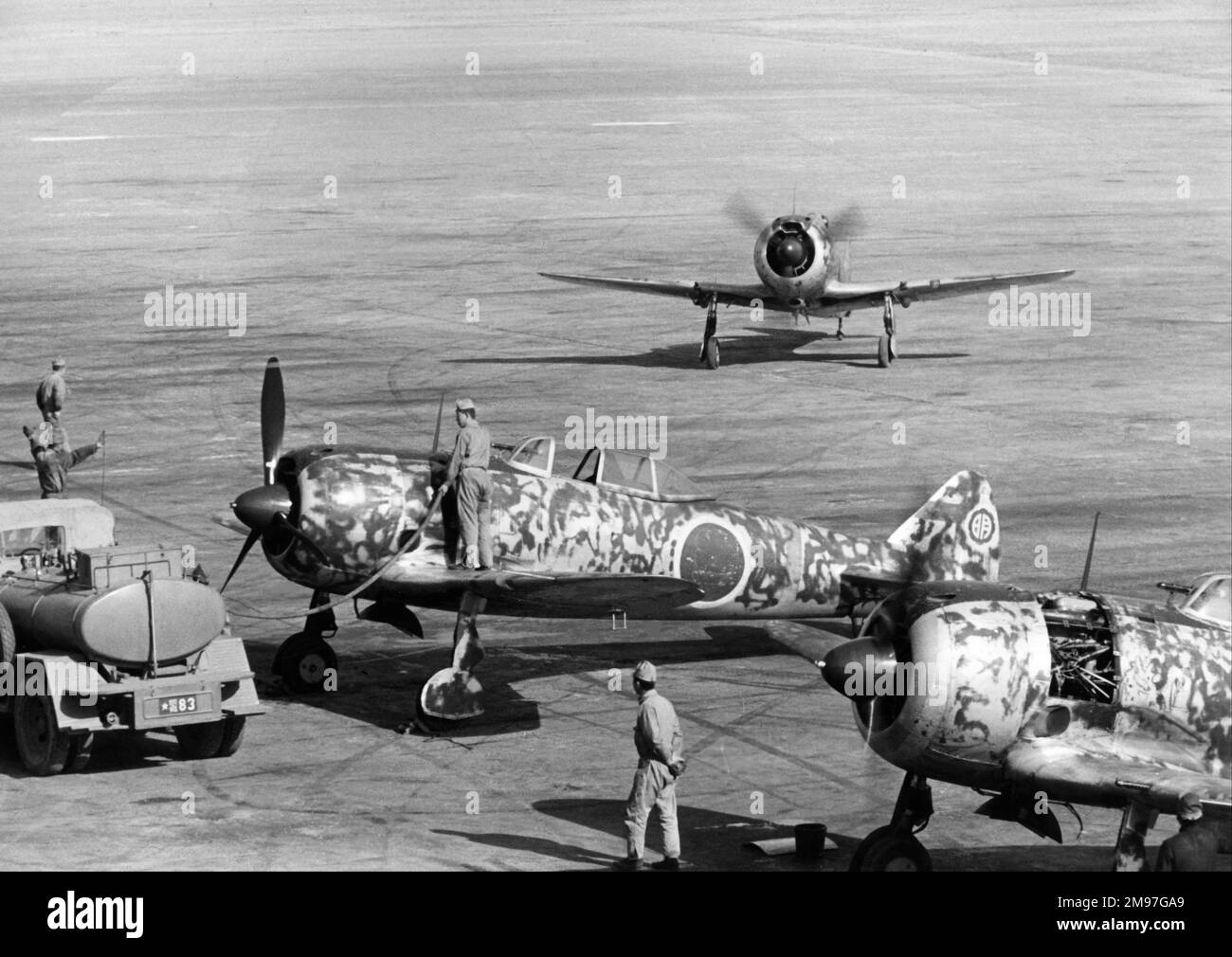
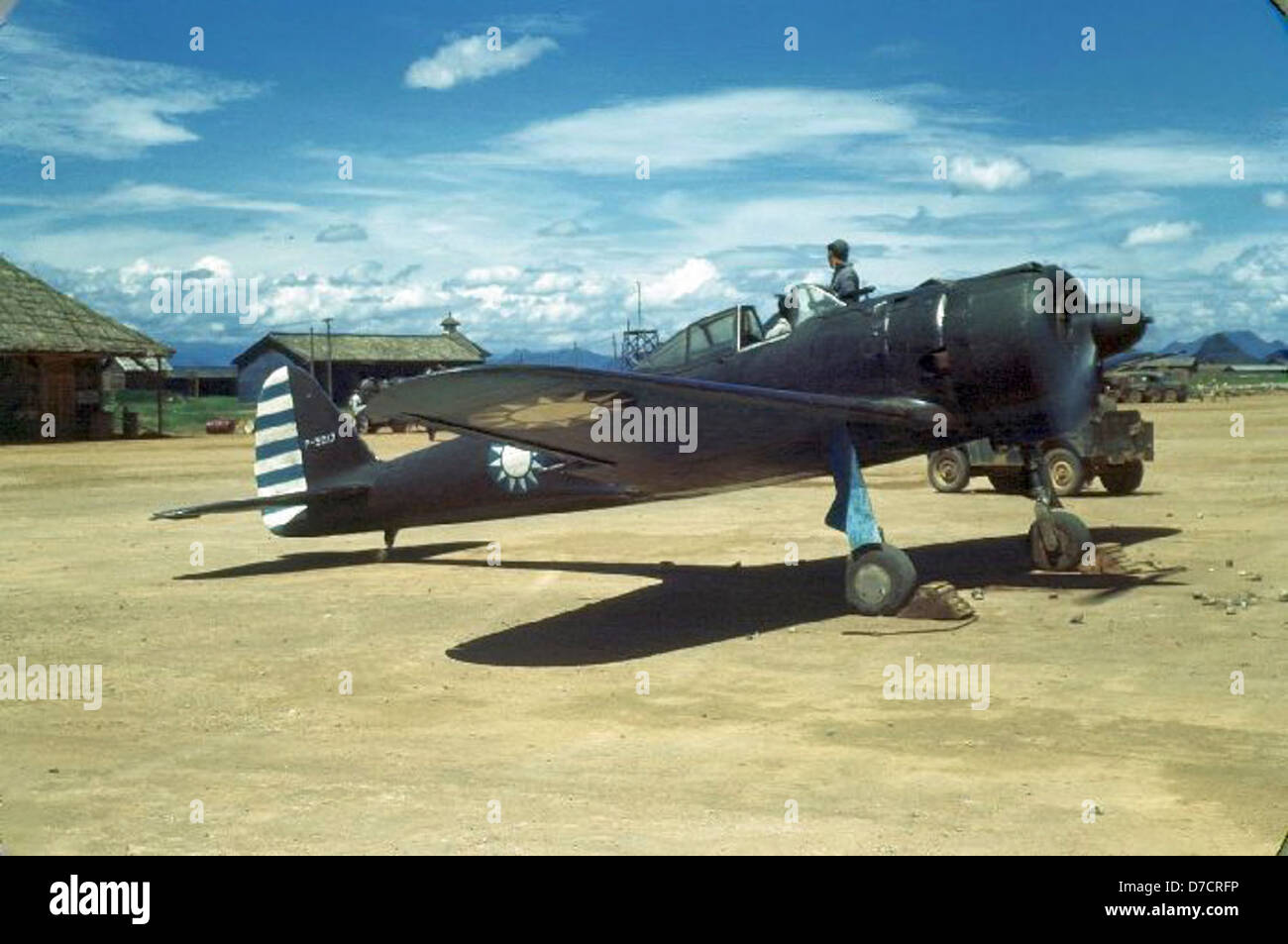
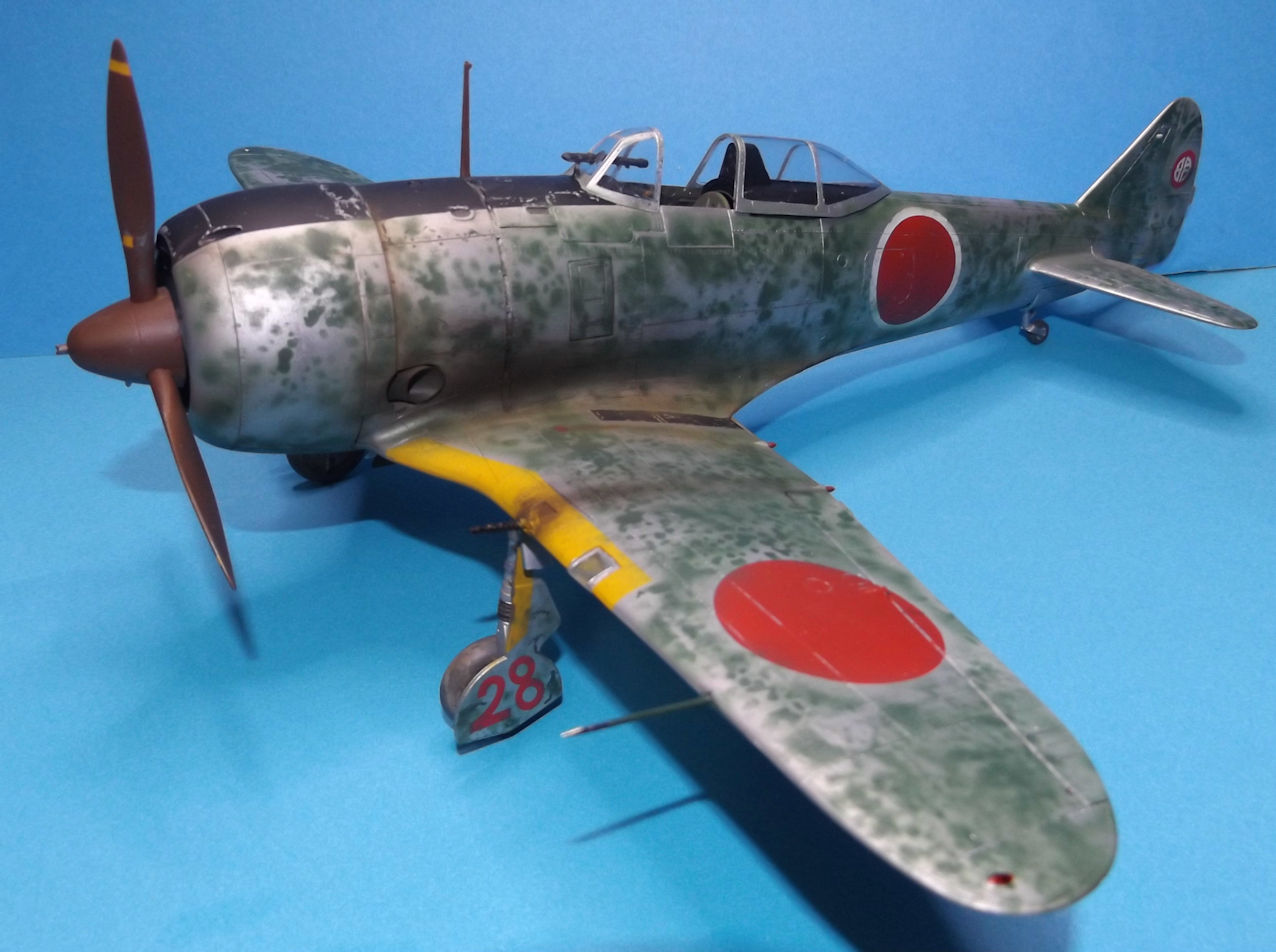
The Nakajima Ki-44 Shoki (Demon) was a radical departure from traditional Japanese military aviation doctrine, prioritizing high speed, rate of climb, and devastating armament over the legendary maneuverability seen in aircraft like the A6M Zero, making it a formidable high-altitude point-defense interceptor during World War II.
Introduction to the Nakajima Ki-44 Shoki
When analyzing the evolution of Imperial Japanese Army Air Service (IJAAS) fighter development during the Second World War, historians and aviation enthusiasts frequently encounter a fascinating technological paradox. While conventional wisdom often reduces Japanese wartime aircraft design to a single-minded pursuit of dogfighting agility at the expense of armor, firepower, and protection, the Nakajima Ki-44 Shoki shatters this stereotype. Conceived to meet a specialized requirement for a point-defense interceptor, the Ki-44 was built to solve a very specific operational problem: intercepting fast, high-flying Allied bomber formations before they could reach strategic targets across the Japanese home islands and occupied territories.
Understanding the Ki-44 requires examining its design philosophy, which traded the nimble, light-frame philosophy of earlier fighters for a heavy, high-powered airframe. This article breaks down five definitive facts about the Nakajima Ki-44, exploring its development hurdles, technical specifications, unique aerodynamic challenges, combat performance, and its ultimate legacy in the annals of military aviation.
Fact 1: A Radical Shift from Maneuverability to Speed and Climb Rate
To understand the operational genesis of the Ki-44, one must look at the prevailing doctrine of the IJAAS in the late 1930s. At the time, light, highly maneuverable monoplanes such as the Nakajima Ki-27 dominated Japanese fighter strategy. These aircraft excelled in classic dogfights, relying on small turning circles and exceptional low-speed handling to defeat adversaries. However, Nakajima's chief designer, Yasushi Koyama, recognized that the nature of aerial warfare was rapidly changing. The advent of heavily armed twin-engine bombers flying at high altitudes rendered traditional dogfighters dangerously obsolete.
Consequently, the specification for the Ki-44 demanded uncompromising performance in two distinct categories: maximum speed and rate of climb. To achieve this, Koyama and his engineering team drafted an airframe with a heavily loaded wing, a narrow fuselage cross-section, and a teardrop canopy that minimized aerodynamic drag.
The emphasis on speed over turning radius initially caused severe political friction within the military. Many traditionalist pilots accustomed to the Ki-27 viewed the Ki-44's high wing loading with deep skepticism, dubbing it a dangerous "flying brick" during early flight tests. Yet, as strategic bombing campaigns intensified, the military leadership realized that an interceptor capable of rapid vertical ascent and high-speed slashing attacks was an absolute necessity.
Fact 2: Powered by the Ha-109 Heavy Radials
An interceptor designed for speed and climb requires massive horsepower, and the Nakajima Ki-44 was built around a series of powerful double-row radial engines. Early prototypes utilized the Nakajima Ha-41 engine, but production variants quickly transitioned to the more refined and powerful Nakajima Ha-109 14-cylinder air-cooled radial engine.
The integration of the Ha-109 significantly altered the aircraft's performance envelope. Displacing over 42 liters and delivering upwards of 1,500 horsepower at takeoff, the engine allowed the heavy fighter to achieve maximum speeds exceeding 600 kilometers per hour (approximately 373 miles per hour) at altitude.
However, housing such a massive radial engine presented significant aerodynamic and thermal challenges. Nakajima engineers invested considerable effort into designing a streamlined cowling and a cooling fan system to prevent the engine from overheating during prolonged climbs—a common hazard for high-performance radials of that era.
Fact 3: The Butterfly Flap Innovation and Handling Challenges
One of the most defining technological features of the Nakajima Ki-44 was its pioneering use of specialized Fowler-type flaps, commonly referred to in technical literature as "butterfly flaps." These auxiliary control surfaces were designed to alter the wing camber and surface area dynamically, allowing the heavy aircraft to manage its high wing loading during tight maneuvers, takeoffs, and landings.
Despite this engineering ingenuity, flying the Ki-44 remained a demanding task that pushed average pilots to their limits. The high wing loading meant that the aircraft possessed a dangerously high stall speed compared to contemporary Allied fighters like the P-47 Thunderbolt or the Supermarine Spitfire. If a pilot pulled back too aggressively on the stick during a high-speed turn, the aircraft would abruptly drop a wing and enter an unrecoverable spin at low altitudes.
Furthermore, early models suffered from severe directional instability at high speeds. Nakajima engineers continuously modified the vertical tail surfaces across successive production blocks to rectify this issue. Mastering the Ki-44 required specialized conversion training, marking a major psychological shift for pilots who had trained exclusively on forgiving, lightweight trainers.
Fact 4: Heavy Firepower Evolution – From Machine Guns to 40mm Cannons
As Allied bomber formations evolved to include heavily armored B-17 Flying Fortresses and B-29 Superfortresses, standard rifle-caliber machine guns proved entirely inadequate. The Nakajima Ki-44 underwent a rapid evolution in armament configuration to counter these heavily defended strategic assets.
Initial production variants, such as the Ki-44-I, typically featured a mix of 7.7mm and 12.7mm machine guns synchronized to fire through the propeller arc. However, as combat realities set in, field units and factory engineers up-gunned the aircraft significantly. The definitive Ki-44-II Ko, Otsu, and Hei variants introduced heavier combinations, including synchronized Ho-103 12.7mm heavy machine guns and wing-mounted 20mm Ho-5 cannon.
In its most specialized configuration as a dedicated bomber destroyer, select Ki-44 units were outfitted with monstrous, wing-mounted Ho-301 40mm shell-firing cannons. These weapons fired caseless ammunition with a very low muzzle velocity, requiring pilots to close to point-blank range before firing. While notoriously difficult to aim accurately due to a steeply dropping trajectory, a single direct hit from a 40mm shell was often enough to tear a heavy four-engine bomber apart in mid-air.
Technical Specifications Comparison Table
To better understand where the Ki-44 sat in the spectrum of wartime fighter development, the following table outlines the core technical specifications of the definitive Ki-44-II Otsu variant compared to standard performance metrics of its contemporaries.
| Technical Metric | Nakajima Ki-44-II Otsu (Shoki) | North American P-51D Mustang | Supermarine Spitfire Mk IX |
|---|---|---|---|
| Primary Role | Point-Defense Interceptor | Long-Range Escort / Fighter | Air Superiority / Interceptor |
| Engine | Nakajima Ha-109 (1,520 hp) | Packard V-1650-7 Merlin (1,490 hp) | Rolls-Royce Merlin 66 (1,705 hp) |
| Max Speed | 605 km/h (376 mph) at 4,000 m | 703 km/h (437 mph) at 7,600 m | 658 km/h (409 mph) at 6,000 m |
| Initial Climb Rate | ~19.3 meters per second | ~18.3 meters per second | ~21.3 meters per second |
| Primary Armament | 2 x 12.7mm machine guns + 2 x 20mm cannons | 6 x 12.7mm machine guns | 2 x 20mm cannons + 4 x 7.7mm machine guns |
| Empty Weight | 2,106 kg (4,643 lb) | 3,232 kg (7,125 lb) | 2,694 kg (5,940 lb) |
Fact 5: Operational Deployment and Combat Legacy
The operational career of the Nakajima Ki-44 spans multiple theaters of World War II, though its most significant impact was felt during the defense of the Japanese homeland and critical industrial centers in China and Southeast Asia.
Combat units such as the 47th Sentai (Air Regiment), famously known as the Narisuhira or "Kachin" unit operating out of Narimasu airfield near Tokyo, utilized the Ki-44 with great success against early high-altitude reconnaissance flights and bomber raids. The aircraft achieved notable victories against Chinese and American formations over the Chinese mainland and played a vital role in blunting early B-29 raids before those missions shifted to low-level incendiary attacks at night.
As the war progressed and American forces secured advanced island bases like Saipan and Tinian, the strategic burden on the IJAAS became insurmountable. The Ki-44 was gradually supplemented and replaced by more advanced types, such as the Nakajima Ki-84 Hayate (Frank). Nevertheless, surviving Ki-44 airframes continued to fly defense missions until the end of the conflict in August 1945, occasionally being adapted for desperate kamikaze attacks during the closing months of the war. Today, no complete original airframes survive intact in museum collections, though major component fragments remain preserved in aviation archives as a testament to this unique evolutionary step in Japanese military engineering.
Frequently Asked Questions
What does the name "Shoki" mean in English?
The name Shoki (鍾馗) translates to "Quong Kui," a mythical Chinese ghost-queller and demon-slasher deity of traditional folklore. The IJAAS selected this name to project an intimidating image of a fierce protector capable of warding off enemy bomber fleets.
How did the Ki-44 perform against American fighters like the P-51 and P-47?
Against agile American types like the P-51 Mustang or high-altitude specialists like the P-47 Thunderbolt, the Ki-44 held a distinct advantage in initial rate of climb and vertical maneuverability at medium altitudes. However, at higher altitudes, the Ki-44 suffered from a drop in engine performance compared to turbocharged American designs, and it was generally outmatched in sustained high-speed turning and high-dive resilience.
Why were only a limited number of Ki-44 fighters built compared to the A6M Zero?
Total production of the Nakajima Ki-44 hovered around 1,225 airframes. This relatively low production run compared to mass-produced aircraft like the Zero stemmed from shifting industrial priorities within the Japanese aviation complex, shortages of precision raw materials, and the specialized, non-versatile nature of the interceptor role.
Did any foreign air forces operate the Ki-44 after World War II?
Yes. Following the cessation of hostilities in 1945, captured Ki-44 airframes were utilized by various regional military forces, including the Chinese Nationalist Air Force and the Indonesian People's Security Force, during the turbulent post-war decolonization conflicts before being permanently retired due to a lack of spare parts.