In the 2026 clinical coding landscape, "cardiorespiratory failure" is considered a nonspecific diagnostic term that primarily maps to the ICD-10-CM code R09.2 (Respiratory arrest) in the Alphabetic Index. However, to ensure clinical accuracy and proper reimbursement, coders must typically report component codes such as J96.00 (Acute respiratory failure) and I50.9 (Heart failure, unspecified) when both systems are failing simultaneously.
The complexities of coding for cardiorespiratory failure arise from the fact that the term describes the dysfunction of two vital systems—the heart and the lungs—which often fail in tandem due to their physiological interdependence. For healthcare providers, medical coders, and Clinical Documentation Improvement (CDI) specialists, navigating the ICD-10-CM (International Classification of Diseases, 10th Revision, Clinical Modification) requirements for this condition is essential for reflecting the true Severity of Illness (SOI) and Risk of Mortality (ROM) of a patient.
As we move through 2026, the emphasis on granular data in value-based care models makes the accurate application of these codes more critical than ever. Below are four key points that define the current standards for coding cardiorespiratory failure.
1. Navigating the Alphabetic Index and the "Arrest" Trap
One of the most frequent points of confusion for medical coders is how the ICD-10-CM Alphabetic Index handles the term "cardiorespiratory failure." When a coder looks up "Failure, cardiorespiratory," the index typically directs them to "Arrest, respiratory," which is coded as R09.2.
The Distinction Between Failure and Arrest
The use of R09.2 is often a point of contention between clinical reality and coding logic. In a clinical setting, cardiorespiratory failure implies that the heart and lungs are struggling to maintain adequate gas exchange and systemic perfusion but are still functioning to some degree. Respiratory arrest, conversely, is the total cessation of breathing.
If a physician documents "cardiorespiratory failure," but the patient is still breathing (even if supported by a ventilator), coding it as an arrest (R09.2) can be seen as an overstatement of the clinical condition. However, per the ICD-10-CM Official Guidelines for Coding and Reporting, coders must follow the index. This creates a "trap" where the code assigned might not perfectly align with the patient’s physiological state unless the physician provides more specific documentation regarding the failure of each individual system.
The Need for Physician Query
To avoid the ambiguity of R09.2, CDI specialists in 2026 frequently query physicians to clarify whether they mean acute respiratory failure, heart failure, or both. By documenting "acute respiratory failure with congestive heart failure" instead of the vague "cardiorespiratory failure," the coder can move away from the R-series (Signs and Symptoms) and into the more specific J-series (Respiratory) and I-series (Circulatory) codes, which more accurately reflect the patient’s acuity.
2. Component Coding: The J96 and I50 Synergy
Since cardiorespiratory failure involves two distinct organ systems, the most accurate way to represent the condition—when supported by clinical evidence—is through component coding. This involves selecting a code for the respiratory component and a separate code for the cardiac component.
The Respiratory Component (J96 Series)
Respiratory failure is classified under category J96. In 2026, the coding of respiratory failure requires a high degree of specificity regarding the timeframe and the nature of the gas exchange impairment:
- Acute Respiratory Failure (J96.0-): Used for sudden onset failure, often requiring emergent intervention like intubation or BiPAP.
- Chronic Respiratory Failure (J96.1-): Used for long-standing conditions where the patient may be on home oxygen or have baseline hypercapnia (e.g., severe COPD).
- Acute on Chronic Respiratory Failure (J96.2-): Used when a patient with baseline chronic failure suffers an acute exacerbation.
Furthermore, these codes are subdivided to specify hypoxia (low oxygen, J96.01), hypercapnia (high CO2, J96.02), or unspecified (J96.00).
The Cardiac Component (I50 Series)
Similarly, the "cardio" portion of the diagnosis must be specified. In most cases of cardiorespiratory failure, the patient is experiencing some form of heart failure (Category I50). Documentation should specify the type of heart failure:
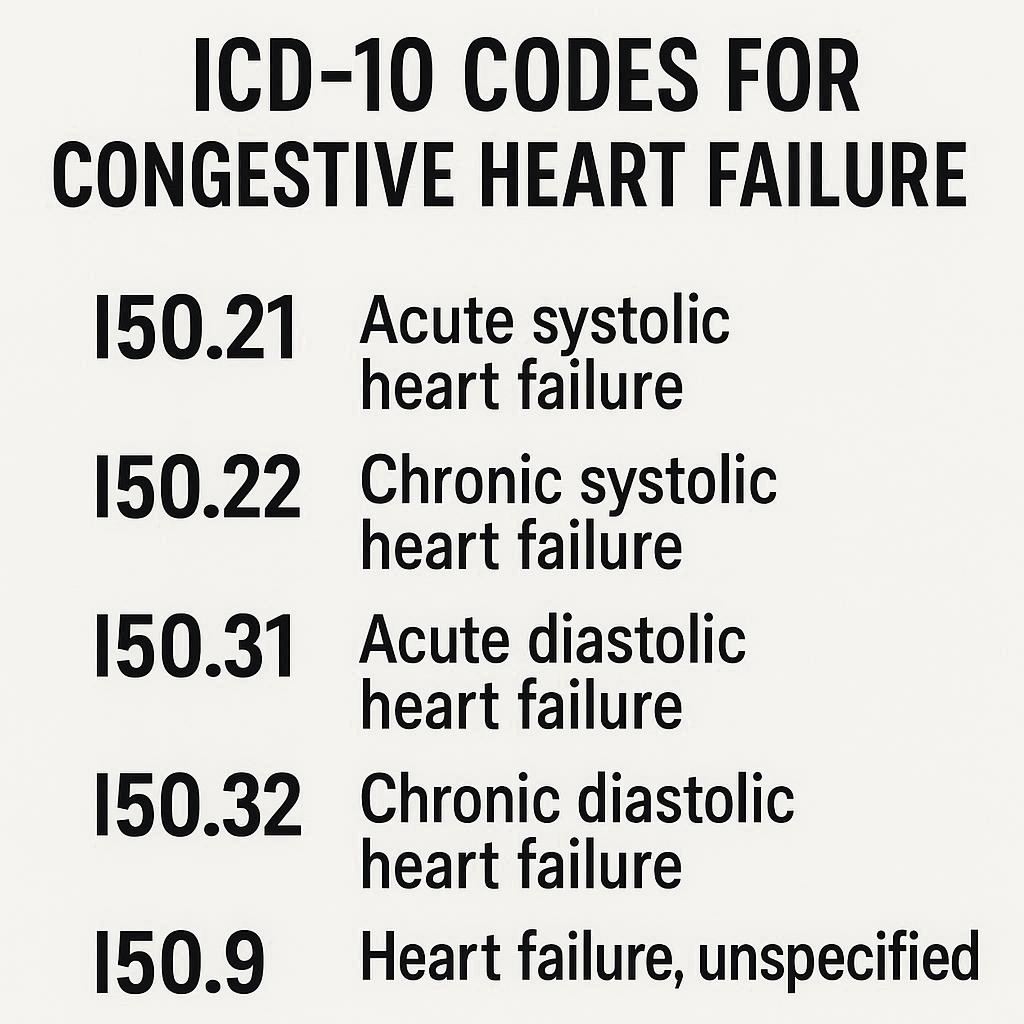
- Systolic (HFrEF): Coded as I50.2-.
- Diastolic (HFpEF): Coded as I50.3-.
- Combined: Coded as I50.4-.
By using a combination such as J96.01 (Acute hypoxic respiratory failure) and I50.21 (Acute systolic heart failure), the coder provides a much clearer picture of the patient's multi-system collapse than a single code for "cardiorespiratory failure" ever could.
3. Sequencing and the "Code First" Principle
In the world of ICD-10-CM, the order in which codes are listed is just as important as the codes themselves. Sequencing for cardiorespiratory failure is governed by the underlying etiology—the "why" behind the failure.
Etiology as the Principal Diagnosis
If the cardiorespiratory failure is a manifestation of an underlying acute condition, that condition is typically sequenced first as the principal diagnosis. For example, if a patient is admitted with an acute myocardial infarction (AMI) that leads to cardiorespiratory failure, the AMI (Category I21) is coded first, followed by the codes for the failure.
Common underlying causes that dictate sequencing include:
- Sepsis (A41.9): If sepsis causes multi-organ failure, sepsis is the principal diagnosis.
- Pneumonia (J12-J18): If a severe infection of the lungs leads to respiratory failure, the specific type of pneumonia is sequenced first.
- Trauma: If a chest injury causes the failure, the trauma codes take precedence.
The 2026 Regulatory Focus on Sequencing
Regulatory bodies and payers in 2026 are increasingly scrutinizing "respiratory failure" as a principal diagnosis. If a patient is admitted with a relatively minor condition but is coded with respiratory failure as the principal diagnosis, it may trigger an audit. Coders must ensure that the documentation supports that the respiratory failure was indeed the condition established "after study" to be chiefly responsible for the admission, or follow the "code first" notes found in the Tabular List.
4. Impact on DRGs, MCCs, and Quality Metrics
The choice of ICD-10 code for cardiorespiratory failure has a massive impact on hospital reimbursement through the Medicare Severity Diagnosis Related Group (MS-DRG) system.
MCC and CC Status
In 2026, many codes within the J96 series (Acute Respiratory Failure) and R09.2 (Respiratory Arrest) are classified as Major Complications or Comorbidities (MCCs). In the DRG system, the presence of an MCC typically moves a case into a higher-paying tier. For example, a "Simple Pneumonia" diagnosis might pay a certain base rate, but "Simple Pneumonia with Acute Respiratory Failure" (an MCC) will significantly increase the reimbursement to reflect the increased resources (ventilators, ICU stays, specialized nursing) required to treat the patient.
Risk Adjustment and HCCs
Beyond immediate hospital payment, these codes are vital for Hierarchical Condition Categories (HCCs), which are used in risk-adjustment models for Medicare Advantage and other value-based care programs. Accurate coding of chronic respiratory failure or specific heart failure types ensures that the healthcare organization is appropriately "credited" for the complexity of the patient population they are managing. Failure to code these specifically—opting instead for a vague "cardiorespiratory failure" code—can result in an artificially low risk score, leading to underfunding for patient care.
| ICD-10 Code | Description | Category Status | Clinical Implication |
|---|---|---|---|
| R09.2 | Respiratory arrest | MCC | Complete cessation of breathing; default for "cardiorespiratory failure" in index. |
| J96.01 | Acute hypoxic respiratory failure | MCC | Acute failure with low blood oxygen levels; requires aggressive support. |
| J96.22 | Acute on chronic hypercapnic respiratory failure | MCC | Exacerbation of long-term failure with high CO2; common in COPD patients. |
| I50.33 | Acute on chronic diastolic heart failure | MCC | Acute worsening of a preserved ejection fraction heart failure. |
| I50.9 | Heart failure, unspecified | CC | Nonspecific heart failure; lacks details on systolic vs. diastolic function. |
Documentation Requirements for 2026
To satisfy the stringent audit requirements of 2026, clinical documentation for cardiorespiratory failure must go beyond the mere mention of the term. Auditors from both government and private payers look for "clinical validity." This means that if a code for acute respiratory failure (J96.0-) is used, the medical record should reflect:
- Arterial Blood Gas (ABG) results: Showing pO2 < 60 mmHg or pCO2 > 50 mmHg (for hypercapnic failure).
- Physical Exam Findings: Use of accessory muscles, cyanosis, or altered mental status.
- Treatment Modalities: Initiation of mechanical ventilation, CPAP/BiPAP, or high-flow nasal cannula.
Without this supporting evidence, the use of an MCC code like J96.01 may be downgraded during a retrospective audit, leading to "DRG creep" accusations and financial penalties.
Frequently Asked Questions
Is "cardiorespiratory failure" always an MCC?
Not necessarily. While the component code for acute respiratory failure (J96.0-) is an MCC, and respiratory arrest (R09.2) is also an MCC, the code for heart failure might only be a CC (Complication or Comorbidity) depending on the type and whether it is acute. Furthermore, if the "failure" is documented as chronic and not acute, it may not reach MCC status.
Can I code both heart failure and respiratory failure if the doctor only says "cardiorespiratory failure"?
Strictly speaking, if the physician only uses the term "cardiorespiratory failure," the ICD-10-CM index directs you to R09.2. To code both separately, you generally need the physician to document both conditions or to clarify the term "cardiorespiratory failure" as representing both acute respiratory failure and heart failure. Coding both without explicit documentation could be seen as "unbundling" a single diagnosis into two to gain a higher reimbursement.
What is the difference between hypoxic and hypercapnic failure in coding?
Hypoxic failure (J96.01) refers to a failure to oxygenate the blood, common in conditions like pneumonia or pulmonary edema. Hypercapnic failure (J96.02) refers to a failure to remove carbon dioxide, often seen in COPD or neuromuscular disorders. Distinguishing between them is a 2026 requirement for high-quality clinical data and can affect the choice of treatments like BiPAP vs. standard oxygen.
How does cardiorespiratory failure relate to "cardiopulmonary failure"?
In ICD-10-CM terminology, these terms are often used interchangeably by clinicians. Both lead to the same indexing pathways in the Alphabetic Index. The coding professional’s goal remains the same: move the provider toward more specific descriptions of the respiratory and circulatory components.
Does the patient have to be on a ventilator to code for respiratory failure?
No. There is no requirement in the ICD-10-CM guidelines that a patient must be intubated or on a ventilator to assign a code for respiratory failure. However, there must be clinical evidence of failure and a treatment plan consistent with that severity. In 2026, patients on high-flow nasal cannula or non-invasive ventilation are frequently coded with J96 series codes.
Practical Recommendation for 2026
For healthcare organizations aiming to maintain compliance and financial stability, the best practice is to eliminate the use of the term "cardiorespiratory failure" in the medical record. Instead, clinical staff should be educated to document the specific components of the patient's condition.
Next Steps for Staff:
- Query Early: If a physician uses "cardiorespiratory failure" in an admission note, CDI specialists should query immediately for the specific type of respiratory failure (acute, chronic, hypoxic, hypercapnic) and the specific type of heart failure.
- Focus on Acuity: Ensure that the "acute" or "acute on chronic" status is clearly stated, as these are the primary drivers of MCC status and higher DRG weights.
- Verify Clinical Validity: Coders should cross-reference the diagnosis with lab values (ABGs) and nursing notes regarding respiratory effort to ensure the diagnosis stands up to external audit.
By shifting from a vague clinical term to precise ICD-10-CM component coding, facilities can ensure that their data accurately reflects the high level of care provided to these critically ill patients.