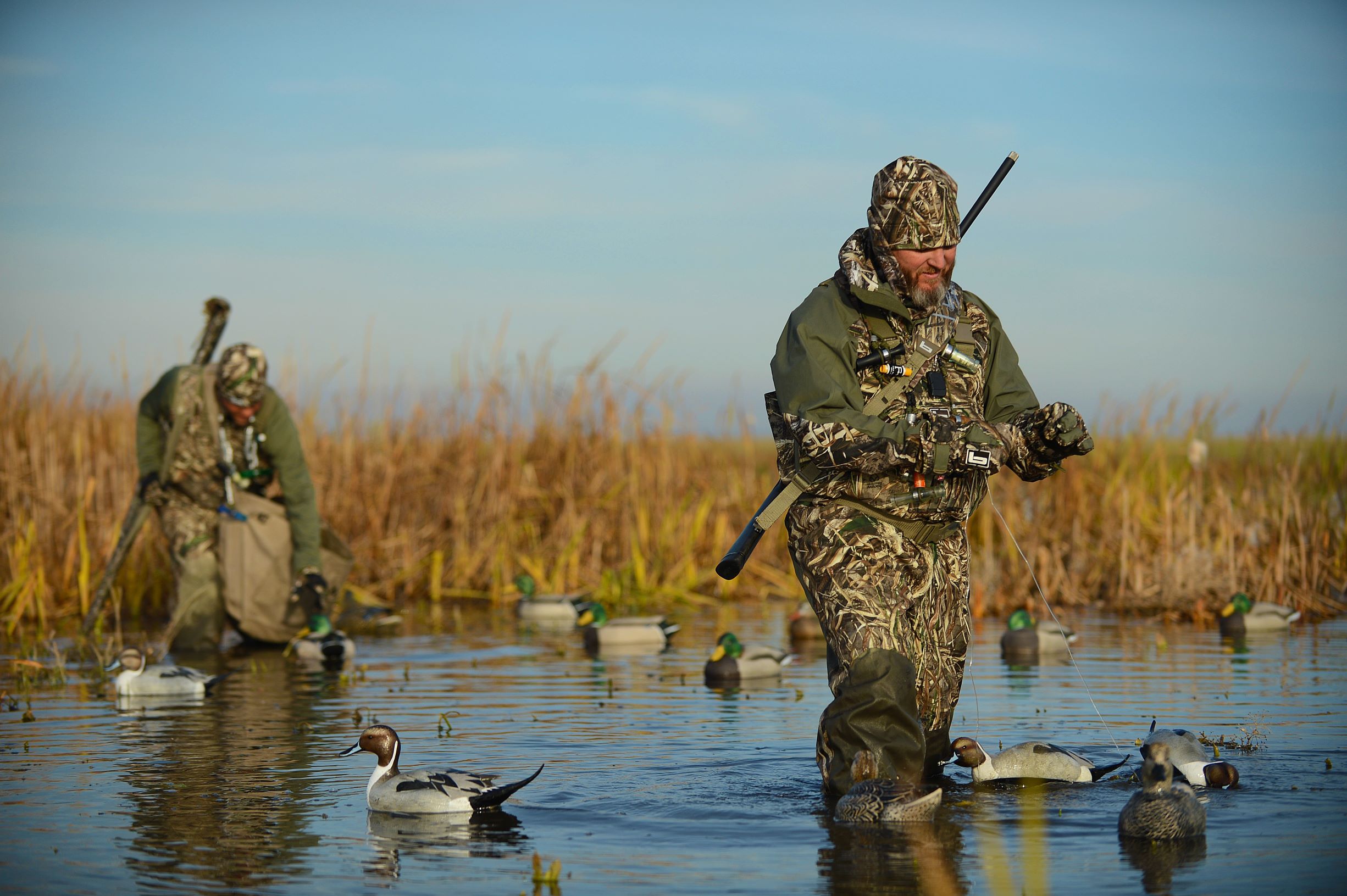
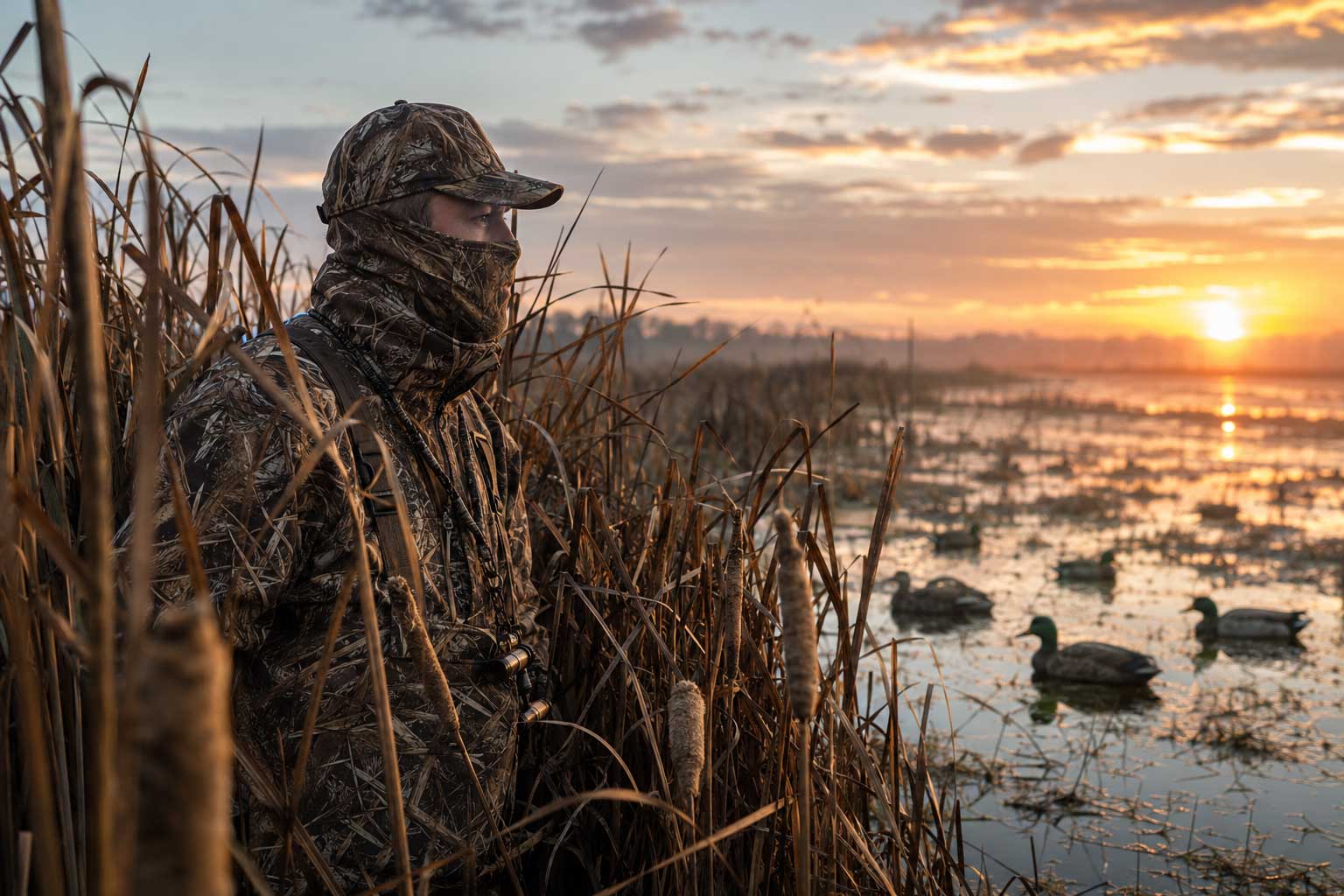
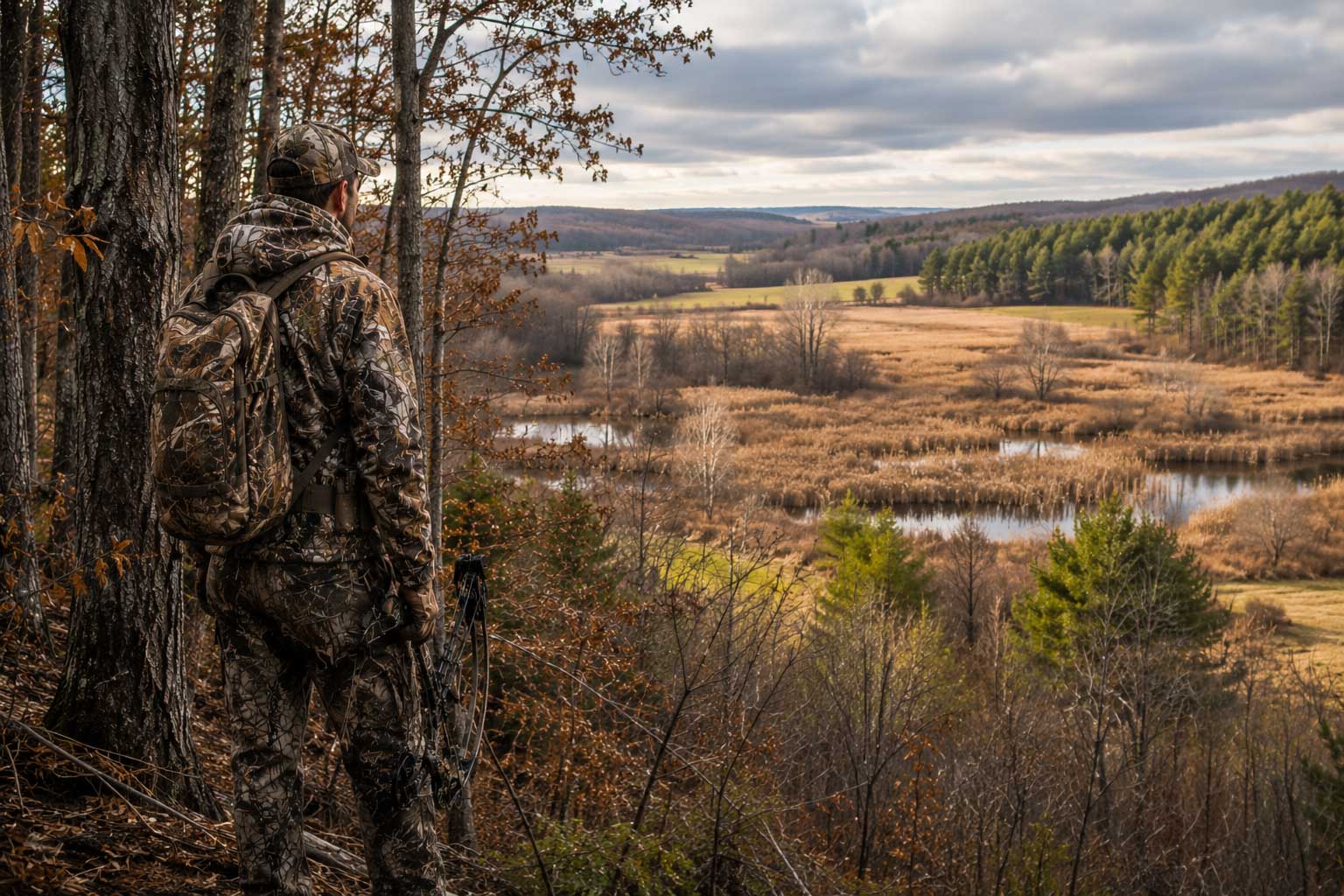
To achieve optimal concealment while hunting ducks and geese, the 3 top camouflage patterns for the best camo for waterfowl in 2026 are Mossy Oak Shadow Grass Habitat, Realtree MAX-7, and GORE OPTIFADE Waterfowl Marsh. These patterns excel by using high-contrast digital imagery and macro-disruption to break up the human silhouette across marshes, flooded timber, and agricultural fields.
Success in the blind often hinges on a hunter’s ability to remain invisible to some of the most keen-sighted creatures in the animal kingdom. Waterfowl possess a visual system that far surpasses human capabilities, particularly in detecting motion, UV light, and structural anomalies in their environment. Choosing the right camouflage is not merely about "blending in" with the colors of the swamp; it is about employing scientific principles of light, shadow, and disruption to deceive a bird’s specialized brain.
Understanding Waterfowl Vision: Why Pattern Matters
Before evaluating specific patterns, it is essential to understand the "customer" you are trying to fool. Waterfowl (ducks and geese) are tetrachromatic. Unlike humans, who have three types of color-detecting cones, birds have four. This fourth cone allows them to see into the ultraviolet (UV) spectrum. This means that if your camouflage or the detergent you used to wash it contains UV brighteners, you will appear to a mallard as a glowing, neon-blue entity against a dull background.
Furthermore, waterfowl have a much higher density of receptors in their retinas, providing them with incredible visual acuity. Their eyes are positioned on the sides of their heads, granting them a near 360-degree field of view. They are evolutionarily programmed to look for the "human shape"—the vertical line of a torso or the roundness of a head—against the horizontal lines of a marsh or grain field.
The most effective camouflage for waterfowl in 2026 focuses on two primary goals:
- Macro-Disruption: Large, high-contrast shapes that break up the recognizable outline of a human body from a distance.
- Micro-Disruption: Smaller, intricate details that mimic the textures of the immediate environment (leaves, twigs, shadows) to provide concealment when birds are "on the deck" and finishing in the decoys.
1. Mossy Oak Shadow Grass Habitat: The Versatile Legend
Mossy Oak has been a staple in the waterfowl community for decades, but their Shadow Grass Habitat pattern represents the pinnacle of their "Shadow Grass" lineage. As we move through the 2026 hunting season, this pattern remains a top choice for its incredible versatility across different flyways.
The Science of Habitat
Shadow Grass Habitat is built upon a foundation of photographic elements—actual images of grass, dirt, twigs, and shadows. However, it avoids the "flatness" that plagued early photorealistic patterns. Mossy Oak designers recognized that a marsh is not just a collection of dead grass; it is a complex 3D environment with significant depth and varying light levels.
The pattern utilizes a technique called "Shadow Technology." By layering dark, blurred shadows behind sharp, high-definition foreground elements like stalks of corn or blades of grass, the pattern creates a 3D effect. This depth is critical because it mimics the way light filters through a stand of cattails or a brushy fenceline.
Ideal Use Cases
Shadow Grass Habitat is specifically designed for "transition" areas. It is arguably the best pattern for hunters who find themselves in varied terrain throughout the season:
- Early Season Marshes: The inclusion of subtle green tones blends seamlessly with late-summer vegetation.
- Flooded Corn and Grain Fields: The vertical grass elements perfectly match the geometry of standing stalks.
- Riverbanks and Mudflats: The earthy base tones provide excellent concealment against darker, wet soils and debris.
Technical Performance
In 2026, Shadow Grass Habitat is frequently applied to high-performance GORE-TEX fabrics. One of its greatest strengths is its "non-blobbing" characteristic. Many older patterns look great from three feet away but turn into a solid dark mass at 40 yards. Mossy Oak’s use of negative space (the light areas between the shadows) ensures the hunter's silhouette remains broken even at the limits of a bird’s vision.
2. Realtree MAX-7: The King of High-Contrast Environments
Realtree has long been the primary rival to Mossy Oak, and with the introduction and refinement of MAX-7, they have carved out a dominant position in the "all-terrain" waterfowl market. MAX-7 succeeded the popular MAX-5, offering significant improvements in contrast and the ability to hide in open spaces.
Disruption Through Contrast
The philosophy behind MAX-7 is rooted in the "open" nature of most waterfowl hunting. Unlike deer hunting in a thick forest, duck hunters are often in wide-open marshes or flat prairies. In these environments, the greatest threat to concealment is a lack of contrast.
MAX-7 uses high-contrast imagery that features sharp transitions between very light tans and deep, dark browns. This "staccato" visual effect is highly effective at confusing the avian brain. When a duck looks down at a hunter clad in MAX-7, its eye struggles to find a continuous edge, making it difficult for the bird to register the hunter as a single object.
Environmental Adaptability
What makes MAX-7 one of the 3 top camouflage patterns for the best camo for waterfowl is its effectiveness in the "Great Plains" and "Central Flyway" environments.
- Cattails and Phragmites: The long, vertical elements in the pattern are scaled to match the height of common marsh grasses.
- Tule and Bulrush: The color palette is specifically tuned to the sun-bleached look of western wetlands.
- Dry Grass and Pasture: If you are layout hunting for geese in a dry field, MAX-7 is widely considered the gold standard.
Technical Breakdown
Realtree MAX-7 utilizes "layering" to create an illusion of transparency. In 2026, the printing processes for these patterns have become so advanced that the "sheen" or "glare" often associated with synthetic fabrics has been largely eliminated. The pattern is designed to absorb light rather than reflect it, which is vital on bright, sunny days when the sun is at the birds' backs.
3. GORE OPTIFADE Waterfowl Marsh: The Science of Concealment
While Mossy Oak and Realtree rely on mimicking nature (mimicry), GORE OPTIFADE Waterfowl Marsh (often associated with Sitka Gear) relies on digital disruption. This pattern was developed by a team of vision scientists, animal behaviorists, and camouflage experts who moved away from what humans think looks like "grass" and focused entirely on how birds perceive their world.
Digital Macropatterns
OPTIFADE does not look like a photograph of a marsh. Instead, it looks like a collection of pixelated blocks and swirls. This is intentional. The pattern is designed to exploit the way waterfowl process motion and color.
Birds are highly sensitive to "edges" and "symmetries." OPTIFADE uses a "Macro" pattern to break the human body into unrelated parts and a "Micro" pattern to blend those parts into the background noise of the environment. Because birds are typically looking down at a 45-degree angle or from directly above, the pattern is optimized for vertical and diagonal concealment.
The "Nothing" Factor
The goal of OPTIFADE Waterfowl Marsh is to make the hunter look like "nothing." In a marsh, there is a lot of visual "noise"—rippling water, wind-blown grass, and shifting shadows. OPTIFADE mimics this noise. While a bird might see the hunter, its brain does not categorize the visual input as a threat because the digital blocks match the frequency of the surrounding environmental noise.
Performance in Flooded Timber and Marshes
- Flooded Timber: The high-contrast digital bits mimic the dappled sunlight hitting tree trunks and water.
- Marsh Settings: It excels in high-light conditions where traditional "flat" camo might fail.
- Durability: Because this pattern is a core part of the GORE-TEX technical clothing ecosystem, it is often found on the most durable, weather-resistant gear available in 2026.
Comparison of the Top 3 Waterfowl Camo Patterns
The following table summarizes the key differences and strengths of the top patterns to help you decide which fits your specific hunting environment.
| Feature | Mossy Oak Shadow Grass Habitat | Realtree MAX-7 | GORE OPTIFADE Waterfowl Marsh |
|---|---|---|---|
| Primary Philosophy | High-definition mimicry & depth | High-contrast environmental blending | Scientific digital disruption |
| Best Environment | Flooded corn, riverbanks, timber | Dry fields, cattails, open marsh | Flooded timber, high-noise marshes |
| Dominant Colors | Earth browns, muted greens, tan | Bleached straw, dark shadows, mud | High-contrast tans, browns, greys |
| Visual Strategy | 3D layering with "Shadow Tech" | Edge disruption via sharp contrast | Macro/Micro digital pixelation |
| Distance Efficacy | Excellent at mid-to-long range | Superior at long-range (anti-blob) | Exceptional at all ranges |
| Common Brands | Drake Waterfowl, Browning | Banded, Chene, Frogg Toggs | Sitka Gear |
Factors Beyond the Pattern: Texture, Sheen, and UV
Choosing one of the 3 top camouflage patterns for the best camo for waterfowl is the first step, but it is not the only factor in staying hidden. Even the best pattern can be compromised by poor maintenance or failure to account for physical properties.
The Problem of Sheen
In the 2026 market, many budget-tier waterfowl jackets use low-quality polyester that has a natural "sheen" or "glare." To a duck, a shiny object is an immediate red flag. When selecting gear in these top patterns, ensure the fabric has a "matte" finish. High-end technical fabrics are often "brushed" to eliminate reflection. If your gear is shiny, the pattern's effectiveness drops by more than 50%.
UV Brighteners and Washing
As mentioned previously, waterfowl see UV light. Many household laundry detergents contain "optical brighteners" to make clothes look cleaner and brighter to human eyes. These chemicals are disastrous for waterfowl hunters. They stick to the fibers of the camouflage and reflect UV light.
- Pro Tip: Always use a detergent specifically labeled "UV-Free" or "Sport Wash." Never use fabric softeners, which also add a reflective coating to the fabric.
Texture and 3D Elements
While the 2D pattern on your jacket is important, adding 3D texture is the ultimate "level up." Many hunters in 2026 use "ghillie-lite" attachments or "blind grass" to break up the flat surface of their clothing. The goal is to create real shadows, not just printed ones. Even a small amount of natural vegetation tucked into a hat or a shoulder strap can make Mossy Oak or Realtree patterns significantly more effective.
Choosing Your Pattern Based on Geographic Flyways
Where you hunt should dictate which of these three patterns you prioritize.
- Atlantic and Mississippi Flyways: These regions often feature darker mud, more green vegetation (even into the late season), and significant flooded timber. Mossy Oak Shadow Grass Habitat is often the winner here due to its darker base and earthy tones.
- Central Flyway: Characterized by vast grain fields, dry prairies, and sun-bleached marshes. Realtree MAX-7's lighter color palette and high contrast make it the superior choice for hiding in a layout blind in a Kansas cornfield or a Nebraska marsh.
- Pacific Flyway: This region offers a mix of everything, from the alkaline flats of the Great Salt Lake to the flooded rice fields of California. GORE OPTIFADE Waterfowl Marsh is highly valued here for its ability to adapt to the varied, high-glare environments typical of the West.
Frequently Asked Questions
Which camo pattern is best for all-season use?
Mossy Oak Shadow Grass Habitat is generally considered the most versatile for all-season use. Its balance of green and brown tones allows it to work in the lush environments of the early teal season while still providing enough brown and tan to blend in once the frost hits and the vegetation turns dormant.
Does the brand of clothing matter if the pattern is the same?
Yes. While the pattern (e.g., Realtree MAX-7) might be the same, the quality of the print and the fabric type can differ. Higher-end brands use advanced printing techniques that ensure the colors don't fade after one season and that the fabric does not reflect light. Durable Water Repellent (DWR) coatings can also affect how the pattern looks when wet; cheaper gear may turn very dark (and lose its contrast) when soaked.
Can I mix and match different waterfowl patterns?
Actually, mixing patterns can be very effective. Wearing a Realtree MAX-7 jacket with Mossy Oak Shadow Grass Habitat waders can help further break up the human silhouette. Nature is rarely uniform, and a "mismatched" look can sometimes appear more natural to a bird than a solid block of a single pattern.
Is digital camo (like Optifade) really better than traditional "leafy" camo?
"Better" is subjective, but digital camo is more scientifically grounded. Traditional patterns like Realtree and Mossy Oak rely on making you look like a specific piece of the environment. If you aren't in that specific environment (e.g., wearing corn-patterned camo in a green marsh), you stand out. Digital camo like OPTIFADE doesn't try to look like a specific plant; it tries to look like "background noise," which can make it more effective across a wider range of different terrains.
How do I prevent my camo from "blobbing out" at a distance?
Look for patterns with high contrast and "open" space. "Blobbing out" happens when a pattern is too "busy" or lacks enough light-colored areas. Realtree MAX-7 and OPTIFADE are specifically designed to combat this by using large blocks of color and high-contrast edges that maintain their disruptive properties even from 100 yards away.
Recommendations for 2026
If you are looking to invest in new waterfowl gear this year, your choice should be a reflection of your primary hunting style.
- For the versatile hunter who moves between the marsh, the timber, and the field, choose Mossy Oak Shadow Grass Habitat. Its "Habitat" focus ensures you are never truly out of place.
- For the field and open-water specialist who deals with bright sun and bleached vegetation, go with Realtree MAX-7. Its ability to hide a hunter in "nothing" is unmatched.
- For the technical hunter who wants the highest level of scientific concealment and performance-driven gear, GORE OPTIFADE Waterfowl Marsh remains the gold standard.
Regardless of which of the 3 top camouflage patterns for the best camo for waterfowl you choose, remember that stillness is the ultimate camouflage. Even the most advanced digital pattern will not save a hunter who flinches or looks up too early as the birds are making their final swing.