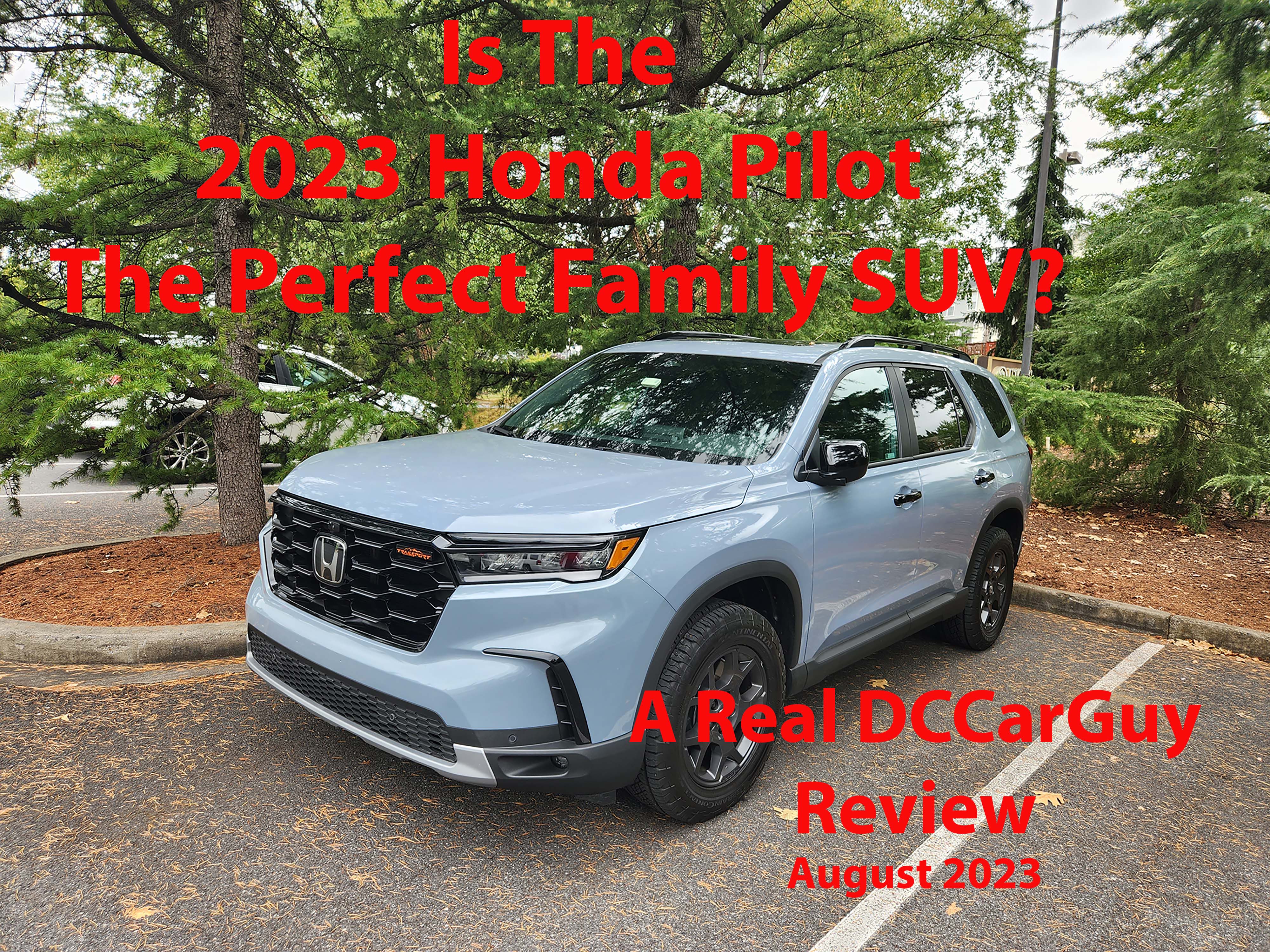
The 2023 Honda Pilot accelerates from 0 to 60 mph in approximately 6.9 to 7.2 seconds, depending on the specific trim and drivetrain configuration. While the Elite and Touring models offer the sharpest street performance, the off-road-focused TrailSport trim sits at the higher end of this range due to its specialized all-terrain tires and increased aerodynamic drag.
When Honda debuted the fourth-generation Pilot for the 2023 model year, it introduced a significant architectural shift. This wasn't just a cosmetic update; it represented a complete overhaul of the powertrain and chassis. As we look back from 2026, the 2023 Pilot remains a benchmark for the brand, as it was the first to implement the all-new 3.5-liter V6 engine that moved away from Honda's long-standing SOHC (Single Overhead Cam) design. To understand how this vehicle performs in a 0-60 mph sprint, one must look at the synergy between its new DOHC engine, the 10-speed automatic transmission, and the evolved i-VTM4 all-wheel-drive system.
The Engineering Behind the 2023 Pilot's Acceleration
The heart of the 2023 Honda Pilot is the J35Y8 engine. This 3.5-liter V6 produces 285 horsepower and 262 lb-ft of torque. While these numbers represent only a modest 5-horsepower increase over the previous generation, the way the power is delivered changed significantly. By moving to a Double Overhead Cam (DOHC) setup, Honda's engineers were able to simplify the cylinder head design and improve combustion efficiency.
In a 0-60 mph test, the lack of VTEC on the intake side—a hallmark of older Honda engines—is compensated for by a more sophisticated Variable Cylinder Management (VCM) system and a hydraulic lifter setup that provides a flatter torque curve. This means that while the 2023 Pilot doesn't have a sudden "burst" of power at high RPMs, it pulls more consistently from a standing start.
The 10-Speed Automatic Transmission Efficiency
A critical component in the 0-60 mph equation is the 10-speed automatic transmission, which replaced the aging 9-speed unit found in the third generation. The 10-speed is a proprietary Honda design, specifically tuned to manage the V6’s output.
The first two gear ratios are notably short, which helps the heavy SUV (weighing between 4,030 and 4,685 lbs) overcome inertia quickly. During a full-throttle 0-60 run, the transmission executes rapid-fire shifts, keeping the engine within its optimal power band (typically between 4,000 and 6,000 RPM). This transmission efficiency is what allows the Pilot to stay competitive with turbocharged rivals that often have more low-end torque but narrower power bands.
0-60 Performance by Trim Level
Not every 2023 Pilot performs identically. Weight, tire choice, and drivetrain friction all play roles in the final clocking.
LX, Sport, and EX-L (FWD vs. AWD)
The base LX and the mid-range Sport and EX-L trims are the lightest in the lineup. In Front-Wheel Drive (FWD) configuration, these models can struggle with traction during a hard launch, often resulting in minor wheel spin before the traction control intervenes. However, when equipped with the i-VTM4 All-Wheel Drive (AWD) system, these trims can achieve a 0-60 time of roughly 6.9 seconds. The AWD system directs up to 70% of torque to the rear wheels during a launch, virtually eliminating slip.
The TrailSport: A Performance Trade-off
The 2023 TrailSport was the most talked-about trim of the launch, but it is technically the slowest in a 0-60 sprint. Several factors contribute to its 7.2-second average:
- All-Terrain Tires: The Continental TerrainContact A/T tires provide excellent grip on dirt, but their high rolling resistance and softer tread blocks are less efficient on dry pavement than the 20-inch street tires found on the Touring trim.
- Suspension Lift: A 1-inch suspension lift increases the vehicle's frontal area, leading to more aerodynamic drag as the vehicle approaches 60 mph.
- Added Weight: Extra skid plates and a full-size spare tire add "unsprung" and "sprung" mass that the engine must overcome.
Touring and Elite
The Elite and Touring trims are the heaviest due to luxury features like the panoramic sunroof and acoustic glass, but they benefit from 20-inch wheels with low-profile street tires. These trims consistently clock in at the 7.0-second mark. They offer the most stable high-speed acceleration thanks to their optimized aerodynamics compared to the TrailSport.
Comparing the 2023 Pilot to Key Rivals
To understand if the Pilot’s 0-60 time is "good," we must compare it to the primary competitors in the mid-size three-row SUV segment from the same era.
| Vehicle Model | Engine Type | Horsepower | 0-60 MPH (Seconds) |
|---|---|---|---|
| 2023 Honda Pilot | 3.5L V6 | 285 hp | 6.9 – 7.2 |
| 2023 Kia Telluride | 3.8L V6 | 291 hp | 6.8 – 7.0 |
| 2023 Toyota Highlander | 2.4L Turbo I4 | 265 hp | 7.0 – 7.2 |
| 2023 Ford Explorer | 2.3L Turbo I4 | 300 hp | 6.0 – 6.2 |
| 2023 Mazda CX-90 | 3.3L Turbo I6 | 280 – 340 hp | 6.3 – 6.5 |
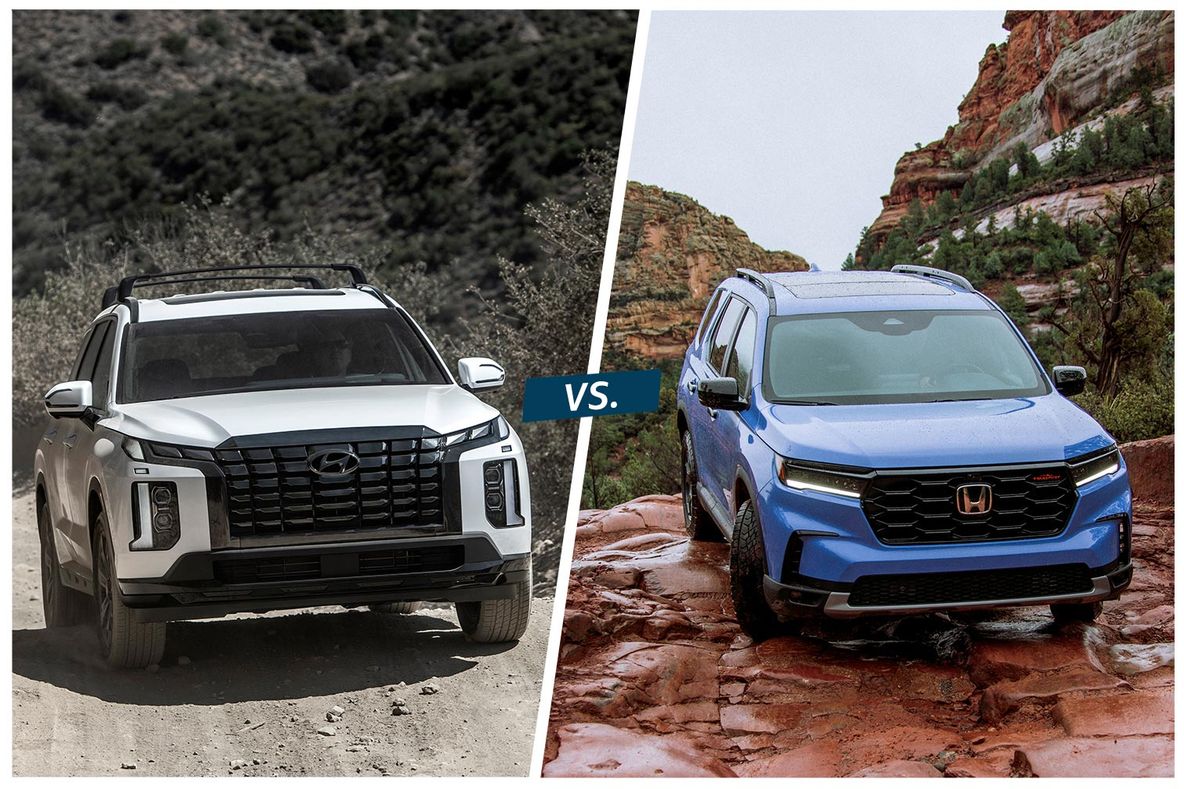
| 2023 Hyundai Palisade | 3.8L V6 | 291 hp | 6.8 – 7.0 |
Pilot vs. Kia Telluride / Hyundai Palisade
The South Korean twins (Telluride and Palisade) utilize a larger displacement 3.8-liter Atkinson-cycle V6. While their 0-60 times are nearly identical to the Pilot (around 6.9 seconds), the sensation of speed differs. The Pilot’s 10-speed transmission is generally more responsive than the 8-speed used by Kia and Hyundai, giving the Honda a slight advantage in "passing maneuvers" (30-50 mph and 50-70 mph) despite the nearly identical 0-60 stats.
Pilot vs. Toyota Highlander
In 2023, Toyota replaced the Highlander’s V6 with a 2.4-liter turbocharged four-cylinder. While the Highlander offers more torque (310 lb-ft), its 0-60 time is roughly equal to the Pilot's. The Pilot generally feels smoother during acceleration because it lacks the "turbo lag" occasionally felt in the Toyota, and it maintains the classic V6 exhaust note that many buyers in this segment prefer.
Pilot vs. Ford Explorer and Mazda CX-90
The Ford Explorer and Mazda CX-90 are the performance outliers in this segment. The Explorer’s base 2.3-liter EcoBoost engine is significantly faster than the Pilot, and the Mazda CX-90’s longitudinal inline-six engine provides a rear-biased AWD feel that the Pilot cannot match in a straight line. For buyers where 0-60 is a primary purchasing driver, the Explorer or CX-90 are technically superior, though they often sacrifice the interior packaging and second-row flexibility where the Pilot excels.
The Role of i-VTM4 AWD in Launch Dynamics
The 2023 Pilot uses the second generation of Honda’s Intelligent Variable Torque Management (i-VTM4) system. This is not a typical "slip-and-grip" AWD system. In a performance context, i-VTM4 is essential for achieving the sub-7-second 0-60 times.
When the driver mashes the accelerator, the system’s electromagnetic clutch packs in the rear differential engage proactively. The system can send up to 70% of the engine's torque to the rear axle and, more importantly, can distribute 100% of that rear torque to either the left or right wheel. During a 0-60 run, this ensures that every bit of the 262 lb-ft of torque is converted into forward motion rather than being wasted through front-wheel slip or electronic braking via the traction control system.
According to technical specifications from the Honda Newsroom, this generation of i-VTM4 has 40% more torque capacity and 30% faster response times than the system used in the 2022 model. This makes the 2023 Pilot feel much more "planted" during aggressive acceleration than its predecessors.
Real-World Factors Influencing Performance
While laboratory or track testing provides a baseline, several real-world variables will alter the 2023 Pilot’s 0-60 performance.
Fuel Quality
The 2023 Pilot is designed to run on 87-octane regular unleaded gasoline. Unlike some turbocharged rivals (like the Mazda CX-90), using 91 or 93-octane premium fuel in the Pilot does not significantly increase horsepower or improve 0-60 times. The engine’s compression ratio and timing maps are optimized for regular fuel, making it a cost-effective choice for families.
Payload and Occupancy
The Pilot is an eight-passenger vehicle. A 0-60 time of 6.9 seconds is achieved with only a driver and a minimal fuel load. Adding a full family of five and vacation luggage can add 800–1,000 lbs to the vehicle. In these scenarios, the 0-60 time can swell to 9.0 seconds or more. The 10-speed transmission works harder here, often holding lower gears longer to compensate for the added mass.
Elevation and Temperature
Naturally aspirated engines like the Pilot’s V6 suffer more at high altitudes than turbocharged engines. At elevations like those in Denver, Colorado, the thinner air can reduce engine output by as much as 15-20%. In these conditions, the Pilot's 0-60 time may drop to the 8.5-second range, whereas a turbocharged rival like the Ford Explorer would maintain more of its sea-level performance.
Is the 0-60 Time Relevant for the Pilot?
For the target audience of the 2023 Honda Pilot—primarily families and outdoor enthusiasts—the 0-60 time is less about "racing" and more about safety and merging.
A sub-7-second 0-60 time indicates that the vehicle has sufficient power to enter a fast-moving highway from a short on-ramp without causing following traffic to brake. It also suggests that the vehicle has the "reserve power" needed for overtaking slower-moving vehicles on two-lane roads. In the context of the 2023 redesign, Honda prioritized a smooth, linear power delivery over "peaky" performance, ensuring that the acceleration feels controlled and predictable for the driver.
Frequently Asked Questions
Which 2023 Honda Pilot trim is the fastest?
The Elite and Touring trims with AWD are generally the fastest, averaging a 0-60 mph time of 6.9 to 7.0 seconds. They combine the traction of the i-VTM4 system with 20-inch street-performance tires and better aerodynamics than the TrailSport.
Does the 2023 Pilot have a Sport Mode?
Yes, the 2023 Pilot features a Sport Mode among its selectable drive modes. When engaged, it alters the shift mapping of the 10-speed transmission to hold gears longer, increases throttle sensitivity, and adjusts the AWD system to be more rear-biased. While it doesn't increase the engine's peak horsepower, it makes the 0-60 sprint feel more immediate and responsive.
How does the 2023 Pilot 0-60 compare to the 2022 model?
The 2023 Pilot is roughly 0.1 to 0.2 seconds faster than the 2022 model. While the horsepower increase was minimal, the move from a 9-speed to a 10-speed transmission and the improvements to the AWD system allow the 2023 model to put its power down more effectively.
Is the 2023 Honda Pilot faster than the Toyota Highlander?
They are nearly identical in real-world testing. The 2023 Highlander's turbocharged four-cylinder offers more low-end torque, which can make it feel faster in initial "stop-light" pulls, but the Pilot's V6 and 10-speed transmission often catch up by the 60 mph mark. The choice between them usually comes down to a preference for engine "feel" (smooth V6 vs. punchy Turbo-4) rather than raw speed.
Does the TrailSport’s lift kit affect its speed?
Yes, the 1-inch suspension lift and the chunkier all-terrain tires on the TrailSport trim increase both weight and aerodynamic drag. This typically results in a 0-60 time that is about 0.2 to 0.3 seconds slower than the street-oriented Elite or Touring trims.
Final Recommendation
When evaluating the 2023 Honda Pilot based on its 0-60 mph performance, it is clear that Honda has struck a balance between utility and capability. If your priority is the quickest possible acceleration in a three-row SUV, the Ford Explorer or Mazda CX-90 are objectively faster choices. However, for the majority of buyers, the Pilot's 6.9 to 7.2-second range is the "sweet spot." It provides enough power for confident highway merging and towing up to 5,000 lbs, without the complexity or potential long-term maintenance concerns of a high-output turbocharged engine. For the best blend of speed and daily drivability, the Touring or Elite AWD trims remain the top recommendations.