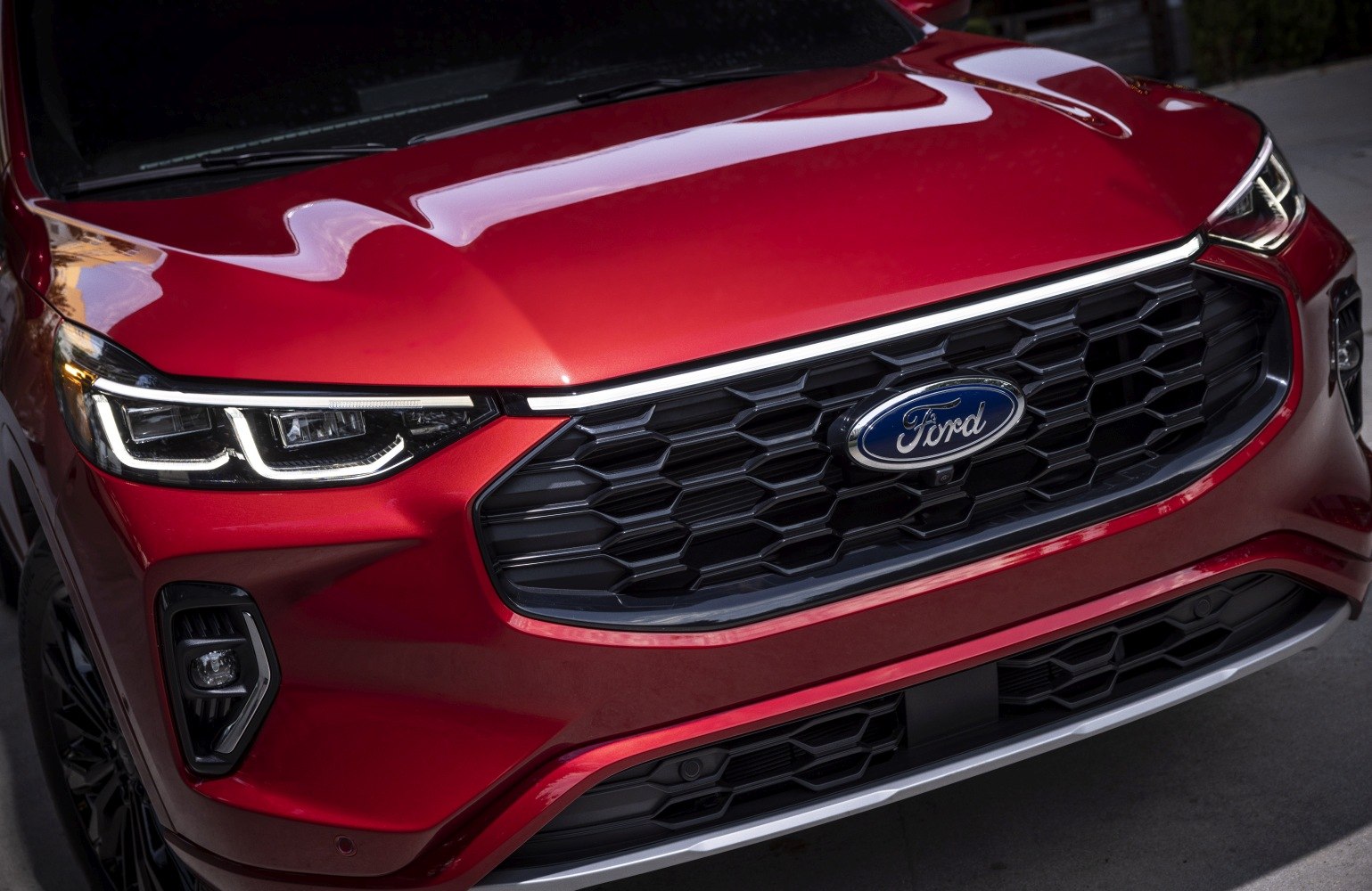
The 2023 Ford Escape specifications feature a significant mid-cycle refresh that introduced a streamlined trim structure, advanced Sync 4 infotainment technology, and a versatile range of four distinct powertrains. As of 2026, the 2023 model remains a benchmark for compact SUVs due to its 37-mile all-electric PHEV range, a maximum towing capacity of 3,500 pounds, and its sophisticated driver-assistance suite.
The 2023 model year represented a pivotal moment for the Ford Escape. Moving away from the traditional S, SE, and Titanium naming conventions, Ford restructured the lineup into Base, Active, ST-Line, Platinum, and PHEV variants. This shift was more than aesthetic; it integrated a new electrical architecture that allowed for larger screens and more robust over-the-air (OTA) update capabilities. Understanding these technical specifications is essential for evaluating the vehicle's performance, efficiency, and long-term utility in the competitive compact crossover segment.
Powertrain Specifications and Engineering
The 2023 Ford Escape offers one of the most diverse engine lineups in its class, catering to different priorities ranging from raw torque to maximum fuel economy. Each engine is paired with a specific transmission and drivetrain configuration designed to optimize its inherent strengths.
1.5L EcoBoost® I-3 Engine
The entry-level engine for the Base, Active, and ST-Line trims is the 1.5L EcoBoost Three-Cylinder. Despite its compact size, this engine utilizes turbocharging and direct injection to produce 180 horsepower and 199 lb-ft of torque.
A notable technical feature of the 1.5L engine is its cylinder deactivation technology. Under light loads, the engine can automatically shut down one cylinder to improve fuel efficiency, transitioning back to three cylinders in milliseconds when acceleration is required. This engine is mated to an 8-speed automatic transmission. While it is available in both Front-Wheel Drive (FWD) and All-Wheel Drive (AWD), the AWD system features a "disconnect" function that allows the rear driveline to be completely disengaged when not needed, reducing parasitic drag.
2.0L EcoBoost® I-4 Engine
Available on the ST-Line Select, ST-Line Elite, and Platinum trims, the 2.0L EcoBoost is the performance-oriented choice. It generates a robust 250 horsepower and 280 lb-ft of torque when using premium fuel. This engine is exclusively paired with an Intelligent AWD system and the 8-speed automatic transmission.
The 2.0L variant is the only choice for drivers requiring the maximum towing capacity of 3,500 lbs (when equipped with the Class II Trailer Tow Package). Its twin-scroll turbocharger reduces lag, providing a more immediate throttle response that is particularly noticeable during highway merging and overtaking maneuvers.
2.5L I-4 Hybrid (HEV) and Plug-in Hybrid (PHEV)
Ford’s fourth-generation hybrid system utilizes a 2.5L Atkinson-cycle four-cylinder engine combined with an electronic continuously variable transmission (eCVT).
- Hybrid (HEV): This system produces a combined 192 horsepower. It uses a liquid-cooled lithium-ion battery pack mounted outside the passenger cabin under the floor, which ensures that cargo space is not compromised compared to gas models. It is available in both FWD and AWD.
- Plug-in Hybrid (PHEV): The PHEV variant increases the combined output to 210 horsepower. It features a larger 14.4 kWh battery, allowing for an EPA-estimated 37 miles of electric-only driving. This makes it an ideal specification for commuters who can charge at home or work, effectively operating as an EV for daily tasks while retaining the 2.5L engine for long-distance travel. The PHEV is strictly FWD.
Performance and Dimensions Table
The following table details the primary mechanical and physical specifications across the 2023 Ford Escape lineup.
| Specification | 1.5L EcoBoost | 2.0L EcoBoost | 2.5L Hybrid (HEV) | 2.5L PHEV |
|---|---|---|---|---|
| Horsepower | 180 hp | 250 hp | 192 hp (Total) | 210 hp (Total) |
| Torque | 199 lb-ft | 280 lb-ft | 155 lb-ft (Engine) | 155 lb-ft (Engine) |
| Transmission | 8-Speed Auto | 8-Speed Auto | eCVT | eCVT |
| Drivetrain | FWD / AWD | AWD Only | FWD / AWD | FWD Only |
| Max Towing | 2,000 lbs | 3,500 lbs | 1,500 lbs | 1,500 lbs |
| EPA Est. MPG (Comb) | 30 (FWD) | 26 | 39 (AWD) | 101 MPGe / 40 Gas |
| Wheelbase | 106.7 inches | 106.7 inches | 106.7 inches | 106.7 inches |
| Length | 180.1 inches | 181.2 inches | 180.1 inches | 180.1 inches |
Interior Technology and Infotainment Architecture
One of the most significant upgrades in the 2023 Ford Escape was the introduction of the Sync 4 system. This replaced the aging Sync 3 hardware and brought the Escape's cabin tech into the modern era.
The Sync 4 Experience
Sync 4 offers twice the computing power of its predecessor. The standard screen size on lower trims is 8 inches, but the standout feature is the available 13.2-inch capacitive touchscreen. This larger display utilizes a horizontal orientation that allows for multi-tasking, such as displaying navigation alongside audio controls.
The system supports wireless Apple CarPlay and Android Auto, eliminating the need for USB cables for smartphone mirroring. Furthermore, Sync 4 is designed for Ford Power-Up OTA updates. In the years since 2023, these updates have allowed Ford to refine software, fix bugs, and even add new features to the vehicle remotely, ensuring the tech remains current as of 2026.
Digital Instrument Clusters
The 2023 Escape also modernized the driver’s view. While base models retain a 4.2-inch or 8-inch partial digital display, higher trims like the Platinum and ST-Line Elite feature a fully digital 12.3-inch instrument cluster. This display is highly customizable, allowing drivers to prioritize navigation maps, hybrid energy flow, or traditional gauges.
Interior Dimensions and Comfort
Despite its compact exterior footprint, the 2023 Escape is engineered for interior flexibility. A key spec is the sliding second-row seats, which can move nearly 6 inches fore and aft.
- Max Legroom (Front): 42.4 inches.
- Max Legroom (Rear): 40.7 inches (Gas models) / 38.9 inches (Hybrid/PHEV).
- Cargo Volume: 37.5 cubic feet behind the second row (34.4 for Hybrids). With seats folded, this expands to 65.4 cubic feet (60.8 for Hybrids).
Safety and Driver Assistance: Ford Co-Pilot360™
Every 2023 Ford Escape comes standard with the Ford Co-Pilot360 suite of safety technologies. These systems rely on a network of radar and camera sensors to monitor the vehicle's surroundings.
- Pre-Collision Assist with Automatic Emergency Braking (AEB): This system scans the road ahead for vehicles or pedestrians. If a collision is imminent and the driver does not react, the system can automatically apply the brakes.
- Blind Spot Information System (BLIS) with Cross-Traffic Alert: BLIS monitors the vehicle's blind spots and provides a visual warning in the side mirrors. Cross-Traffic Alert is particularly useful when backing out of parking spaces, detecting vehicles approaching from the sides.
- Lane-Keeping System: This includes Lane-Keeping Aid, Lane-Keeping Alert, and Driver Alert. It can provide steering torque to help nudge the vehicle back into the center of the lane if it begins to drift.
- Adaptive Cruise Control with Stop-and-Go: Available on higher trims or via packages, this allows the Escape to maintain a set distance from the car in front, even in heavy traffic, by coming to a complete stop and resuming automatically.
In the 2023 refresh, Ford also introduced Intersection Assist, which can detect oncoming traffic when the driver is attempting to make a left turn and apply the brakes if a collision risk is detected.
Trim Level Specifics and Aesthetic Packages
The 2023 model year introduced the "ST-Line" as a core part of the trim hierarchy, rather than just an appearance package. This was designed to offer a sportier look without necessarily requiring the highest-output engine.
- Base & Active: Focused on value and comfort. The Active trim adds features like a power liftgate, dual-zone climate control, and an 8-way power driver's seat.
- ST-Line Series: Includes the standard ST-Line, ST-Line Select, and ST-Line Elite. These models feature a unique black mesh grille, a rear "skid plate," and a large single-wing rear spoiler. Inside, they are distinguished by red stitching on the seats, steering wheel, and door panels. The ST-Line Select and Elite trims are the primary gateways to the 2.0L EcoBoost engine and AWD.
- Platinum: The luxury-oriented trim. It includes the 2.0L engine as standard, the 13.2-inch touchscreen, a 360-degree camera system, and premium synthetic leather upholstery.
- PHEV: This stands as its own standalone trim, roughly equivalent to the features found in the high-end ST-Line or Platinum models but focused entirely on the plug-in hybrid powertrain.
Chassis and Handling Dynamics
The 2023 Ford Escape utilizes a MacPherson strut front suspension and a multi-link independent rear suspension. The tuning is generally biased toward comfort and daily drivability, though the ST-Line trims feature slightly "sport-tuned" suspension components to provide a firmer feel and flatter cornering.
Steering is handled by an Electric Power-Assisted Steering (EPAS) system. This system is variable, meaning it provides more assistance at low speeds for easier parking and becomes firmer at highway speeds to provide better directional stability. The Escape also features four selectable drive modes: Normal, Eco, Sport, and Slippery. These modes adjust the throttle mapping, transmission shift points, and traction control settings to suit the driving environment.
Towing and Utility Requirements
To achieve the maximum 3,500-lb towing capacity, the 2023 Escape must be equipped with the 2.0L EcoBoost engine and the factory-installed Class II Trailer Tow Package. Without this package, or when equipped with the 1.5L or Hybrid engines, towing capacities are significantly lower.
The Trailer Tow Package includes a hitch receiver and a 4-pin wiring harness. It also integrates Trailer Sway Control into the vehicle's electronic stability control system. This tech can detect if a trailer is beginning to sway and will apply individual brakes or reduce engine torque to help bring the trailer back under control.
Frequently Asked Questions
What is the real-world electric range of the 2023 Ford Escape PHEV?
The 2023 Ford Escape PHEV is EPA-rated for 37 miles of all-electric range on a full charge. In real-world conditions, this can vary based on temperature and driving style. Cold weather can reduce battery efficiency, while urban driving with frequent regenerative braking can often help drivers reach or slightly exceed the 37-mile mark. Once the battery is depleted, the vehicle operates as a traditional hybrid, achieving roughly 40 MPG combined.
Does the 2023 Ford Escape have a spare tire?
Most 1.5L and 2.0L gas-only models of the 2023 Ford Escape come with a mini-spare tire located under the cargo floor. However, the Hybrid (HEV) and Plug-in Hybrid (PHEV) models often replace the spare tire with a Tire Mobility Kit (a sealant and compressor) to save weight and accommodate the high-voltage battery components.
What are the main differences between the 13.2-inch and 8-inch screens?
The 13.2-inch screen is the primary interface for the Sync 4 system in higher trims. Beyond just being larger, it integrates the climate controls into the bottom of the touchscreen, whereas the 8-inch screen retains physical knobs and buttons for the HVAC system. The 13.2-inch unit also supports "split-screen" functionality, allowing for more simultaneous data display.
Can the 2023 Ford Escape be flat-towed behind an RV?
Only the 2.5L Hybrid (HEV) and 2.5L Plug-in Hybrid (PHEV) versions of the 2023 Ford Escape are approved for four-wheel-down "flat" towing. The gas-only models with the 8-speed automatic transmission are not designed for flat towing and require a trailer or a tow dolly (for FWD models) to avoid damaging the transmission.
How long does it take to charge the 2023 Ford Escape PHEV?
Using a standard 120V Level 1 household outlet, a full charge for the 14.4 kWh battery takes approximately 10 to 11 hours. If you use a 240V Level 2 charger, the charging time is significantly reduced to roughly 3.5 hours.
Final Recommendation
When evaluating the 2023 Ford Escape specs in detail, the optimal choice depends heavily on your daily mileage and towing needs. For those who prioritize fuel economy and have access to home charging, the PHEV remains the standout specification, offering a bridge to electrification without range anxiety. However, for those requiring All-Wheel Drive and maximum utility, the 2.0L EcoBoost with the Class II Tow Package provides a level of performance and capability that is rare in the compact SUV segment. Before purchasing, verify the specific infotainment screen size and safety packages, as these were frequently bundled into "Equipment Groups" that vary between individual used listings as of 2026.