The 2016 Toyota RAV4 is widely regarded as a benchmark for compact SUV reliability, yet it is not without specific mechanical and electrical faults. The most significant issues include a major safety recall regarding engine compartment fires caused by improper battery installation, intermittent transmission hesitation, and frequent glitches within the Entune infotainment system. While these problems exist, most are addressable through manufacturer-issued recalls and routine preventative maintenance.
Understanding the 2016 Toyota RAV4’s Legacy in 2026
As of 2026, the 2016 Toyota RAV4 has reached a decade of service on the road. This model year was a pivotal one for the fourth-generation (XA40) RAV4, introducing a mid-cycle refresh that brought updated styling, improved cabin materials, and the introduction of the first-ever RAV4 Hybrid. For owners and used-market buyers, the vehicle remains a top choice due to its high resale value and Toyota’s reputation for longevity.
However, a decade of real-world driving data has highlighted specific areas where the 2016 model falls short. Understanding these issues is essential for maintaining vehicle safety and performance, especially as many of these units now exceed 120,000 to 150,000 miles.
The Primary Safety Concern: Battery Fire Risk
The most critical issue associated with the 2016 RAV4 involves the 12-volt battery. This problem was significant enough to trigger a massive recall by Toyota, affecting approximately 1.9 million vehicles globally.
The Source of the Problem
The issue stems from the design of the battery hold-down bracket and the dimensions of the replacement batteries used during maintenance. If a replacement battery has a smaller top surface area than the original equipment manufacturer (OEM) specifications, the hold-down clamp may not secure it properly.
During forceful turns or sudden maneuvers, a loose battery can shift within the engine compartment. This movement allows the positive battery terminal to come into contact with the hold-down bracket, leading to a direct electrical short circuit. The resulting heat buildup is sufficient to ignite the surrounding plastic components, potentially causing a total engine bay fire.
Identification and Resolution
Owners should verify if their vehicle has undergone the Recall 23V-734 (or regional equivalent). The fix involves technicians replacing the battery hold-down bracket, the battery tray, and the positive terminal cover with improved versions designed to accommodate a wider variety of battery sizes safely. If you are purchasing a used 2016 RAV4 in 2026, checking the National Highway Traffic Safety Administration (NHTSA) database or the Toyota Recall Lookup tool is the first and most important step.
Transmission Performance and "Shudder" Issues
The 2016 RAV4 utilizes the U660E (for V6 models in other markets, though the US 2016 RAV4 primarily used the U760E 6-speed automatic). While generally robust, some owners report a phenomenon known as "transmission shudder" or "hunting for gears."
Transmission Shudder at Low Speeds
This issue typically occurs between 25 and 45 mph under light acceleration. Drivers describe a vibration that feels similar to driving over a rumble strip. The root cause is often the torque converter clutch failing to engage smoothly.
In many cases, Toyota addressed this through a Software Update (TSB) for the Engine Control Unit (ECU) and Transmission Control Module (TCM). The update recalibrates the shift points and the torque converter lock-up schedule. If the software update does not resolve the vibration, the torque converter itself may require replacement, which is a significant repair cost.
Acceleration Hesitation
Some drivers experience a momentary delay when accelerating from a rolling stop. This is often an electronic throttle control issue rather than a mechanical failure of the gears. Keeping the throttle body clean and ensuring the mass airflow sensor (MAF) is functioning correctly can mitigate this "laggy" feeling.
Interior Technology and the Entune System
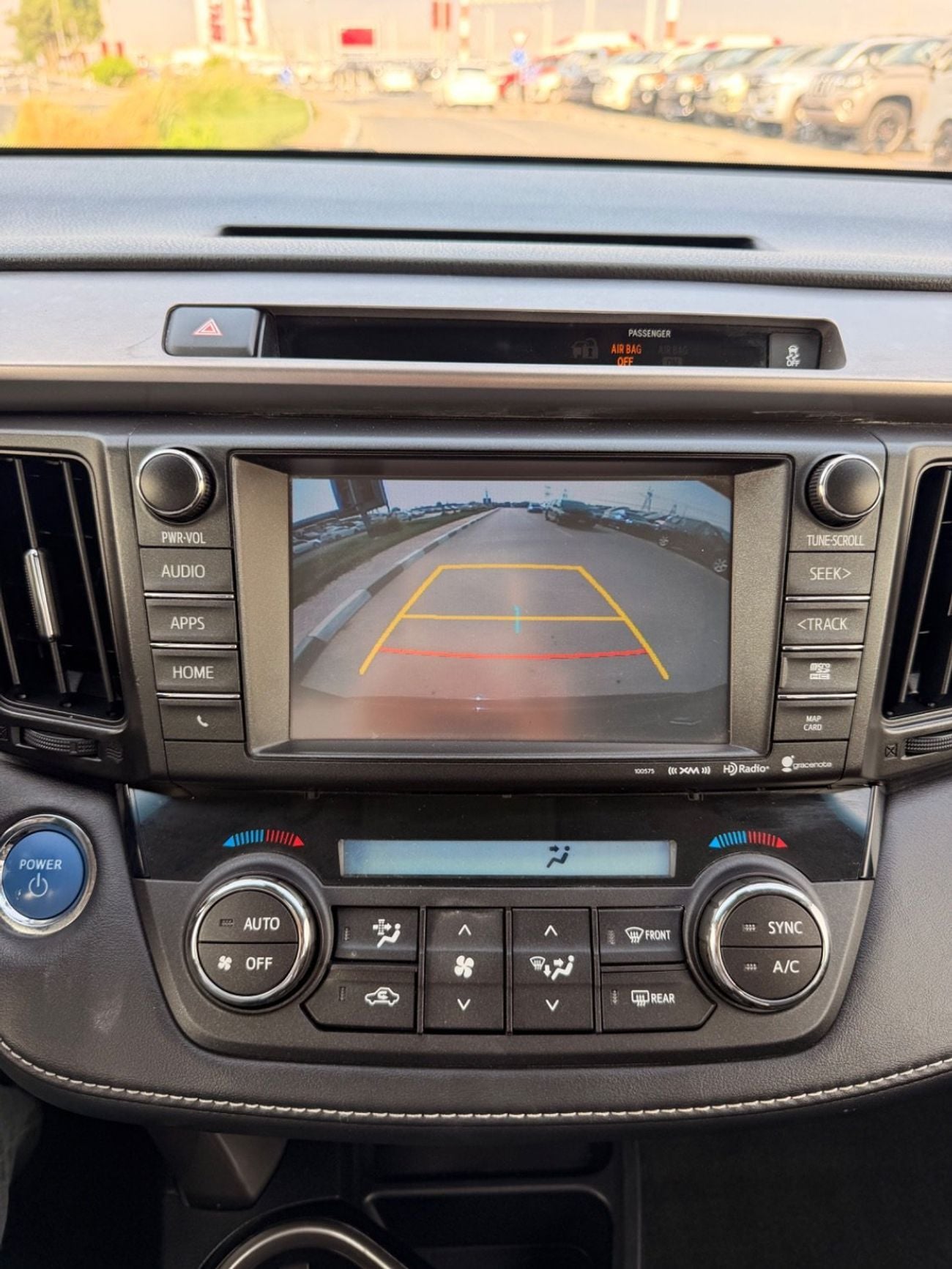
The 2016 model year featured the Entune infotainment system. By 2026 standards, this system feels dated, but its primary "issues" are related to software stability and hardware responsiveness rather than just age.
Common Entune Glitches
- System Rebooting: Owners frequently report the screen going black and the system restarting itself while driving. This is often caused by a corrupt Bluetooth handshake with modern smartphones or outdated navigation maps.
- Touchscreen Unresponsiveness: Over time, the resistive touchscreen can develop "dead zones" where touch inputs are ignored.
- Navigation Inaccuracy: Without frequent (and often paid) SD card updates, the onboard navigation becomes obsolete.
For many owners, the most effective "repair" for these issues in 2026 is replacing the factory head unit with an aftermarket system that supports Apple CarPlay or Android Auto. This bypasses the aging Entune hardware entirely while modernizing the vehicle's cabin technology.
Suspension and Drivetrain Component Wear
As these vehicles age into their second decade, mechanical wear on the suspension and all-wheel-drive (AWD) systems becomes a more prominent concern for owners.
Rear Differential and Transfer Case Leaks
On AWD models, the seals on the rear differential and the transfer case can begin to weep oil. If left unaddressed, the lack of lubrication will lead to gear whine and eventual mechanical failure. In 2026, any 2016 RAV4 should have its differential fluid and transfer case oil inspected for clarity and volume during every oil change.
Lower Control Arm Bushings
The rubber bushings in the front lower control arms are prone to cracking after ten years of exposure to the elements. This leads to a "clunking" sound when driving over bumps and can cause uneven tire wear. Replacing the entire control arm is often more cost-effective than attempting to press out the old bushings.
2016 RAV4 Issues Comparison Table
The following table summarizes the most common complaints and their typical resolution paths for the 2016 model year.
| Component | Issue Description | Severity | Typical Solution |
|---|---|---|---|
| Battery/Electrical | Fire risk due to loose battery hold-down | High | Manufacturer Recall (Free) |
| Transmission | Shuddering vibration (25-45 mph) | Medium | Software Update or Torque Converter |
| Infotainment | Screen freezing and constant reboots | Low | Software Update or Aftermarket Head Unit |
| Brakes | Premature rotor warping / squealing | Low | High-quality ceramic pads and rotors |
| Exterior | Wind noise around side mirrors | Low | Weatherstripping reinforcement |
| Power Liftgate | Failure to open/close or noisy operation | Medium | Strut replacement or motor recalibration |
| Interior | Driver seat cushion "sinking" | Low | Foam replacement or upholstery repair |
The RAV4 Hybrid: Specific 2026 Concerns
The 2016 RAV4 Hybrid was a breakthrough, but in 2026, the primary concern for these units is the health of the Nickel-Metal Hydride (NiMH) hybrid battery pack.
Battery Degradation
Most hybrid batteries are designed to last 10 to 15 years or roughly 150,000 miles. Many 2016 units are currently entering the "danger zone" for battery failure. Symptoms of a failing hybrid battery include:
- Noticeable drop in fuel economy (MPG).
- The internal combustion engine (ICE) running more frequently than usual.
- Rapid fluctuations in the battery charge level on the dashboard display.
The "Big Cable" Corrosion Issue
While more common in the newer 2019+ models, 2016 RAV4 Hybrids in salt-belt states should be inspected for corrosion on the high-voltage cable that connects to the rear electric motor. Excessive salt and moisture can corrode the connector, leading to a "Hybrid System Malfunction" warning.
Steering and Braking Dynamics
Some owners have noted that the steering feel in the 2016 RAV4 can be overly light or "numb," which is a characteristic of the Electric Power Steering (EPS) tuning rather than a defect. However, specific mechanical failures can occur.
Steering Column Clunk
A common Toyota issue of this era is a worn steering column intermediate shaft. This manifests as a clicking or clunking sensation in the steering wheel when turning at low speeds (such as when parking). Replacing the intermediate shaft is the standard fix and restores the smooth steering feel.
Brake Rotor Warping
The factory rotors on the 2016 RAV4 are somewhat prone to heat-induced warping. This causes the steering wheel to shake during high-speed braking. When the time comes for a brake job, moving to high-quality vented aftermarket rotors usually prevents this issue from recurring.
Expert Maintenance Recommendations for 2026
To keep a 2016 RAV4 running reliably for another five to ten years, owners should move beyond the "standard" oil change routine.
- Transmission Fluid Exchange: Despite Toyota's "lifetime fluid" claim, the 6-speed automatic benefits greatly from a drain-and-fill every 60,000 miles. By 10 years of age, this is a critical preventative measure to avoid the aforementioned shudder issues.
- Coolant System Service: The pink Super Long Life Coolant (SLLC) is rated for 100,000 miles. In 2026, almost every 2016 RAV4 is due for a coolant flush to protect the water pump and radiator.
- Liftgate Lubrication: The power liftgate struts are a known failure point. Periodically cleaning the struts and applying a light silicone lubricant can prevent the motor from burning out due to excessive resistance.
- Sunroof Drain Cleaning: If your RAV4 has a sunroof, the drain tubes can become clogged with debris. This leads to water leaking into the headliner or the floorboards. Using compressed air to blow out these drains once a year can prevent expensive interior water damage.
Frequently Asked Questions
Is the 2016 Toyota RAV4 a reliable used car to buy in 2026?
Yes, it remains one of the most reliable vehicles in its class. While the battery recall and transmission shudder are notable, they are well-documented and manageable. Compared to competitors from the same era that utilize CVT transmissions or small-displacement turbocharged engines, the 2016 RAV4's naturally aspirated 2.5L engine is exceptionally durable.
How much does it cost to fix the 2016 RAV4 transmission shudder?
If the issue is resolved with a software update, the cost is typically one hour of labor at a dealership (approx. $150–$200). If the torque converter must be replaced, costs can range from $1,500 to $2,500 depending on labor rates and whether OEM parts are used.
Why does my 2016 RAV4 have so much wind noise?
This is a common aerodynamic complaint. The noise usually originates from the side mirrors or the weatherstripping around the front doors. Some owners have successfully reduced this noise by adding small foam inserts into the weatherstripping or ensuring the plastic trim pieces around the mirror base are tightly clipped in.
Has the battery fire issue been completely fixed?
The issue is "fixed" as long as the recall work has been performed. The recall ensures that even if an owner installs an incorrect battery size in the future, the new hardware will prevent it from short-circuiting. Always verify the VIN on the NHTSA website to confirm the work was completed on a specific vehicle.
What is the life expectancy of a 2016 RAV4?
With proper maintenance, these vehicles frequently reach 250,000 to 300,000 miles. The powertrain is very robust. In 2026, the primary "end-of-life" factors for these cars are typically severe frame rust (in northern climates) or the cost of a hybrid battery replacement exceeding the vehicle's market value.
Final Practical Recommendation
If you currently own or are looking to purchase a 2016 Toyota RAV4 in 2026, your first priority is safety verification. Ensure the battery hold-down recall has been performed to eliminate the risk of an engine fire. Following this, perform a "baseline" service that includes changing the transmission fluid, engine coolant, and inspecting the AWD drivetrain seals.
Despite the glitches in the Entune system and minor suspension wear, the 2016 RAV4 remains a "buy" recommendation for those seeking a practical, high-utility vehicle that prioritizes mechanical simplicity over high-tech complexity. By addressing the known issues early, you can maximize the lifespan of what is arguably one of the most dependable SUVs Toyota has ever produced.