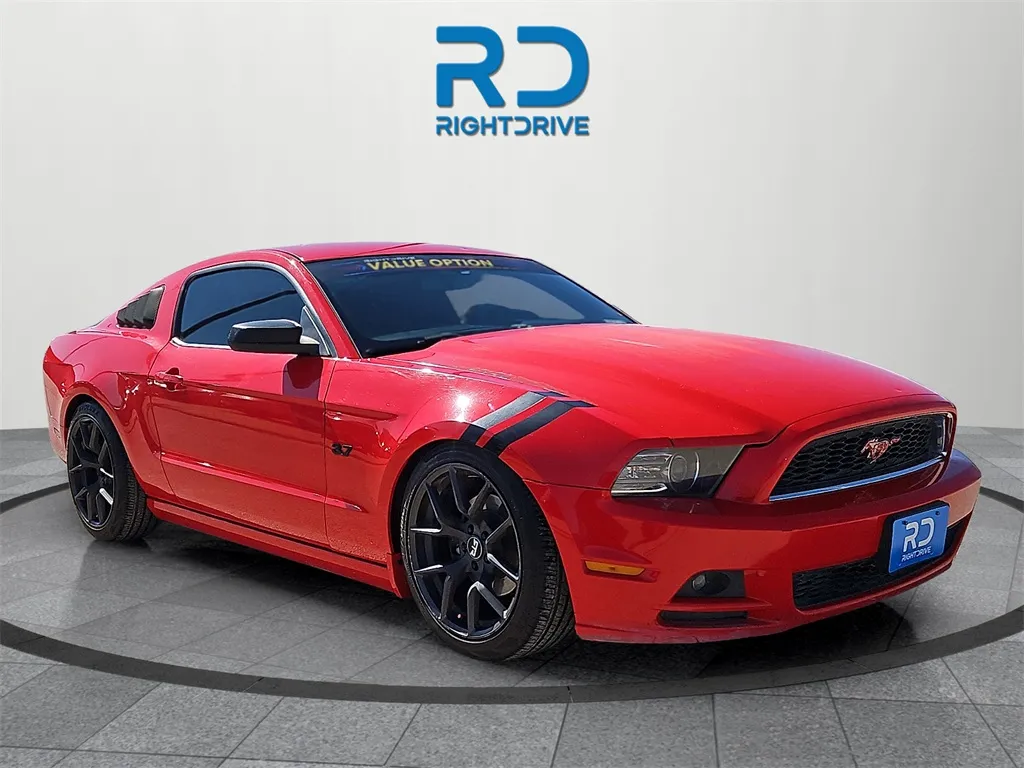
The 2014 Ford Mustang V6 achieves a 0 to 60 mph time of approximately 5.5 to 5.8 seconds when equipped with a manual transmission and the performance axle ratio, while automatic models typically record times between 5.9 and 6.2 seconds, depending on track conditions, driver technique, and factory equipment options.
Introduction to the 2014 Mustang V6
The 2014 model year represents the final iteration of the fifth-generation (S197) Ford Mustang before the introduction of the completely redesigned sixth-generation platform for 2015. While automotive enthusiasts often focus heavily on the GT's 5.0-liter Coyote V8 or the supercharged Shelby GT500, the base V6 model carved out a significant market niche. It delivered an exceptional blend of everyday usability, respectable fuel economy, and surprisingly robust straight-line acceleration that matched or exceeded historical V8 Mustang performance benchmarks from previous decades.
Understanding the true capability of this vehicle requires examining the mechanical architecture under the hood, the impact of drivetrain configurations, and how various factory performance packages alter its dynamic profile. Evaluating the 2014 Mustang V6 0-60 performance specs demands looking beyond simple catalog figures to understand the real-world conditions, gearing options, and weight distributions that dictate how power translates to the pavement.
Engine Architecture and Powertrain Specifications
At the heart of the 2014 Ford Mustang V6 is the 3.7-liter "Cyclone" Duratec V6 engine. This modern powerplant departed significantly from the older 4.0-liter Cologne V6 found in 2005 through 2010 models, introducing advanced engineering concepts designed to maximize volumetric efficiency and high-revving power delivery.
The engine features an aluminum block and aluminum cylinder heads, dual overhead camshafts (DOHC), and independent variable cam timing (Ti-VCT) on both the intake and exhaust valves. This variable timing optimization allows the engine to maintain strong low-end torque while breathing efficiently at higher rpm ranges.
- Displacement: 3.7 liters (227 cubic inches)
- Horsepower: 305 horsepower at 6,500 rpm
- Torque: 280 lb-ft at 4,250 rpm
- Compression Ratio: 10.5:1
- Redline: 7,000 rpm
Power is sent to the rear wheels through either a Getrag MT82 six-speed manual transmission or a Ford 6R80 six-speed automatic transmission. The inclusion of a six-speed transmission for both options marked a major turning point for the base Mustang, allowing the engine to stay within its optimal power band during aggressive acceleration runs and improving highway cruising efficiency.
Detailed Breakdown of 0-60 MPH Times and Quarter-Mile Performance
When evaluating acceleration metrics, vehicle configuration plays a definitive role. The 305 horsepower rating is impressive for a base-level sports car engine, but getting that power to the ground efficiently depends heavily on final drive ratios and transmission choices.
Testing data from major automotive publications during the car's initial release and subsequent years provides a reliable baseline for performance expectations.
| Transmission Type | Axle Ratio | 0-60 MPH Time | Quarter-Mile Time | Trap Speed |
|---|---|---|---|---|
| 6-Speed Manual | 3.31:1 (Performance Package) | 5.5 seconds | 14.2 seconds | 99 mph |
| 6-Speed Manual | 2.73:1 (Standard) | 5.8 seconds | 14.5 seconds | 97 mph |
| 6-Speed Automatic | 3.15:1 (Optional) | 5.9 seconds | 14.6 seconds | 97 mph |
| 6-Speed Automatic | 2.73:1 (Standard) | 6.2 seconds | 14.9 seconds | 95 mph |
The data clearly demonstrates the significant impact of the rear axle ratio. Models equipped with the optional Performance Package benefited from a shorter 3.31:1 final drive ratio paired with a limited-slip differential. This mechanical advantage multiplied torque multiplication in the lower gears, allowing the car to launch harder and reach 60 mph significantly faster than standard models equipped with the taller 2.73:1 fuel-economy-focused gears.
The Role of the V6 Performance Package
For buyers seeking maximum dynamic capability from the six-cylinder platform, Ford offered the V6 Performance Package (often referred to by enthusiasts as the Club Racer or V6PP option). This package borrowed heavily from the suspension and braking hardware of the GT model, transforming the character of the base Mustang.
The package included:
- Unique 19-inch wheels wrapped in Pirelli summer performance tires.
- Stiffened front and rear stabilizer bars.
- Unique front and rear spring and damper tuning.
- A 3.31:1 rear axle ratio with a limited-slip differential.
- Shelby GT500 rear lower control arms and a unique strut tower brace.
- Calibrated Electronic Stability Control (ESC) with a dedicated "Sport Mode."
These hardware upgrades directly influenced the 0-60 mph times by mitigating wheel spin during hard launches. The limited-slip differential ensured that power was distributed evenly to both rear tires rather than letting the inside wheel break loose on uneven pavement. Furthermore, the stickier summer compounds provided superior mechanical grip compared to the standard all-season touring tires.
Weight Distribution, Aerodynamics, and Power-to-Weight Ratio
One of the most frequently overlooked advantages of the V6 Mustang compared to its V8 GT counterpart is its front-end weight distribution. The 3.7-liter DOHC V6 is physically lighter than the 5.0-liter Coyote V8. This reduction in mass over the front axle changes the car's handling dynamics and weight transfer characteristics.
- Curb Weight: Approximately 3,500 to 3,550 pounds, depending on options and transmission.
- Weight Distribution: Roughly 55% front / 45% rear (compared to roughly 57% front for the GT).
During a 0-60 mph acceleration run, weight transfer plays a critical role. As the rear tires squat under acceleration, the lighter front end allows for a slightly more neutral balance. While the V8 clearly dominates in raw horsepower (420 hp versus 305 hp), the V6 punches well above its weight class, delivering a power-to-weight ratio of roughly 11.5 pounds per horsepower. This made the 2014 V6 quicker off the line than many classic muscle cars of the 1960s and 1970s while offering modern reliability, fuel efficiency, and emissions compliance.
Real-World Driving Dynamics and Launch Technique
Achieving the published 5.5 to 5.8-second 0-60 mph times in a manual 2014 Mustang V6 requires proper driving technique. The MT82 manual transmission features relatively tall first and second gears, meaning clutch engagement and engine speed management are vital to preventing bogging down off the line or inducing excessive wheel spin.
Drivers attempting to replicate performance numbers must consider several physical factors:
- Tire Temperature and Compound: Factory all-season tires harden in cooler temperatures and easily lose traction, whereas proper summer performance tires hook up significantly better.
- Launch RPM: Dropping the clutch at too low of an rpm bogs the engine down due to the 3.7L's torque curve peaking at 4,250 rpm. Launching between 2,500 and 3,000 rpm yields the best momentum without excessive clutch slip.
- Shift Points: To maximize acceleration, shifts should be executed near the 7,000 rpm redline, where the engine maintains strong breathing capability before dropping back into the power band in the next gear.
Common Modifications to Improve Performance
Because the 2014 Mustang V6 has been a staple of the enthusiast community for over a decade, a vast aftermarket ecosystem exists for owners seeking to improve its acceleration and handling specs. Common modifications yield measurable gains over stock factory performance.
- Cold Air Intake and ECU Tuning: Upgrading the intake tract and recalibrating the engine computer can unlock an additional 15 to 25 horsepower, optimizing air-fuel ratios and ignition timing.
- Axle-Back or Cat-Back Exhaust Systems: While largely changing the acoustic profile (giving the V6 a deeper, more aggressive tone reminiscent of sports cars rather than economy sedans), free-flowing exhausts slightly reduce backpressure.
- Aftermarket Gears: Owners of base models with 2.73 gears frequently swap to 3.31, 3.55, or 3.73 ring and pinion gears, drastically transforming the acceleration feel and dropping 0-60 times, though at the expense of highway fuel economy.
- Suspension Upgrades: Aftermarket lowering springs, adjustable dampers, and panhard bars help plant the rear tires more effectively during hard launches.
Frequently Asked Questions
Is the 2014 Mustang V6 faster than older V8 Mustangs?
Yes. The 2014 Mustang V6, with its 305-horsepower 3.7L engine, easily outperforms stock V8 Mustangs from the late 1990s and early 2000s. For comparison, the 1999-2004 Mustang GT (powered by a 4.6L modular V8 producing 260 hp) required roughly 6.0 to 6.3 seconds to reach 60 mph, making the 2014 V6 demonstrably faster in a straight line.
How does the V6 fuel economy compare to its performance?
Despite its strong acceleration capabilities, the 2014 V6 is remarkably efficient for a rear-wheel-drive sports coupe. EPA ratings for the manual transmission sit at 19 mpg city and 29 mpg highway, while automatic models achieve 19 mpg city and 31 mpg highway, making it a practical daily driver.
Can you add a turbocharger or supercharger to the 2014 Mustang V6?
Yes, aftermarket forced induction kits, including centrifugal superchargers and turbocharger systems, are available. However, builders must monitor internal engine limits. While the stock block and connecting rods handle moderate boost (around 400-450 whp) reliably, pushing past those thresholds generally requires forged internal engine components.
What is the top speed of a 2014 Mustang V6?
The factory top speed of the 2014 Mustang V6 is electronically limited to approximately 121 mph (or 145 mph for models equipped with the V6 Performance Package, which featured a higher speed limiter matching the GT tire ratings).
How can I tell if my 2014 Mustang V6 has the Performance Package?
The easiest ways to identify a V6 Performance Package car are by inspecting the factory build sheet, looking for the 19-inch silver-painted aluminum wheels, checking for a strut tower brace under the hood, verifying the presence of a limited-slip differential via the axle code on the door jamb sticker, or noting the lack of an engine cover.
Conclusion and Final Recommendation
The 2014 Ford Mustang V6 stands as a high-water mark for naturally aspirated V6 muscle cars. By pairing a free-revving 305-horsepower engine with a balanced chassis and modern six-speed transmissions, Ford delivered a platform that offers legitimate sports car performance without the fuel consumption and insurance penalties traditionally associated with V8 ownership. For buyers evaluating a used model today, prioritizing a unit equipped with the factory V6 Performance Package (or budgeting for a gear ratio upgrade) ensures the best possible driving experience and acceleration metrics.