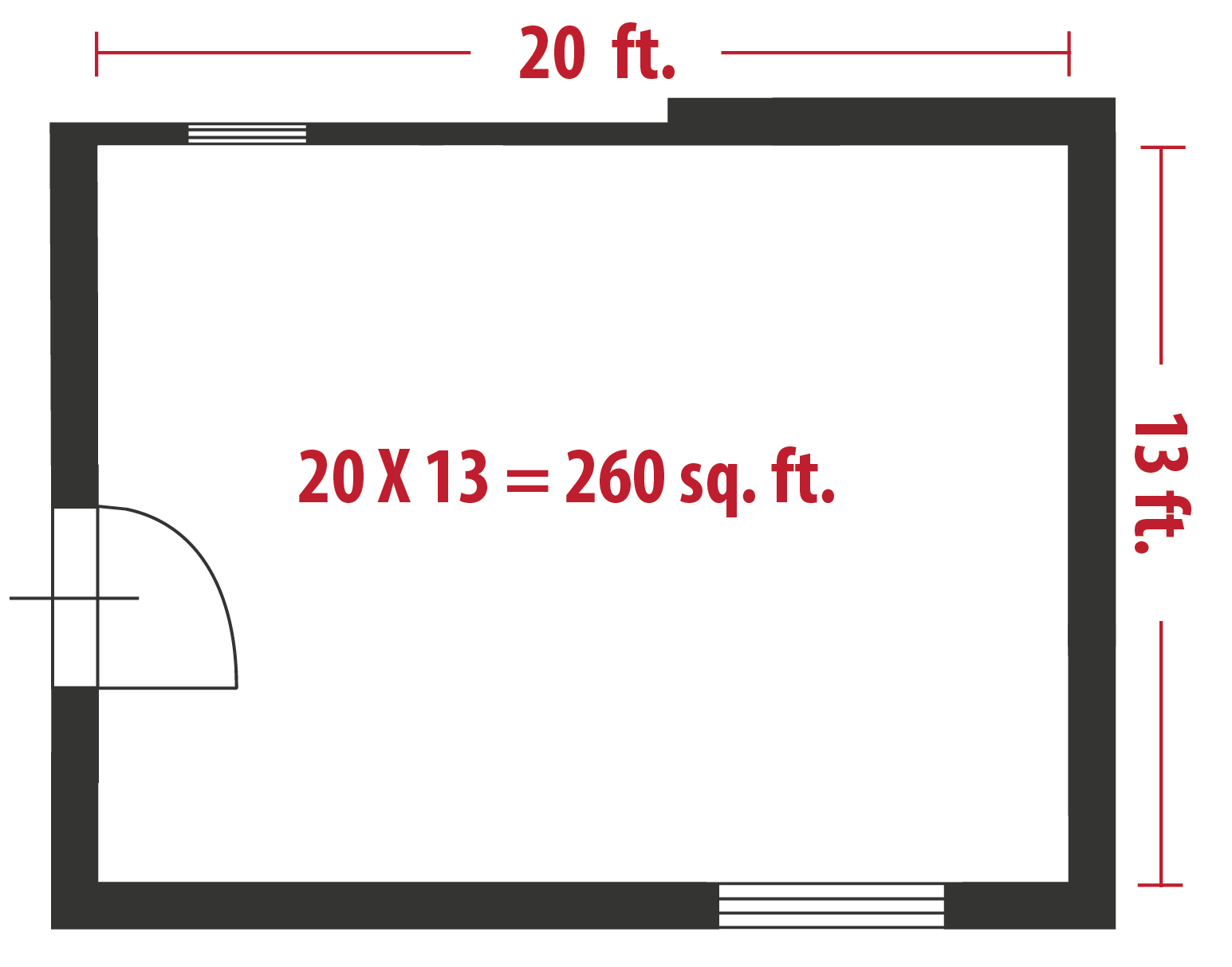
A 20-foot square in Fifth Edition (5e) Dungeons & Dragons translates to a four-by-four grid of standard five-foot squares on a battle map, covering a total area of 400 square feet. This specific measurement governs the geometry of numerous spells, area-of-effect abilities, and tactical maneuvers, dictating how Dungeon Masters adjudicate space and how players position their characters during encounters.
Introduction to Spatial Mechanics in Fifth Edition Dungeons & Dragons
Spatial awareness is a foundational element of tactical combat in Fifth Edition Dungeons & Dragons. Unlike theater-of-the-mind play, where distances and layouts are fluidly interpreted, grid-based combat relies on precise geometric measurements. Every standard square on a tabletop battle map represents a five-foot-by-five-foot area, aligning with the space required for a medium-sized creature to move, fight, and occupy.
When rules, spells, or environmental features introduce a 20-foot square, they disrupt the standard single-target paradigm by introducing area-of-effect (AoE) calculations. Understanding how to measure, project, and react to a 20-foot square is essential for both Dungeon Masters (DMs) designing encounters and players optimizing their character's tactical potential. Misinterpreting these dimensions can lead to accidental friendly fire, wasted spell slots, or flawed dungeon design. This guide examines the mechanics of the 20-foot square in 5e, breaking down its geometry, mechanical classifications, tactical deployment, and common rules interactions.
Geometric Breakdown: Translating Feet to Grid Squares
To visualize and deploy a 20-foot square on a standard tabletop grid, players must convert linear feet into grid units. Because each grid square equals five feet, dividing twenty by five yields four. Therefore, a 20-foot square spans four squares horizontally and four squares vertically.
[ ][ ][ ][ ] [ ][ ][ ][ ] [ ][ ][ ][ ] [ ][ ][ ][ ]
This configuration creates a total footprint of sixteen individual 5-foot-by-5-foot squares. When measuring area-of-effect spells or hazard zones, this total footprint determines which creatures and objects fall within the affected region.
The Point of Origin and Targeting Rules
According to the Player's Handbook (PHB) rules for areas of effect, spells and effects that use a square shape originate from a point of origin chosen by the caster. This point can be placed on an intersection of grid lines, within a square, or on a target. However, the exact placement relative to the grid lines dictates how the square expands.
- Intersection Targeting: If the point of origin is placed on the intersection between grid squares, the square spreads outward symmetrically if dimensions permit, though DMs often simplify this by aligning the square to the grid lines for ease of play.
- Whole Square Targeting: Aligning the edge of a 20-foot square with the existing grid lines ensures that all 16 squares are explicitly accounted for without straddling partial boundaries, which minimizes complex ruling disputes during fast-paced combat.
Categorizing the 20-Foot Square in Spells and Features
In 5e, the 20-foot square is most frequently encountered as the designated area of effect for various invocation-based, elemental, and conjuration spells. While spheres, cones, and lines are common, square areas offer distinct geometric coverage that can be manipulated to avoid obstacles or maximize terrain utility.
Spells Utilizing Square Areas
Several iconic spells utilize square or rectangular areas rather than circular bursts. While many spells use a 20-foot radius (which creates a 40-foot-wide circle), specific spells and environmental hazards utilize square configurations to represent restricted boundaries, lingering magical fields, or volumetric barriers.
When a spell description specifies a "20-foot square," the caster designates the targeted area within range, and all creatures completely or partially inside that 16-square zone are subjected to the spell's effects. According to core rules, a creature is affected if any part of its space falls within the area of effect, unless specified otherwise. Because a medium creature occupies a single 5-foot square, it is either fully inside or fully outside the 20-foot square boundary, provided the square is cleanly aligned with the grid.
Comparison of Common Area-of-Effect Geometries
To understand why a 20-foot square behaves differently than other shapes, compare its coverage and tactical footprint against other standard 5e areas of effect:
| Area Type | Dimension Specification | Total Grid Footprint (Approx.) | Primary Tactical Advantage |
|---|---|---|---|
| Square | 20-foot square | 16 squares ($4 \times 4$) | Clean alignment with room walls and corridors; precise corner coverage. |
| Radius Sphere | 20-foot radius | ~44 to 48 squares (circular approximation) | Radial spread maximizes coverage in open spaces from a central point. |
| Cone | 15-foot or 30-foot cone | Varies by length | Broadens outward from the caster, ideal for sweeping groups of approaching enemies. |
| Line | 30-foot to 100-foot line | Varies by length (1 square wide) | Pierces through tightly packed lines of enemies in narrow corridors. |
Tactical Applications in Combat Encounters
Using a 20-foot square effectively requires an understanding of spatial management, positioning, and environmental interaction. Because dungeon corridors, chambers, and caverns are frequently built around 5-foot and 10-foot increments, a 20-foot square fits neatly into standard architectural layouts.
Controlling Bottlenecks and Corridors
Dungeon crawls often feature corridors that are 10 or 20 feet wide. Placing a 20-foot square spell—such as a localized hazard, web, or wall effect—directly into a corridor can completely block enemy advancement.
- Area Denial: If an enemy force attempts to charge through a hallway, a properly placed 20-foot square hazard forces melee combatants to either halt, find alternative routes, or endure damage and adverse conditions.
- Flanking Prevention: By placing a square effect that covers both the enemy front line and potential flanking routes, a spellcaster can isolate individual combatants and protect vulnerable backline allies.
Managing Ally Safety and Friendly Fire
One of the primary challenges of executing area-of-effect tactics is avoiding allied units. Because a 20-foot square covers 16 individual grid spaces, it provides a substantial zone that can easily trap careless party members if dropped blindly into a melee brawl.
- Target Selection: Spellcasters should coordinate with front-line tanks (such as Fighters or Paladins) to ensure they step outside the designated 4-foot-by-4-foot zone before the effect is triggered.
- Shape Utilization: Unlike a circular radius which radiates evenly in all directions, a square can be rotated or shifted cleanly against walls, allowing casters to clip enemy clusters while leaving adjacent corridors clear for retreating allies.
Common Rules Misinterpretations and Edge Cases
Adjudicating grid-based movement and targeting in 5e occasionally leads to confusion, particularly regarding diagonal measurements and partial square coverage.
The Diagonal Movement Rule Clarification
A common misconception involves measuring distances diagonally across a square grid. Under the optional rules for variant diagonal movement in the Dungeon Master's Guide (DMG), the first diagonal square counts as 5 feet, but the second diagonal square counts as 10 feet (the 5-10-5 rule). However, standard rules treat every diagonal step as 5 feet. When measuring a 20-foot square, straight lines are straightforward, but casting a square effect diagonally across the grid requires careful counting to ensure the spell's range and dimensions do not exceed official limitations.
Partial Squares and Creature Sizes
For medium and small creatures, occupying a single grid square makes resolution simple. However, complications arise with larger creatures:
- Large Creatures: Occupy a $2 \times 2$ space (10 feet by 10 feet). If a Large creature overlaps even a single 5-foot square of a 20-foot square effect, the entire creature is generally subjected to the effect, as rules dictate that if an effect touches any part of a creature's space, it affects that creature.
- Huge and Gargantuan Creatures: Occupy $3 \times 3$ or larger spaces. A 20-foot square may only cover a fraction of a Gargantuan monster's physical footprint, yet core rules often apply the saving throw or damage regardless, provided the area touches part of the creature's occupied space. DMs should apply consistent rulings for partial overlaps based on the specific wording of the feature in question.
Step-by-Step Guide to Resolving a 20-Foot Square Effect
When a player declares an action or spell that deploys a 20-foot square, the DM and player should follow a structured sequence to resolve the mechanics smoothly without slowing down combat pacing.
- Verify Range and Line of Effect: Ensure the caster has an unobstructed line of effect to the chosen point of origin and that the target location falls within the spell's maximum casting range.
- Designate the Point of Origin: The caster selects the anchor point for the square. Encourage players to explicitly state whether this point starts on a grid intersection or the corner of a specific square.
- Map the Footprint: Count outward from the origin point to outline the four-by-four grid ($4 \times 4$ squares). Use transparent template markers or dry-erase grid lines to verify the exact 16 squares included.
- Identify Affected Entities: Check every creature, object, and environmental hazard whose physical space intersects with the 16-square zone.
- Execute Saving Throws and Damage: Roll initiative-based saving throws simultaneously for all affected creatures, apply resistances or vulnerabilities, and resolve any lingering secondary conditions (such as being restrained, burning, or poisoned).
Frequently Asked Questions
How many individual grid squares make up a 20-foot square in 5e?
A 20-foot square consists of 16 individual 5-foot-by-5-foot grid squares. This is calculated by dividing 20 feet by the standard 5-foot grid scale, yielding 4 squares per side ($4 \times 4 = 16$).
Does a creature have to be entirely inside a 20-foot square to be affected by it?
No. Unless a specific rule or spell description states otherwise, a creature is affected if any part of its occupied space falls within the area of effect. Even if a creature is only touching one corner of the 16-square zone, it is considered within the area.
How does a 20-foot square differ from a 20-foot radius circle?
A 20-foot square covers a total area of 400 square feet arranged in a rectilinear grid ($4 \times 4$ squares). In contrast, a 20-foot radius circle extends 20 feet outward from a center point in all directions, creating a circular area with a diameter of 40 feet that covers approximately 44 to 48 grid squares, offering a wider overall footprint at the cost of clipped corners.
Can a 20-foot square spell be rotated on the grid?
Yes. Unless the rules specify that a square must align with the cardinal directions of the map, a spellcaster can angle or rotate a square area of effect to match the contours of a room or corridor, provided the DM can accurately adjudicate which grid squares fall within the rotated boundary.
What should a DM do if a large monster only partially touches a 20-foot square?
By strict rule interpretation, if an area of effect covers any square occupied by a creature, that creature is subjected to the effect. For large, huge, or gargantuan creatures that span multiple squares, touching any part of their multi-square footprint is sufficient to trigger the spell's saving throw or damage roll.
Conclusion and Next Actions
Mastering the mechanics of the 20-foot square in 5e enhances tactical depth and streamlines combat adjudication at the tabletop. By understanding how to translate linear feet into grid squares, manage line-of-effect rules, and account for creature sizes, players can maximize their spell efficiency while DMs can design balanced, dynamic encounters. For your next session, review your spellcasting character's available area-of-effect options, practice mapping square templates on your battle grid, and consult the Player's Handbook rules section on areas of effect to ensure seamless rule execution.