Navigating the Cybersecurity Maturity Model Certification (CMMC) Level 2 framework requires understanding that it is built directly upon National Institute of Standards and Technology (NIST) Special Publication 800-171 Revision 2. Designed to protect Controlled Unclassified Information (CUI) within the Defense Industrial Base (DIB), the CMMC Level 2 assessment framework establishes 110 distinct security requirements spanning 14 discrete domains. Defense contractors, subcontractors, and organizations handling federal contract information must systematically implement, document, and verify these controls to achieve compliance and maintain eligibility for Department of Defense contracts.
Understanding the Foundation of CMMC Level 2
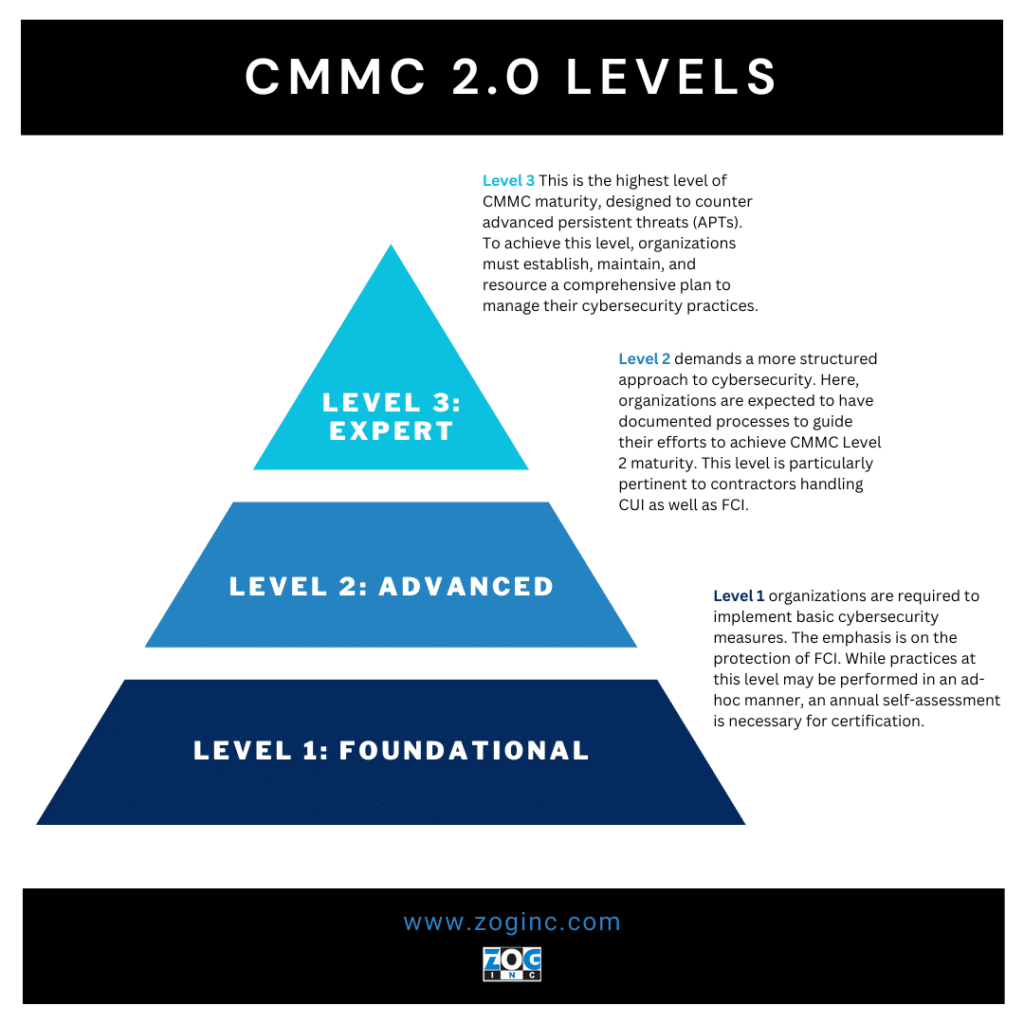
The Cybersecurity Maturity Model Certification program underwent significant structural evolution prior to its final rulemaking implementation. Understanding the regulatory landscape requires recognizing that Level 2—titled "Advanced"—is specifically tailored for organizations that process, store, or transmit CUI. While Level 1 focuses on Basic Cyber Hygiene through 17 practices protecting Federal Contract Information (FCI), Level 2 requires the full implementation of all 110 controls found in NIST SP 800-171.
For defense contractors, a CMMC Level 2 checklist serves as the operational blueprint for evaluating current security postures against federal mandates. Implementing these controls is not merely an administrative exercise; it requires a documented architecture that proves continuous compliance. Organizations must realize that self-assessments or third-party assessments (depending on the contract type) will scrutinize every single control. Missing even a single practice can result in a failed assessment, delayed contract awards, or the inability to bid on solicitations requiring CMMC Level 2 certification.
The 14 Security Domains of NIST SP 800-171
The 110 requirements of CMMC Level 2 are categorized into 14 distinct security domains. Each domain addresses a specific vector of organizational and technical security. A thorough checklist overview must examine how these domains group related security controls to ensure comprehensive coverage across an enterprise network.
- Access Control (AC)
- Awareness & Training (AT)
- Audit & Accountability (AU)
- Configuration Mgmt (CM)
- Identification & Auth (IA)
- Incident Response (IR)
- Maintenance (MA)
- Physical Protection (PE)
- Risk Assessment (RA)
- Security Assessment (CA)
- System/Communications Protection (SC)
- System/Information Integrity (SI)
- Media Protection (MP)
- Personnel Security (PS)
Access Control (AC) and Identification and Authentication (IA)
Access Control mandates that information system access is limited to authorized users, processes acting on behalf of authorized users, and authorized devices. This includes limiting access to specific types of transactions and functions. Concurrently, Identification and Authentication requires that system users are identified before permitting access to organizational systems processing CUI. Multi-factor authentication (MFA) is a cornerstone here, required for all local and network access to privileged accounts, as well as non-privileged accounts accessing systems remotely.
System and Information Integrity (SI) and Incident Response (IR)
System and Information Integrity requires organizations to identify, report, and correct information and system flaws in a timely manner. This involves managing software patches, monitoring for malicious code, and implementing system alerts. Incident Response pairs with SI by mandating operational incident handling capabilities that include preparation, detection, analysis, containment, recovery, and user response activities. Contractors must test these incident response plans regularly to ensure operational readiness.
Audit and Accountability (AU) and Configuration Management (CM)
Audit and Accountability controls require the creation, protection, and retention of system audit logs to enable the monitoring and investigation of unauthorized activities. Configuration Management establishes baseline configurations and inventories for organizational systems, ensuring that security settings are maintained throughout the system lifecycle and that unauthorized changes are blocked or flagged.
Key Assessment Requirements and Methodologies
Preparing for a CMMC Level 2 assessment involves understanding whether your organization requires a Self-Assessment or a Certification Assessment conducted by a Certified Third-Party Assessment Organization (C3PAO). The determination generally depends on the sensitivity of the CUI handled and the specific language within the prime contract or solicitation.
Self-Assessments vs. C3PAO Assessments
- Self-Assessments (Bi-Annual): Certain contracts involving CUI that is deemed lower risk or specific to certain sub-tiers may permit a company to conduct an annual or bi-annual self-assessment. This requires a high-level official within the organization to submit a score into the Supplier Performance Risk System (SPRS).
- C3PAO Assessments (Tri-Annual): Most organizations handling critical CUI must undergo a formal third-party assessment by an accredited C3PAO. These assessments result in a formal certification valid for up to three years, provided continuous compliance is maintained.
The Role of Plan of Action and Milestones (POA&Ms)
Under CMMC 2.0 rules, the Department of Defense permits the use of Plans of Action and Milestones (POA&Ms) for specific requirements under strict conditions. However, a POA&M cannot be used for every control. High-value requirements—such as certain multi-factor authentication or encryption controls—often cannot be placed on a POA&M to pass an assessment. Organizations must verify which specific controls are eligible for POA&M remediation and close out all permitted items within the 180-day window typically allowed by the regulatory framework.
CMMC Level 2 Domain Breakdown and Control Counts
To structure an effective compliance checklist, organizations must analyze the distribution of the 110 requirements across the 14 NIST SP 800-171 domains. The table below outlines each domain, its primary focus, and the number of associated controls.
| Domain Name | Abbreviation | Focus Area | Number of Controls |
|---|---|---|---|
| Access Control | AC | Limiting system access to authorized users and devices | 22 |
| Awareness and Training | AT | Ensuring personnel are trained on security risks and duties | 3 |
| Audit and Accountability | AU | Creating, protecting, and reviewing system audit logs | 9 |
| Configuration Management | CM | Establishing and maintaining baseline configurations | 9 |
| Identification and Authentication | IA | Verifying the identities of users, processes, or devices | 11 |
| Incident Response | IR | Detecting, analyzing, and containing security incidents | 3 |
| Maintenance | MA | Performing timely maintenance on organizational systems | 6 |
| Media Protection | MP | Protecting digital and physical media containing CUI | 9 |
| Personnel Security | PS | Screening individuals and protecting information during transitions | 2 |
| Physical Protection | PE | Limiting physical access to systems, equipment, and facilities | 6 |
| Risk Assessment | RA | Assessing risk, vulnerability scanning, and risk mitigation | 3 |
| Security Assessment | CA | Periodically assessing security controls and remediation | 4 |
| System and Communications Protection | SC | Protecting communications at boundaries and in transit | 16 |
| System and Information Integrity | SI | Managing flaws, malicious code, and system monitoring | 7 |
| Total | 110 |
Step-by-Step Implementation Roadmap
Implementing a CMMC Level 2 checklist requires a structured, multi-phase project management approach. Organizations attempting to achieve compliance haphazardly often face budget overruns, failed assessments, and missed contracting deadlines.
Phase 1: CUI Scope Discovery and Data Flow Mapping
Before implementing technical controls, an organization must identify exactly where CUI enters, flows through, and exits its enterprise systems.
- Identify Data Repositories: Locate all servers, cloud environments, workstations, and physical filing systems storing CUI.
- Scope Reduction: Implement network segmentation to isolate CUI environments from corporate IT networks, minimizing the operational boundary that requires CMMC Level 2 certification.
- Define the Enclave: Establish a secure enclave or Government Community Cloud (GCC) High environment dedicated exclusively to handling defense information.
Phase 2: Gap Analysis and System Security Plan (SSP)
Once the scope is established, conduct a comprehensive gap analysis against the 110 practices of NIST SP 800-171.
- Evaluate Current Controls: Compare existing IT policies, tools, and configurations against each requirement.
- Draft the System Security Plan (SSP): Document how each of the 110 controls is implemented within the environment. The SSP is the primary document reviewed by assessors.
- Establish POA&Ms: For controls not fully implemented, document remediation steps, timelines, and responsible parties in a Plan of Action and Milestones.
Phase 3: Technical Remediation and Documentation
Execute the remediation steps identified during the gap analysis. This phase involves deploying enterprise software solutions and updating operational policies.
- Deploy Security Toolsets: Implement centralized log management (SIEM), mobile device management (MDM), Endpoint Detection and Response (EDR), and robust boundary protection mechanisms like Next-Generation Firewalls.
- Formalize Policies and Procedures: Ensure that every domain has written policies approved by senior management and operational procedures executed consistently by IT personnel.
- Conduct Employee Training: Execute security awareness programs tailored to handle CUI and report suspicious activities.
Phase 4: Pre-Assessment Readiness Review
Prior to scheduling an official C3PAO assessment or submitting a self-assessment score to SPRS, conduct a rigorous internal or third-party mock assessment.
- Evidence Gathering: Collect artifacts (screenshots, configuration files, access logs, policy documents) for every single control. Assessors require objective proof of implementation.
- Mock Interviews: Test staff members on their operational adherence to established security procedures. Assessors will interview system administrators and general users alike.
- Remediate Findings: Close any remaining gaps discovered during the mock assessment before the official evaluation window opens.
Common Compliance Pitfalls and Troubleshooting
Organizations pursuing CMMC Level 2 frequently encounter systemic hurdles that delay certification. Recognizing these obstacles allows leadership teams to adjust their strategies proactively.
Over-Scoping the Enterprise Network
One of the most frequent and costly mistakes is failing to scope the network correctly. If an organization permits CUI to flow unrestricted across every workstation and server in the company, the entire enterprise must meet CMMC Level 2 requirements. Organizations should leverage network segmentation, virtual desktop infrastructure (VDI), and dedicated secure enclaves to restrict CUI to a small, manageable subset of users and hardware.
Treating Compliance as a One-Time Event
Achieving a passing score or receiving a C3PAO certificate is not the end of the compliance lifecycle. CMMC requires continuous monitoring, regular vulnerability scanning, annual policy reviews, and continuous log analysis. Auditors look for historical evidence of security operations over time—such as months of continuous log review records—rather than point-in-time snapshots created just before an assessment.
Inadequate Artifact Collection and Documentation
An organization may have implemented a highly secure technical control (such as complex password policies), but if it lacks written policy documentation or cannot produce historical evidence of enforcement during an audit, the control will fail. Every single practice requires an implemented policy, a documented procedure, and verifiable artifacts proving operational execution.
Frequently Asked Questions
What is the difference between CMMC Level 1 and Level 2?
CMMC Level 1 applies to organizations handling Federal Contract Information (FCI) and requires the implementation of 17 basic cyber hygiene practices. CMMC Level 2 applies to organizations handling Controlled Unclassified Information (CUI) and requires the implementation of all 110 security controls specified in NIST SP 800-171, covering 14 distinct security domains.
Can my organization use a Plan of Action and Milestones (POA&M) to pass a CMMC Level 2 assessment?
Yes, under CMMC 2.0 rules, POA&Ms are permitted for certain Level 2 requirements, provided they are not high-value controls restricted by the Department of Defense. Permitted POA&M items must typically be remediated within 180 days of the initial assessment to achieve final certification.
How often must a defense contractor renew their CMMC Level 2 certification?
For organizations assessed by a Certified Third-Party Assessment Organization (C3PAO), the CMMC Level 2 certificate is valid for up to three years, assuming continuous compliance and annual corporate affirmations submitted to the Supplier Performance Risk System (SPRS).
What document serves as the foundation for a CMMC Level 2 audit?
The System Security Plan (SSP) is the foundational document for any CMMC Level 2 assessment. The SSP details how the organization implements each of the 110 NIST SP 800-171 security requirements across its scoped network environment.
Do commercial off-the-shelf (COTS) product manufacturers need CMMC Level 2?
Suppliers that provide purely COTS items—defined under federal acquisition regulations—are generally exempt from CMMC requirements unless their contracts specifically involve handling CUI outside of standard commercial transactions or require the processing of sensitive defense data.
Practical Next Steps for Defense Contractors
To initiate or advance your organization's compliance journey, begin by mapping your data flows to determine the exact boundaries where Controlled Unclassified Information is processed and stored. Engage a qualified third-party advisor to perform an objective gap analysis against NIST SP 800-171, and immediately establish a centralized repository for compliance documentation, system logs, and security policies. By treating cybersecurity readiness as an ongoing operational discipline rather than an administrative hurdle, your enterprise can secure its federal contracting future, protect vital defense information, and maintain a competitive edge in the defense industrial base.