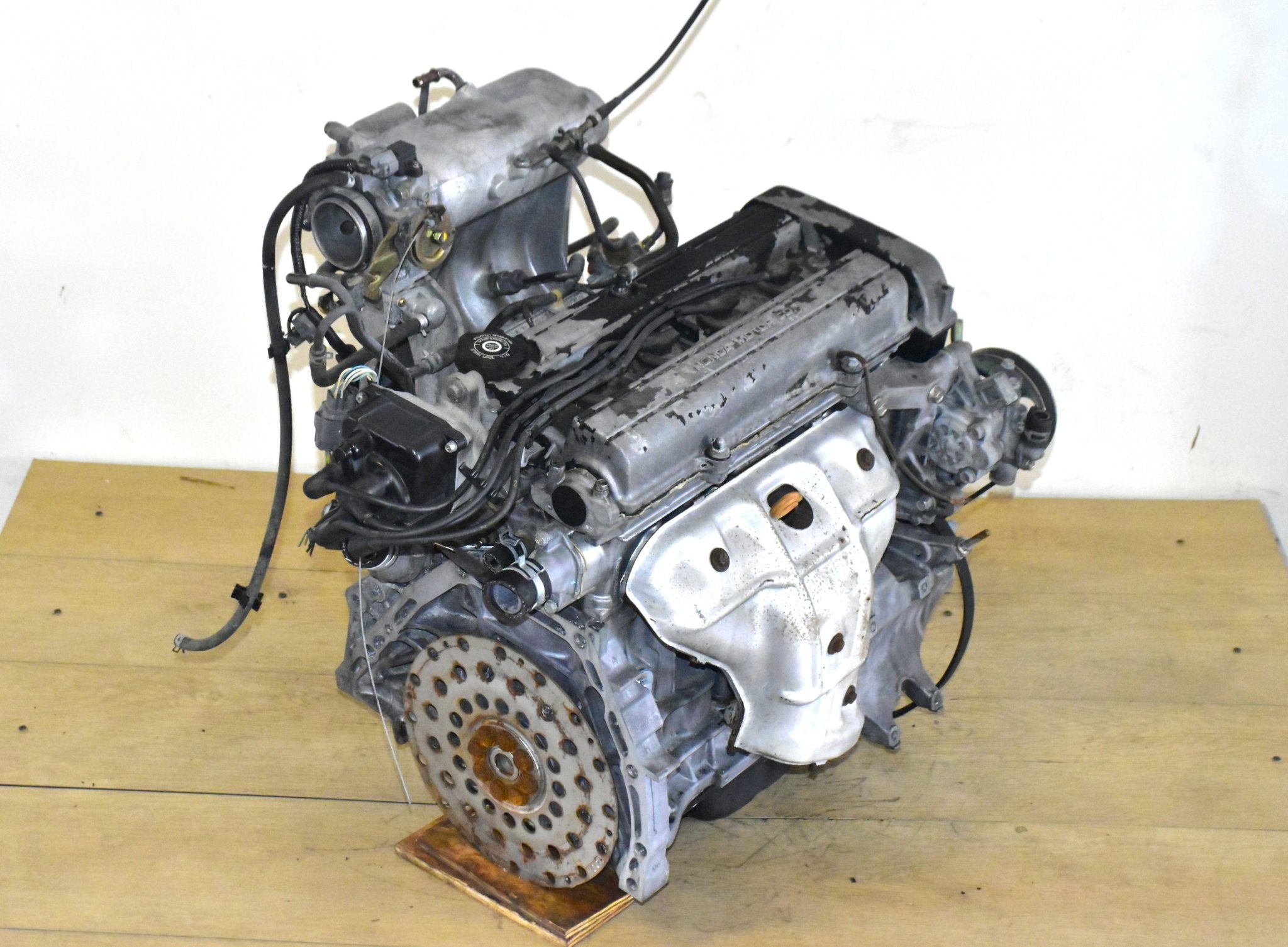
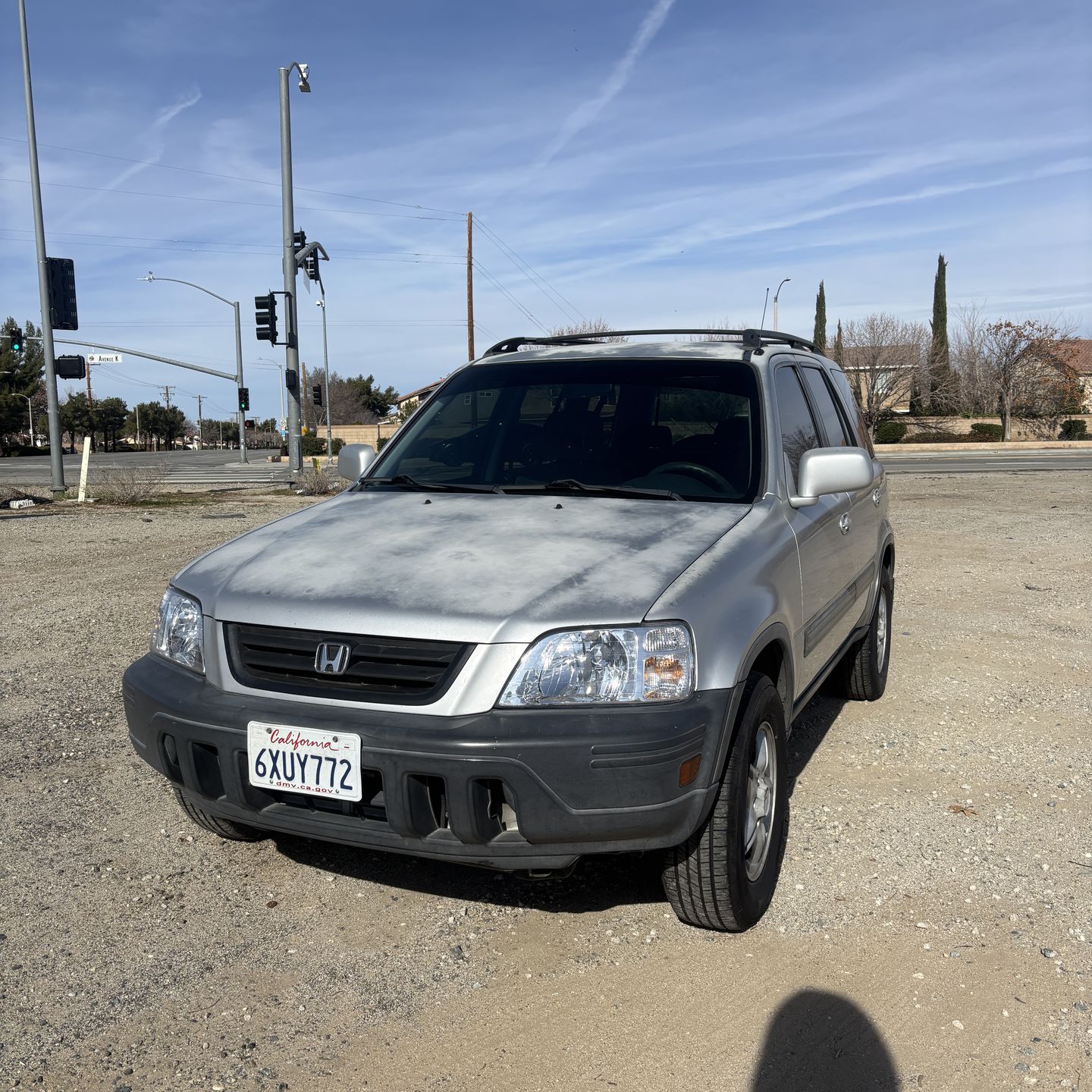
The 1998 Honda CR-V represents a pivotal moment in the first-generation (RD1) production cycle, serving as the final year for the original low-compression B20B engine in the North American market. This 2.0-liter, dual-overhead-cam (DOHC) inline-four engine was the sole powerplant for the 1998 model year, delivering 126 horsepower and 133 lb-ft of torque before being succeeded by the higher-output B20Z in 1999.
Throughout its lifecycle, the 1998 engine became known for its reliability and its shared architecture with the legendary Honda B-series family. Understanding the timeline of this engine requires looking at its transition from a Japanese-market exclusive to a global workhorse, its specific internal engineering, and its eventual role as a favorite for performance enthusiasts seeking a "B20-VTEC" hybrid build.
The B20B Engine: The Heart of the 1998 Model
By 1998, the Honda CR-V had established itself as a leader in the nascent "crossover" segment. The engine found in the 1998 model is technically designated as the B20B. Unlike the B16 or B18 engines found in the Civic and Integra of the same era, the B20B was designed specifically for the heavier weight and utility requirements of an All-Wheel Drive (AWD) vehicle.
The B20B features a 1,973cc displacement, achieved via an 84mm bore and an 89mm stroke. This "undersquare" or "long-stroke" design was intentional; it prioritized low-end torque over high-RPM horsepower, which was necessary for a vehicle often used for light off-roading or carrying full loads of cargo.
1995–1997: The Early Global Timeline
While the CR-V arrived in the United States in 1997, the engine's timeline actually begins in 1995 in Japan. The early B20B was characterized by its relatively low compression ratio (8.8:1) and a "tall" intake manifold designed to increase the velocity of incoming air at lower engine speeds. When the 1998 model rolled off the assembly line, it carried this exact same configuration.
For 1998, Honda maintained the status quo for the engine's internals. It utilized a cast-aluminum block with iron cylinder liners. One unique technical aspect of the 1998 B20B was the use of a "one-piece" cylinder sleeve design (often called a "siamese" sleeve), which allowed for the larger 84mm bore within the compact B-series block dimensions.
The 1998-1999 Transition: B20B vs. B20Z
The timeline of the 1998 engine is most often defined by what came immediately after it. Owners of 1998 CR-Vs often look toward the 1999–2001 models with envy because of the significant power jump.
In late 1998 (for the 1999 model year), Honda updated the engine to what is colloquially known as the B20Z (though in some markets, it was still stamped B20B despite the internal changes). The 1998 model's 126 hp was criticized by some automotive journalists as being slightly "underpowered" for the 3,200-pound vehicle.
Key Differences in the 1998 Powerplant
To understand the 1998 engine's place in the timeline, one must look at the specific components that defined it before the 1999 refresh:
- Intake Manifold: The 1998 engine uses a high-profile intake manifold that arches over the valve cover. This is often called the "giraffe" manifold. It was designed for torque but proved restrictive at high RPMs.
- Piston Design: The 1998 pistons have a significant "dish" or depression in the center. This lowered the compression to 8.8:1, allowing the engine to run safely on low-octane fuel worldwide without the risk of "knocking" or pre-ignition.
- Knock Sensor: Curiously, the 1998 USDM (United States Domestic Market) engine lacks a factory knock sensor on the back of the block, a feature that was added in 1999 to support the higher compression ratio of the newer version.
Technical Specifications Comparison
The following table outlines the technical specifications of the 1998 engine compared to the later iteration of the first-generation CR-V powerplant.
| Specification | 1997–1998 Honda CR-V (B20B) | 1999–2001 Honda CR-V (B20Z/B20B High-Comp) |
|---|---|---|
| Displacement | 1,973 cc | 1,973 cc |
| Horsepower | 126 hp @ 5,400 RPM | 146 hp @ 6,200 RPM |
| Torque | 133 lb-ft @ 4,300 RPM | 133 lb-ft @ 4,500 RPM |
| Compression Ratio | 8.8:1 | 9.6:1 |
| Bore x Stroke | 84mm x 89mm | 84mm x 89mm |
| Valvetrain | DOHC 16-Valve (Non-VTEC) | DOHC 16-Valve (Non-VTEC) |
| Fuel Requirement | 87 Octane Regular | 87 Octane Regular |
Maintenance Timeline and Critical Care for the 1998 Engine
As of 2026, many 1998 Honda CR-V engines are still on the road, some exceeding 300,000 miles. However, the longevity of this specific engine timeline depends heavily on a very specific maintenance task that is often overlooked: valve adjustments.
The 30,000-Mile Valve Adjustment
Unlike modern engines that use hydraulic lifters to automatically adjust valve clearance, the 1998 B20B uses a mechanical "solid" lifter design. Over time, the exhaust valves have a tendency to "recede" into the cylinder head. This causes the clearance to tighten rather than loosen.
If the valves become too tight, they will not fully close. This prevents the valve from dissipating heat into the cylinder head, eventually leading to a "burnt valve." A burnt valve results in a cylinder misfire, loss of compression, and an expensive head rebuild. For the 1998 model, checking and adjusting these valves every 30,000 to 50,000 miles is the most critical survival task.
Timing Belt and Water Pump
The 1998 CR-V engine is an interference engine. This means that if the timing belt snaps, the pistons will strike the open valves, causing catastrophic internal damage. The factory-recommended interval for timing belt replacement was 90,000 miles or 72 months. In 2026, even if a 1998 CR-V has low mileage, the rubber belt is likely aged and prone to cracking. Replacing the water pump and tensioner at the same time is standard industry practice, as these components are driven by the same belt system.
The Enthusiast Legacy: The B20-VTEC Hybrid
While the 1998 engine was designed for utility, it gained a second life in the early 2000s tuning scene, which continues into 2026. Because the B20B block shares the same basic architecture as the high-revving VTEC engines found in the Civic Si (B16) and Integra Type R (B18C), enthusiasts discovered they could "mate" a VTEC cylinder head to the 1998 CR-V block.
This creation, known as a B20-VTEC, combines the 2.0-liter displacement (torque) of the CR-V with the high-RPM breathing capabilities of the VTEC head. The 1998 B20B block is particularly popular for these builds, though the low-compression pistons are often replaced with higher-compression aftermarket units to maximize the performance of the VTEC system.
It is important to note that the 1998 block requires an external oil line kit to provide oil pressure to the VTEC solenoid, as the CR-V block was never cast with the internal oil galleries for variable valve timing.
Troubleshooting Common 1998 Engine Issues
Despite its reputation for being "bulletproof," the 1998 engine has a few specific failure points that owners should monitor as the vehicle enters its third decade of service.
- Distributor Bearing Failure: The internal bearings in the 1998 distributor can wear out, leading to a "squealing" noise or red dust (iron oxide) inside the distributor cap. If the bearing seizes, it can cause the engine to stall and potentially damage the camshaft.
- Coolant Leaks at the Fast Idle Thermo Valve (FITV): Located on the bottom of the throttle body, the FITV can develop leaks or become clogged, leading to a "surging" idle when the engine is cold.
- Oil Leaks from the Cam Seal: The rubber plug at the end of the exhaust camshaft often hardens and leaks oil down the side of the block. This is a simple, inexpensive fix but is frequently mistaken for a more serious head gasket leak.
- Crankshaft Pulley Separation: The harmonic balancer (crank pulley) consists of two metal pieces joined by a rubber ring. As the rubber ages, it can dry rot and cause the outer ring to slip, resulting in accessory belt failure or charging issues.
Global Variations in 1998
While the North American 1998 CR-V was limited to the 126 hp B20B, other markets saw different variations. In Japan (JDM), the 1998 model year was already transitioning to the "Full Mark" and "Performa" trim levels, which occasionally featured the higher-compression engine earlier than the US market.
Additionally, the European market (EDM) models often included a manual transmission paired with the AWD system more frequently than in the US, though the engine internals remained largely identical to the B20B specs. Identifying which version you have is best done by checking the engine stamp located on the front of the block, near where it meets the transmission. It will clearly state "B20B" followed by a serial number.
Summary of the 1998 Engine's Place in History
The 1998 Honda CR-V engine remains a testament to Honda's "over-engineering" philosophy of the 1990s. While it lacks the high-end power of later models, its mechanical simplicity and robust iron-sleeved block have allowed it to outlast many of its contemporaries.
For those looking to purchase or maintain a 1998 model today, the focus should remain on the mechanical health of the valvetrain and the integrity of the cooling system. With proper valve adjustments and timing belt services, the 1998 B20B is capable of operating well into the 2030s.
Frequently Asked Questions
Can I swap a 1999–2001 engine into my 1998 CR-V?Yes, it is a very common swap. However, the 1999+ engine (B20Z) requires the knock sensor to be wired into the ECU to avoid a Check Engine Light. Additionally, you should ideally use the intake manifold from the newer engine to gain the full 20-horsepower increase, though the 1998 manifold will bolt up.
Is the 1998 Honda CR-V engine fuel efficient by 2026 standards?By modern 2026 standards, the 1998 engine is not particularly efficient. It typically achieves 20–25 miles per gallon. Its 4-speed automatic transmission and relatively high-drag AWD system mean it consumes more fuel than a modern hybrid or small-displacement turbocharged SUV.
Does the 1998 CR-V use a timing belt or a timing chain?The 1998 model uses a timing belt. Honda did not switch the CR-V to a timing chain until the second generation (2002), which introduced the K-series engine family.
What is the best oil for a high-mileage 1998 B20B engine?Most mechanics recommend a high-quality 5W-30 synthetic or synthetic-blend oil. If the engine has very high mileage and minor leaks, a "High Mileage" specific oil with seal conditioners can help reduce oil consumption and slow down leaks from the rear main seal or cam seals.
Why does my 1998 CR-V have a rough idle when cold?This is often caused by the Fast Idle Thermo Valve (FITV) or a dirty Idle Air Control Valve (IACV). Cleaning these components with throttle body cleaner often resolves the issue. If the rough idle persists after the engine is warm, it is a strong indicator that a valve adjustment is overdue.
Final Recommendation for Owners
If you are operating a 1998 Honda CR-V in 2026, prioritize a compression test and a valve clearance check. These two diagnostic steps will tell you the definitive health of the engine. If the compression is even across all four cylinders (typically between 150-180 PSI) and the valves are adjusted to factory spec (0.003-0.005" intake, 0.006-0.008" exhaust), your 1998 engine is likely ready for many more years of service.