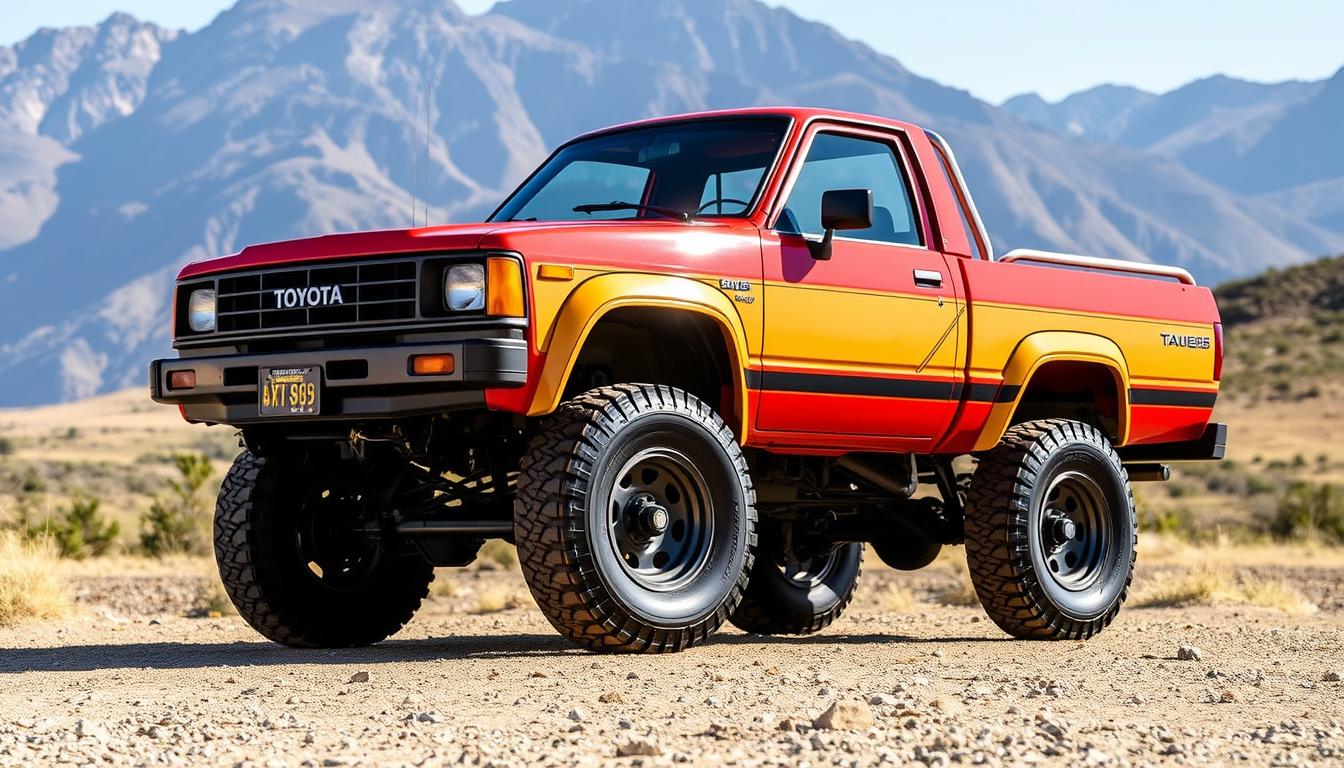
The 1985 Toyota Truck, known technically as the fourth-generation Hilux platform in North America, is widely considered the most desirable year for vintage compact pickup enthusiasts. This specific model year is unique because it was the only time Toyota paired the highly reliable 22R-E electronic fuel-injected engine with a factory solid front axle (SFA) in the 4x4 configuration.
Why the 1985 Toyota Truck Remains an Icon in 2026
To understand the 1985 Toyota Truck, one must understand the transition in automotive engineering that occurred during the mid-1980s. For decades, Toyota built its reputation on ruggedness and simplicity. By 1985, the company was moving toward modern comforts and improved road handling, but they hadn't yet abandoned the heavy-duty off-road architecture that made them famous.
In 2026, these trucks have transitioned from reliable workhorses to high-value collector items. A well-maintained 1985 4x4 SR5 can fetch prices that rival modern mid-size trucks, primarily because they are increasingly rare and possess a "mechanical purity" that modern vehicles cannot replicate. The 1985 model year represents the "Goldilocks" zone: it has the modern convenience of fuel injection but retains the legendary durability of a leaf-sprung solid front axle, which Toyota replaced with independent front suspension (IFS) in 1986.
Engine Specifications and Performance
The heart of the 1985 Toyota Truck is the R-series engine. While there were several variants available globally, the North American market was dominated by two primary versions of the 2.4-liter inline-four.
The 22R-E: The Fuel-Injected Revolution
The 22R-E was a landmark for Toyota. While it had been introduced in limited capacities previously, 1985 saw its widespread adoption across the 4WD lineup. This engine utilized Toyota’s Electronic Fuel Injection (EFI) system, which significantly improved cold-start reliability, fuel efficiency, and performance at high altitudes compared to its carbureted predecessors.
- Type: 2.4-Liter SOHC Inline 4-Cylinder
- Horsepower: 116 hp @ 4,800 RPM
- Torque: 140 lb-ft @ 2,800 RPM
- Bore x Stroke: 92 mm x 89 mm
- Compression Ratio: 9.3:1
The 22R-E is renowned for its longevity. It is not uncommon to find these engines with over 300,000 miles on the original bottom end. The primary maintenance concern remains the plastic timing chain guides, which can become brittle and break over decades of heat cycles. In the current 2026 market, many owners have upgraded these to metal-backed guides to ensure another half-century of operation.
The 22R: The Carbureted Workhorse
Available primarily in base models and 2WD versions, the 22R remained a popular choice for those who preferred mechanical simplicity over electronics.
- Horsepower: 96 hp @ 4,800 RPM
- Torque: 129 lb-ft @ 2,800 RPM
While lower in power, the 22R is famously easy to repair in the field, making it a favorite for remote overland travel where diagnostic computers are non-existent.
The 2L-T Turbo Diesel
A rare sight in North America but common in international markets, the 2.4-liter 2L-T turbo diesel was also offered in 1985. It produced approximately 86 horsepower and 139 lb-ft of torque. While underpowered by modern standards, its low-end grunt made it an exceptional choice for technical off-roading.
Drivetrain and Transmission Options
The 1985 model year utilized some of the most robust manual transmissions Toyota ever produced for its light-truck segment.
Manual Transmissions
The W56 5-speed manual is the most sought-after transmission from this era, typically found in 4WD fuel-injected models. It was designed to handle the increased torque of the 22R-E and featured a top-shift transfer case design that is prized by rock crawlers for its reliability.
- Gear Ratios (W56): 1st: 3.95, 2nd: 2.14, 3rd: 1.38, 4th: 1.00, 5th: 0.85.
The G52 5-speed manual was common in carbureted 4WD models. While slightly less robust than the W56, it is still a highly capable unit. 2WD models often utilized the W55 or a 4-speed variant in base trims.
Automatic Transmissions
Toyota offered the A43D (2WD) and A340H (4WD) 4-speed automatic transmissions. While these were reliable, they significantly blunted the performance of the 116 hp engine. In 2026, manual-equipped trucks generally command a 20-30% price premium over automatics due to the increased control they offer off-road.
The Transfer Case
For 4WD models, 1985 featured the RF1A gear-driven transfer case. Unlike modern trucks that use a chain-driven system, the gear-driven case uses a series of heavy-duty gears to transfer power to the front wheels. This design is incredibly durable and allows for "dual case" setups, where two transfer cases are bolted together to provide ultra-low crawling ratios.
Chassis and Suspension: The Solid Front Axle
The defining characteristic of the 1985 4x4 model is the Solid Front Axle (SFA). This consists of a rigid axle housing connected to the frame via leaf springs.
Why the Solid Axle Matters
In 1986, Toyota moved to an Independent Front Suspension (IFS) with torsion bars. While IFS provided a much smoother ride on highways, it was more complex and had less "wheel travel" or articulation for off-road use. The 1985 solid axle is essentially a beam; when one tire goes up over a rock, the other tire is pushed down, maintaining contact with the ground.
- Front Axle: 8-inch ring gear with a 30-spline inner axle.
- Rear Axle: 8-inch ring gear, semi-floating design.
- Suspension: Semi-elliptic leaf springs at all four corners (4WD models).
This setup makes the 1985 truck highly modular. Enthusiasts can easily lift the vehicle or install lockers (devices that force both wheels on an axle to turn at the same speed) to improve traction in mud or rocks.
Dimensions, Capacities, and Body Styles
Toyota offered several configurations in 1985 to suit different needs, from basic farm trucks to the "Xtracab" models that provided extra storage behind the seats.
| Specification | Short Bed (Standard) | Long Bed | Xtracab |
|---|---|---|---|
| Wheelbase | 103 inches | 112 inches | 112 inches |
| Overall Length | 174.4 inches | 187.5 inches | 187.5 inches |
| Bed Length | 75 inches | 86 inches | 75 inches |
| Fuel Capacity | 13.7 Gallons | 17.2 Gallons | 17.2 Gallons |
| Curb Weight (4x4) | ~3,100 lbs | ~3,250 lbs | ~3,350 lbs |
| Payload Capacity | 1,400 lbs | 1,400 lbs | 1,400 lbs |
Exterior Features
The 1985 styling is characterized by the "flat-nose" look with integrated headlights and a simple, horizontal grille. It was the first year that the "TOYOTA" lettering on the tailgate was embossed rather than just a decal on some trims. Paint codes from this era, such as "Terra Cotta" and "Cream," have become iconic in the vintage truck community.
Trim Levels and Interior Comfort
By 1985, Toyota began offering more creature comforts, though by 2026 standards, the interiors remain Spartan.
- Base: Rubber floors, vinyl bench seats, and no power steering. These were pure utility vehicles.
- Deluxe (DX): Added carpeting, cloth/vinyl mix seats, and often power steering and air conditioning as options.
- SR5 (Sport Rally 5-Speed): The top-tier trim. It included a full gauge cluster with a tachometer, "sport" bucket seats with adjustable lumbar support, higher-quality upholstery, and often a sunroof.
A unique feature of the SR5 4x4 was the clinometer, an instrument mounted on the dashboard that showed the pitch and roll angles of the truck—essential for serious off-roading.
Common Maintenance and Reliability Concerns
Despite its "indestructible" reputation, a 40-year-old vehicle requires specific attention. If you are looking to purchase or restore a 1985 Toyota Truck in 2026, keep these factors in mind:
- Frame Rust: The single biggest killer of these trucks. The C-channel frames tend to trap mud and moisture, leading to internal rot, particularly near the rear leaf spring hangers.
- Timing Chain Guides: As mentioned, the 22R-E's plastic guides can fail. If you hear a "clattering" sound upon startup, the chain may be eating into the timing cover, which can eventually lead to coolant mixing with oil.
- Steering Box Stress: On trucks with oversized tires, the frame near the steering box can crack. Reinforcement plates are a standard modification for enthusiasts.
- Knuckle Rebuilds: The front solid axle uses "Birfield" joints enclosed in a spherical knuckle. These require periodic repacking with grease and new felt seals to prevent leaks.
Frequently Asked Questions
Is the 1985 Toyota Truck fuel efficient?
Compared to modern trucks, no. The 22R-E typically achieves between 17 and 21 MPG depending on gearing and tire size. While respectable for 1985, it is far behind the hybrid and electric powertrains common in 2026. However, its mechanical simplicity often offsets the fuel cost for many hobbyists.
Why is 1985 considered better than 1984?
1984 was the first year of this body style, but most 1984 models featured the carbureted 22R engine. 1985 is the "sweet spot" because it introduced the 22R-E fuel injection as a standard option for the higher trims while keeping the solid axle. 1984 models are excellent, but the fuel injection of the '85 makes it much more drivable in modern traffic and various climates.
Can I daily drive a 1985 Toyota Truck in 2026?
Yes, provided you understand its limitations. It lacks modern safety features like airbags, ABS, and crumple zones. It is also noisy and slow by modern standards. However, its small footprint makes it easy to park, and its visibility is far superior to modern trucks with high beltlines and thick pillars.
What is the towing capacity?
The 1985 Toyota Truck is rated to tow approximately 3,500 lbs when properly equipped. However, with only 116 horsepower, towing a heavy load is a slow process, especially on inclines. It is best suited for small utility trailers or light boats.
Are parts still available?
Surprisingly, yes. Because the 22R-E was used in various Toyota models (including the Celica and 4Runner) for years, engine parts are plentiful. Aftermarket support for the suspension and drivetrain is massive, though some interior trim pieces and body panels are becoming difficult to find in "new old stock" (NOS) condition.
Final Recommendation for Buyers and Owners
If you are looking to acquire a 1985 Toyota Truck in 2026, prioritize frame integrity over mechanical health. Engines and transmissions can be rebuilt or swapped with relative ease, but a compromised frame is a costly and safety-critical repair.
For current owners, the best investment you can make is a high-quality undercoating or fluid film treatment to prevent corrosion. The 1985 model is more than just a truck; it is a piece of automotive history that represents the pinnacle of Toyota's "over-built" era. Whether used as a weekend trail rig or a pampered collector piece, its 22R-E engine and solid axle configuration ensure it remains the benchmark for what a compact 4x4 should be.