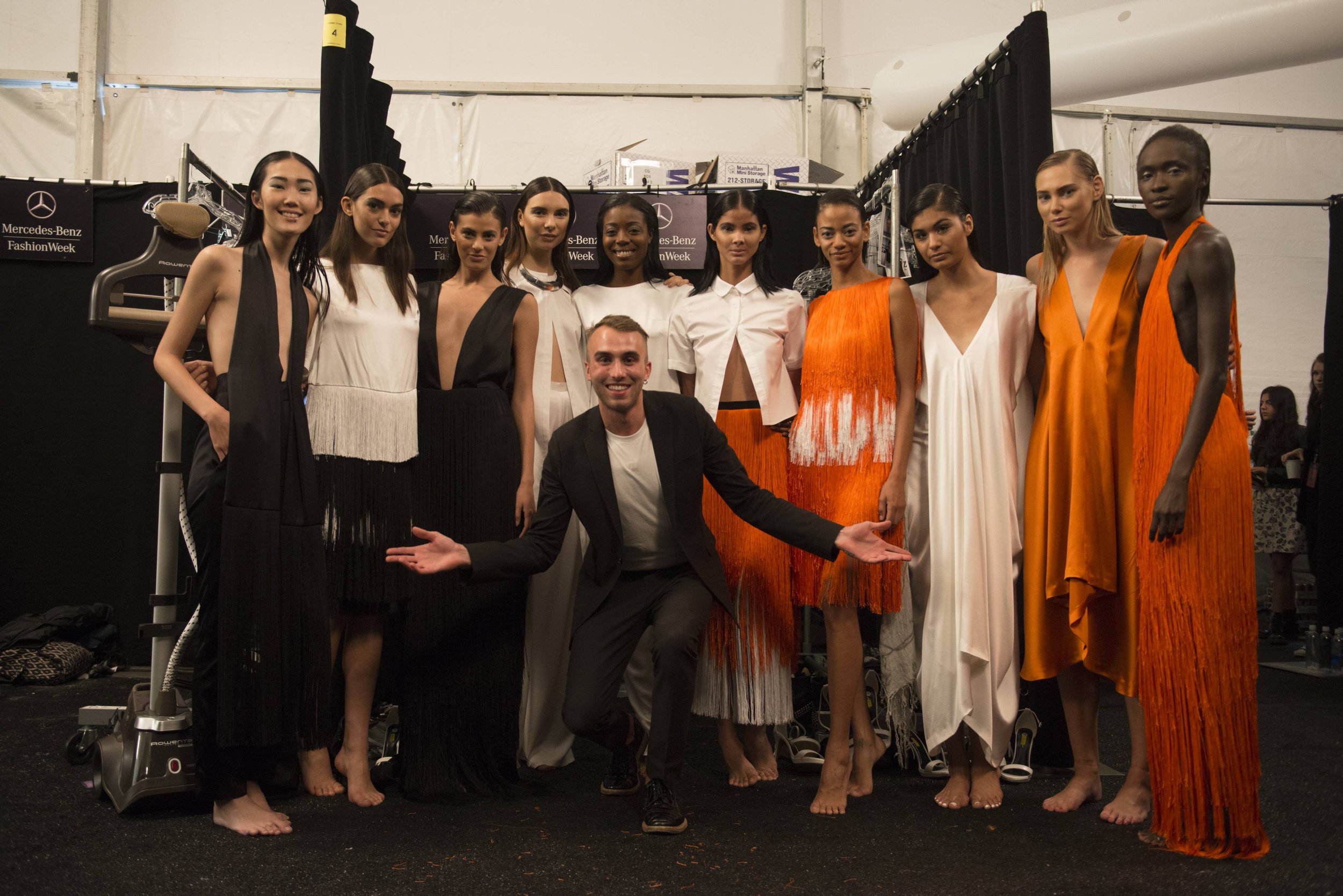
Kini Zamora’s journey in Project Runway Season 13 was defined by unmatched technical speed and structural precision. As the runner-up, his highlights include the iconic "Rainway" fringe dress and several challenge wins that showcased his mastery of denim and tailoring, solidifying his place as one of the show's most formidable technicians.
Project Runway Season 13, which originally aired in 2014, remains a standout era for the franchise due to the high level of technical skill displayed by the finalists. Among them, Kini Zamora, the designer from Kapolei, Hawaii, emerged as a "speed demon" of the sewing room. Looking back from the vantage point of 2026, Zamora’s contributions to the series are still cited by fashion students and fans as a masterclass in construction and garment architecture. His ability to turn a sketch into a high-end, finished garment in a fraction of the time required by his peers became a central narrative of the season.
The Technical Prowess of the "Speed Demon"
One cannot discuss Kini Zamora’s highlights without addressing his extraordinary pace. In a competition where time is the primary antagonist, Zamora often finished his garments hours—sometimes even a full day—before his competitors. This wasn't merely a matter of rushing; the quality of his work was consistently professional, often surpassing the "editorial" requirements of judges Nina Garcia and Zac Posen.
Zamora’s background in fashion technology and his experience in his family’s sewing business provided him with a foundation that most reality TV contestants lack. He understood the mechanics of industrial sewing machines and the properties of various textiles, particularly heavy-duty fabrics like denim and neoprene. This technical depth allowed him to experiment with complex silhouettes that others would have found too risky under a 12-hour deadline.
The Construction Advantage
During the season, mentor Tim Gunn often expressed disbelief at Zamora’s efficiency. In many episodes, while other designers were still struggling with muslin mock-ups, Zamora was already at the ironing board, pressing the final seams of a completed look. This efficiency allowed him more time for "self-editing"—a luxury rarely afforded on Project Runway. He could step back, assess the garment’s movement, and add the intricate details, such as contrast topstitching or hand-finished hems, that became his signature.
Highlight: The "Rainway" Revolution (Episode 9)
If there is a single moment that defines Kini Zamora’s Season 13 legacy, it is the "Rainway" challenge. The task was to create an avant-garde look that would be showcased on a runway featuring a constant downpour of water. While many designers struggled with how fabrics would react to being drenched, Zamora thrived.
He created a black, structural ensemble featuring an umbrella-inspired headpiece and a dress adorned with hundreds of strands of fringe. The brilliance of the design lay in its interaction with the environment. As the model walked through the "rain," the fringe absorbed the water, changing the weight and movement of the garment in real-time. The judges were floored. Nina Garcia noted that it was one of the most "spectacular" moments in the history of the show.
The "Rainway" look was a pivot point for Zamora. It proved that he wasn't just a fast tailor; he was a conceptual artist capable of high-fashion storytelling. The construction of the headpiece alone, which required balancing structural integrity with aesthetic grace, demonstrated his superior understanding of millinery and 3D design.
The Denim King: Mastery of Fabric and Form
Another major highlight of Zamora’s season was his consistent success with denim. In Episode 10, the "Muse" challenge, designers were tasked with creating a look for a "real woman" (in this case, members of the Project Runway crew). Zamora’s client requested a denim look, a choice that can often lead to "crafty" or overly casual results on the runway.
Instead, Zamora delivered a high-fashion denim jumpsuit and coat combination that looked like it belonged in a Parisian boutique. He utilized:
- Contrast Topstitching: A hallmark of high-end denim construction that requires perfectly straight lines.
- Structural Boning: To give the denim a couture silhouette.
- Intricate Seaming: Which elongated the client’s frame and provided a tailored fit that felt custom-made.
Zac Posen, known for his own rigorous standards of construction, praised the garment as being "impeccably made." This challenge solidified Zamora’s reputation as the "Denim King" of Season 13, a title he would carry into his future collections and his eventual return to the All Stars stage.
Collaboration and The "Dream Team"
The middle of the season featured a cinematic challenge where designers worked in pairs to create looks inspired by movie genres. Zamora was paired with Sean Kelly, the eventual winner of the season. Together, they formed what fans dubbed the "Dream Team."
Their collaboration for the "Sci-Fi" category resulted in a futuristic, sleek, and high-contrast look that showcased both designers' strengths. While Kelly provided much of the conceptual "cool" factor, Zamora’s technical execution ensured the garment looked expensive and intentional. This highlight is significant because it showed Zamora’s ability to play well with others—a trait that isn't always present in high-fashion designers—and demonstrated how his technical skills could elevate another designer's vision.
The Road to the Finale: Winning Streaks and Struggles
Zamora’s path to the New York Fashion Week finale was paved with multiple wins. One of his most charming victories came in the American Girl Doll challenge (Episode 8). Designing for children (and their dolls) requires a specific balance of playfulness and sophistication. Zamora managed to create a look that was age-appropriate yet sophisticated enough to win the challenge, proving his versatility across different market segments.
However, his journey wasn't without its critiques. As the season progressed, the judges began to worry that his speed was leading to a "repetitive" silhouette. They often cautioned him against leaning too heavily on "old-fashioned" or "matronly" shapes. This feedback became a central theme in his preparation for the final collection.
Project Runway Season 13 Performance Summary (Kini Zamora)
The following table outlines Zamora’s performance across the key milestones of the season, highlighting his consistency.
| Episode | Challenge Theme | Outcome | Key Highlight |
|---|---|---|---|
| 1 | Judges' Auditions | High | Established the "speed" narrative early on. |
| 4 | Red Carpet (Heidi Klum) | High | Created a sophisticated gown in record time. |
| 8 | American Girl Doll | WIN | Showed versatility in the "mini-me" market. |
| 9 | The Rainway | WIN | The iconic fringe dress and umbrella hat. |
| 10 | Muse (Denim) | WIN | Perfected the high-fashion denim aesthetic. |
| 12 | Avant-Garde | High | Secured his spot in the final four. |
| 13/14 | Finale (NYFW) | Runner-up | Presented a 10-look collection at Lincoln Center. |
The Finale: New York Fashion Week
The culmination of Zamora’s Season 13 journey was his collection presented at Lincoln Center. Zamora’s collection was a study in high-contrast "Park Avenue Goth." He utilized a monochromatic palette—primarily black and white—with heavy emphasis on structured silhouettes, trench-coat inspirations, and, of course, denim.
While the construction was, as expected, flawless, the judges' reception was mixed. Nina Garcia and Heidi Klum felt that some of the styling was "too mature" and lacked the youthful "street" energy that Sean Kelly’s collection possessed. Despite this, Zamora’s collection featured some of the most technically difficult pieces ever seen on a Project Runway finale stage. His use of pleated white fabric to create a structured "fan" effect on skirts and tops was particularly praised for its innovation.
Ultimately, Zamora finished as the runner-up. While he did not take home the top prize, his performance in Season 13 remains a gold standard for technical excellence in the series.
Legacy and Impact (2026 Perspective)
Looking back from 2026, Kini Zamora’s highlights from Season 13 serve as a reminder of the importance of "the craft." In an era where digital design and fast fashion have often overshadowed the art of tailoring, Zamora’s work stands as a testament to the power of the hand-made garment.
Following the show, Zamora returned to Hawaii and successfully launched his own brand, KiniZamora, which bridges the gap between contemporary ready-to-wear and high-fashion custom pieces. His Season 13 performance didn't just win him fans; it provided a blueprint for how to leverage technical skill into a sustainable fashion career. He later returned for Project Runway All Stars Season 5, where he continued to demonstrate the same speed and precision that made him a household name in Season 13.
Frequently Asked Questions
Why didn't Kini Zamora win Project Runway Season 13?
While Kini Zamora was the most technically proficient designer of the season, the judges ultimately felt that Sean Kelly’s collection was more "forward-thinking" and "on-trend." Zamora’s finale collection was criticized for being slightly "matronly" or "dated" in its styling, despite the impeccable construction. In the world of high fashion, innovation often trumps execution in a tie-breaker.
How fast was Kini Zamora compared to other designers?
In several episodes, Zamora was seen completing complex garments in roughly 4 to 6 hours, whereas other designers struggled to finish in the full 12-hour allotted time. This allowed him to help other designers with their sewing, a rare occurrence in the competitive environment of Project Runway.
What was the most famous dress Kini made in Season 13?
The "Rainway" dress from Episode 9 is widely considered his most famous creation. It featured black fringe that moved beautifully under falling water and was paired with a structured, avant-garde hat. It is frequently cited in "Top 10" lists of the best designs in the history of the show.
Did Kini Zamora use denim in his finale collection?
Yes, denim was a recurring theme in his New York Fashion Week collection. He used it to create structured jackets and skirts, attempting to elevate the fabric to a "couture" level. While the judges appreciated the craftsmanship, they felt the overall vibe was a bit too "heavy" for a spring/summer collection.
Where is Kini Zamora now in 2026?
As of 2026, Kini Zamora continues to be a leading figure in the Hawaiian fashion scene. He operates his own design studio and has been instrumental in mentoring young designers in the Pacific region. He is often invited back to fashion programs as a guest lecturer to teach the technical construction methods he showcased on Season 13.
Practical Recommendation for Aspiring Designers
For those inspired by Kini Zamora’s Season 13 highlights, the best "next action" is to focus on mastering the fundamentals of garment construction. Speed in design is not the result of moving fast; it is the result of knowing exactly what to do next. Study pattern making, practice industrial sewing techniques, and learn how different fabrics behave under tension. Like Zamora, when you no longer have to fight your tools or your materials, you are free to let your creativity lead.