Securing a $125,000 life insurance policy at age 65 requires balancing the higher premiums of older age brackets with the necessity of locking in financial protection for final expenses, income replacement, or estate liquidity. Because underwriting strictness and pricing escalate significantly in your sixties, finding the best value demands a careful comparison between term life insurance, permanent whole life options, and simplified issue products.
As individuals reach age 65, navigating the life insurance market involves understanding structural policy differences, medical underwriting requirements, and long-term financial commitments. Whether you are replacing a policy that is expiring or purchasing coverage for the first time to secure a legacy or cover debts, evaluating your options thoroughly helps you avoid overpaying while ensuring your beneficiaries receive the exact financial safety net you intend.
Understanding the Landscape of Life Insurance at Age 65
At age 65, life insurance moves from a tool primarily used for income replacement and raising children to a specialized instrument focused on final expenses, debt elimination, spousal protection, and legacy planning. The financial stakes change because insurers calculate mortality risk more conservatively as policyholders age. Consequently, premiums are notably higher than they are for policies purchased in your forties or early fifties.
A $125,000 face amount serves as a versatile middle ground. It is substantial enough to clear a remaining mortgage balance, fund final medical and funeral costs, and provide a comfortable cushion for a surviving spouse, yet it remains significantly more affordable than a multi-million-dollar estate policy. However, finding the "best value" at this age does not simply mean choosing the absolute lowest monthly premium. Value encompasses the predictability of rates, the longevity of the policy, the financial stability of the issuing carrier, and how well the policy structure matches your personal financial goals.
When shopping for coverage at 65, applicants generally evaluate three primary types of life insurance:
- Term Life Insurance: Provides coverage for a specific duration, such as 10, 15, or 20 years, offering the lowest initial cost for a fixed death benefit.
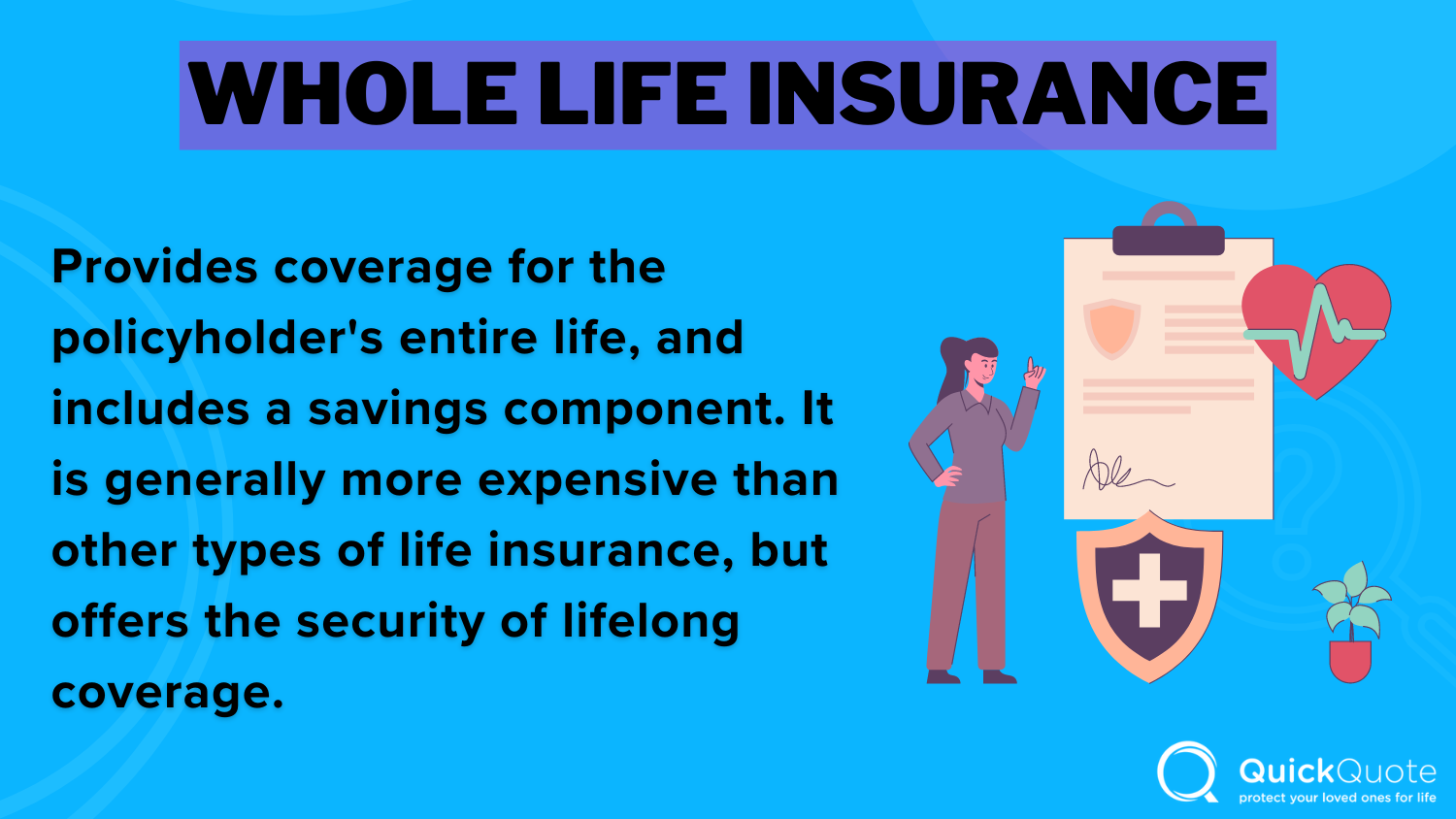
- Whole Life Insurance: A form of permanent insurance that builds cash value and guarantees level premiums and a death benefit for the rest of your life.
- Universal Life Insurance: Another permanent option that offers flexible premiums and adjustable death benefits tied to interest-crediting mechanisms.
Term Life vs. Permanent Insurance for a 65-Year-Old
Choosing between term and permanent insurance is the most critical decision a 65-year-old applicant will make. The right choice depends entirely on how long you need the protection to last and what you can comfortably afford within a fixed retirement budget.
Term Life Insurance
For a 65-year-old, a 10-year or 15-year term policy is often the most cost-effective way to secure a $125,000 death benefit. If your primary financial obligations will expire within that timeframe—such as paying off a mortgage, funding a child's remaining education, or bridging the gap until your Social Security and pension benefits reach their peak—term insurance provides maximum coverage for minimal cost.
The primary trade-off is expiration. A 10-year term policy will expire when you turn 75. If you outlive the term, the coverage ends, and all the premiums paid up to that point provide no return unless the policy includes a specialized return-of-premium rider. Furthermore, converting a term policy to permanent coverage later in life can be prohibitively expensive.
Whole Life and Permanent Insurance
If your goal is to leave a guaranteed inheritance, cover funeral costs that will inevitably occur whenever you pass away, or pay for long-term care needs, permanent insurance is necessary. Whole life insurance locks in level premiums for life and builds cash value against which you can borrow if needed.
The downside of permanent insurance at age 65 is the cost. Because the insurer guarantees a payout eventually, the cost of insurance is compressed into a shorter expected lifespan, driving monthly or annual premiums substantially higher than equivalent term policies.
| Policy Type | Typical Cost Factor (Age 65) | Cash Value Growth | Duration of Coverage | Best Suited For |
|---|---|---|---|---|
| 10-Year Term | Lowest | None | 10 Years | Temporary debts, mortgage protection, income bridging |
| 15-Year Term | Moderate-Low | None | 15 Years | Extended temporary obligations, budget-conscious buyers |
| Whole Life | Highest | Guaranteed | Lifetime | Final expenses, guaranteed legacy, estate liquidity |
| Universal Life | Moderate-High | Variable | Lifetime (if funded) | Flexible budgeting, cash accumulation strategies |
The Impact of Health and Medical Underwriting
Underwriting is the process by which insurance companies evaluate your risk profile and determine your premium rate. At age 65, medical history plays a monumental role in pricing. Insurers generally categorize applicants into health tiers such as Preferred Plus, Preferred, Standard Plus, Standard, or Substandard (Table Ratings).
Fully Underwritten Policies
To secure the absolute best value on a $125,000 policy, undergoing full medical underwriting is usually required. This process involves filling out a detailed health questionnaire, providing medical records from your primary care physician, and completing a paramedical exam. A paramedical exam typically includes a nurse visiting your home or office to measure your height, weight, blood pressure, pulse, and collect blood and urine samples.
If you are in excellent health—meaning your cholesterol is well-managed, your blood pressure is normal, you do not use tobacco products, and you have no history of major cardiovascular events or cancer—fully underwritten policies will reward you with the lowest available rates for a 65-year-old.
Simplified Issue and Guaranteed Acceptance
For individuals with chronic health conditions, pre-existing illnesses, or those who simply wish to avoid needles and doctor visits, simplified issue and guaranteed acceptance policies are alternative pathways.
- Simplified Issue: Requires answering health questions but no medical exam. Approval can be granted in days, though premiums are higher and coverage amounts may be capped.
- Guaranteed Acceptance: Requires no medical exam and no health questions whatsoever. Anyone within the eligible age range (often up to age 85) is accepted. However, these policies typically feature a "graded death benefit," meaning if you pass away from natural causes within the first two years of the policy, your beneficiaries receive only a refund of premiums plus interest, rather than the full $125,000.
Key Factors That Influence the Cost of $125k Coverage at Age 65
Understanding the variables that drive insurance pricing helps you position your application for the best possible outcome. While age cannot be changed, several factors remain within your control or can be strategically managed.
Tobacco and Nicotine Use
Insurance carriers draw a sharp financial distinction between tobacco users and non-users. Smokers, cigar users, and even those who use vaping products or nicotine replacement therapies often pay double—or sometimes triple—the rates of non-smokers at age 65. If you have successfully quit smoking for several years, you may qualify for non-tobacco rates, yielding substantial savings.
Gender Differences
Statistically, women have a longer life expectancy than men. As a result, female applicants at age 65 generally enjoy lower monthly premiums than male applicants for the exact same $125,000 face amount across all policy types.
Build and Medical History
Insurers look closely at your Body Mass Index (BMI) alongside your blood pressure and cholesterol levels. Conditions such as type 2 diabetes, sleep apnea, or controlled hypertension do not automatically disqualify you from obtaining affordable coverage, but they may shift you from a "Preferred" rate class to a "Standard" rate class. Working with an independent broker who knows which carriers are lenient toward specific health conditions is essential for securing the best value.
Strategies for Finding the Best Value
Finding the best value for a $125,000 policy at age 65 requires a methodical approach to shopping and structuring your coverage. Because pricing can vary wildly between different insurance companies for the exact same applicant profile, comparison shopping is mandatory.
Utilize Independent Insurance Brokers
Captive agents work for a single insurance company and can only offer that specific company's products. Independent insurance agents and brokers, by contrast, have access to dozens of different top-tier insurance carriers. An independent broker can run quotes across multiple companies simultaneously to identify which carrier currently offers the most competitive underwriting guidelines and pricing for a 65-year-old with your specific health profile.
Purchase Only the Coverage You Need
Avoid buying arbitrary face amounts. If your financial audit reveals that your family requires exactly $125,000 to clear remaining debts and handle final expenses, do not overbuy a $250,000 policy simply because it is available. Conversely, do not underinsure yourself and leave your loved ones vulnerable to out-of-pocket costs.
Lock in Rates Before Your Next Birthday
Life insurance premiums are calculated based on your "age nearest" or "age actual" depending on the carrier. Many insurance companies round up to your next age if you are within six months of your birthday. Purchasing coverage immediately upon turning 65 prevents you from crossing an age threshold that will permanently increase your baseline premium rate.
Common Pitfalls to Avoid When Buying Coverage at 65
Navigating the life insurance market in your sixties can expose you to aggressive marketing tactics or misunderstandings regarding policy performance. Keep these common mistakes in mind:
- Focusing Exclusively on Lowest Price: A cheap policy from a financially unstable carrier introduces counterparty risk. Always verify that the insurance company holds a strong financial strength rating from independent rating agencies like A.M. Best.
- Misunderstanding Riders: Adding optional riders—such as accelerated death benefit riders (which allow you to access funds if diagnosed with a terminal illness) or waiver of premium riders—can increase costs. Evaluate whether each rider provides genuine utility for your situation.
- Delaying Application: Waiting until retirement celebrations settle down or putting off the application process will only result in higher rates as you age further.
Frequently Asked Questions
How much does $125,000 of life insurance typically cost for a 65-year-old?
The cost varies widely based on gender, health status, and whether you choose term or permanent coverage. A healthy non-smoking male might pay roughly $60 to $100 per month for a 10-year term policy, whereas a whole life policy for the same individual can easily exceed $400 to $600 per month due to the lifetime guarantee and cash value accumulation.
Can I get life insurance at 65 without a medical exam?
Yes. Simplified issue and guaranteed issue policies do not require a medical exam. However, they are generally more expensive per dollar of coverage, and guaranteed issue policies often feature a graded death benefit period where full coverage is restricted for the first two years.
Is $125,000 enough life insurance for someone retiring at age 65?
It depends entirely on your final expense goals and outstanding liabilities. If your mortgage is paid off and you need coverage primarily for funeral expenses, medical bills, and a modest cushion for a surviving spouse, $125,000 is often sufficient. If you still have significant debts or want to replace lost retirement income for a dependent spouse, you may need to evaluate higher coverage amounts.
What happens if I outlive a 10-year term policy purchased at age 65?
If you outlive a 10-year term policy, the coverage expires at age 75, and you no longer have the death benefit. To maintain coverage past that age, you would need to convert the policy (if it has a conversion privilege) or purchase a new policy, which would be significantly more expensive at age 75.
Are life insurance death benefits taxable for my beneficiaries?
In most cases, life insurance death benefits paid out to named beneficiaries are entirely income tax-free under current federal tax laws. However, if the estate is the beneficiary or if the policy is structured improperly within a taxable estate, different rules may apply. Consulting a tax professional or estate planner is recommended for large estates.
Next Actions and Recommendations
To secure the best value on a $125,000 life insurance policy at age 65, begin by conducting a thorough audit of your financial obligations and determining whether you need temporary term coverage or permanent lifetime protection. Next, gather your recent medical history and consult with an independent insurance broker who can shop multiple carriers on your behalf. Request formal quotes for both 10-year term and whole life options to compare long-term costs and benefits side by side before submitting your application.