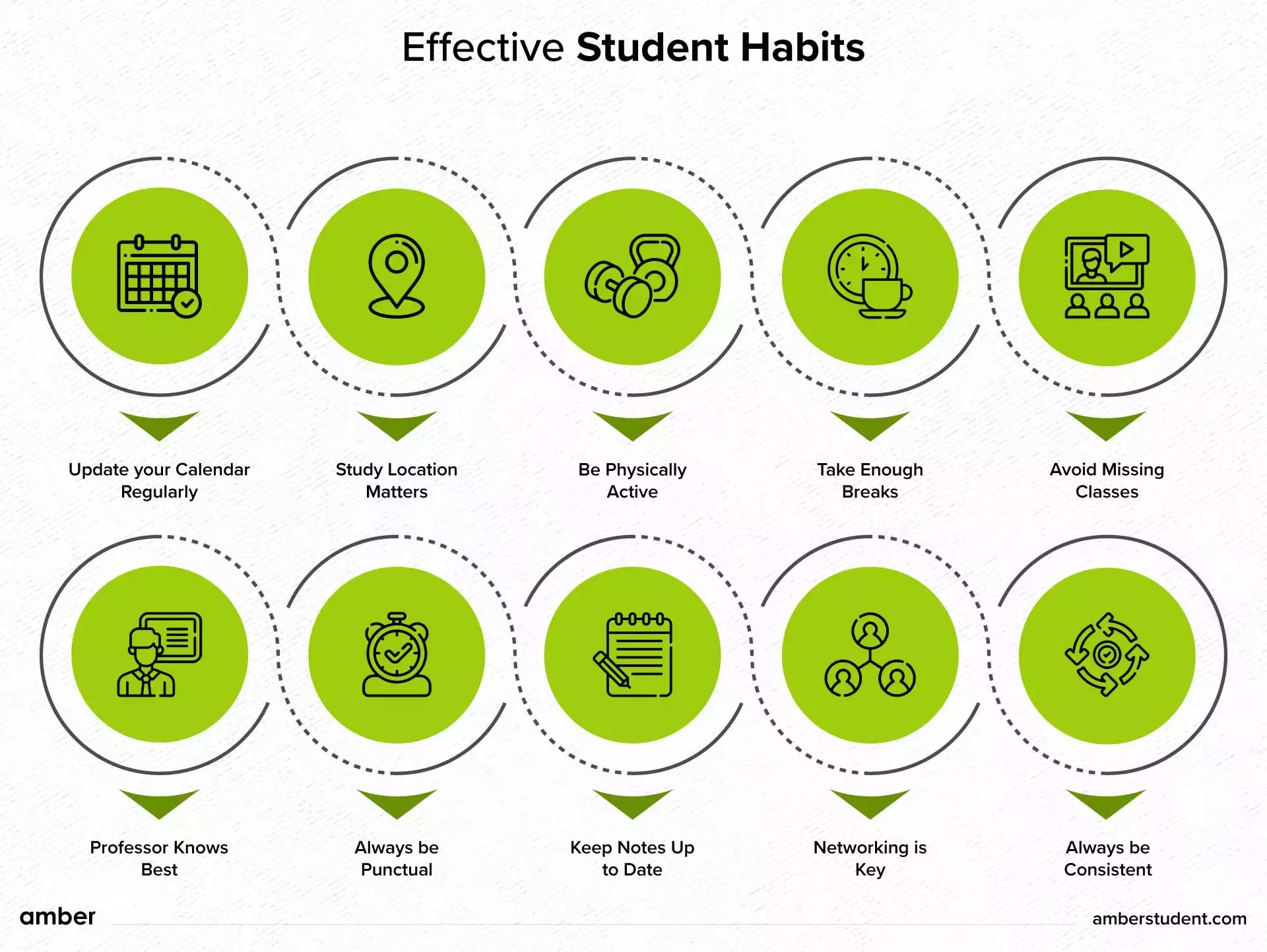
Student success is rarely the product of innate talent alone; it is the culmination of deliberate, consistent behaviors that optimize cognitive retention, time management, and psychological resilience. By integrating evidence-based habits into daily routines, learners can bridge the gap between their current performance and their academic potential, creating a sustainable framework for long-term growth and professional readiness.
1. Active Recall and Spaced Repetition
The most effective way to retain information is not through passive re-reading, but through active recall. This habit involves testing yourself on the material rather than simply consuming it. By forcing the brain to retrieve information, you strengthen neural pathways. Complement this with spaced repetition, a method where you review material at increasing intervals—such as one day, three days, one week, and one month later. This technique combats the "forgetting curve," ensuring that information moves from short-term working memory into durable long-term storage.
2. Strategic Time Blocking
Successful students do not merely maintain "to-do" lists; they use time blocking to assign specific windows for specific tasks. Instead of keeping a vague goal to "study biology," a high-performing student allocates a 90-minute block on Tuesday morning specifically for biology chapter reviews. This approach minimizes decision fatigue and prevents procrastination. By treating study sessions with the same gravity as an appointment with a professor or an employer, you establish a disciplined cadence that renders cramming unnecessary.
3. The Implementation of "Deep Work"
Coined by researcher Cal Newport, the concept of "deep work" refers to professional activities performed in a state of distraction-free concentration. For students, this means silencing mobile notifications, using website blockers, and entering a period of cognitive intensity. Shallow work, such as checking emails or organizing digital folders, provides little academic gain. Prioritizing one or two hours of deep work daily yields more substantive results than five hours of distracted, multi-tasking study.
4. Intentional Note-Taking Systems
The goal of note-taking is not to transcribe a lecture verbatim, but to synthesize information in a way that makes it usable for future retrieval. Systems like the Cornell Method, which segments pages into cues, notes, and summaries, force a level of engagement that passive typing cannot replicate. By summarizing lectures in your own words immediately after class, you solidify understanding and create a reliable study guide that serves as a primary resource during exam preparation.
5. Prioritizing Physical Recovery and Sleep Hygiene
Cognitive function is tethered to biological health. Sleep is the period during which the brain undergoes memory consolidation—the process of stabilizing a memory trace after initial acquisition. Students who sacrifice sleep to study frequently see diminishing returns, as their ability to recall information and solve complex problems declines. A consistent sleep schedule, paired with adequate hydration and physical activity, functions as a foundational support system for academic stamina.
6. Effective Communication with Instructors
Academic success is often accelerated by leveraging available institutional resources. Habits such as attending office hours, asking clarifying questions during lectures, and seeking feedback on draft assignments demonstrate engagement. Instructors are more likely to provide high-quality mentorship to students who show an active interest in the subject matter. This professional networking also creates a record of performance and character that is invaluable when requesting letters of recommendation or research opportunities.
7. Goal Setting via the SMART Framework
Ambition without structure is often unproductive. The SMART acronym—Specific, Measurable, Achievable, Relevant, and Time-bound—provides a roadmap for academic goals. Instead of setting a vague goal like "get better grades," a successful student defines a specific objective, such as "achieve a 90% average on the mid-term by completing all practice sets two days before the exam." This clarity allows for the tracking of progress and the identification of necessary adjustments in study habits.
8. Cultivating a Growth Mindset
Psychologist Carol Dweck’s research into the "growth mindset" suggests that students who believe their intelligence can be developed through hard work and strategic effort perform significantly better than those who view intelligence as a fixed trait. Viewing academic struggles as diagnostic information—rather than evidence of personal failure—allows students to pivot their strategies. When you accept that mistakes are part of the learning process, you develop the resilience required to master difficult, high-level concepts.
9. Managing Digital Distractions
In 2026, the digital environment is the primary workspace for most students, making the management of technology a critical competency. Developing a habit of "digital hygiene"—which includes cleaning up browser clutter, organizing cloud storage, and managing notification settings—reduces the friction between starting a task and completing it. Use software tools that limit access to social media during designated study blocks to maintain cognitive flow.
10. Regular Reflection and Course Correction
The final habit is the practice of self-assessment. At the end of every week, successful students reflect on what worked and what did not. Did you miss a deadline? Was your study plan too ambitious? By identifying the bottlenecks in your workflow, you can optimize your habits for the following week. This iterative process prevents the accumulation of bad habits and ensures that your academic strategy remains responsive to the increasing demands of your curriculum.
Comparative Overview of Study Habits
| Habit Category | Impact on Performance | Implementation Difficulty | Primary Benefit |
|---|---|---|---|
| Active Recall | High | Moderate | Long-term Retention |
| Time Blocking | High | Easy | Productivity Consistency |
| Deep Work | Very High | Hard | Cognitive Depth |
| Goal Setting | Medium | Easy | Directional Clarity |
| Self-Reflection | Moderate | Moderate | Process Improvement |
Frequently Asked Questions
How long does it take for a new study habit to become automatic? Research suggests that it takes anywhere from 18 to 254 days to form a new habit. For academic routines, consistency is more important than speed. If you fail to stick to a routine one day, focus on returning to it the next day rather than viewing it as a permanent lapse.
Is multi-tasking ever an effective way to study? No. Neuroscientific evidence indicates that the brain cannot perform two cognitively demanding tasks simultaneously; it merely switches between them rapidly. This "context switching" results in increased errors and longer completion times. Focus on one task at a time for optimal results.
What should I do if my current study habits are not working? The first step is to perform a time audit. Track your activities for three days to see exactly where your time goes. Often, students discover that they spend more time on "shallow work" than they realized. Once identified, replace one unproductive block with a "deep work" session.
Does the specific environment affect study success? Yes. Creating a "dedicated study space"—a location used exclusively for academic work—trains the brain to enter a state of focus upon entering that space. Avoid studying in bed or areas associated with leisure to prevent mental fatigue and association-based distraction.
Can these habits be applied to all academic levels? Absolutely. While the content complexity changes from secondary school to university and beyond, the psychological principles of memory, time management, and focus remain consistent. Adapt the intensity of these habits based on the cognitive load of your current coursework.
Next Steps for Implementation
To begin, do not attempt to change all ten habits simultaneously. Select one or two, such as "Time Blocking" and "Active Recall," and implement them for two weeks. Once these become part of your natural routine, incorporate additional habits like "Deep Work" or "SMART Goal Setting." Academic success is a process of refinement; monitor your outcomes, adjust your variables, and maintain the discipline required to reach your long-term educational objectives.